Building a blog for your boat parts business isn't about pretty pictures and generic advice. It's about creating a content machine that turns curious browsers into paying customers.
I've spent years optimizing ecommerce content strategies. The boat parts market presents unique challenges and massive opportunities.
The global outboard engines market is projected to reach $20.94 billion by 2034. That growth means more customers searching for parts, advice, and suppliers.
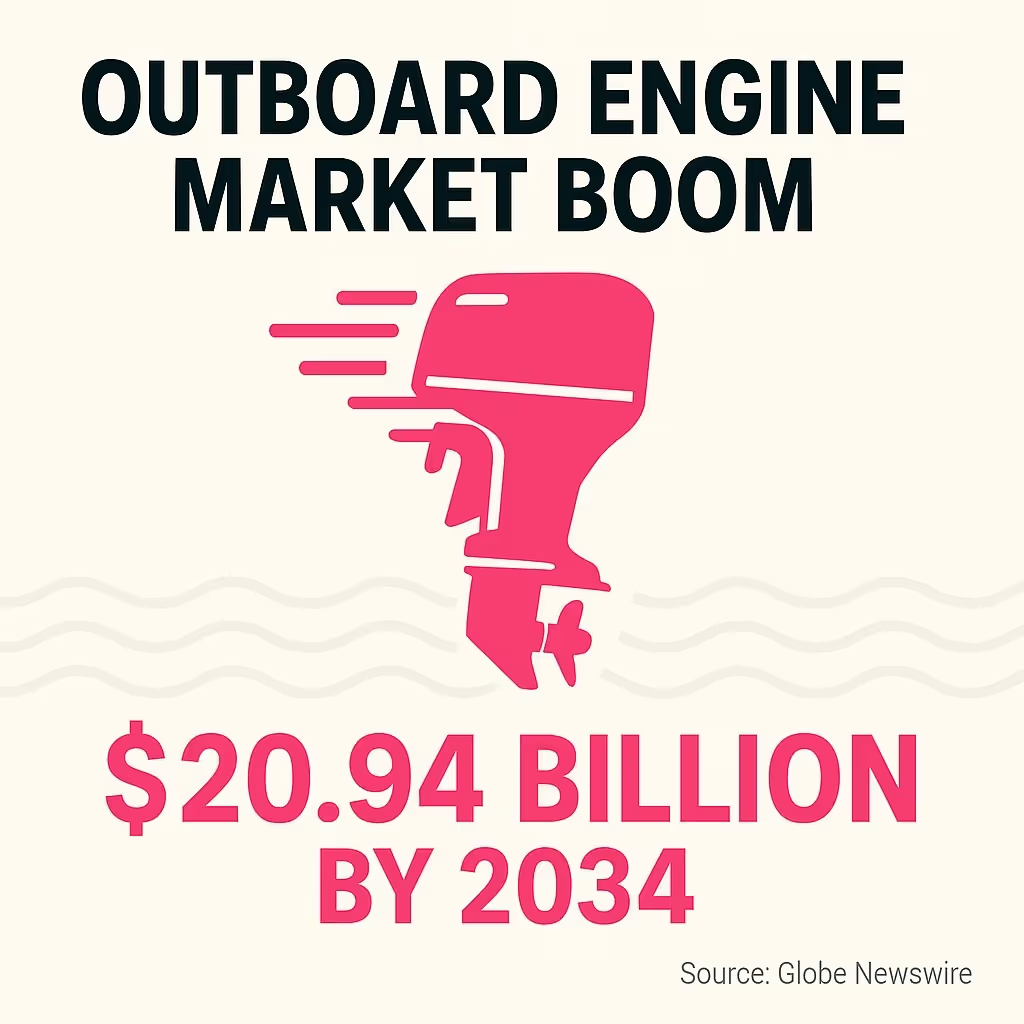
Global outboard engines market projected to reach $20.94B by 2034—more demand, more parts searches.
Your blog should capture that search intent and convert it into revenue. Not through pushy sales tactics, but through strategic content that builds trust and guides purchasing decisions.
This guide covers the complete system for building a boat parts blog that generates qualified leads and sales. You'll learn audience targeting strategies, content frameworks that convert, technical optimization, and conversion tactics specific to the marine parts industry.
By the end, you'll have a clear roadmap for creating content that ranks in search engines and drives measurable business results.
Most boat parts blogs make one critical mistake. They focus on what they want to say instead of what customers need to know.
I see this pattern constantly in ecommerce. Business owners write about their products, their expertise, their company history.
None of that converts visitors into buyers.
Your audience doesn't care about your catalog. They care about solving their specific problems.
Someone searching "outboard motor carburetor rebuild" isn't looking for a product page. They want guidance, reassurance, and eventually, the right parts to fix their problem.
Generic content destroys conversion potential. When you write broad articles about "boat maintenance," you attract unqualified traffic that bounces immediately.
Poor navigation frustrates ready-to-buy visitors. If someone can't find the product they need within two clicks, they leave.
Missing trust signals kill sales at the final moment. Without reviews, certifications, or clear return policies, hesitant buyers abandon their carts.
Target specific problems your customers face. Create content around exact part failures, repair procedures, and compatibility questions.
Target exact part failures and real customer problems to align content with conversions.
Build clear pathways from content to products. Every blog post should guide readers toward relevant parts in your catalog.
Establish expertise through detailed technical content. When you demonstrate deep knowledge, customers trust your recommendations.
The global marine vessel market projected at $115 billion in 2025 means massive opportunity for specialized suppliers who understand their audience.
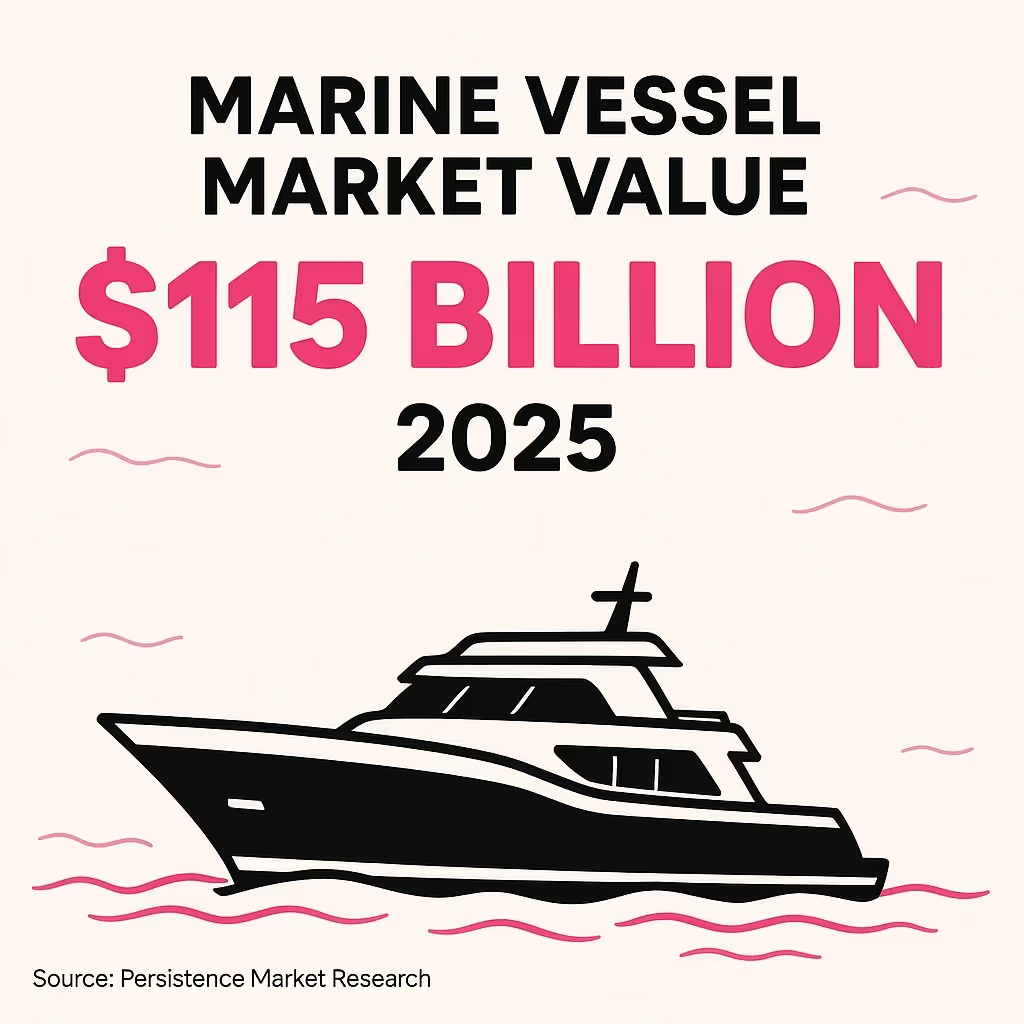
Marine vessel market: $115B in 2025—position your content to capture specialized demand.
Content pillars form the foundation of your blog strategy. These are the core topics that attract your ideal customers and support your business goals.
For boat parts businesses, profitable pillars align with your highest-margin products and most frequent customer questions.
Start with your existing sales data. Which product categories generate the most revenue?
Review your customer service inquiries. What questions come up repeatedly?
Check your current website analytics. Which pages get the most traffic and engagement?
This data reveals what your customers actually care about. Build your content strategy around those proven interests.
Awareness stage content addresses problems before customers know solutions exist. Articles like "why does my outboard motor stall" attract early-stage researchers.
Consideration stage content compares solutions and options. "Two-stroke vs four-stroke outboard parts compatibility" helps customers evaluate approaches.
Decision stage content removes final purchasing barriers. "How to verify marine part numbers" builds confidence in making the right purchase.
Each stage requires different content formats and conversion strategies. Your blog needs all three types working together.
|
Journey Stage
|
Content Type
|
Conversion Goal
|
|---|---|---|
|
Awareness
|
Problem identification, symptoms, diagnostics
|
Email capture, return visits
|
| Consideration |
Solution comparisons, repair guides, compatibility
|
Product page visits, tool engagement |
|
Decision
|
Installation guides, part verification, warranty info
|
Add to cart, purchase
|
Select five main topics that cover your primary product categories. For most boat parts businesses, these might include engine components, electrical systems, steering and controls, fuel systems, and propulsion parts.
Each pillar should support multiple subtopics and connect to specific products in your catalog. Keyword research for parts niches applies directly to boat parts content strategy.
Limit yourself to five pillars initially. Depth beats breadth for conversion-focused blogs.
Conversion-focused content serves two masters. It must rank in search engines and guide readers toward purchasing decisions.
Most content does neither well because writers optimize for one at the expense of the other.
Start every piece with the specific problem your reader faces. Use their exact language from search queries and customer emails.
Provide detailed solution information next. Explain the technical aspects, common approaches, and what makes solutions effective or ineffective.
Connect solutions to specific products naturally. Don't force sales pitches, but make clear which parts solve which problems.
This framework works because it matches how customers actually research and make decisions. Content marketing funnels for parts ecommerce demonstrates how this approach drives measurable results.
Search intent determines what type of content ranks for each keyword. Google shows different results for "outboard motor repair" versus "buy outboard motor parts."
Informational intent requires educational content. These searchers want to understand problems and solutions.
Commercial intent signals comparison shopping. These readers evaluate options before purchasing.
Transactional intent indicates purchase readiness. These visitors need product details and buying confidence.
Match your content format to the dominant intent for each target keyword. Forcing transactional content on informational queries tanks your rankings.
Strategic internal linking guides visitors from awareness content toward conversion points. Each blog post should link to related articles and relevant product pages.
Create hub pages for each content pillar. These comprehensive guides link to all related subtopic articles and product categories.
Use descriptive anchor text that helps both readers and search engines understand destination content. Avoid generic "click here" links.
Track which internal links generate the most engagement and purchases. Double down on pathways that convert.
Technical optimization determines whether your excellent content actually reaches your target audience. Even brilliant writing fails without proper technical foundation.
Site speed directly impacts conversion rates. Slow loading times cause immediate abandonment, especially on mobile devices.
Optimize images before uploading. Compress photos of parts and diagrams to reduce file sizes without sacrificing quality.
Use lazy loading for images below the fold. This technique loads initial content quickly while delaying off-screen images.
Test your blog on actual mobile devices. Desktop performance doesn't predict mobile experience.
Structured data helps search engines understand your content context. This markup increases visibility in search results through rich snippets.
Implement Article schema on all blog posts. Include headline, author, publish date, and featured image data.
Add Product schema when discussing specific parts. Include pricing, availability, and review information.
Use FAQ schema for common questions. This markup can generate featured snippet placement in search results.
Title tags determine click-through rates from search results. Include your target keyword and a compelling benefit.
Meta descriptions don't affect rankings but influence clicks. Write specific, action-oriented descriptions that differentiate your content.
Keep titles under 60 characters and descriptions under 155 characters. Longer text gets truncated in search results.
Test different title formulas to improve click-through rates. Small improvements compound over hundreds of pages.
Strategic conversion elements transform passive readers into engaged prospects and customers. These components work together to guide visitor behavior.
Place your primary call-to-action after providing substantial value. Asking for action before building trust generates poor results.
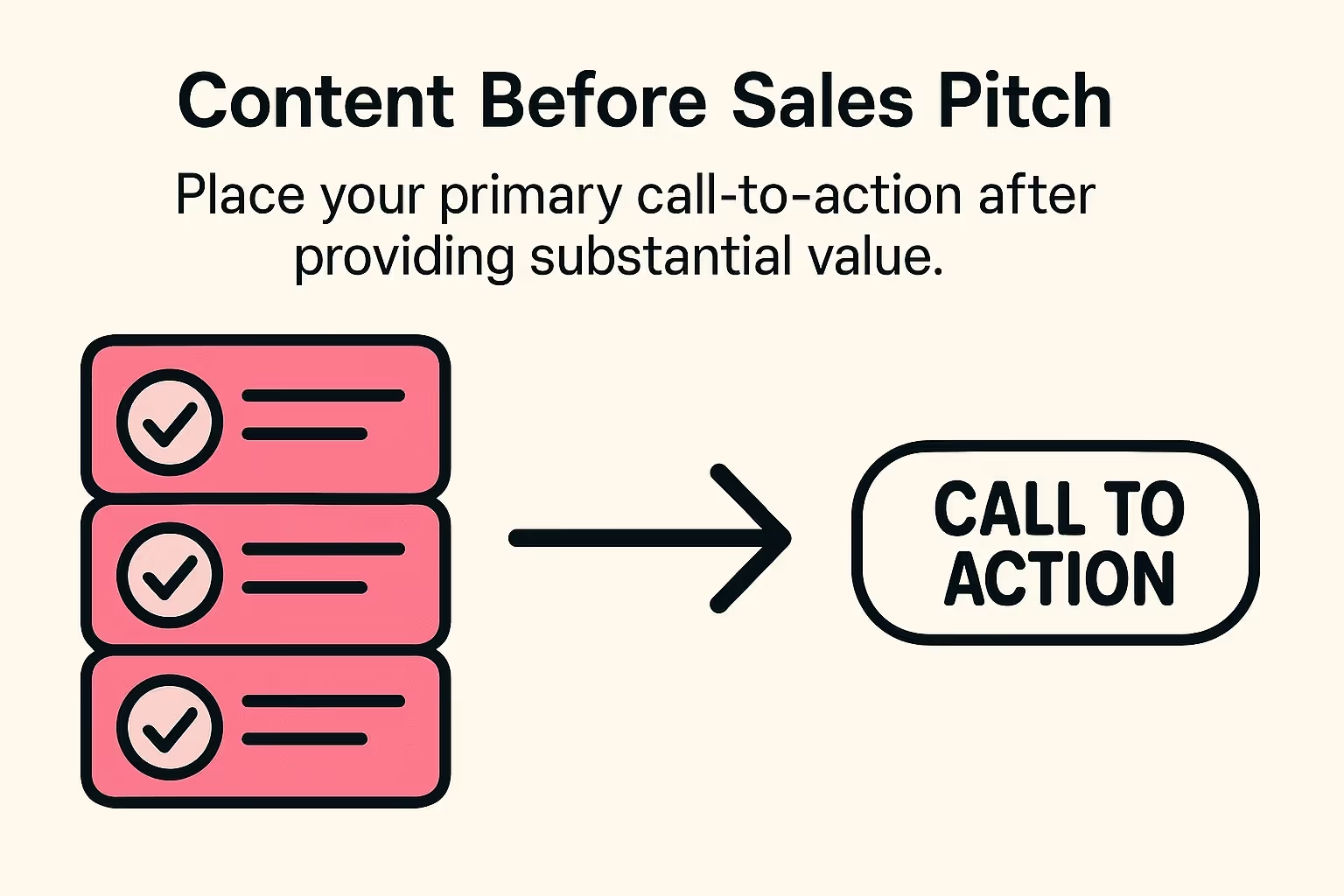
Content first, then the ask: place your primary CTA after delivering substantial value.
Use multiple calls-to-action with different commitment levels. Offer low-friction options like email signup alongside direct purchase links.
Make CTAs specific and benefit-focused. "Download the Outboard Motor Maintenance Checklist" outperforms generic "Subscribe Now."
Position product links naturally within content. Reference specific parts when discussing solutions without disrupting reading flow.
Display relevant certifications and industry affiliations prominently. OEM partnerships and marine industry memberships build credibility.
Include detailed technical specifications in your content. Precise measurements, compatibility details, and installation requirements demonstrate expertise.
Show actual customer reviews and testimonials. Real feedback from boat owners carries more weight than marketing claims.
Link to authoritative external sources when making technical claims. Citations to manufacturer specifications and industry standards increase trustworthiness.
Offer genuinely valuable lead magnets. Generic newsletters don't motivate signups, but specific resources like compatibility charts or maintenance schedules do.
Use exit-intent popups strategically. Trigger them when visitors show abandonment behavior but not so aggressively they damage user experience.
Segment email lists based on content interests. Someone reading about engine parts receives different follow-up than electrical system researchers.
The approach outlined in conversion rate optimization from analytics to action applies directly to blog conversion tactics.
|
Conversion Element
|
Best Placement
|
Primary Goal
|
|---|---|---|
|
Email signup
|
After 50% scroll depth
|
Capture interested visitors
|
|
Related products
|
Within relevant content sections
|
Drive product page visits
|
|
Content upgrades
|
End of high-value posts |
Deepen engagement
|
|
Chat widget
|
Bottom right, delayed load
|
Answer questions, reduce friction
|
Consistent publishing builds audience trust and search engine authority. Sporadic content creation undermines both goals.
Your workflow determines whether content production becomes sustainable or burns out your team.
Plan content three months ahead. This timeline allows for research, production, and optimization without constant deadline pressure.
Balance evergreen content with timely seasonal topics. Core educational posts drive long-term traffic while seasonal content captures timely searches.
For boat parts businesses, align content with boating seasons. Winterization content peaks in fall, while engine maintenance guides perform best in spring.
Track which topics generate the most engagement and conversions. Adjust your calendar based on performance data rather than assumptions.
The systematic approach detailed in content marketing process frameworks prevents production bottlenecks.
Establish clear quality criteria before production begins. Define minimum word counts, required elements, and technical accuracy standards.
Implement peer review for technical accuracy. Have experienced technicians verify repair procedures and part specifications.
Check all product links before publishing. Broken links to your catalog damage both user experience and conversion rates.
Proofread for clarity and readability. Technical accuracy matters, but incomprehensible writing serves no one.
Publish during your audience's peak browsing times. Analytics reveal when your visitors are most active online.
Consider seasonal factors for marine content. Spring preparation content should publish in late winter, not after boating season starts.
Space major posts to allow proper promotion time. Flooding your blog with daily posts dilutes promotional effectiveness.
The timing strategies covered in selecting optimal content publishing times maximize initial engagement.
Creating excellent content means nothing if nobody reads it. Traffic generation requires deliberate strategy across multiple channels.
Target long-tail keywords with clear commercial intent. "Yamaha outboard carburetor rebuild kit 150hp" attracts far more qualified traffic than generic "boat parts."
Build backlinks through industry relationships. Marine forums, boating clubs, and manufacturer partnerships provide relevant authority signals.
Optimize for featured snippets. Structure content to directly answer common questions in concise, snippet-friendly formats.
Monitor search rankings weekly. Identify declining pages and refresh content to maintain visibility.
Focus on platforms where boat owners congregate. Facebook groups and forums drive more qualified traffic than trendy platforms with poor audience fit.
Share content with genuine commentary, not just links. Explain why each post matters to your audience.
Engage with comments and questions. Social media conversation builds relationships that drive traffic and conversions.
Use platform-specific content formats. Video performs well on Facebook, while detailed posts work better on forums.
Segment your email list by product interests and purchase history. Send engine content to engine buyers, not everyone on your list.
Write compelling subject lines that promise specific value. "3 Signs Your Fuel Pump Is Failing" outperforms "New Blog Post."
Include clear links to blog content with context. Tell readers why they should click through.
Test send times to optimize open rates. Email performance varies significantly by audience and industry.
Understanding diverse website traffic sources helps you allocate promotion resources effectively.
Data transforms gut feelings into strategic decisions. Without proper measurement, you're guessing about what works.
Monitor organic traffic growth by content pillar. Which topics attract the most visitors?
Track conversion rate by post type. Which content formats drive the most purchases or leads?
Measure average time on page and scroll depth. Are readers actually consuming your content?
Calculate revenue per visitor for blog traffic. This metric reveals true content ROI.
Set up goal tracking for key conversions. Track email signups, product page visits, and purchases from blog traffic.
Create custom segments for blog visitors. Compare their behavior to other traffic sources.
Use UTM parameters for promotional links. Track which social posts and emails drive the most traffic.
Configure enhanced ecommerce tracking. See which blog posts contribute to purchase paths.
Test different call-to-action placements and formats. Small changes often produce significant conversion improvements.
Experiment with content length and depth. Sometimes shorter posts convert better than comprehensive guides.
Try various headline formulas. Title changes alone can double click-through rates from search results.
Test product recommendation strategies. Different linking approaches work better for different content types.
|
Metric
|
Target Range |
Optimization Priority
|
|---|---|---|
|
Organic traffic growth
|
High
|
|
| Blog conversion rate | 1-3% |
Critical
|
|
Average session duration
|
3-5 minutes | Medium |
|
Pages per session
|
2-3 pages |
Medium
|
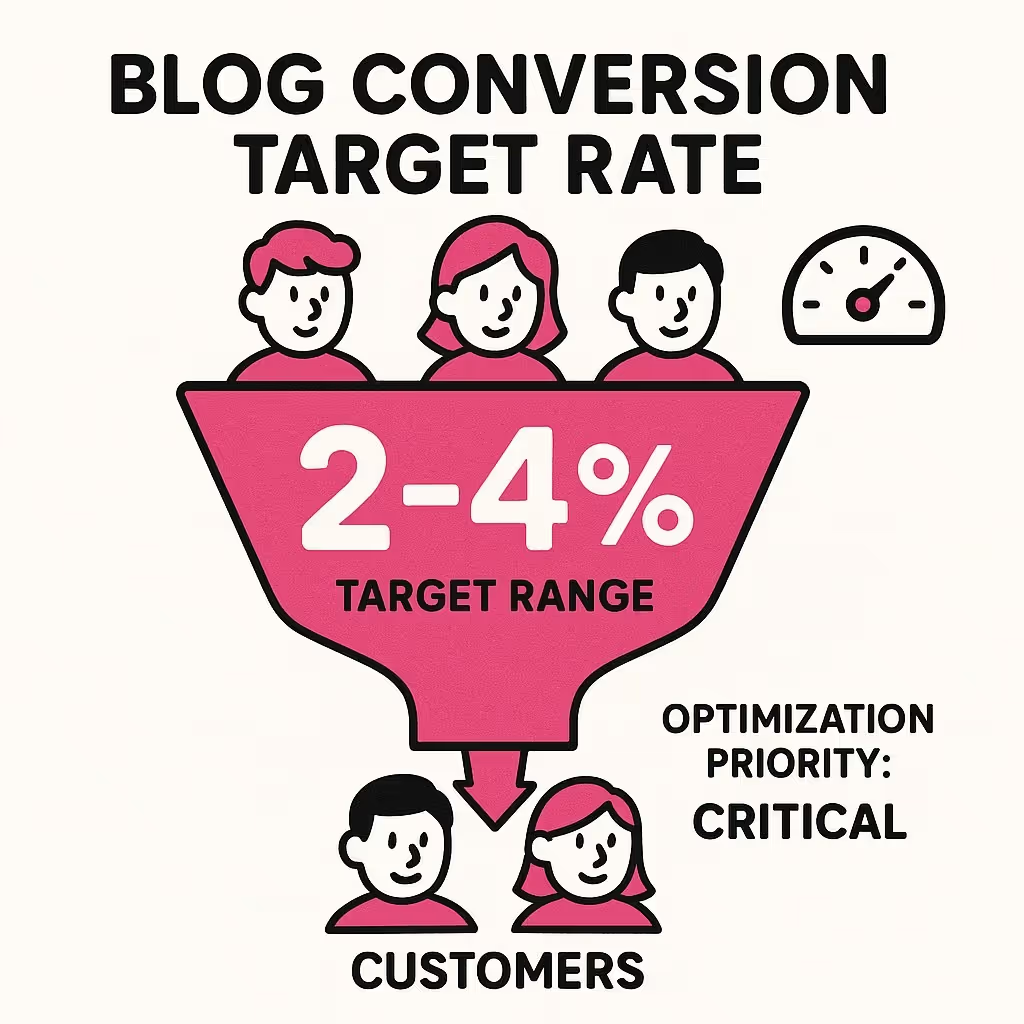
Benchmark your performance: blog conversion target range is 2–4%.
Community transforms one-time visitors into loyal customers and brand advocates. These relationships generate long-term value beyond individual transactions.
Enable comments on blog posts to encourage engagement. Respond to every genuine comment within 24 hours.
Ask specific questions at the end of posts. "What's your biggest challenge with outboard maintenance?" generates discussion.
Highlight valuable community contributions. Feature helpful comments or success stories in future content.
Moderate comments firmly but fairly. Remove spam aggressively while welcoming constructive criticism.
Invite customers to share their repair stories and solutions. Real experiences provide valuable content and build community.
Feature customer projects in dedicated posts. Recognition motivates participation and provides social proof.
Create hashtag campaigns for social sharing. Make it easy for customers to share their boat projects.
Offer incentives for content contributions. Discounts or featured placement motivate quality submissions.
The community building tactics from building engaged online communities apply effectively to marine audiences.
Focus on education over promotion. Share genuinely helpful tips and insights, not just product announcements.
Maintain a consistent sending schedule. Weekly or biweekly newsletters build habit and anticipation.
Personalize content based on subscriber interests. Engine enthusiasts get different content than electrical system specialists.
Include exclusive content not available on your blog. Give subscribers reasons to stay subscribed.
Sustainable growth requires systems that work without constant founder involvement. Build processes that maintain quality while increasing output.
Recruit writers with marine industry experience. Technical knowledge can't be easily taught to generic content writers.
Create detailed content briefs for every assignment. Specify target keywords, required elements, and conversion goals.
Develop style guides that maintain brand voice. Consistent tone builds trust across all content.
Provide ongoing feedback and training. Content quality improves through iteration and coaching.
Transform comprehensive blog posts into video tutorials. Visual content reaches different audience segments.
Create infographics from data-heavy articles. Shareable graphics extend content reach on social platforms.
Compile related posts into downloadable guides. Lead magnets built from existing content require minimal new production.
Extract key points for social media posts. One blog post generates weeks of social content.
Use editorial calendar tools to manage production workflow. Centralized planning prevents bottlenecks.
Automate social sharing with scheduling tools. Consistent promotion doesn't require manual posting.
Set up email automation for content distribution. New posts automatically notify relevant subscriber segments.
Maintain human oversight of automated systems. Technology assists but shouldn't replace judgment.
Your boat parts blog exists to drive revenue. Every strategic decision should connect to measurable business results.
Focus on the metrics that matter. Traffic vanity metrics mean nothing if they don't generate sales.
The conversion optimization principles from building high-converting landing pages apply to every blog post you create.
Start with your most profitable product categories. Build content pillars around parts that generate the highest margins.
Track revenue attribution carefully. Know which posts and traffic sources drive actual purchases.
Optimize aggressively based on performance data. Double down on what works and eliminate what doesn't.
Your blog should function as a self-sustaining lead generation system. Content attracts qualified visitors, builds trust through expertise, and guides purchasing decisions.
The marine parts market continues growing. Position your blog to capture that expansion through strategic content that converts browsers into loyal customers.