
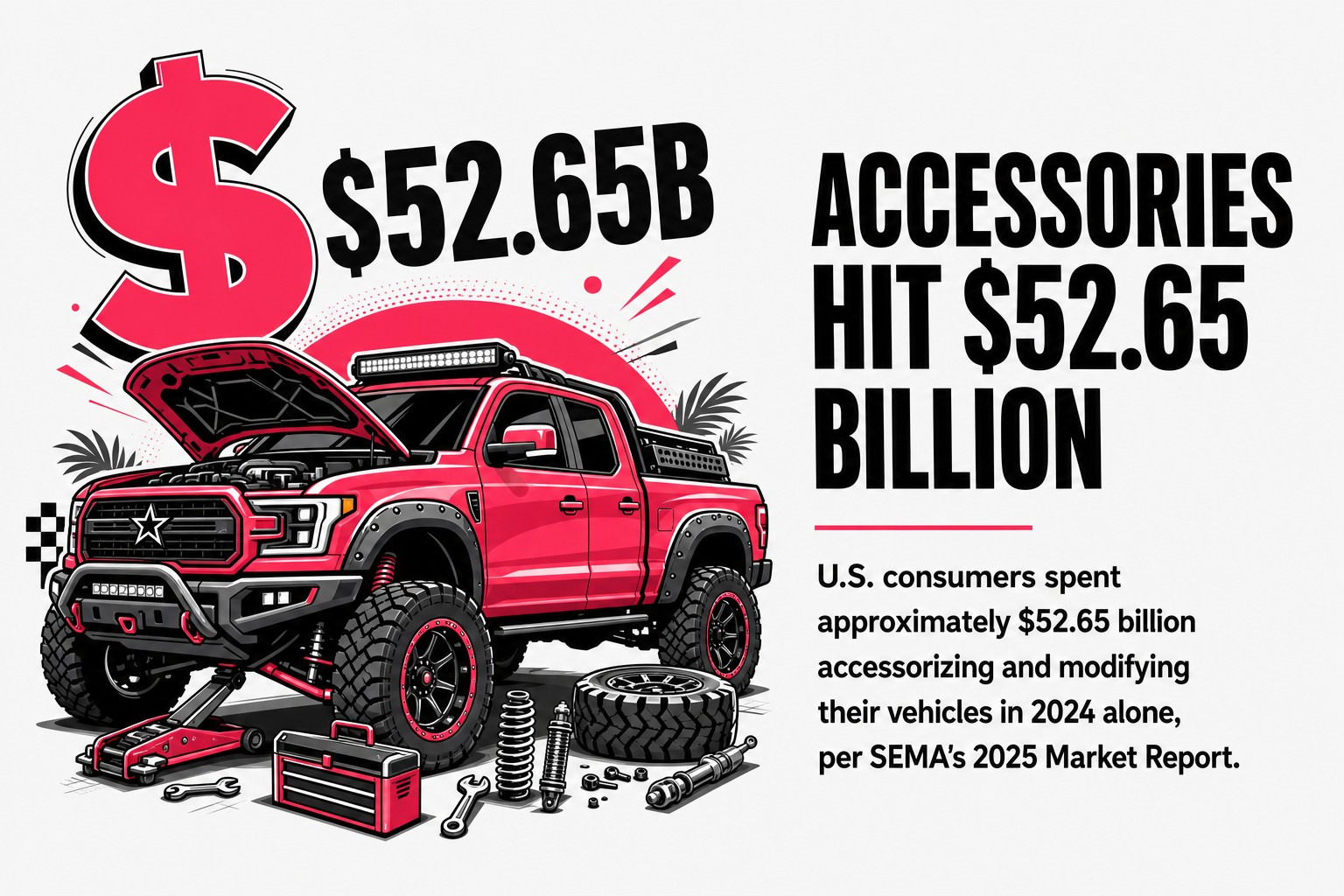
The U.S. automotive aftermarket generated $413.7 billion in light-duty sales in 2024, a 5.7% increase year over year, according to the Auto Care Association's 2025 industry report. Within that figure, U.S. consumers spent approximately $52.65 billion accessorizing and modifying their vehicles in 2024 alone, per SEMA's 2025 Market Report. The global auto accessories market was valued at $80.4 billion in 2025, according to Intel Market Research, and the retail distribution channel holds a 54.2% dominant share of the global automotive aftermarket, per Grand View Research. These are not soft signals. This is a market moving real money, and the businesses capturing it are doing so with deliberate digital marketing strategy, not viral luck.
I spend a lot of time talking to parts and accessories sellers who are frustrated. They see the market numbers, they know demand is there, but their ecommerce store is grinding along while competitors seem to pull further ahead. Most of the time the problem isn't the product. It's that aftermarket accessories marketing gets treated like an afterthought, a few Google Ads here, some social posts there, and then confusion when nothing converts. This guide cuts through that. We'll go channel by channel, tactic by tactic, so you leave with a strategy that actually matches how your buyers shop.
Aftermarket accessories marketing covers every digital and offline activity that drives awareness, traffic, and sales for auto parts, performance parts, and vehicle customization products sold outside original equipment manufacturer channels. The scale of the opportunity is hard to ignore. The Auto Care Association projects the U.S. light-duty aftermarket will grow in 2025, reaching approximately $435 billion. That growth creates real room for parts and accessories sellers who market well.
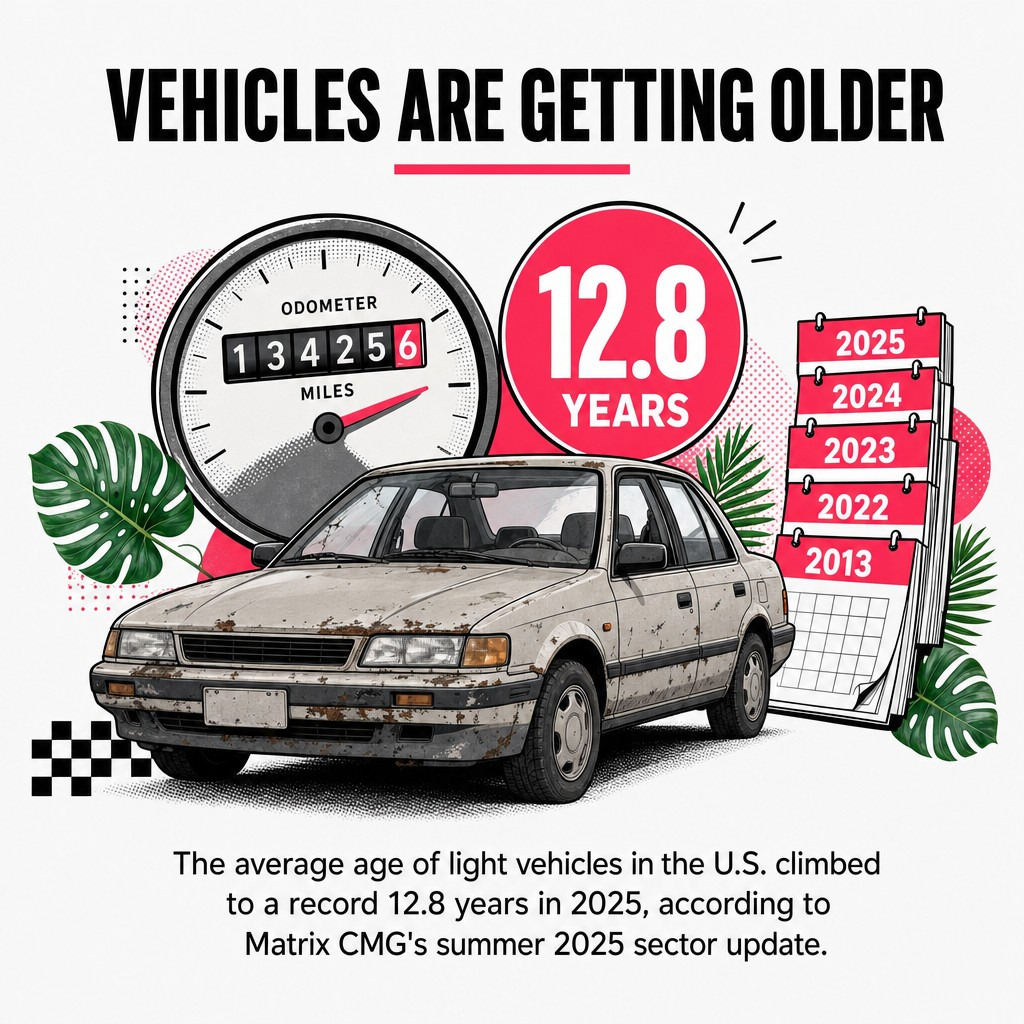
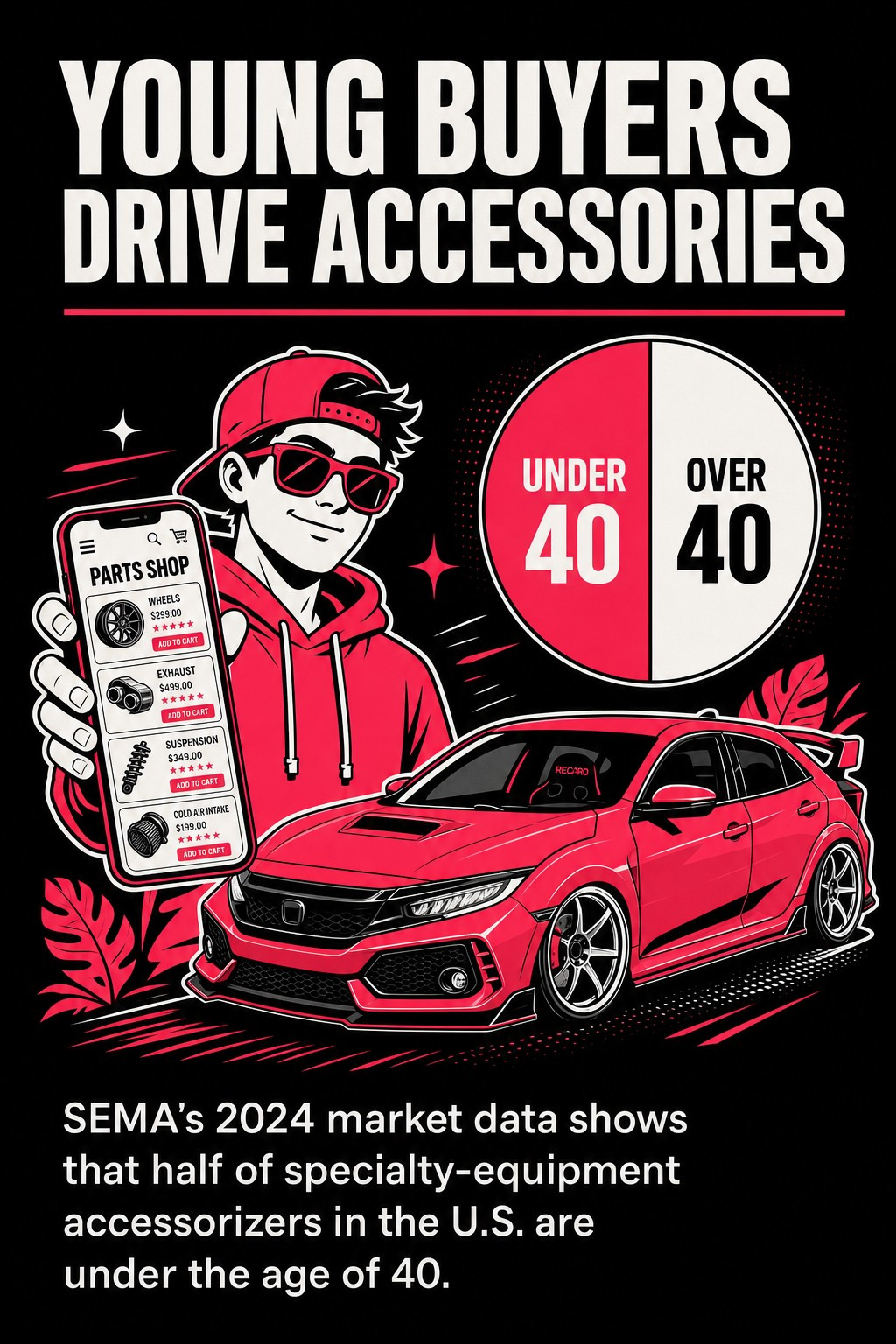
Two structural trends make this moment especially good for accessories sellers. First, the average age of light vehicles in the U.S. climbed to a record 12.8 years in 2025, according to Matrix CMG's summer 2025 sector update. Older vehicles need more maintenance and attract more modification spending. Second, SEMA's 2024 market data shows that half of specialty-equipment accessorizers in the U.S. are under the age of 40. That means your core buyer is digitally native and expects a strong online experience.
And yet a lot of aftermarket accessories marketing still looks like it was designed in 2012. Product listings with three lines of description, no fitment data, and a single stock photo. That's not a product problem. It's a marketing execution problem, and it's fixable.
For a deeper look at the data shaping buyer behavior in this space, the automotive aftermarket research and insights we've published covers the key shifts worth knowing before you build your strategy.
An effective aftermarket accessories marketing strategy starts with three questions your team should answer before touching a single ad account or content calendar.
Who exactly is buying? The accessories buyer is not the same as the maintenance parts buyer. One is emotionally driven, researching YouTube builds and Instagram fitment shots. The other is price-sensitive and searching for a specific part number. Your digital marketing needs to speak to both, but with different channels and different content. 57% of consumers in Western markets now prefer Independent Aftermarket parts over Original Equipment brands, which tells you that price and availability messaging matters, but brand trust still wins deals.
Where are you selling? Direct-to-consumer ecommerce, wholesale, Amazon, eBay Motors, or some mix? Each channel demands a different paid search approach, a different product data feed structure, and a different content strategy. Trying to use one generic digital marketing plan across all channels is why most aftermarket sellers plateau.
Are you building in-house or outsourcing? This shapes every resource decision that follows. In-house teams move faster on brand voice and product knowledge. A specialist agency brings certified paid search expertise and platform relationships. Many successful parts businesses run a hybrid: in-house content and email, agency-managed PPC and Google Shopping. Neither option is universally right. The wrong answer is outsourcing everything to a generalist agency that doesn't know what a year/make/model fitment filter is.
The OEM vs. aftermarket positioning question also shapes your messaging strategy significantly. We've covered that split in detail in our automotive OEM vs. aftermarket marketing comparison, which is worth reading before you finalize your brand positioning.
SEO for automotive aftermarket products is more technically demanding than most ecommerce categories because every product page needs year/make/model fitment data to rank for the searches that actually convert. A generic title like "Cold Air Intake" will not compete. "Cold Air Intake for 2019 Ford F-150 5.0L" will.
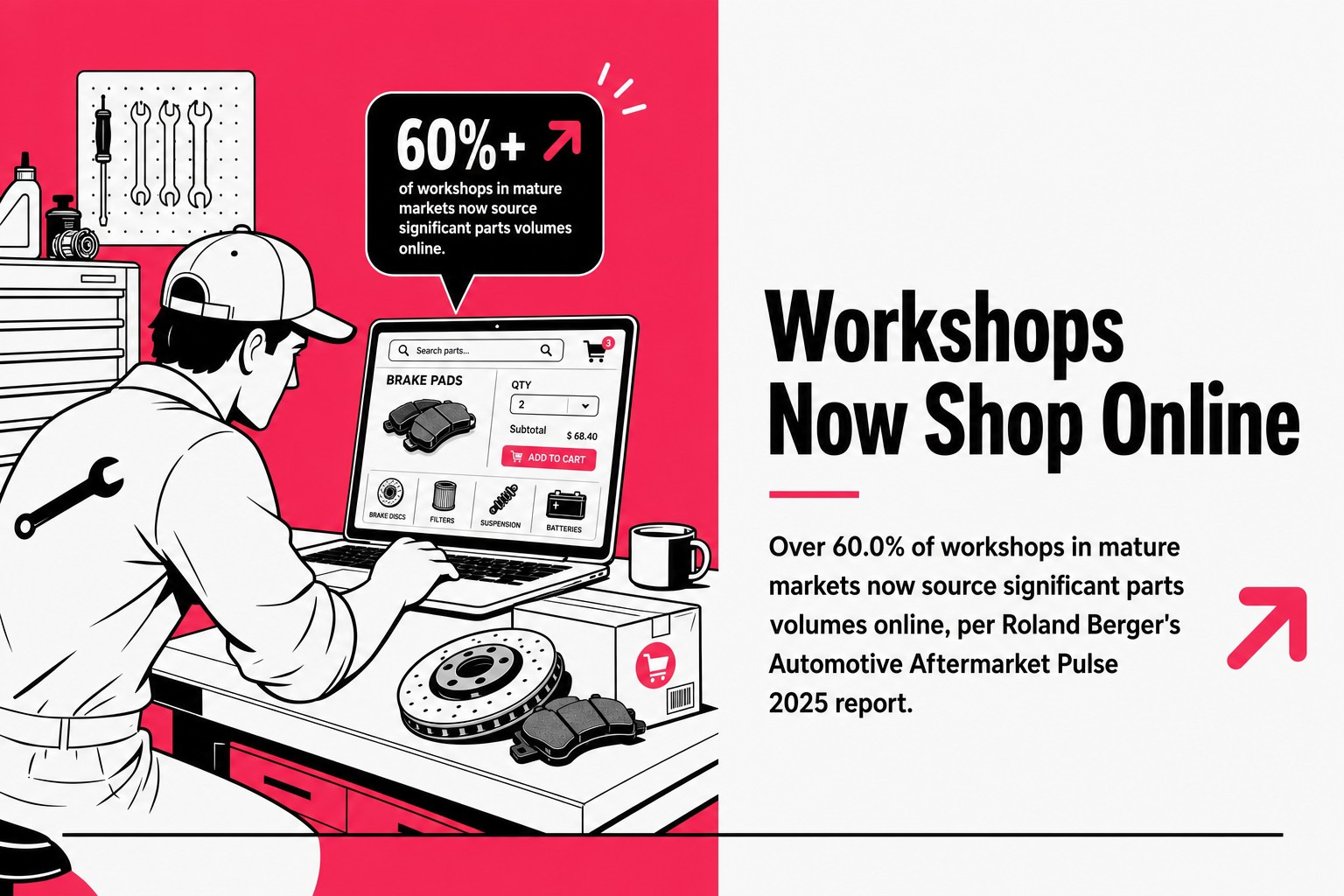
Your product catalog is your ecommerce SEO asset base. Each SKU should carry a complete fitment description, a unique product title that includes vehicle application, and a description that answers the installation question buyers inevitably search after purchase. Roland Berger's Automotive Aftermarket Pulse 2025 report found that over 60% of workshops in mature markets now source significant parts volumes online. That number reflects a broader shift: the buyer who used to call a parts counter now searches Google. Your product pages are your parts counter.
Category pages need the same treatment. A category page for "Tonneau Covers" should target "tonneau covers for [popular truck makes]" and include buying guide content above the product grid. This is not fluff. It's how you capture top-of-funnel search intent and push buyers toward your catalog.
Content marketing for auto parts and accessories works best when it maps to real purchase decisions. Installation guides rank for long-tail searches and reduce return rates. Comparison articles ("coilover vs. lowering springs") capture research-phase buyers who are weeks away from purchasing but months away from forgetting who helped them decide.
Video content paired with written guides doubles the SEO value. A YouTube installation video linked from your product page increases time on page and earns backlinks from enthusiast forums. Neither happens with a bare product listing.
Brand-building case studies show what's possible when content strategy is taken seriously. The Flowmaster brand-building lessons in the automotive aftermarket show exactly how a parts brand builds the kind of content authority that compounds over time. And the WeatherTech growth lessons for aftermarket founders break down how product-led SEO and brand consistency create durable market position.
Paid search for automotive aftermarket products demands tighter campaign architecture than most ecommerce verticals because a mis-matched fitment click costs you the click cost and the customer's trust simultaneously. Getting PPC right here is genuinely worth more than in most categories.
Google Ads campaigns for aftermarket auto parts and accessories should be segmented by product category and intent stage. Brand campaigns, category campaigns, and competitor campaigns each need separate budgets, separate bid strategies, and separate negative keyword lists. Running everything in one campaign is how you burn budget on the wrong searches.
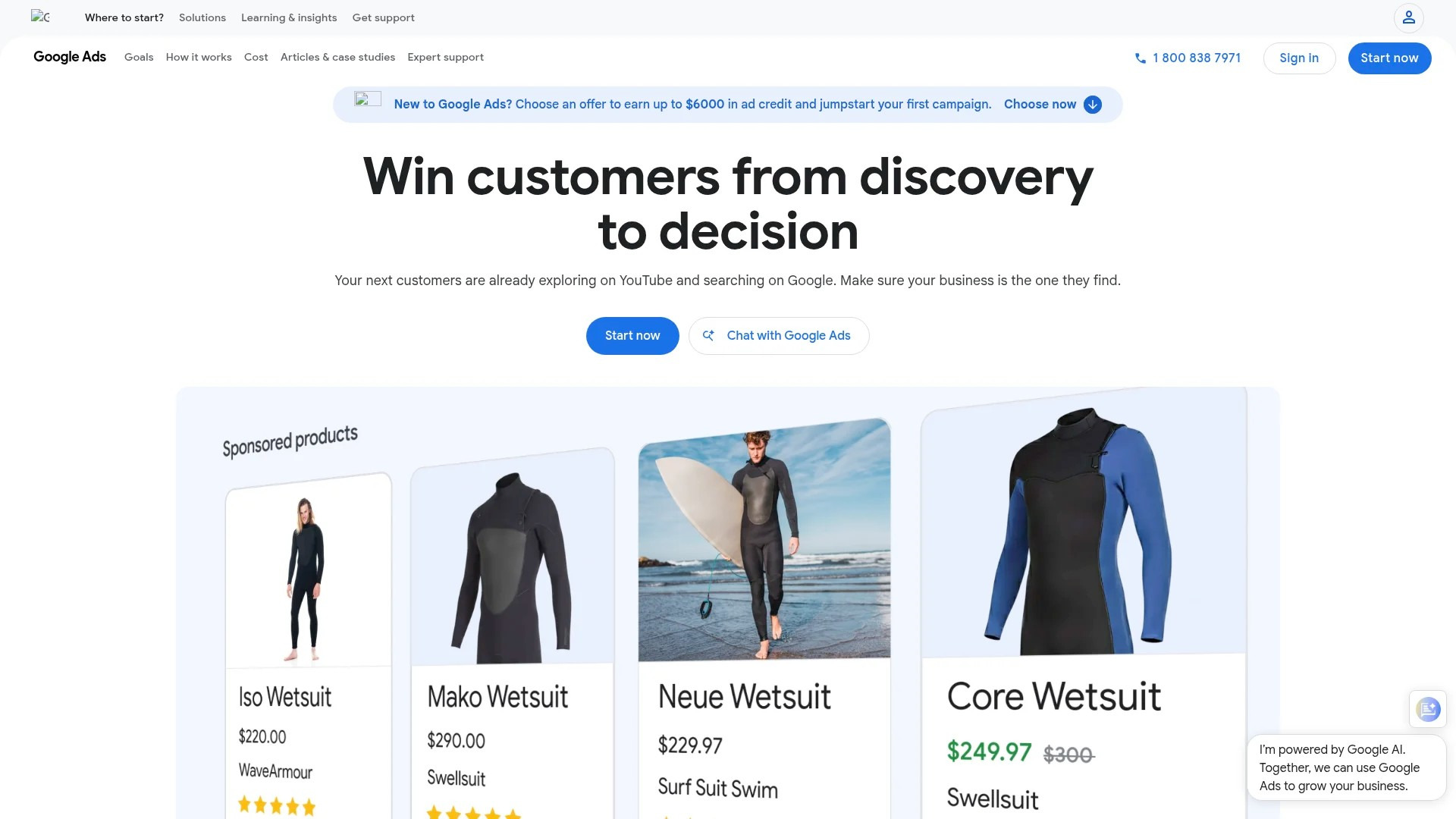
Google Ads: structure separate brand, category, and competitor campaigns with distinct budgets and negatives.
Negative keyword management is where most aftermarket PPC accounts bleed money. "OEM", "dealer", "factory", and specific competitor model numbers need to be in every campaign's negative list from day one. Check your search term reports weekly, not monthly. The automotive category generates a high volume of irrelevant queries that will drain your ROAS before your monthly review catches them.
Google Shopping performance for auto parts is almost entirely determined by product data feed quality. Your feed title format matters enormously: lead with brand, then part type, then fitment. "Borla Axle-Back Exhaust for 2021 Chevrolet Camaro SS" outperforms "Exhaust System" in both impression share and conversion rate.
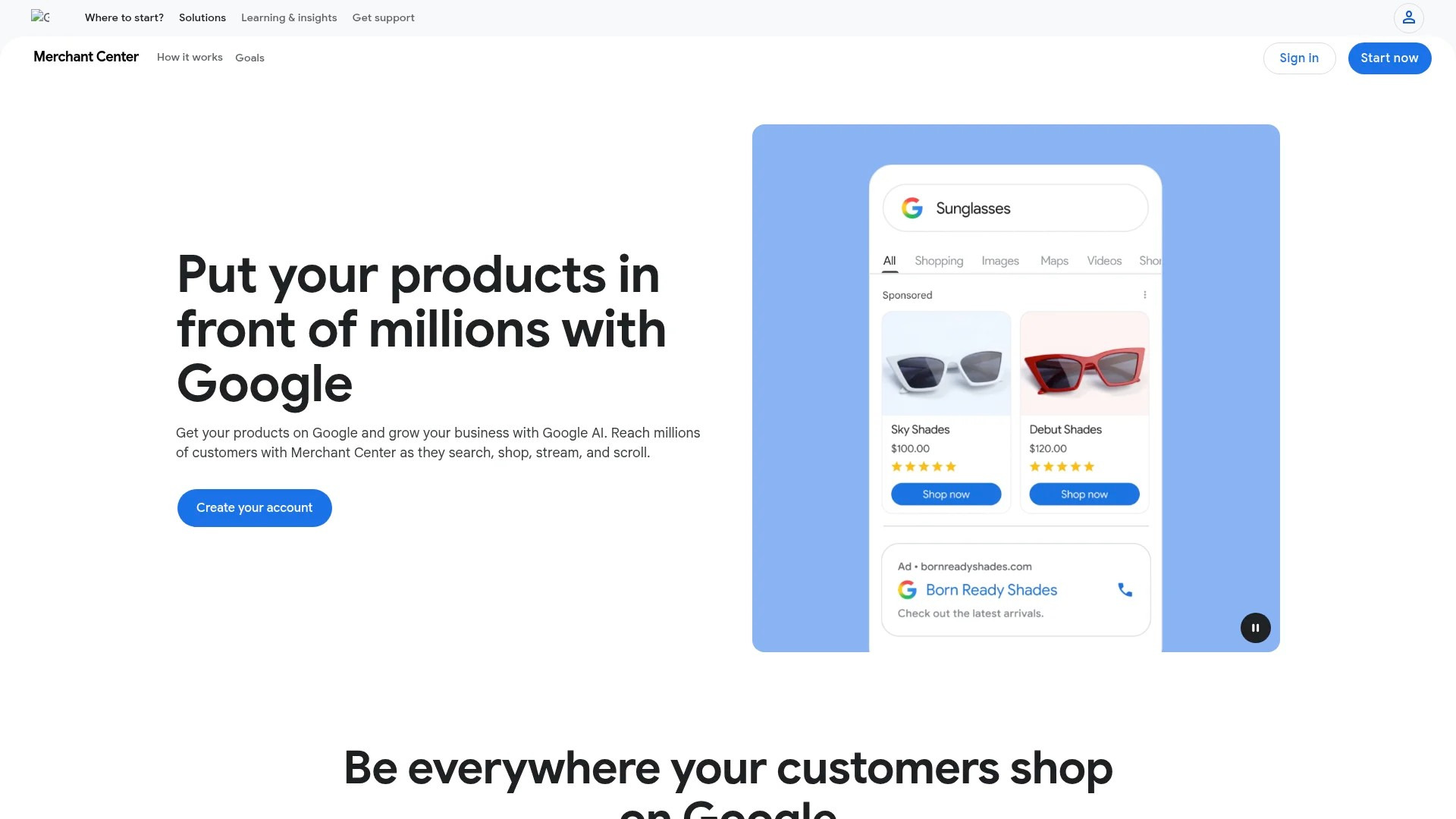
Google Merchant Center: product feed completeness and accuracy drive Shopping visibility and ROAS.
Product data feed optimization is ongoing work, not a setup task. Your feed needs to update daily if your inventory changes, and every product needs a GTIN, accurate pricing, and complete fitment attributes. Sellers who treat the feed as a one-time upload typically see Shopping performance degrade within 60 days as product data drifts out of sync.
For a complete breakdown of ecommerce strategy beyond paid search, the aftermarket auto parts ecommerce success strategies guide covers the full picture from store architecture to fulfillment.
Social media marketing for automotive aftermarket brands works because car enthusiasm is visual, tribal, and deeply shareable. The challenge is that most parts brands treat social as a product catalog broadcast rather than a community channel. That's backwards.
YouTube, Instagram, and TikTok each serve a different function in an aftermarket accessories marketing strategy. YouTube drives sustained SEO value through installation and review content. Instagram builds brand aesthetic and reaches the under-40 buyer segment that SEMA's data identifies as the core accessories market. TikTok moves product discovery fast, particularly for lower-cost accessories with strong visual appeal.
Pick two platforms and do them well rather than spreading thin across five. The automotive aftermarket audience rewards depth. A channel with 40 detailed installation videos will drive more qualified traffic than five channels each posting once a week.
Influencer marketing works differently in the automotive aftermarket than in most consumer categories. The follower count matters less than the build credibility. A YouTuber with 80,000 subscribers who does serious suspension builds will convert more shock absorber sales than an Instagram account with a million followers who posts car photos. Match the influencer to the product application, not the audience size.
Micro-influencers in specific vehicle communities, truck builders, Jeep modders, track day regulars, consistently outperform broad automotive influencers on conversion metrics. They have audiences who trust their technical judgment, which is exactly the credibility transfer your brand needs. Budget accordingly: ten micro-influencer partnerships will typically outperform one mid-tier influencer deal at the same total cost.
Social media strategy for aftermarket brands can draw sharp lessons from how Hoonigan built its brand. The Hoonigan aftermarket brand-building breakdown is worth studying if you want to understand community-first growth in this space.
Email marketing for auto parts and accessories sellers is significantly underused relative to its potential return, particularly on repeat purchase campaigns where vehicle profile data creates a targeting advantage no other channel can match.
The vehicle profile is your email marketing superpower. When a customer buys a cold air intake for a 2020 Subaru WRX, you now know their vehicle. Every subsequent email should use that data. Maintenance interval reminders, compatible upgrade suggestions, fitment-confirmed promotions. Generic "check out our latest products" emails compete with every other retailer in the inbox. Vehicle-specific emails feel like a service.
Segmentation by purchase history and vehicle type lifts email performance across all core metrics. A customer who bought performance parts is a different email audience than a customer who bought interior accessories. Treat them that way. Set up separate welcome sequences, different content tracks, and separate promotional calendars for each segment.
Post-purchase sequences deserve more attention than they typically get in aftermarket ecommerce. An email sent 48 hours after an installation part ships, with a link to your installation guide and a prompt to review the product, does three things at once: it reduces support tickets, generates social proof, and opens the door to the next purchase. That's a lot of work for one automated email.
SEMA forecasts the specialty-equipment market will return to 4%-5% annual growth in subsequent years after post-pandemic normalization. Consistent, above-market growth means the brands that invest in customer retention now will compound that advantage as the market expands. Loyalty programs for parts businesses work best when they reward fitment breadth, encouraging customers to register multiple vehicles and buy across more categories.
Aftermarket accessories marketing performance should be tracked against a short list of metrics that actually connect to business outcomes, not vanity numbers that feel good on a slide deck.
For ecommerce auto parts operations, five metrics drive decisions more than anything else: return on ad spend (ROAS) by channel, conversion rate by traffic source, average order value by product category, customer lifetime value by vehicle segment, and cart abandonment rate by device type. Cart abandonment deserves special mention because it's the most actionable metric most parts sellers ignore. A high abandonment rate on mobile specifically usually points to a fitment verification problem: the buyer isn't confident the part fits their vehicle, so they leave.
Organic search traffic growth is the KPI that reflects your SEO and content marketing investment. Track it at the category page level, not just site-wide. A rising tide of organic visits to your "brake pads" category page means your content and fitment data are earning rankings. Flat or declining category traffic means your SEO work isn't compounding the way it should.
Omnichannel attribution is genuinely hard in the automotive aftermarket because the purchase cycle is long and touches multiple channels. A buyer might discover your brand on YouTube, research on Google, compare on Amazon, and buy on your direct site. Last-click attribution gives all the credit to the final touchpoint and starves your upper-funnel investment of budget justification.
Move to data-driven attribution in Google Analytics 4 and Google Ads as a baseline. It won't be perfect, but it's significantly more accurate than last-click. Supplement with first-party data collection: post-purchase surveys asking customers where they first heard about you remain one of the most underrated attribution tools available.
Track marketplace performance separately from direct ecommerce. Amazon and eBay Motors generate different margin profiles, different customer lifetime value, and different return rates. Mixing them into a single revenue figure hides the true performance of each channel and makes budget decisions harder. Treat each channel as its own P&L line, at least for marketing attribution purposes.
The 2026 digital marketing strategy playbook we've put together covers the full measurement framework for automotive sellers in more detail, including how to structure your reporting dashboards: 2026 automotive digital marketing strategy playbook.
The aftermarket accessories market is large, growing, and full of buyers who actively want to spend money on their vehicles. U.S. aftermarket e-commerce sales are projected to grow 4.6% in 2025, and that growth lands on sellers who've built the digital infrastructure to capture it.
The businesses that win in this space aren't the ones with the biggest ad budgets. They're the ones with tight product data feeds, consistent SEO compounding through fitment-focused content, PPC campaigns that spend only on searches that convert, and email sequences that treat every customer as a vehicle owner with specific needs. That's the strategy. The hype is irrelevant.
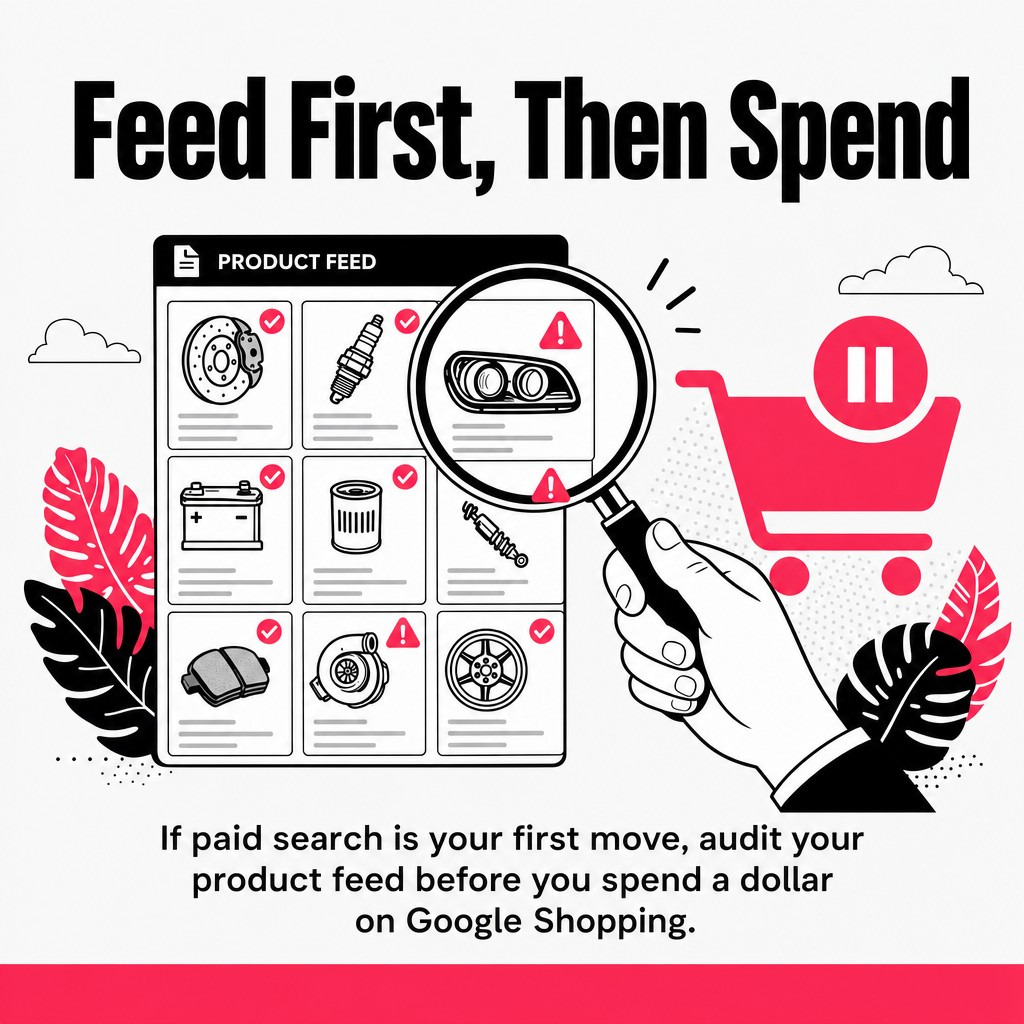
Start with one channel, get it right, measure it honestly, then build the next one on top. If paid search is your first move, audit your product feed before you spend a dollar on Google Shopping. If SEO is your priority, start with your top 20 product pages and add proper fitment titles and descriptions this week. Small, specific, measurable. That's how aftermarket accessories marketing actually compounds.
Check out all of our aftermarketing content with our auto parts marketing & ecommerce guide.