
The automotive industry is going through a major digital transformation as consumers increasingly move online for vehicle research, auto parts purchases, and even full vehicle transactions. In today’s increasingly digital world, this shift is changing how automotive businesses connect with buyers, manage customer experience, and compete in the wider automotive market.
As someone who has spent years helping ecommerce brands strengthen their digital presence, I’ve watched the rise of automotive ecommerce with real interest. What was once a mostly offline business model is now becoming a fast-moving form of digital commerce. This creates major opportunities for automotive businesses, but it also introduces unique challenges around online sales, site performance, and meeting the expectations of modern car buyers.
The numbers behind automotive ecommerce growth are significant. The global automotive ecommerce market is projected to grow from $75.28 billion in 2022 to approximately $213.08 billion by 2029, at a compound annual growth rate (CAGR) of 16.02%. (Source: GlobeNewswire)
This substantial growth goes far beyond new car sales. It reflects expansion across the full automotive ecommerce industry, including auto sales, automotive parts, aftermarket parts, accessories, services, and other forms of digital commerce. The automotive aftermarket is a major contributor here, especially as more consumers turn to shopping online for maintenance items, upgrades, and car parts that help them repair or customize vehicles.
The pre-owned vehicle segment is also gaining momentum, with a projected CAGR of 15.4% in the LAMEA region. (Source: Allied Market Research) This signals strong potential for any automotive ecommerce business serving price-conscious buyers, diy enthusiasts, repair shops, or parts suppliers looking to reach a broader customer base through ecommerce platforms and other ecommerce solutions.
The adoption of automotive ecommerce varies by region, and that creates different opportunities across the global market. North America currently leads with a substantial 39.9% market share. (Source: Coherent Market Insights) This leadership comes from strong digital infrastructure, high purchasing power, and a mature online business environment that supports automotive ecommerce platforms and automotive ecommerce websites.
Europe is also showing strong momentum. The region’s automotive ecommerce market is projected to grow at 16.6% CAGR from 2024 to 2032. (Source: Fortune Business Insights) This growth is being driven by cross-border sales opportunities, innovation in virtual showrooms, and a stronger focus on enabling customers to browse and compare vehicles online.
These regional shifts show that the automotive ecommerce industry is not growing in just one lane. It is expanding across multiple markets, with different demand patterns, customer expectations, and competitive pressures. For brands and dealerships, this creates both opportunity and the need for stronger automotive ecommerce solutions that support localization, scalability, and more control over the digital buying journey.
Like many other areas of ecommerce, the automotive sector got a major push from the COVID-19 pandemic. When physical dealerships faced restrictions, both consumers and automotive businesses turned to online options much faster than expected. One notable example is the sharp rise in pre-owned vehicle sales, which increased by 300% in Q3 2023 according to data from Carlelo. (Source: Expert Market Research)
This was not a small change. It accelerated digital adoption across the automotive market and changed long-term customer behavior. What began as a temporary response quickly became a new standard. Many automotive brands, car dealerships, and other automotive businesses now view online sales as a core part of their strategy rather than an optional add-on.
In many ways, the pandemic turned the transition to automotive ecommerce into a wild ride, pushing both large and small businesses to adapt faster, improve their site experience, and rethink how they support customers across physical and digital channels.
Read more: Discover The Complete Guide to Auto Parts Marketing & Ecommerce for a full look at strategies that help auto parts sellers grow online.
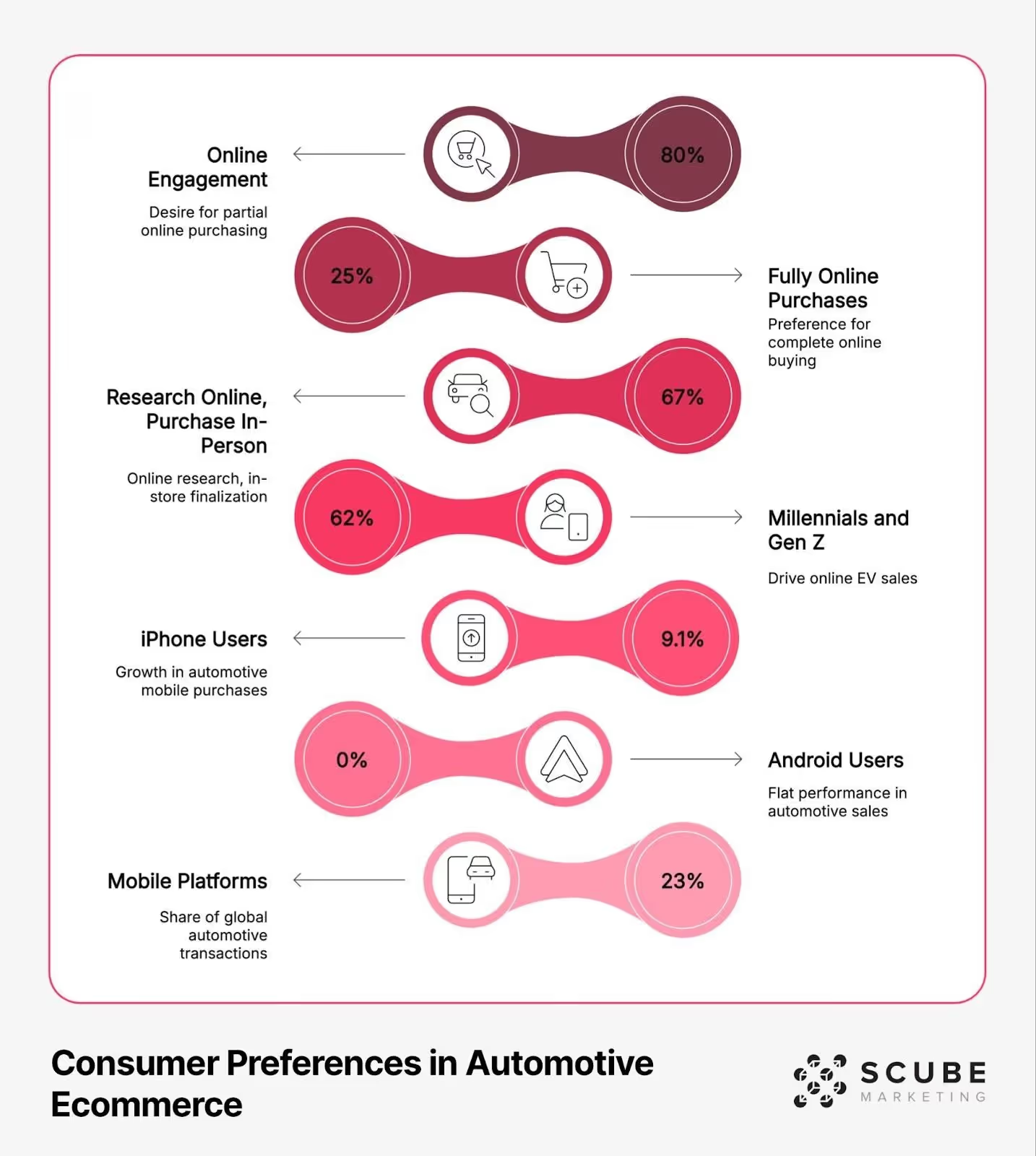
The rise of automotive ecommerce is not being driven by businesses alone. Consumers are actively shaping this shift through their buying habits and expectations. Research shows that 80% of consumers now want to handle at least part of their vehicle purchase online, while 25% prefer fully online purchases. These preferences are especially strong among Millennials and Gen Z, who account for around 62% of online electric vehicle sales. (Source: SkyQuest)
This trend reflects a broader move toward digital first buyers who expect convenience, speed, and easy access to information. They compare pricing rules, review features, and study search results before deciding where to buy. They are also more comfortable with shopping online, whether for vehicles, automotive parts, or services connected to the automotive aftermarket.
An important part of this shift is the rise of hybrid buying behavior. Around 67% of consumers choose their vehicles online but still want to complete the final purchase at physical car dealerships. That tells us the future of automotive ecommerce is not just about replacing the showroom. It is about building a better customer experience that blends digital convenience with real-world trust and support.
For companies in this space, understanding customer behavior is essential. It helps improve customer engagement, strengthen customer satisfaction, and build a real competitive advantage in a crowded market.
Mobile has become a key part of automotive ecommerce. Recent data shows that iPhone users drove a 9.1% growth in gross merchandise value (GMV) in automotive purchases, while Android performance remained relatively flat. (Source: BigCommerce)
Mobile platforms now account for approximately 23% of global automotive online transactions. (Source: IMARC Group) That makes mobile optimization a major factor in boosting conversion rates, improving site performance, and capturing a larger share of ecommerce sales.
For automotive ecommerce websites, this means the mobile experience has to be built carefully. A strong ecommerce website should support fast navigation, clean page layouts, intuitive filters, and smooth checkout. This matters whether the user is browsing auto parts, comparing car sales, or researching products with real time data.
As more car shoppers browse on mobile, brands need automotive ecommerce platforms that deliver speed, flexibility, and reliable performance. Mobile users expect fast answers, accurate product data, and a site that works without friction. Businesses that meet those expectations are in a better position to increase sales and build long-term loyalty.
In the automotive ecommerce space, the audience for auto parts and accessories is broad. The market includes everyday drivers, professional installers, diy enthusiasts, collectors, fleet operators, and repair shops. That means successful automotive ecommerce solutions must serve diverse customer segments with different needs, budgets, and expectations.
SUV owners are especially active in online purchasing, with this category holding a leading share in ecommerce sales. Owners of pre-owned vehicles also represent a large share of the market, partly because rising costs have increased demand for affordable maintenance solutions and aftermarket parts.
For marketers, these patterns matter. Different groups search in different ways, compare different products, and respond to different messaging. Some are focused on speed and fitment. Others care more about price, trust, or special discounts. Many want detailed product data, accurate fitment data, and tools like vin lookup to help them choose the right car parts.
This is where strong automotive ecommerce platforms and better campaign planning make a difference. A well-built strategy using paid search, digital advertising, and a high-performing site can help businesses reach the right customers at the right time. Whether you are selling directly to drivers or supporting other businesses in the supply chain, a more targeted approach can improve conversion rate, increase ecommerce sales, and help grow your automotive ecommerce business.
For those of us working in PPC and growth strategy, understanding these audience segments is critical. A tailored approach across ecommerce platforms, automotive websites, and content can support online sales, expand market share, and create a stronger foundation for long-term success.
Technology is reshaping how consumers discover, evaluate, and purchase automotive products online. In the automotive ecommerce industry, emerging tools like Augmented Reality (AR) and Virtual Reality (VR) are improving how car buyers explore products before making decisions. These innovations support stronger customer experience, better product visualization, and more confidence in digital commerce. AR and VR are already enhancing virtual test drives and customization journeys, allowing customers to preview vehicles, automotive parts, and features before purchase. (Source: DataFeedWatch)
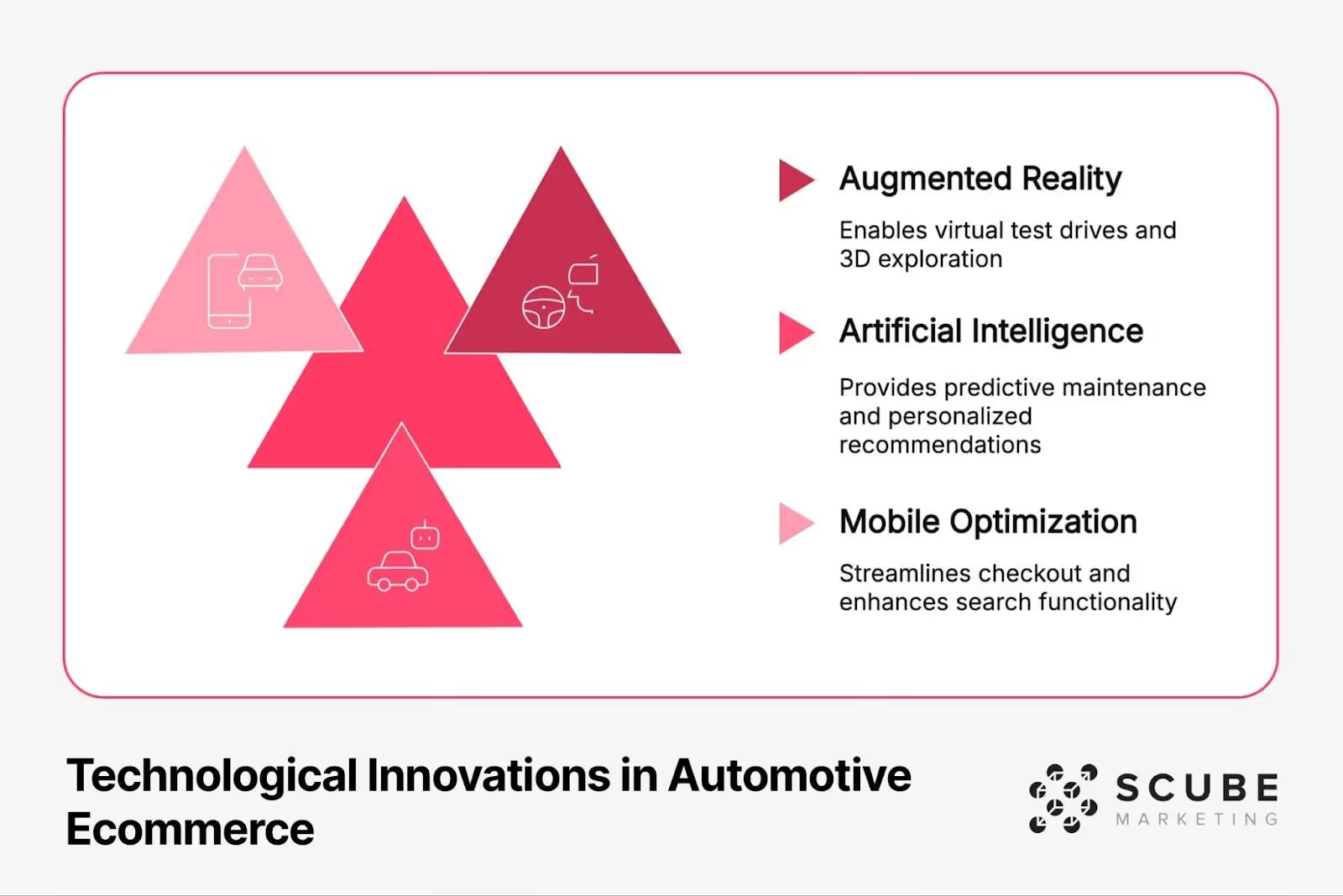
In an increasingly digital world, these tools are becoming an important part of modern automotive ecommerce solutions. They help automotive businesses meet the needs of digital first buyers, support customer engagement, and improve online sales in a highly competitive automotive market.
Tesla offers a clear example of technology-led automotive ecommerce. Its 100% online sales model, combined with over-the-air updates for vehicles, has changed expectations across the automotive sector. While not every automotive ecommerce business or parts supplier will follow that same path, Tesla shows how comfortable consumers have become with digital purchasing. This shift is influencing car sales, auto sales, and the wider automotive aftermarket, where buyers increasingly expect seamless digital journeys.
Virtual showrooms are one of the most exciting developments in automotive ecommerce. These digital spaces allow car shoppers to explore vehicles or automotive parts in detail without visiting a physical location. This helps solve one of the biggest barriers in the automotive ecommerce industry: the lack of physical inspection during the buying journey.
Inside these environments, customers can rotate 3D models, inspect interiors, open doors, and customize colors and features in real time. These tools are especially helpful for automotive ecommerce websites that want to improve customer satisfaction and stand out in a crowded market.
For businesses that focus on auto parts, AR tools are becoming increasingly valuable. These features let customers use mobile devices to visualize how aftermarket parts or accessories will look on their own vehicle before they buy. A shopper can point a phone at their car and preview a new set of wheels, lights, or trim. This supports stronger buying confidence, helps enabling customers to make better decisions, and can play a major role in boosting conversion rates.
For diy enthusiasts, performance-focused buyers, and owners who want to customize vehicles, these experiences make online shopping far more practical. They also give automotive brands and automotive businesses a real competitive advantage over more static automotive websites.
Artificial intelligence and machine learning are also transforming automotive ecommerce. These technologies help automotive ecommerce platforms analyze customer behavior, purchase history, vehicle details, and browsing data to deliver smarter product recommendations and more relevant content.
For any automotive ecommerce business, this can improve ecommerce sales, support stronger customer engagement, and create a better overall customer experience. Recommendation systems in the automotive aftermarket can suggest related car parts, maintenance products, and upgrades based on a buyer’s specific vehicle, preferences, and purchase history.
From an ecommerce marketing perspective, these systems can improve conversion rate, raise average order value, and support long-term online sales growth. They also help businesses work with real time data, which is increasingly important as customers expect faster, more accurate digital experiences.
Examples include:
These innovations support better product data, stronger fitment accuracy, and more personalized ecommerce solutions for both direct buyers and other businesses in the supply chain.
Despite its strong momentum, automotive ecommerce still comes with important challenges. The online car buying market is expected to see substantial growth through 2032, but businesses still face major barriers around trust, operations, and technology integration. (Source: EIN Presswire)
These issues affect every part of the automotive ecommerce business, from complete car sales to auto parts and aftermarket parts. To stay competitive, businesses need systems that support accurate information, strong site performance, and better visibility across multiple channels.
Trust remains one of the biggest barriers in automotive ecommerce. Only about 23% of U.S. buyers currently trust online auto marketplaces, showing that confidence is still a major issue. This affects not only complete vehicles, but also purchases involving automotive parts, accessories, and maintenance-related products.
To build trust, automotive ecommerce websites need clear product details, high-quality images, strong review systems, and accurate specifications. This is especially important in the automotive aftermarket, where buyers need reassurance that the part they are ordering is correct.
Using manufacturer part numbers, detailed product data, and clear fitment data can improve confidence and reduce purchase hesitation. It also helps customers find the right part more quickly, especially when combined with tools like vin lookup and year-make-model search.
For car buyers, trust is built through clarity. For automotive businesses, that clarity leads to better customer satisfaction, fewer returns, and stronger ecommerce sales.
Inventory and fitment are two major challenges in automotive ecommerce. Many businesses manage large catalogs, multiple suppliers, and several ecommerce platforms at the same time. When stock levels are not updated correctly across channels, products may appear available online when they are actually out of stock. This hurts the customer experience, delays orders, and affects trust. In the automotive industry, supply chains are also more complex because they involve OEMs, distributors, retailers, service providers, and parts suppliers.
For sellers of automotive parts, fitment adds another layer of difficulty. Car parts must match exact vehicles, model years, trims, and engine types. That makes accurate fitment data, product data, and vin lookup essential. Without this, businesses risk lower conversion rate, more returns, and weaker customer satisfaction. Strong automotive ecommerce solutions help centralize inventory, improve real time data, and support better search, giving businesses more control and helping buyers find the right parts faster.
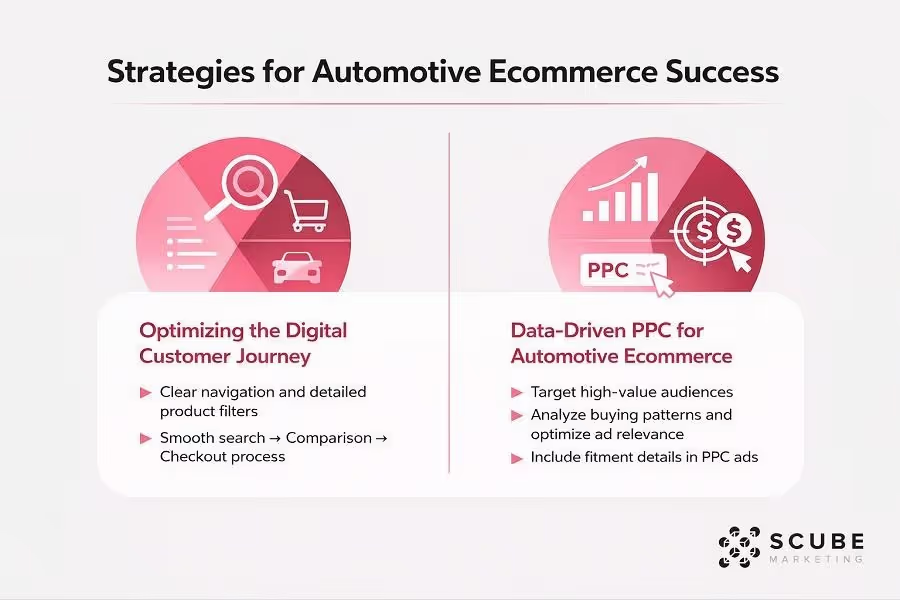
Based on industry trends and experience working with ecommerce brands, several strategies stand out for businesses that want to succeed in automotive ecommerce.
The strongest performers are usually the ones that treat their digital operation as a long-term online business, not just an extra sales channel. They focus on trust, usability, data, and customer support while building a stronger digital foundation for future growth.
A seamless digital journey is critical in automotive ecommerce. That means making it easy for customers to move from search to product evaluation to checkout without confusion. Strong navigation, clear product details, year-make-model filters, and simple checkout flows all support better customer experience.
The most effective automotive ecommerce websites understand that automotive purchases often involve more research than typical ecommerce transactions. Buyers compare products, review compatibility, look for special discounts, and spend time evaluating their options before purchase.
That is why educational content matters. A comprehensive guide, product explanations, installation support, and comparison pages can all help enabling customers to move forward with more confidence. This supports stronger customer engagement, better customer satisfaction, and higher ecommerce sales over time.
Data-driven marketing helps automotive businesses improve both automotive ecommerce performance and automotive sales in a competitive market. By analyzing customer behavior, brands can identify high-value audiences, understand buying patterns, and build more relevant campaigns. This may include targeting specific vehicles, focusing on maintenance needs, or promoting upgrades in the automotive aftermarket. For businesses investing in digital advertising and paid search, data improves ad relevance and helps ads appear in the right search results at the right time.
For sellers of automotive parts, PPC ads should include fitment data whenever possible. Mentioning compatible years, makes, and models helps car shoppers find the right option faster. This improves click-through rates, reduces wasted spend, supports a stronger conversion rate, and gives brands a clear competitive advantage.
The digital transformation of the automotive industry is one of the most important retail shifts in recent years. Looking ahead, several trends are likely to shape the next stage of automotive ecommerce.
As consumers buying cars become more comfortable with digital journeys, the line between physical and digital retail will continue to blur. Businesses that adapt early will be better positioned to gain market share and serve a wider range of diverse customer segments.
Traditional automotive retail and ecommerce are continuing to merge. Hybrid models such as subscription services, buy online and pick up in store, and direct-to-consumer selling are all becoming more common.
For automotive businesses, this opens the door to more flexible e-commerce solutions. It also gives them more ways of selling directly to buyers, rather than relying only on traditional distribution channels.
In the parts space, specialized marketplaces focused on certain vehicle types or enthusiast communities offer interesting opportunities. A business that serves a niche group well can build a loyal customer base, increase online sales, and stand apart from broader ecommerce platforms.
For some brands, a dedicated bigcommerce store or similar ecommerce website may offer the right balance of flexibility, performance, and more control over the full customer journey.
Sustainability is also influencing the future of automotive ecommerce. More consumers are paying attention to the environmental impact of what they buy, including automotive parts, accessories, and maintenance choices.
This creates new opportunities for businesses to promote remanufactured products, parts recycling programs, and solutions that improve fuel efficiency or reduce emissions. In the automotive aftermarket, that message can resonate strongly with both value-focused buyers and environmentally aware consumers.
The growth of electric vehicles is also creating new product categories, from home charging equipment to specialized maintenance tools and related auto parts. Businesses that respond early can strengthen their position in this expanding part of the automotive market.
The shift to automotive ecommerce in the automotive industry brings both challenge and opportunity. The businesses that succeed will be the ones that embrace digital transformation while also responding to the unique demands of automotive buying behavior.
By focusing on trust, smoother digital journeys, stronger use of data, and emerging technology, automotive businesses can build a better online business and compete more effectively in the evolving automotive e-commerce market.
For sellers of automotive parts and aftermarket parts, this transformation also creates access to wider markets and more specific audiences than ever before. Whether you are an established brand, a dealership, a supplier, or a newcomer entering the space, understanding these changes is essential for building success in modern digital commerce.