

Electrical wholesale marketing has moved decisively online, and the numbers back that up: the U.S. Electrical Equipment Wholesaling industry sits at $260.9 billion in market size, while B2B ecommerce across U.S. wholesale distribution grew 13% to reach $2.93 trillion, according to Digital Commerce 360. Roughly 62% of electrical product transactions globally pass through wholesale distribution networks, which means that whoever wins online wins a massive share of a market that isn't slowing down.

I've worked with distributors across industrial supply categories, and the pattern I keep seeing is the same: smart, capable businesses running on relationship-based sales models while their online presence sits gathering virtual dust. That's not sustainable. Electrical contractors shop online now. They compare prices on their phones between job sites. The electrical distributor who meets them wins the reorder. This post gives you seven specific strategies to make that happen.
The global Electrical Wholesaler Market was valued at $470.6 billion in 2024 and is projected to reach $600 billion by 2035, but that growth will not be distributed evenly across the electrical distribution industry.
The distributors who grow will be the ones meeting buyers where buying actually happens. A Gartner analysis confirmed that 80% of B2B sales interactions now occur through digital channels. That's not a soft trend. It's the baseline expectation for every electrical contractor, project manager, and procurement officer searching for electrical supply today.

And yet most independent electrical wholesalers still treat digital marketing as an add-on rather than a core sales channel. That gap is the opportunity. The strategies below are ordered by impact, starting with the foundation.
For a broader look at how these principles apply across the trades, the complete guide to electrical parts marketing and ecommerce covers the cross-channel picture in detail.
A B2B e-commerce website built specifically for electrical wholesale buyers is the single highest-leverage asset an electrical distributor can invest in right now, because 61% of B2B buyers prefer a rep-free buying experience according to Gartner.

That stat should sting a little if your current "website" is a static brochure with a phone number. Electrical contractors don't want to call to check stock at 7am before a job. They want to log in, see their account pricing, check inventory, and place the order in under three minutes.
The must-have features for electrical wholesale e-commerce are account-based pricing, real-time inventory visibility, quick-order forms for part numbers, and mobile-friendly checkout. Digital buying is already central to the channel: one Electrical Trends LinkedIn post notes that 45% of electrical contractors already purchase online, and more than 80% plan to do so in the future. That shift makes a strong case for self-serve infrastructure, and it shows why digital revenue share continues to grow.
Start with a proper B2B platform. Shopify Plus handles B2B pricing tiers natively. BigCommerce B2B Edition integrates with most ERP systems common in electrical distribution. Pick the one that connects cleanly to your existing inventory system, because a product catalog that's out of sync with your warehouse is worse than no catalog at all.
SEO for electrical wholesale businesses directly addresses the moment when a buyer types "electrical supply distributor near me" or "bulk wire pricing commercial electrician" into Google, and 71% of B2B buyers begin their purchase journey with a Google search.

That's seven out of ten potential customers. If your electrical wholesale business doesn't appear in those results, you don't get a chance to compete, regardless of how good your pricing or service is.
Search engine optimization for electrical distributors breaks into three practical areas. Local SEO captures the electrical contractors in your service region: optimize your Google Business Profile with accurate hours, product categories, and photos of your trade counter. Technical SEO keeps your site crawlable and fast. And content SEO, which I'll come back to, builds authority over time.

For the product catalog specifically, every category page needs a unique title tag, a short description that uses the terms your buyers actually search, and structured data markup so Google can parse your inventory. "14/2 Romex 250ft spool" is a search term. "Products" is not. That distinction, applied across thousands of SKUs, is what separates the electrical distributors who rank from the ones who don't.
The SEO strategies developed for lighting distribution map almost directly onto electrical wholesale, and the SEO guide for lighting distributors and energy efficiency keywords covers the keyword research process worth replicating here.
Social media marketing for electrical wholesalers is most effective on LinkedIn, where electrical contractors, project managers, and purchasing directors are actively looking for vendors and supplier updates.
I know what you're thinking: "Do electricians actually use LinkedIn?" Some do. But more importantly, the decision-makers who approve supplier relationships and procurement budgets definitely do. LinkedIn is where an electrical distributor can build the kind of visibility that gets them into a bid conversation before the RFQ goes out.
The content that works on LinkedIn for electrical supply companies is practical and specific. New product arrivals with part numbers. Code compliance updates relevant to your region. Short videos walking through a new product line. Stock alerts for high-demand items. None of this requires a marketing department. It requires someone willing to post consistently, and a content calendar that keeps it from falling off the priority list.
YouTube is worth a mention too. Product how-to videos, installation guides, and panel walk-throughs position an electrical distributor as a resource, not just a vendor. That distinction matters when electrical contractors are choosing between you and a national chain on price alone.
Email marketing for electrical wholesale companies delivers some of the highest returns in B2B digital marketing because the list is already warm: these are customers who have bought from you before and would buy again if reminded at the right moment.
Customer retention is where electrical wholesalers leave the most money on the table. A contractor who bought wire and conduit six months ago and went quiet didn't necessarily switch suppliers. They might have just forgotten, gotten busy, or assumed your pricing wasn't competitive. A well-timed email changes that.
Build three core sequences. A welcome sequence for new account holders that explains your ordering portal, minimum order policies, and account pricing. A reorder reminder sequence triggered 60 to 90 days after a purchase, featuring the same product category the customer bought. And a promotional sequence for clearance stock, new arrivals, and seasonal demand spikes like commercial project season in spring.
Use Mailchimp or Klaviyo for smaller lists. If your ERP exports customer data, connect it. Segmentation by trade type, project size, or purchase frequency makes every send more relevant, and relevant email gets opened. Generic blast email gets unsubscribed.


Paid search for electrical wholesale businesses produces measurable lead generation results fast, especially for high-intent keywords where a contractor is ready to order today rather than researching for next quarter.
The keyword strategy for an electrical distributor is different from a consumer retailer. You're bidding on professional terms: "commercial electrical supply distributor," "bulk conduit pricing," "breaker panels wholesale." These searches have lower volume than consumer terms but dramatically higher purchase intent. One contractor placing a $12,000 project order more than justifies a month of ad spend.
Google Ads shopping campaigns work well for product categories with clear specs and part numbers. Set up product listing ads for your top 50 SKUs by margin, not by volume. A product that moves a lot at low margin should not eat your ad budget. A product that moves moderately at high margin should be front and center.
For a detailed breakdown of paid search strategy built specifically for this sector, the paid search guide for industrial electrical suppliers covers campaign structure, match types, and bid strategy in practical terms.
Data-driven sales strategies for electrical distributors turn existing customer purchase history into a systematic up-sell and cross-sell engine, and most electrical wholesalers are already sitting on the data they need without using it.
Your ERP knows which customers buy wire but never buy conduit fittings. It knows which accounts reorder frequently versus which ones haven't touched you in four months. It knows which product categories have the widest margin spread between what customers currently buy and what they could upgrade to. That's a sales opportunity list sitting in a database, waiting to be turned into a campaign.
The practical steps here are straightforward. Export a customer segment report monthly: accounts active in the last 90 days, sorted by product category. Flag anyone buying Category A without ever buying the natural complement Category B. Hand that list to your inside sales team with a script, or feed it into your email system for an automated cross-sell sequence.
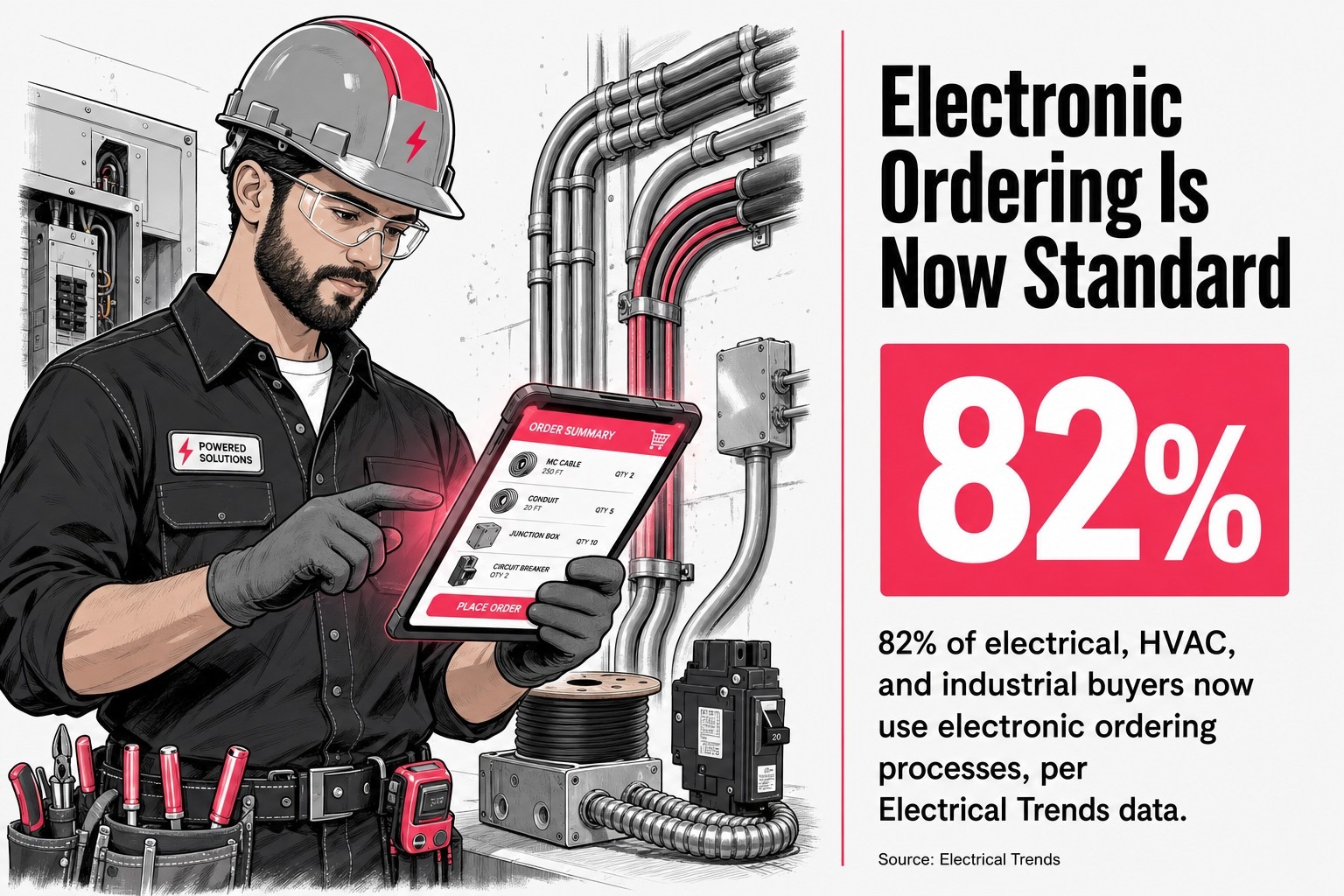
Electrical Trends data shows 82% of electrical, HVAC, and industrial buyers now use electronic ordering processes, which means the behavioral data trail is richer than it has ever been. An electrical distributor that connects its ERP to its CRM and marketing tools will spot patterns a sales rep relying on memory simply cannot.
This is the same logic that drives revenue growth for B2B industrial distributors. The 3x revenue growth case study for a B2B industrial and utility distributor shows what systematic data use looks like in practice for a business with a comparable distribution model.
Online marketplace management is a direct lead generation channel for electrical wholesalers, with Amazon Business projected to generate $83.1 billion in gross merchandise value, making it too large to ignore as a sales channel alongside your own e-commerce site.
The strategic question isn't whether to list on Amazon Business. It's how to do it without cannibalizing your direct channel or training customers to bypass your pricing. The answer is product selection strategy: list commodity SKUs with competitive pricing to attract new accounts, while keeping exclusive products, custom pricing tiers, and account-specific deals on your own B2B portal.
Amazon Business gives electrical contractors a familiar purchasing interface with business account features. Getting in front of them there, and then converting them to direct account holders through better pricing and service, is a real acquisition funnel. Not glamorous. But it works.
Beyond Amazon, Zoro and Grainger's marketplace reach industrial and commercial buyers who might not find your branded site directly. A marketplace presence, managed carefully, extends your digital footprint without requiring the same SEO investment your own site demands.
B2B buyers now use an average of 10.2 interaction channels during a purchase decision, according to research compiled by OmniBound. That's more than double the five channels buyers used in 2016. An electrical wholesaler present across its own site, Google search, paid ads, email, and at least one marketplace covers most of those touchpoints. One that only has a trade counter and a phone number covers almost none of them.
Content marketing for electrical wholesale companies builds compounding search engine optimization value over time, and 95% of B2B decision-makers report that strong thought leadership makes them more receptive to sales and marketing outreach.
That's not about writing corporate white papers. It's about answering the questions your electrical contractors actually type into Google. "What breaker panel is best for a 200-amp residential upgrade?" "NEC 2023 changes for commercial wiring." "How to spec wire gauge for a 50-amp circuit." If your electrical wholesale business publishes useful answers to those questions, you appear when contractors are in research mode, before they even have a supplier in mind.
The publishing frequency matters more than most electrical distributors expect. Companies publishing 16 or more blog posts per month generate 4.5x more leads than infrequent publishers, according to research on B2B content performance. That's a high bar for a distributor without a marketing team. Start with two posts per month on high-intent topics and build from there. Four posts a month beats zero posts every time.
The digital marketing guide for electrical parts covers content strategy and channel prioritization for businesses at exactly this stage of building out their online presence.
The electrical distribution industry is not waiting for stragglers. National distributors are scaling their digital marketing budgets, and regional independents have a narrow window to build search authority and direct customer relationships before that ground becomes harder to take. Seven strategies, one at a time. Start with your B2B e-commerce site, get your SEO fundamentals in place, and build the email and content engine behind it. The electrical wholesalers who act on this now won't be scrambling to catch up in two years. They'll be the ones everyone else is trying to catch.