
Most marine parts dealers treat online channels like an afterthought. They're leaving serious money on the table.
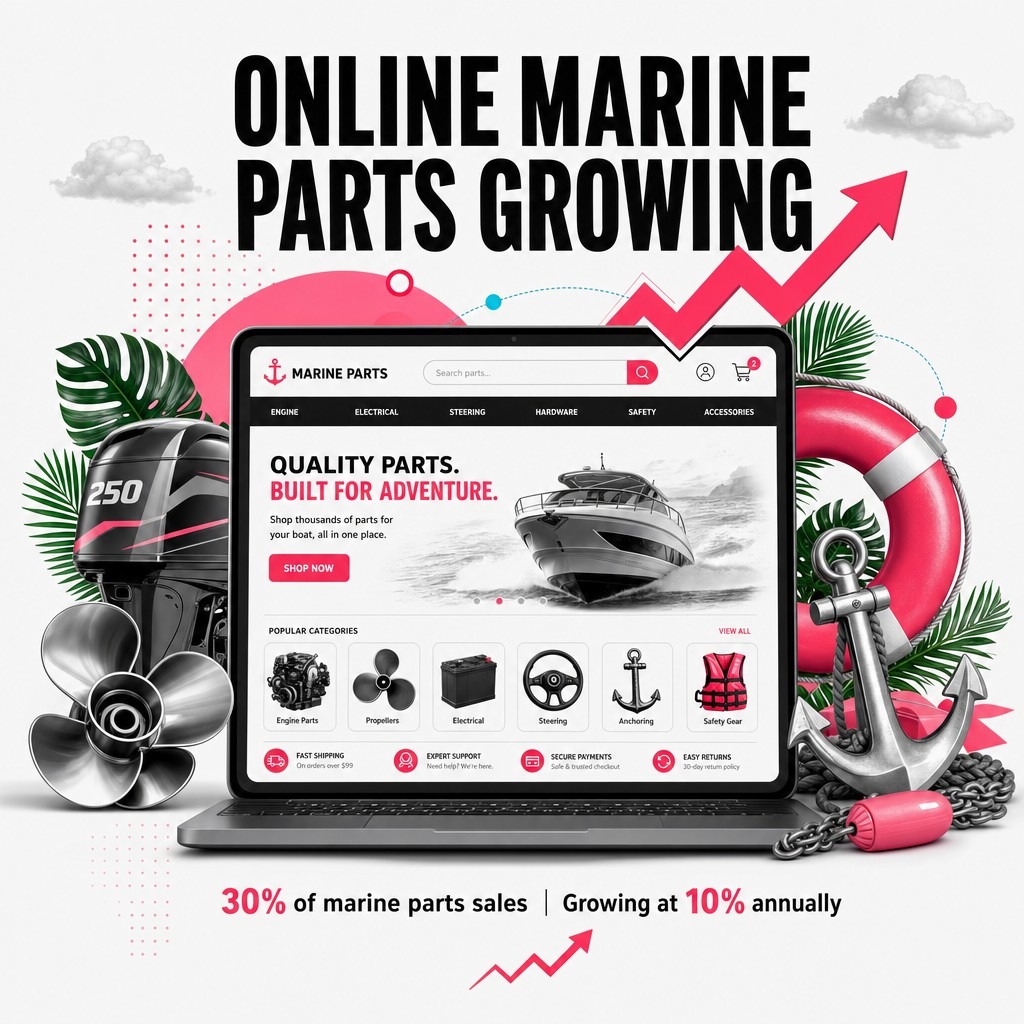
Online channels account for roughly 30% of marine parts sales and are growing at approximately 10% annually. That's not a side hustle anymore. That's a revenue stream begging for optimization.
I've spent years helping eCommerce businesses squeeze better performance from digital channels. The marine parts industry? It's ripe with opportunity precisely because so many dealers haven't figured this out yet.
The dealers who are winning aren't just throwing up a website and hoping boat owners stumble across it. They're using data, optimizing inventory decisions, and treating digital marketing like the revenue engine it actually is.
This guide walks through eight specific strategies that actually move the needle on marine parts sales. No fluff about "building your brand presence." Just tactics that increase revenue and profitability when you implement them correctly.
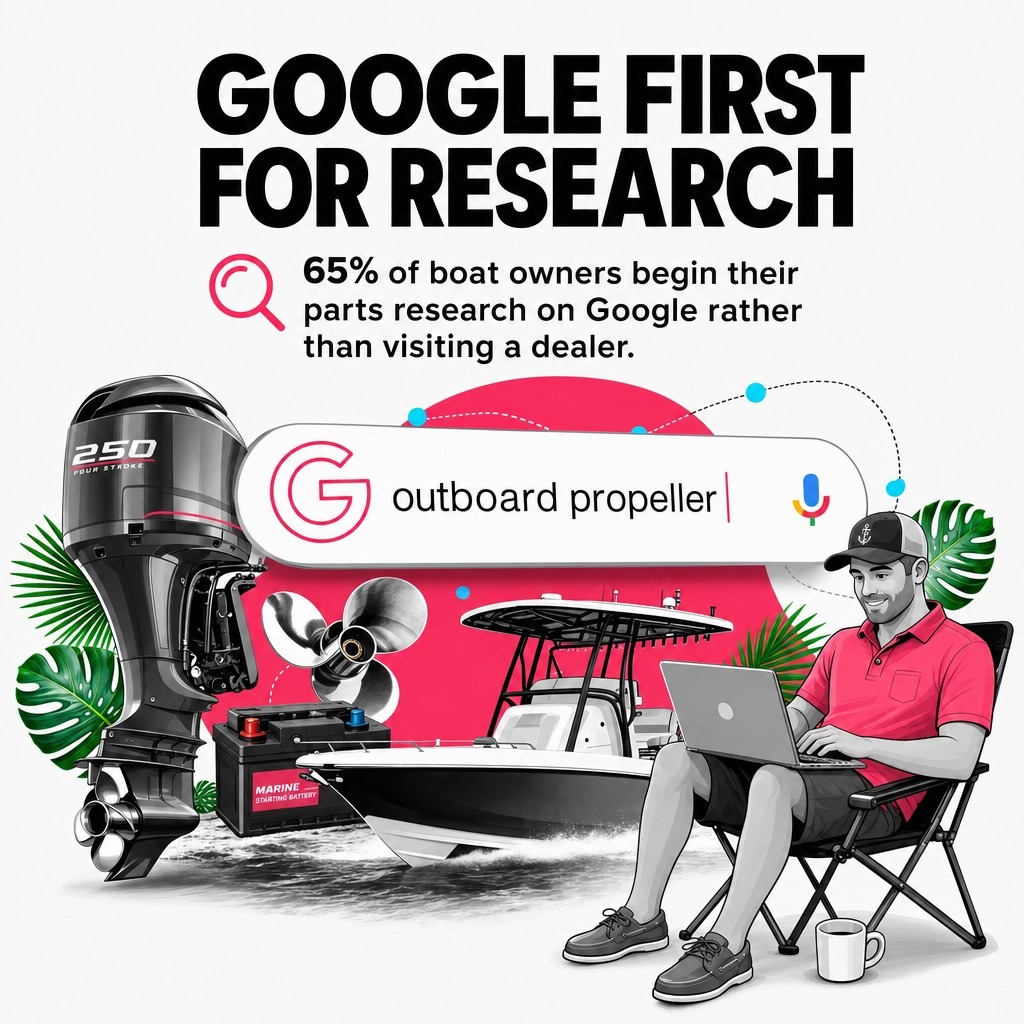
65% of boat owners begin their parts research on Google rather than visiting a dealer. Read that again. Your customers are already looking for you online. The question is whether they're finding you or your competitors.
Here's what that means practically: when a boat owner needs a replacement impeller at 9 PM on a Tuesday, they're not driving to your physical location. They're searching online. If your product catalog isn't optimized for search, you've lost the sale before you even knew it existed.
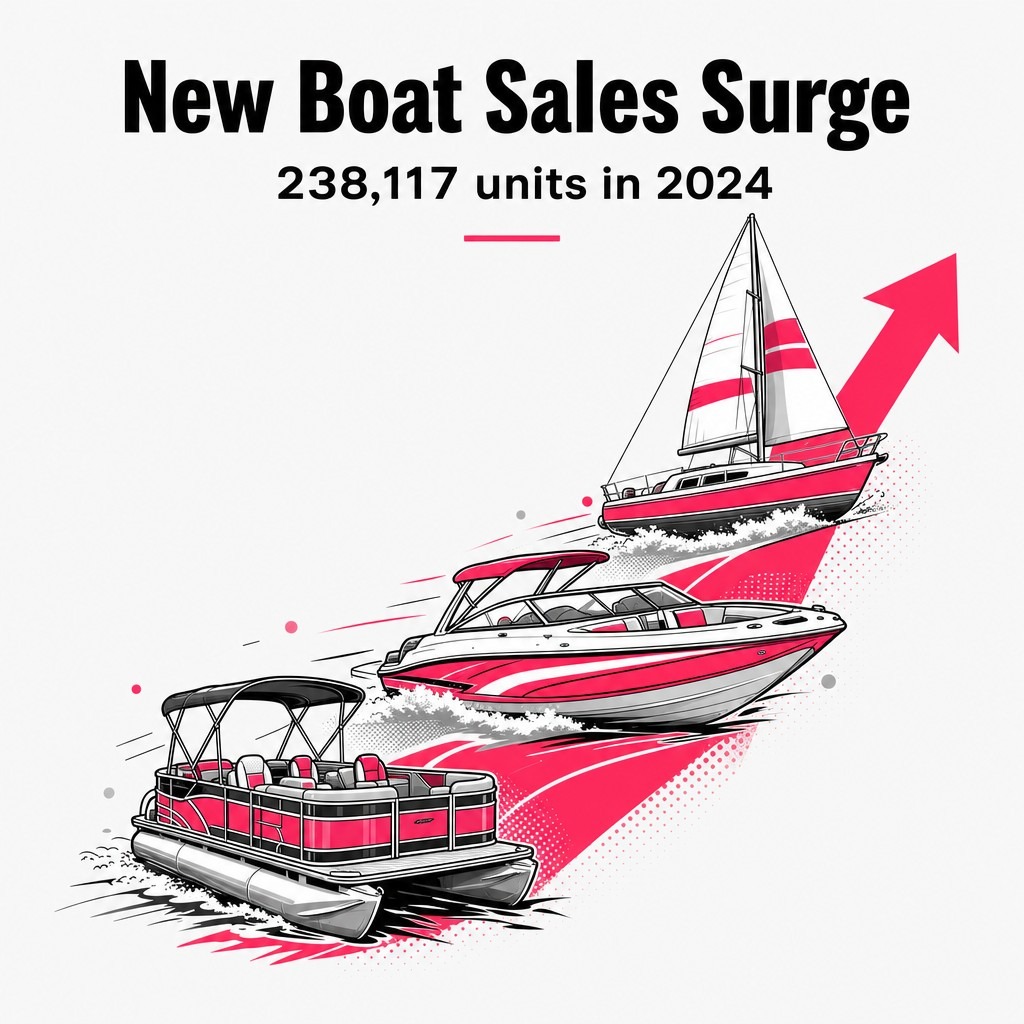
The marine parts market hit significant scale recently. New boat sales accounted for 238,117 units in 2024. Every one of those boats will need maintenance parts, upgrades, and repairs. That's your addressable market.
Start by tracking where your current online sales come from. Most boat owners follow a predictable path: problem identification, parts research, compatibility verification, price comparison, then purchase.
Your job is to show up at every stage. That means product listings for broad searches, detailed compatibility information for research, and clear pricing with availability for comparison.
Use your analytics to identify which products generate the most searches but convert poorly. Those are your optimization opportunities. Fix the product information, add better images, clarify specifications.
Not all boat owners need the same parts at the same frequency. Research shows six distinct customer segments exist in the boating market. Your marketing should reflect that diversity.
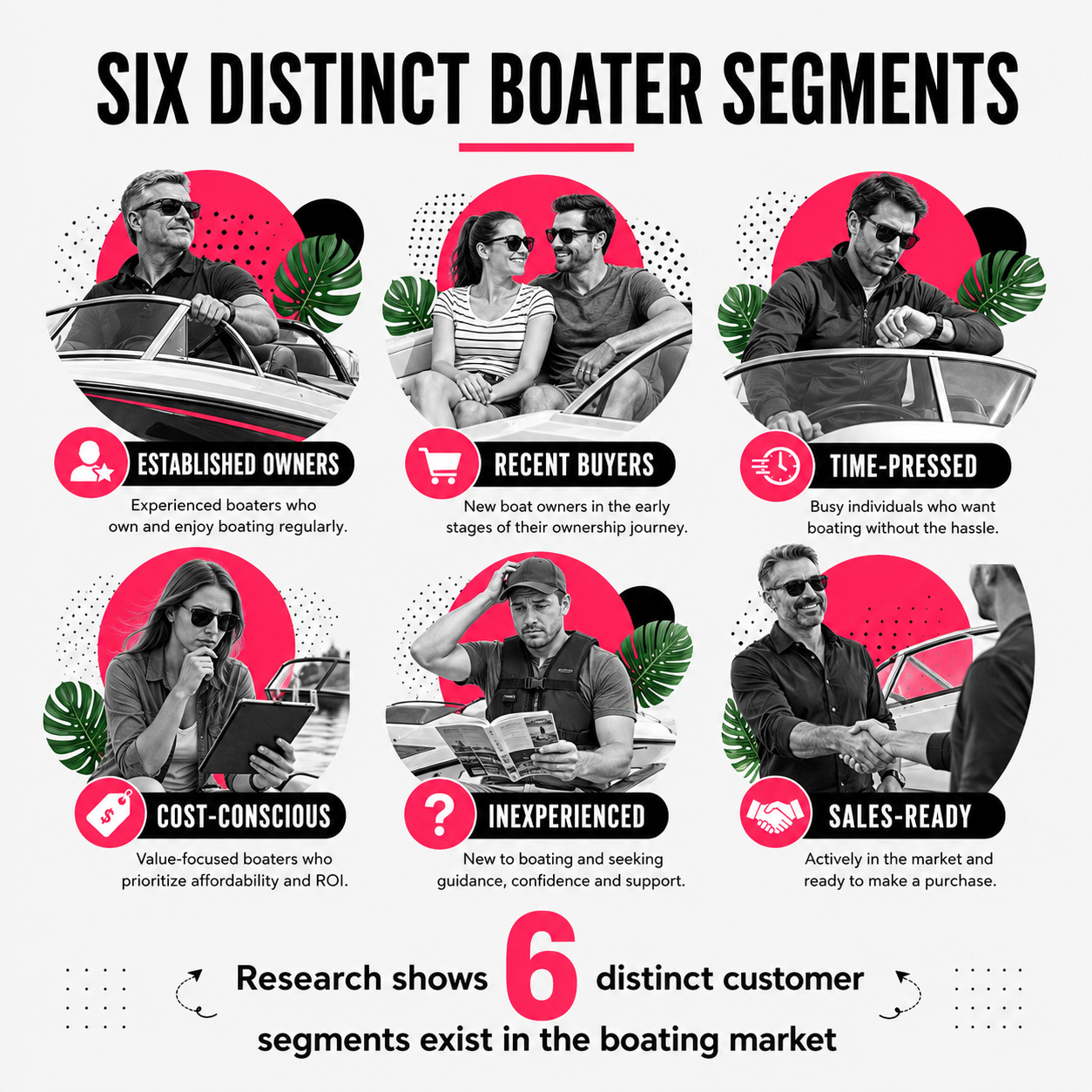
Saltwater fishing boat owners need corrosion-resistant parts regularly. Recreational pontoon owners need different seasonal maintenance items. Tournament bass fishermen prioritize performance upgrades.
Create email segments and product recommendations based on boat type. Your conversion rate will improve immediately because you're showing people parts they actually need instead of generic inventory.
Inventory management separates profitable marine parts dealers from the rest. You can't sell what you don't have, but excess inventory kills cash flow and margins.
Smart dealers use sales data to predict which parts move quickly and which collect dust. They stock fast-moving maintenance items deeply and order specialty parts on demand.
Your inventory should reflect actual customer demand, not what you think boats need. Pull sales data from the last 12 months. Identify the top 20% of SKUs that generate 80% of revenue.
Stock those items aggressively. Boat owners buying oil filters, impellers, and spark plugs want them now. They'll pay a premium for immediate availability.
For slower-moving specialty parts, establish relationships with distributors who drop-ship. You capture the sale without the inventory carrying cost.
Marine parts sales follow predictable seasonal patterns. Spring brings winterization parts removal and summer prep. Fall means winterization supplies.
Build your inventory calendar around these cycles. Order engine maintenance parts in February and March. Stock winterization chemicals in September and October.
Track year-over-year growth by category. If your outboard motor parts sales grew 15% last year, plan inventory accordingly for this year.
Commodity parts like oil and filters face price competition. Specialty parts with limited availability support higher margins. Your pricing strategy should acknowledge this reality.
Use dynamic pricing tools to stay competitive on commodity items while maximizing margin on unique products. Monitor competitor pricing weekly, adjust strategically.
Data-driven strategies help dealers make smarter pricing decisions across their entire inventory mix.
Getting a customer to your site is expensive. Once they're there, your job is to maximize the value of that visit. Average order value directly impacts profitability.
Most boat owners don't realize what else they need until you show them. A customer buying a water pump impeller probably needs the gasket kit too. Show it to them.
Create pre-packaged maintenance kits that include everything needed for specific jobs. An "Annual Outboard Service Kit" with oil, filters, spark plugs, and lower unit grease sells better than individual components.
Price bundles at a 10-15% discount versus buying items separately. Customers perceive value, you increase average order value. Everyone wins.
Promote these bundles prominently on product pages and in email campaigns. Make buying the complete solution easier than piecing it together.
When someone buys a stainless steel propeller, recommend propeller installation tools and marine grease. When they buy electronics, show them the appropriate wiring kits and connectors.
Your eCommerce platform should automatically suggest complementary products at checkout. Don't make this manual. Automate the recommendations based on what previous customers bought together.
Test different recommendation placements: product pages, cart page, checkout page. Measure which location generates the highest attachment rate.
Free shipping at $99 or $149 encourages customers to add one more item. They're already buying marine parts. Give them a reason to expand the order.
Clearly display how much more they need to spend to qualify. "Add $23 more for free shipping" converts better than hiding the threshold.
Consider tiered incentives. Free shipping at $99. Free shipping plus 5% off at $199. The psychology works.
Your product listings do the selling when you're not there. Most marine parts dealers phone this in. Blurry photos, vague descriptions, missing specifications.
Boat owners need detailed compatibility information before they'll buy. They're not gambling on whether a part fits their specific motor. Give them the confidence to purchase.
Every product listing needs complete specifications: dimensions, materials, compatible models, part numbers. This isn't optional. It's what separates a sale from a bounce.
Include OEM part numbers and aftermarket equivalents. Boat owners search using both. If you only list one, you're invisible to half your potential customers.
Structure descriptions consistently across all products. Specifications section, compatibility list, installation notes, warranty information. Customers should know where to find each detail.
One small thumbnail photo doesn't sell marine parts. Customers need to see the product clearly, understand its size relative to familiar objects, and verify it matches what they need.
Minimum four photos per product: main view, alternate angle, detail shot, packaging or scale reference. More for complex items like electronics or steering systems.
Enable zoom functionality. Boat owners want to read part numbers stamped on products and verify connector types. Let them inspect virtually.
Create filterable search that lets customers find parts by boat make, model, year, and engine type. This is table stakes for serious marine parts eCommerce.
Manually tag every product with compatible applications. Yes, it's tedious. It's also how you capture sales from customers who start with "I have a 2019 Yamaha F150, what oil filter do I need?"
Display fitment information prominently on every product page. Don't bury compatibility in a description paragraph. Make it impossible to miss.
Your website is your digital storefront. If customers can't find products quickly, they leave. Marine parts websites need better navigation than general eCommerce sites because the products are technical.
Boat owners often search three ways: by part type, by brand, or by what fits their specific boat. Your site architecture should support all three.
Main navigation by category: engine parts, electrical, plumbing, steering, electronics. Standard eCommerce structure that works.
Secondary navigation by brand: Mercury, Yamaha, Honda, Garmin. Brand-loyal boat owners prefer shopping this way.
Fitment search tool: enter boat details, see only compatible parts. This is your competitive advantage if you build it well.
Boat owners shop from their phones at the dock, in their garage, at the boat ramp. Your mobile experience better be flawless.
Test your site speed using Google PageSpeed Insights. Anything under 70 needs work. Compress images, minimize code, use faster hosting.
Simplify mobile checkout. Every extra field you require costs you sales. Name, email, shipping address, payment. That's it.
Your site search needs to recognize synonyms, part numbers, and common misspellings. "Impellor" and "impeller" should return the same results. "Lower unit oil" and "gear lube" need to match.
Build a custom synonym dictionary for your search engine. Map technical terms to common language. Connect OEM numbers to aftermarket equivalents.
Track failed searches in your analytics. If customers search for something and get zero results, that's a signal you're missing either products or search optimization.
Remember that 65% of boat owners starting their research on Google? You need to show up in those search results. Not on page three. In the top five results.
Marine parts SEO isn't complicated, but it requires consistent execution. Product pages optimized for specific part searches, category pages targeting broader queries, content that answers common questions.
Boat owners searching for specific part numbers have the highest purchase intent. They know exactly what they need. Rank for those searches.
Include the full part number in your title tag, URL, and product name. Create unique descriptions for each part, don't duplicate manufacturer copy.
For a detailed strategy on this, check out our guide on optimizing marine parts SEO with part numbers.
People search "boat fuel filters," "marine water pumps," "outboard motor parts." Your category pages should rank for these broader terms.
Write substantial category descriptions, not two sentences of generic text. Explain what the products do, common applications, how to choose the right one.
Link between related categories. Your "fuel system" category should link to "fuel pumps," "fuel filters," and "fuel lines." Internal linking helps SEO and user navigation.
Boat owners research installation procedures, maintenance schedules, and troubleshooting. Create content that answers these questions and links to relevant products.
"How to Change a Water Pump Impeller" with step-by-step instructions and links to impellers, gaskets, and tools you sell. That's useful content that drives sales.
For broader strategies applicable to marine parts, see our article on SEO for aftermarket parts sales growth.
Email marketing remains one of the highest-ROI tools for marine businesses. Most boat owners need parts multiple times per year. Email keeps you top-of-mind.
The key is relevance. Generic "20% off everything" emails get ignored. Targeted messages based on previous purchases and boat type generate sales.
Track what customers bought and when. Three months after an oil purchase, send a maintenance reminder with a direct link to reorder.
Before boating season starts, email winterization product buyers with de-winterization reminders and product suggestions.
These emails require upfront setup but run automatically afterward. Build them once, generate repeat revenue indefinitely.
Customers who buy Mercury parts don't need Yamaha promotions. Electronics buyers differ from fishing accessory buyers.
Create segments based on brand preferences, product categories purchased, and spending levels. Send targeted content to each segment.
High-value customers get early access to sales and premium products. Budget-conscious buyers get clearance notifications and bundle deals.
Your email open rate directly impacts revenue per send. A 20% open rate versus 15% is significant money over time.
Test subject lines: questions versus statements, urgency versus information, personalization versus generic. Track what your audience responds to.
Test send times: weekday mornings, weekend afternoons, Thursday evenings. Boat owners have different schedules than typical consumers.
For specific tactics that work, read our guide on email marketing strategies for parts retailers.
Social media for marine parts isn't about going viral. It's about consistent visibility with your target audience when they're thinking about boating.
Boating social media engagement averages just 1.3%. That's actually not bad for an industry selling parts, not entertainment.

Focus on platforms where boat owners actually spend time: Facebook groups, YouTube for how-to content, Instagram for lifestyle appeal.
Post maintenance tips, seasonal checklists, and troubleshooting guides. "How to prep your boat for storage" in October gets shared. "Buy our parts" doesn't.
Video content performs particularly well. A 60-second clip showing how to replace a fuel filter helps customers and subtly promotes your products.
Answer common questions publicly. When someone asks about compatible parts in a forum or group, provide a helpful answer with a link. That's boat parts marketing that doesn't feel like marketing.
Facebook has thousands of boat-specific groups: bass fishing, offshore fishing, pontoon owners, specific boat brands. Join the relevant ones.
Don't spam with promotions. Participate genuinely. Answer questions, share knowledge, occasionally mention products when directly relevant.
Building reputation in these communities takes months but generates consistent referral traffic and sales. Play the long game.
Facebook and Instagram ads let you target by location and interests. "People interested in boating within 50 miles" is your audience.
Promote seasonal products at the right time. Boat covers in fall, water toys in spring, maintenance kits before summer.
Retarget website visitors who didn't purchase. Show them the specific products they viewed. Conversion rates on retargeting ads significantly exceed cold traffic.
Revenue is the ultimate metric, but you need leading indicators that tell you what's working before the month ends.
Track conversion rate by traffic source. If organic search converts at 3% but paid ads convert at 1%, you know where to focus optimization efforts.
Monitor average order value monthly. If it's declining, your cross-sell strategy needs work. If it's growing, double down on what's working.
Watch your email list growth and engagement rates. A shrinking or disengaged list predicts future revenue problems.
For comprehensive guidance on tracking the right metrics, see our article on eCommerce KPIs for parts businesses.
The recreational boat market is projected to reach $24.64 billion by 2032, growing at 6.4% annually. That growth means more boats needing more parts.
The dealers who capture that opportunity will be the ones treating digital channels as critical revenue drivers, not afterthoughts. They'll use data to make inventory decisions, optimize their online presence for search, and communicate consistently with customers through email.
Pick two strategies from this guide and implement them completely this quarter. Not all eight simultaneously. Two, done well.
Most dealers will read this and do nothing. That's your opportunity.