Most marine LED lighting companies miss their highest-converting traffic because they ignore part number optimization. When someone searches "Lumitec SeaBlaze3 101143" or "Hella NaviLED PRO 2LT 959520001," they're not browsing. They're buying.
Part numbers deliver purchase-ready traffic that generic terms like "boat lights" never will. The challenge? These searches have tiny volumes individually, but collectively they drive massive qualified traffic.
I've spent years optimizing product feeds for parts-based businesses. The marine LED lighting industry has unique SEO challenges because you're competing against massive marine retailers and OEM sites.
But here's what matters: 65% of boat owners begin their parts research on Google rather than visiting a dealer. If your part numbers don't rank, you're invisible to two-thirds of your potential customers.
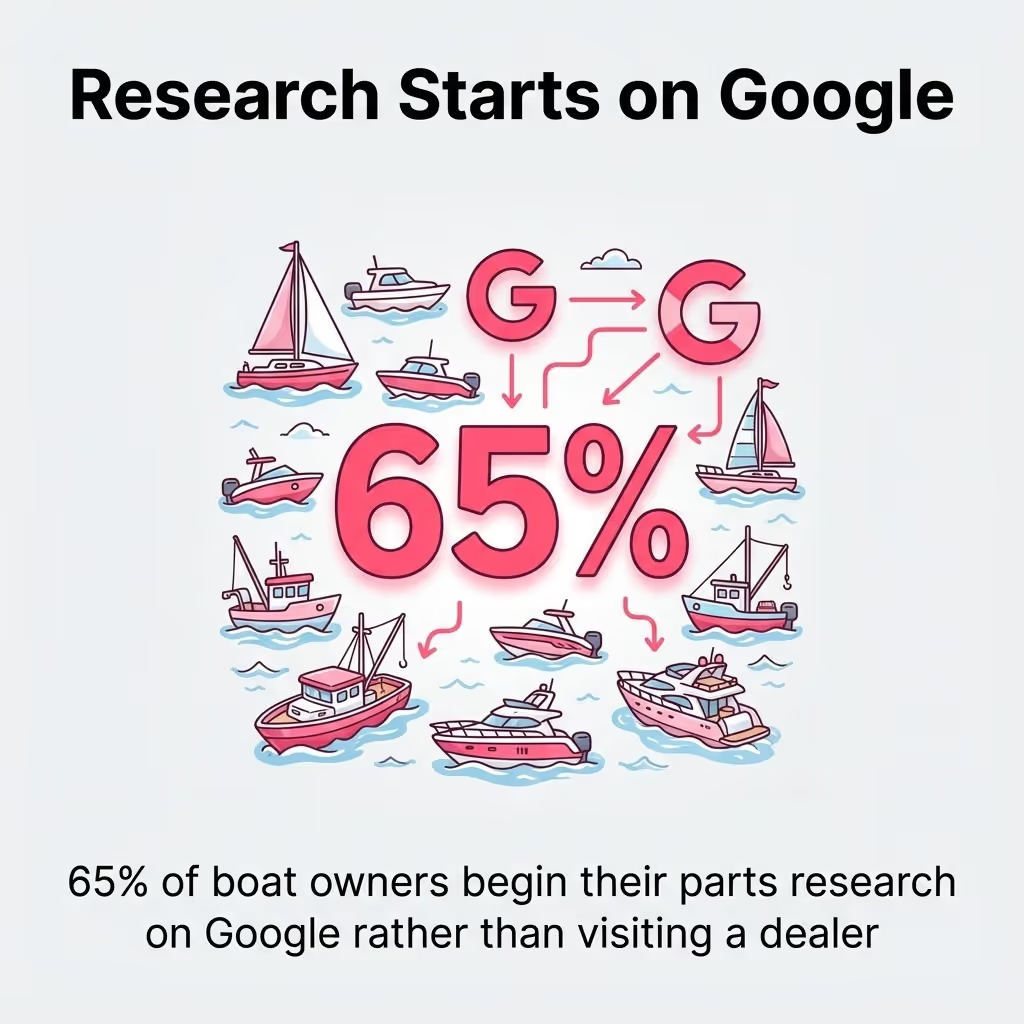
65% of boat owners start their parts research on Google—be there when they search.
This guide shows you exactly how to dominate part number rankings in the marine LED lighting space. You'll learn keyword research strategies, technical SEO requirements, and product page optimization tactics that actually work.
The marine LED lighting market is growing steadily, and online channels are capturing more sales every year. Getting your part numbers ranking now positions you ahead of competitors who treat ecommerce SEO as an afterthought.
Part numbers represent your highest-intent traffic. Someone searching for a specific part number already knows what they need and they're ready to buy.
Generic searches like "marine LED lights" attract browsers. Part number searches attract buyers with purchase orders ready.
Online channels account for 30% of marine parts sales and are growing at 10% annually. That growth is happening in part-number-specific searches, not general browsing.
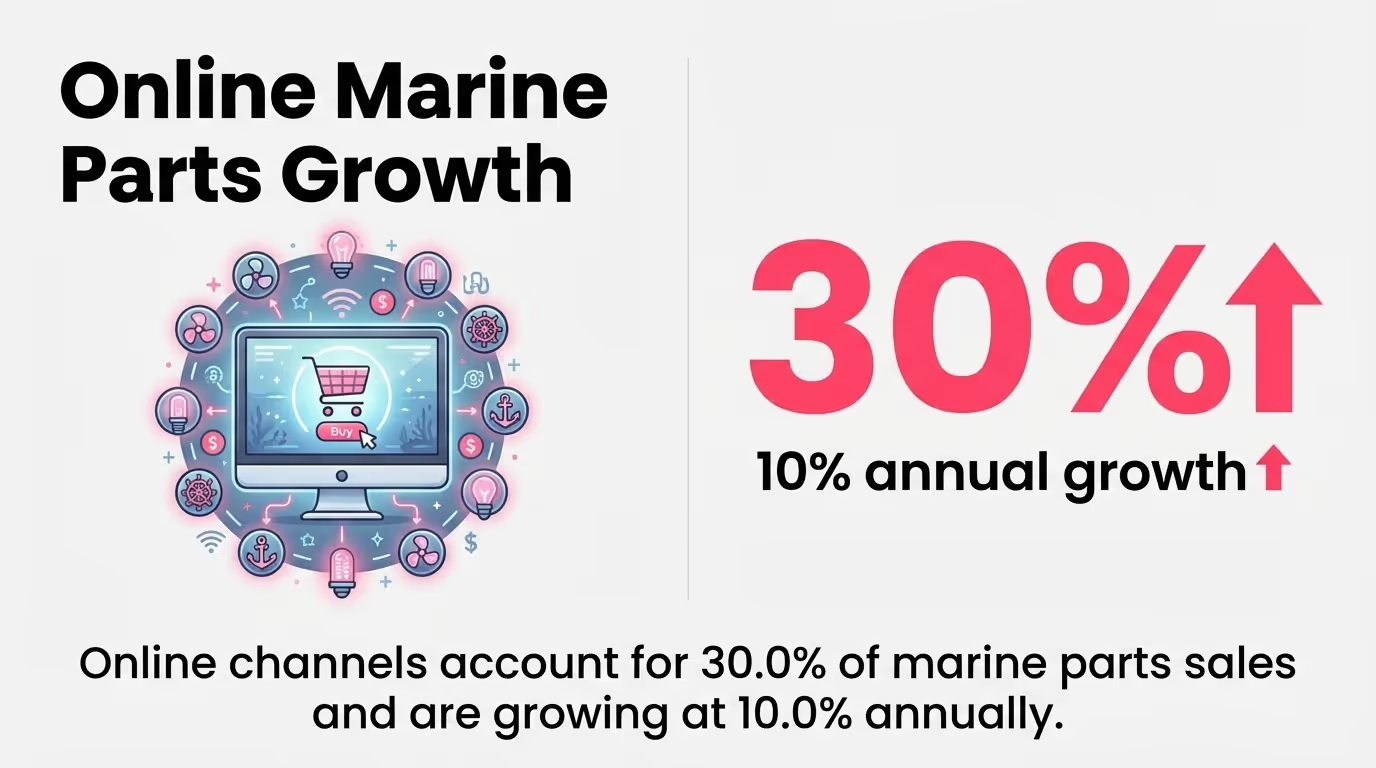
Online marine parts now drive 30% of sales and are growing 10% yearly—fueling part-number demand.
The marine lighting market differs from automotive or general lighting. Your customers include boat manufacturers, marine electricians, yacht service centers, and serious boat owners.
These buyers search differently than retail consumers. They use manufacturer part numbers, compatibility specifications, and technical terms.
When you rank for part numbers, you capture demand that already exists. You're not creating awareness or educating buyers about problems they don't know they have.
Part number rankings deliver better ROI than generic keyword rankings. The math is simple.
A generic term like "boat LED lights" might get 2,000 searches monthly. But those searches convert at low rates because searchers are in research mode.
A specific part number like "Lumitec 101143" might only get 40 searches monthly. But those 40 searches convert at dramatically higher rates.
Multiply this across your entire catalog. If you carry 500 LED lighting part numbers, that's 500 opportunities for high-converting traffic.
Understanding search intent helps you optimize correctly. Part number searches fall into specific categories.
Direct part lookup: "Lumitec 101143" means someone has the exact part number and wants to buy it or verify compatibility.
Cross-reference searches: "Hella 959520001 equivalent" means someone needs an alternative or wants to compare options.
Specification searches: "SeaBlaze3 specifications" means someone is verifying technical details before purchase.
Your product pages need to satisfy all three intent types. This means including complete specifications, compatibility information, and cross-reference data.
The marine LED lighting space has specific SEO dynamics. You're competing against West Marine, Defender, Amazon, manufacturer direct sites, and specialized marine retailers.
These competitors have established domain authority and massive backlink profiles. You can't out-muscle them with domain authority alone.
Your advantage comes from specialization and comprehensive product data. Sites with complete part information, detailed specifications, and proper technical SEO win part number rankings.
Your real competitors aren't always who you think they are. For part number rankings, you're competing against whoever has the most complete product information.
Run searches for your top 20 part numbers. Note who ranks in positions 1-3 for each.
Analyze their product pages using these criteria: page title optimization, meta description quality, product description completeness, specification detail, image quality and quantity, schema markup implementation, page load speed, and mobile optimization.
Look for patterns. Are the top-ranking pages using specific schema types? Do they include certain data fields you're missing?
The global recreational boating market was valued at $23 billion in 2020 and is projected to reach $35 billion by 2027, at a CAGR of 6%. This growth drives demand for replacement parts and upgrades.
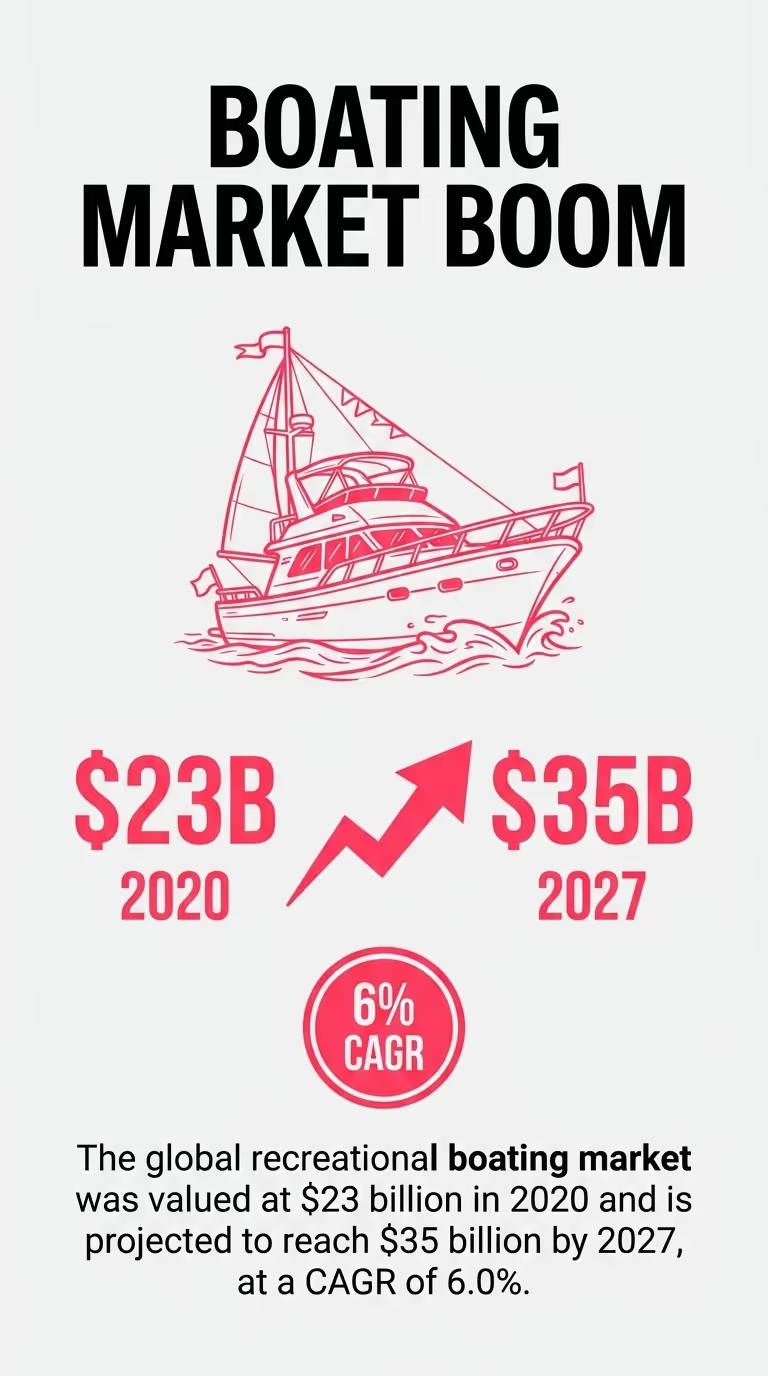
Recreational boating is rising from $23B to $35B by 2027—expanding demand for LED lighting.
Marine LED lighting serves multiple market segments. Recreational boaters upgrade existing lighting for aesthetics and functionality. Commercial vessels replace lighting for regulatory compliance and efficiency.
Yacht builders and boat manufacturers source LED lighting for new construction. Marine service centers stock common parts for repair work.
Each segment searches differently. Recreational buyers might search brand names. Commercial buyers search by specification or regulatory compliance codes.
Your SEO strategy needs to address all segments. This means optimizing for brand part numbers, generic specifications, and regulatory compliance terms.
Now that you understand the market, let's build a keyword strategy that captures actual searches. Part number keyword research differs from traditional SEO keyword research.
Traditional SEO focuses on high-volume head terms. Part number SEO focuses on hundreds or thousands of low-volume exact-match terms.
Your catalog is your keyword list. Every part number you carry should have an optimized page targeting that exact term.
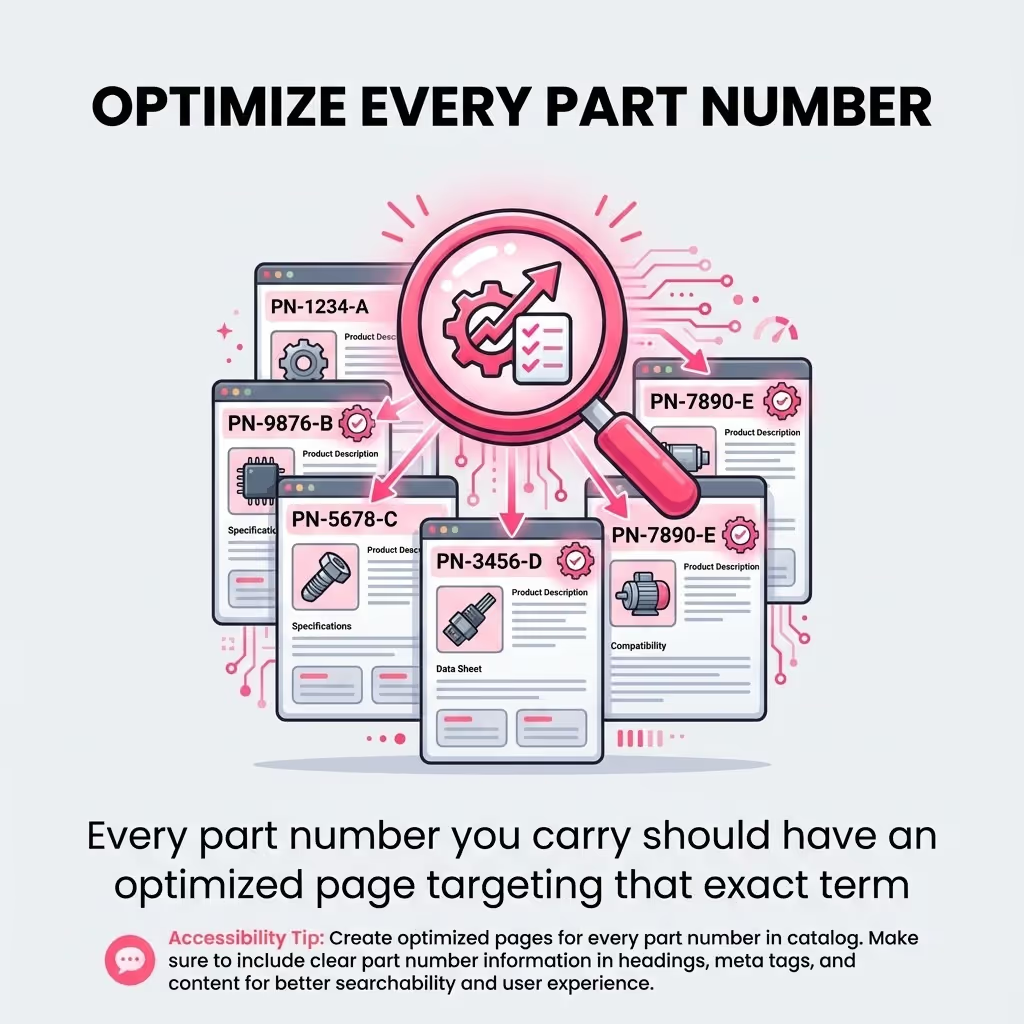
Build a page for every MPN: treat each part number as its own high-intent keyword.
Start with your product feed. Export every part number you carry into a spreadsheet.
Include manufacturer part numbers, OEM numbers, competitor cross-references, and any alternative part numbers. Each variation needs optimization.
For each part number, identify these keyword variations: exact manufacturer part number, part number with spaces or dashes removed, part number with brand name prefix, generic descriptive term plus part number, and compatibility-based searches.
Use keyword research strategies similar to auto parts since both industries rely on part number specificity.
Beyond part numbers, long-tail keywords capture specific use cases. These terms have lower competition and high purchase intent.
Application-based keywords work well. Terms like "underwater LED lights for sailboats" or "navigation lights for center console boats" describe specific needs.
Technical specification keywords capture qualified searches. Examples include "12V marine LED spreader lights" or "IP67 rated boat courtesy lights."
Installation-based keywords help you rank for how-to searches that lead to purchases. Think "flush mount LED lights for fiberglass" or "surface mount marine LED installation."
Find keywords your competitors rank for that you don't. This reveals optimization opportunities.
Pick your top three competitors. Use any SEO tool to export their ranking keywords.
Filter for keywords containing LED, light, marine, boat, or navigation. Look for part numbers and product-specific terms.
Cross-reference against your catalog. Any part numbers they rank for that you also carry are immediate opportunities.
Prioritize keywords where competitors rank in positions 4-10. These are easier to capture than top-3 rankings.
Technical SEO provides the foundation for all your optimization work. Without proper technical implementation, even perfect content won't rank well.
Marine LED lighting sites have specific technical requirements. Your site needs to handle large product catalogs efficiently while maintaining fast load speeds.
Search engines need to crawl and index thousands of product pages without encountering errors or duplicate content issues.
Your site structure impacts rankings directly. Organize products in a logical hierarchy that search engines and users can navigate easily.
Use this structure: Homepage → Category Pages → Subcategory Pages → Individual Product Pages.
Categories might include navigation lights, underwater lights, interior lights, deck lights, and spreader lights. Each category page should target relevant category keywords.
Subcategories add specificity. Under navigation lights, you might have bow lights, stern lights, port/starboard lights, and all-around lights.
Every product page should be reachable within three clicks from the homepage. This ensures proper link equity distribution and crawl efficiency.
Implement lighting-specific SEO strategies for energy efficiency keywords since marine LED lights emphasize power consumption benefits.
URL structure significantly impacts part number rankings. Your URLs should be clean, descriptive, and include the target keyword.
Bad URL structure: yoursite.com/product?id=12345
Good URL structure: yoursite.com/lumitec-seablaze3-101143-underwater-led-light
Include the brand name, product line, part number, and brief descriptor. Keep URLs under 75 characters when possible.
Use hyphens to separate words, not underscores. Search engines treat hyphens as word separators.
Avoid dynamically generated parameters like ?color=blue&voltage=12v. Use static, readable URLs.
Marine buyers often search from their boats using mobile devices. Your site must perform flawlessly on mobile.
Google uses mobile-first indexing. Your mobile site version determines your rankings, even for desktop searches.
Test your site on actual mobile devices. Check load speed, tap target sizing, and image rendering.
Mobile page speed under three seconds is critical. Compress images, minimize JavaScript, and use browser caching.
Ensure product specifications are easily readable on small screens. Use responsive tables or accordion sections for technical data.
Page speed directly impacts rankings and conversions. Slow pages rank lower and convert worse.
Target these metrics: Largest Contentful Paint under 2.5 seconds, First Input Delay under 100 milliseconds, and Cumulative Layout Shift under 0.1.
Optimize product images aggressively. Use WebP format, implement lazy loading, and serve appropriately sized images.
Minimize HTTP requests by combining CSS files and using CSS sprites for icons.
Enable gzip compression and browser caching. These simple changes often reduce page size by 70%.
Product pages are where rankings and conversions happen. Every element matters, from title tags to specification tables.
Your product pages compete against established retailers with strong SEO. You need comprehensive optimization to win rankings.
The good news? Most competitors have mediocre product pages. Thorough optimization gives you a significant advantage.
Title tags are the single most important on-page ranking factor. Get these right and rankings improve dramatically.
Use this format: [Brand] [Product Line] [Part Number] - [Key Descriptor] | [Your Store Name]
Example: Lumitec SeaBlaze3 101143 - Underwater LED Light | Marine Lighting Supply
Place the part number early in the title tag. This signals relevance for part number searches.
Keep titles under 60 characters to avoid truncation in search results. Every character counts.
Include a compelling descriptor that differentiates your listing. "In Stock," "Free Shipping," or "Authorized Dealer" add value.
Meta descriptions don't directly impact rankings, but they dramatically affect click-through rates. Higher CTR improves rankings indirectly.
Write compelling meta descriptions between 150-160 characters. Include the part number, key features, and a call to action.
Example: "Lumitec SeaBlaze3 101143 underwater LED light - 4000 lumens, RGB color changing, marine-grade waterproof. In stock with free shipping. Order today!"
Highlight differentiators like warranty terms, availability, or technical support. Give searchers a reason to click your listing over competitors.
Product descriptions serve two purposes: ranking the page and converting visitors. Balance SEO optimization with persuasive copywriting.
Structure descriptions with these sections: introductory paragraph with part number and key benefits, detailed feature list, technical specifications, compatibility information, installation guidance, and warranty and support information.
The introductory paragraph should include the part number naturally multiple times. Mention the brand, product line, and primary use case.
Example: "The Lumitec SeaBlaze3 101143 represents the pinnacle of marine underwater LED lighting technology. This premium underwater light delivers 4000 lumens of brilliant illumination with full RGB color control. Part number 101143 fits most center console and sport fishing boats with transom-mounted installations."
Use bullet points for features. This improves readability and allows keyword variation.
Complete specification tables improve rankings and conversions simultaneously. They provide structured data that search engines love.
Include every relevant specification: voltage, current draw, lumen output, beam angle, color temperature, IP rating, housing material, lens material, mounting type, dimensions, weight, and warranty period.
Format specifications as HTML tables, not just text paragraphs. This allows proper schema markup implementation.
Understanding what MPN numbers are and why they matter helps you structure part number data correctly for search engines.
Schema markup provides search engines with explicit information about your products. This improves rankings and enables rich snippets in search results.
Rich snippets increase click-through rates significantly. Product pages with schema markup often see 20-30% CTR improvements.
Marine LED lighting products need specific schema types. Product schema is mandatory, but additional markup types provide extra ranking signals.
Product schema tells search engines exactly what you're selling. Include these required fields: name, image, description, SKU, MPN (manufacturer part number), brand, and offers (with price and availability).
Optional but valuable fields include aggregateRating, review, color, material, and additionalProperty for custom specifications.
The MPN field is critical for part number rankings. This explicitly connects your page to the manufacturer part number.
Use JSON-LD format for schema markup. It's easier to implement and Google's preferred format.
Beyond basic product schema, implement these additional types when applicable.
BreadcrumbList schema shows your site hierarchy in search results. This improves CTR and helps search engines understand your site structure.
Organization schema establishes your business entity. Include your business name, logo, contact information, and social profiles.
FAQPage schema for product FAQ sections can generate rich snippet question drops in search results.
Review schema displays star ratings in search results. These significantly improve CTR for product pages.
Implementing schema markup isn't enough. You must test and validate it to ensure proper recognition.
Use Google's Rich Results Test tool. Enter your product page URL and verify all schema types are detected without errors.
Check for warnings as well as errors. Warnings indicate missing optional fields that could improve your rich results.
Test your markup on several product pages, not just one. Ensure your schema template works correctly across your entire catalog.
Monitor Search Console for schema-related errors. Google reports markup issues that need correction.
Category pages capture broader search terms and funnel traffic to specific part number pages. They're essential for comprehensive SEO coverage.
While individual product pages target specific part numbers, category pages target product type keywords like "underwater LED lights" or "marine navigation lights."
Strong category pages establish topical authority. They signal to search engines that you're a comprehensive resource for marine LED lighting.
Category pages need substantial content beyond just product listings. Aim for 800-1200 words of unique, valuable content.
Include these elements: introductory overview explaining the category, buying guide with selection criteria, comparison of popular options, technical considerations, installation guidance, and frequently asked questions.
Position content strategically. Place an introductory paragraph at the top, followed by product listings, then detailed content below the products.
This structure shows products immediately while providing ranking-boosting content further down the page.
Category pages are powerful internal linking hubs. They distribute link equity to individual product pages while establishing topical relationships.
Link to your most important product pages using keyword-rich anchor text. Instead of "View Product," use "Lumitec SeaBlaze3 101143 underwater LED light."
Link to related categories and subcategories. This creates a web of topical relevance that search engines reward.
Include links to relevant blog content. If you have installation guides or comparison articles, link them from appropriate category pages.
Apply product listing optimization best practices from automotive SEO since the principles apply directly to marine parts.
Filtering options improve user experience but create SEO challenges. Each filter combination can generate a unique URL, leading to massive duplicate content issues.
Implement filtering carefully. Use URL parameters that can be properly configured in robots.txt and Search Console.
Consider these approaches: use AJAX-based filtering that doesn't change URLs, implement canonical tags pointing to the main category page, or use robots.txt to block parameter-based URLs from crawling.
The best solution depends on your catalog size and filtering complexity. For large catalogs, allowing some filtered pages to index can capture long-tail search traffic.
Content marketing amplifies your product page SEO by capturing informational searches and building topical authority.
Not every search has direct purchase intent. Someone searching "how to choose marine LED lights" is in research mode, not buying mode.
Content marketing captures these early-stage searches and builds relationships that convert later.
Buying guides rank well and drive qualified traffic. They capture consideration-stage searches from buyers evaluating options.
Create guides covering these topics: choosing the right marine LED lights by boat type, understanding IP ratings for marine applications, comparing LED color temperatures for different uses, and installation planning for LED lighting upgrades.
Structure guides to naturally link to relevant product pages. Mention specific part numbers when discussing examples.
Example: "For center console boats, the Lumitec SeaBlaze3 101143 provides excellent underwater illumination with 4000 lumens and RGB color options."
Technical comparisons target specific competitive searches. These pages capture traffic from buyers comparing options.
Create comparisons between: your products and competitors' equivalent products, different product lines within the same brand, OEM parts versus aftermarket alternatives, and budget versus premium options.
Use comparison tables extensively. They improve readability and provide natural keyword opportunities.
Be honest in comparisons. Acknowledge when competitors have advantages. This builds trust and improves conversion rates.
How-to content captures DIY-focused searches and establishes expertise. It also reduces post-purchase support burden.
Create detailed guides for: installing flush-mount LED lights in fiberglass, wiring marine LED lights properly, weatherproofing LED connections, and troubleshooting common LED lighting issues.
Include plenty of images and diagrams. Visual content improves engagement and shares.
Link to specific products needed for each installation. This converts informational traffic into purchases.
Consider creating video versions of popular guides. Video content ranks well and increases engagement time.
If you have physical locations, local SEO captures nearby searchers. This is especially valuable for marine dealers with showrooms.
Local searches often have immediate purchase intent. Someone searching "marine LED lights near me" is ready to buy today.
Local SEO requires different optimization than general product SEO. You're targeting geographic-specific keywords and optimizing for map pack rankings.
Your Google Business Profile is the foundation of local SEO. Optimize it thoroughly to maximize visibility.
Complete every profile section: business name, address, phone number, website URL, business hours, business categories, service areas, attributes, and product catalog.
Choose categories carefully. Your primary category should be the most specific option available.
Add products directly to your profile. Include images, descriptions, and prices for key marine LED lighting products.
Encourage customer reviews actively. Reviews significantly impact local rankings and conversion rates.
If you have multiple locations, create dedicated pages for each. These pages target location-specific searches.
Each location page needs: unique content about that specific location, complete address and contact information, embedded Google Map, local customer testimonials, location-specific images, and list of services available at that location.
Avoid duplicate content across location pages. Write unique descriptions emphasizing what makes each location different.
Include location-specific keywords naturally. Mention nearby landmarks, neighborhoods, and service areas.
Citations are online mentions of your business name, address, and phone number. They improve local rankings and provide referral traffic.
Submit your business to marine-specific directories: boat dealer associations, marine industry directories, and regional boating resources.
Ensure NAP (name, address, phone) consistency across all citations. Inconsistent information confuses search engines and hurts rankings.
Focus on quality over quantity. A few authoritative citations matter more than hundreds of low-quality directory listings.
Backlinks remain a critical ranking factor. Quality links from relevant sites significantly improve your domain authority and rankings.
Link building in the marine lighting space requires industry-specific strategies. Generic link building tactics often fail or produce low-quality links.
Focus on earning links from marine industry sites, boating publications, and related businesses. These links carry more weight than generic directory links.
High-quality content naturally attracts links. Create resources that other marine sites want to reference.
Develop comprehensive guides: the complete marine LED lighting buyer's guide, marine electrical system planning guide, or boat lighting regulations by region.
Create data-driven resources. Original research, industry surveys, and trend analyses attract editorial links.
Promote your best content actively. Reach out to marine publications, boating blogs, and industry forums to share valuable resources.
Business relationships create natural link opportunities. Leverage existing partnerships and create new ones strategically.
Manufacturer partnerships often include website links. If you're an authorized dealer, manufacturers may link to your site from their dealer locator.
Collaborate with marine service centers, boat builders, and yacht brokers. Provide technical resources they can link to from their sites.
Sponsor marine industry events, boat shows, or fishing tournaments. Event sponsorships often include website links.
Digital PR generates high-quality links from news sites and publications. It's more scalable than manual outreach.
Create newsworthy content: industry trend reports, innovative product launches, sustainability initiatives, or expert commentary on marine regulations.
Build relationships with marine journalists and bloggers. Become their go-to source for marine lighting expertise.
Respond to journalist queries on platforms like HARO. Provide expert quotes for articles about marine safety, boat maintenance, or LED technology.
Measurement confirms what's working and guides optimization priorities. Without proper tracking, you're optimizing blind.
Part number SEO requires specific tracking approaches. You're measuring performance across hundreds or thousands of individual keywords.
Set up tracking systems before you start optimizing. This establishes baseline metrics and enables progress measurement.
Google Search Console provides essential data about your organic search performance. Configure it properly to maximize insights.
Verify all site versions: www and non-www, HTTPS and HTTP if applicable. Submit your XML sitemap immediately.
Monitor the Performance report regularly. Filter by query to see which part numbers drive impressions and clicks.
Set up email alerts for critical issues: manual actions, security issues, and indexing problems. Address issues immediately to prevent ranking drops.
Use the Coverage report to identify indexing problems. Fix crawl errors, blocked resources, and duplicate content issues.
Track rankings for your target part numbers and related keywords. This shows optimization progress over time.
Choose a rank tracking tool that can handle large keyword lists. You'll be tracking hundreds or thousands of part number terms.
Organize keywords by priority: high-value part numbers, category keywords, brand terms, and long-tail variations.
Track competitor rankings simultaneously. This shows competitive movement and reveals optimization opportunities.
Focus on ranking improvements, not absolute positions. Moving from position 15 to position 8 is valuable progress.
Rankings matter, but traffic and conversions determine ROI. Connect your SEO efforts to business outcomes.
Set up goal tracking in Google Analytics. Track add-to-cart actions, checkout starts, and completed purchases.
Create custom segments for organic search traffic. Compare organic traffic behavior to other channels.
Identify your highest-converting part number pages. Analyze what makes them successful and replicate those elements.
Calculate organic search ROI regularly. Divide organic revenue by SEO investment to measure program effectiveness.
Apply conversion optimization strategies from auto parts to improve your marine LED product page performance.
SEO isn't a one-time project. It requires ongoing maintenance and continuous improvement.
As your catalog grows, your SEO program must scale efficiently. You can't manually optimize every new product with the same effort you put into initial optimization.
Build systems and processes that maintain quality while enabling scale.
Clean product data is the foundation of scalable SEO. Establish data quality standards and enforce them consistently.
Create templates for product titles, descriptions, and specifications. Templates ensure consistency across your catalog.
Require complete data before publishing new products. Missing specifications hurt rankings and conversions.
Audit product data quarterly. Fix incomplete information, update outdated specifications, and add new keyword opportunities.
Understanding product feed attributes and their purpose helps you structure data for maximum SEO impact.
Search engines favor fresh, updated content. Regularly updating product pages maintains and improves rankings.
Schedule quarterly reviews of high-priority product pages. Update specifications, refresh descriptions, and add new images.
When manufacturers release new versions, update part number pages promptly. Add information about superseded parts and compatibility changes.
Expand thin content pages. If a product page has minimal content, enhance it with additional details and specifications.
Monitor Search Console for declining pages. If a previously well-ranking page drops, audit and update it immediately.
Marine LED lighting has seasonal demand patterns. Optimize for these cycles to maximize traffic during peak periods.
Boat owners upgrade lighting in spring before the boating season. Increase content marketing and promotional efforts in January through April.
Create seasonal content: spring boat preparation guides, summer navigation lighting tips, and winterization electrical checklists.
Monitor search trends using Google Trends. Identify emerging product categories and create content proactively.
Track marine industry news. New regulations, technology developments, and safety requirements create content opportunities and keyword demand.
The marine LED market continues growing, with LED lighting expected to grow at a 4.5% CAGR from 2021 to 2028, driven by demand for energy-efficient, durable lighting on vessels. Position yourself to capture this expanding market through consistent SEO execution.
LED lighting demand on vessels is forecast to grow at 4.5% CAGR through 2028—sustained opportunity for SEO.
Start with your highest-value part numbers. Optimize those completely before moving to lower-priority products.
SEO results compound over time. The work you do today builds rankings that generate traffic for years.