
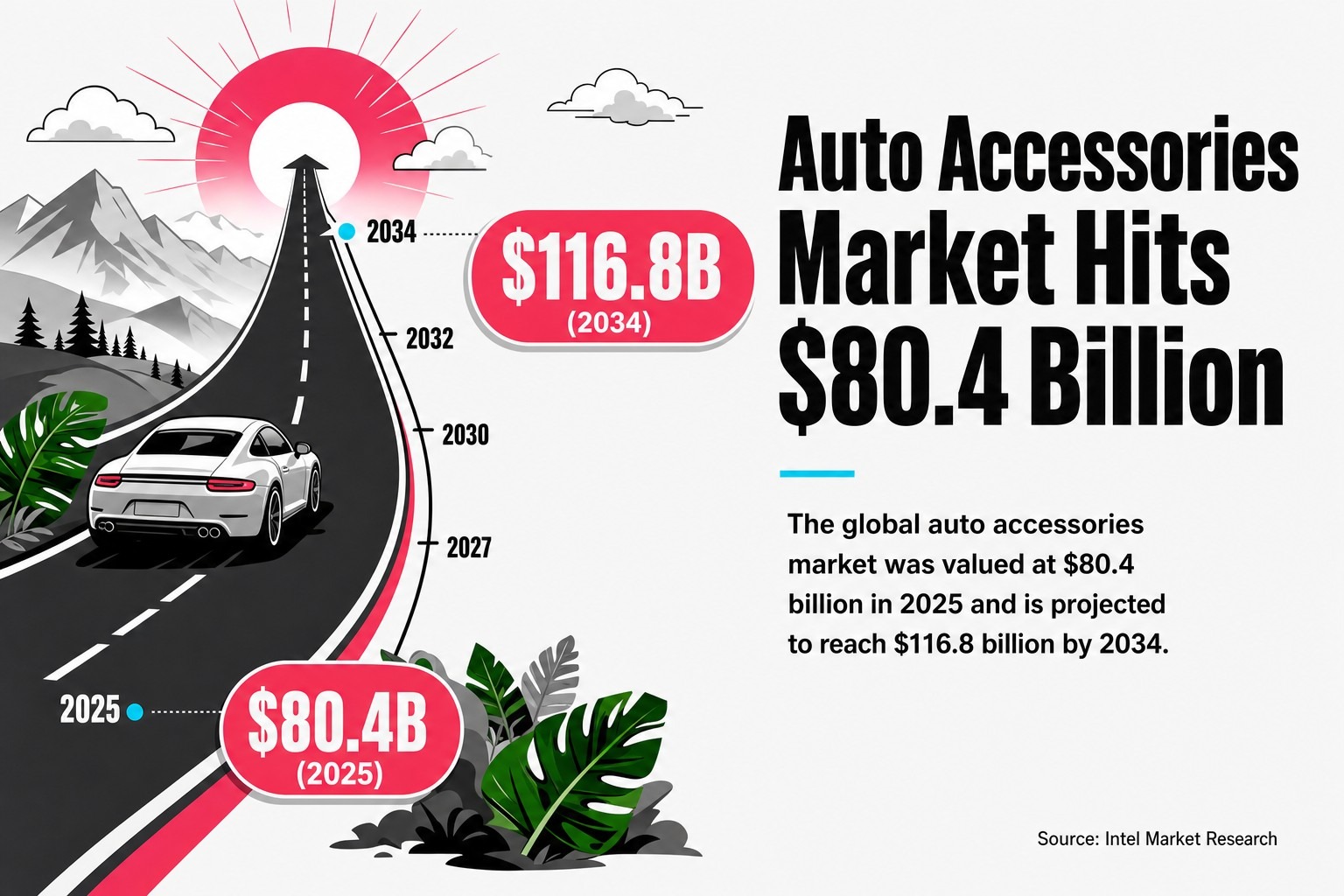
Advertising aftermarket accessories on Google Ads is structurally harder than almost any other ecommerce vertical because every product exists inside a compatibility matrix: year, make, model, trim, and sometimes engine size. The global auto accessories market was valued at $80.4 billion in 2025 and is projected to reach $116.8 billion by 2034, according to Intel Market Research's auto accessories market report. That scale means serious ad spend is flowing through this category, and the sellers who win are the ones who build their Google Ads account structure around fitment data, not just product categories.
I run PPC for ecommerce stores for a living, and the aftermarket parts space is where I've seen more well-funded accounts leak money than almost anywhere else. Not because Google Ads doesn't work for auto parts. It absolutely does. But because most sellers copy a generic ecommerce campaign structure and then wonder why their ROAS looks like a broken speedometer.
The aftermarket accessories category sits at the intersection of three forces that create structural advertising complexity: massive catalog depth, strict vehicle fitment requirements, and intense competition from Amazon, eBay, and Walmart Marketplace.
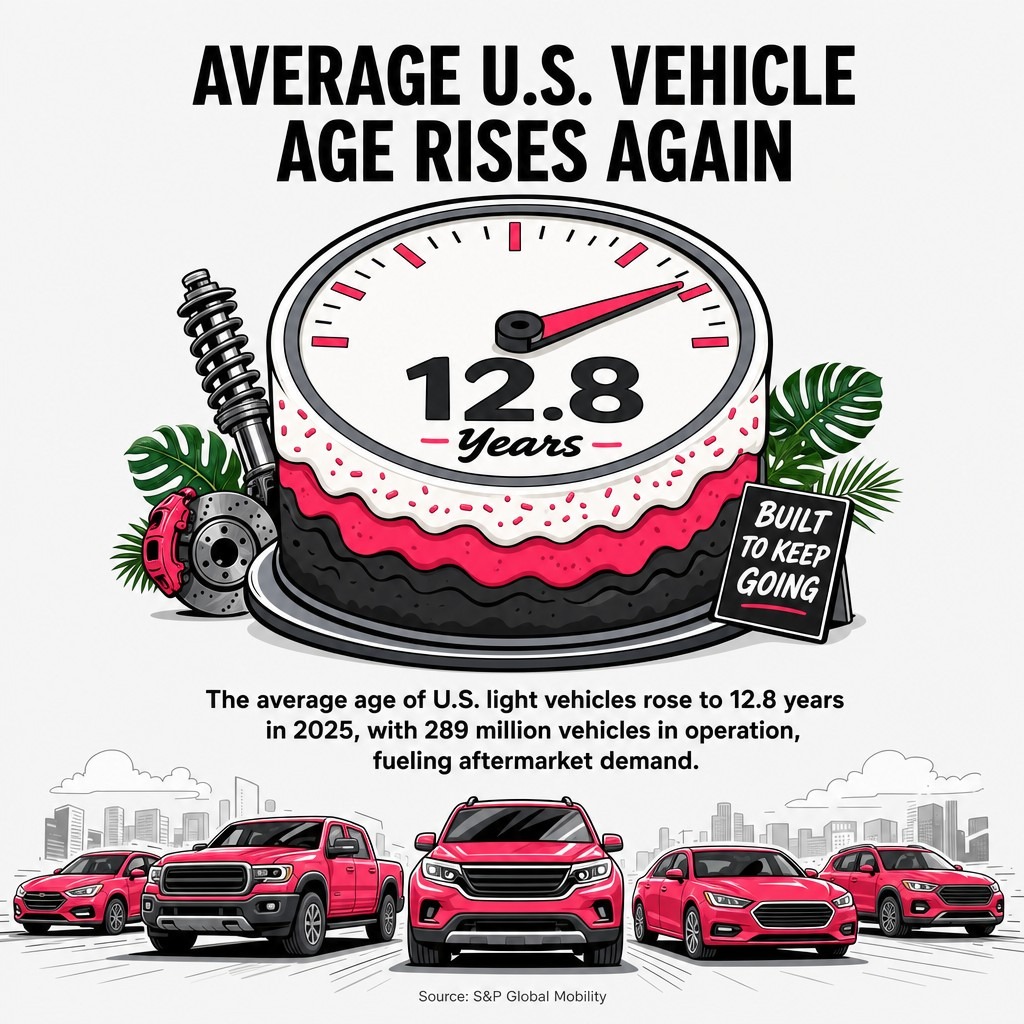
The U.S. vehicle fleet stands at 289 million vehicles in operation, with the average age of U.S. light vehicles rising to 12.8 years in 2025, according to S&P Global Mobility's 2025 vehicle age report. Older vehicles out of warranty drive sustained demand for aftermarket parts and accessories. That's the opportunity. The challenge is that a single product, say a set of running boards, might fit 47 different year/make/model combinations and fit zero others. Your Google Ads campaign structure has to account for that.
Most aftermarket catalogs carry thousands of SKUs. A catalog with 10,000 products might map to 500,000 fitment combinations. If your product feed doesn't carry that vehicle fitment data cleanly, Google Shopping can't match your ads to the right searches. And if your Search campaigns aren't segmented by vehicle type or part category, you're paying for traffic that bounces the moment a buyer sees the product doesn't fit their truck.
The other pressure is price. Aftermarket accessories often have MSRP constraints, especially for branded parts. Sellers on Amazon and eBay operate with lower overhead, which compresses margins on Google Shopping. You can't always win on price, so your campaign structure has to work harder on relevance and intent matching.
Aftermarket parts buyers search with surgical precision, and your keyword strategy lives or dies by how well you match that precision.
More than 60% of specialty-equipment sales in 2023 came from accessorizers under 45, according to SEMA's market research on emerging specialty-equipment trends. This is a digitally fluent buyer who knows exactly what they want. They search "2019 F-150 bed liner spray-on", not "truck accessories." They search "OBD2 scanner Toyota Tacoma" or "Jeep JL winch mount 10000 lb." That specificity is the signal you need to build your keyword targeting around.
Aftermarket buyer searches fall into four identifiable intent stages:
Part number searches deserve special attention in your Search campaigns. A buyer who types a specific part number has usually already done their research. They know what they want. Your job is to be there with the right price and a clean product page. These searches convert fast, and they're worth bidding aggressively on.
Negative keyword management is the flip side of this. Searches like "how to install," "review," "forum," and year-specific fitment queries for vehicles you don't carry will drain your ad spend if you don't block them. Build your negative keyword list before you launch, not after.
Expand your marketing beyond Google Ads. Check out our marketing for auto parts guide.
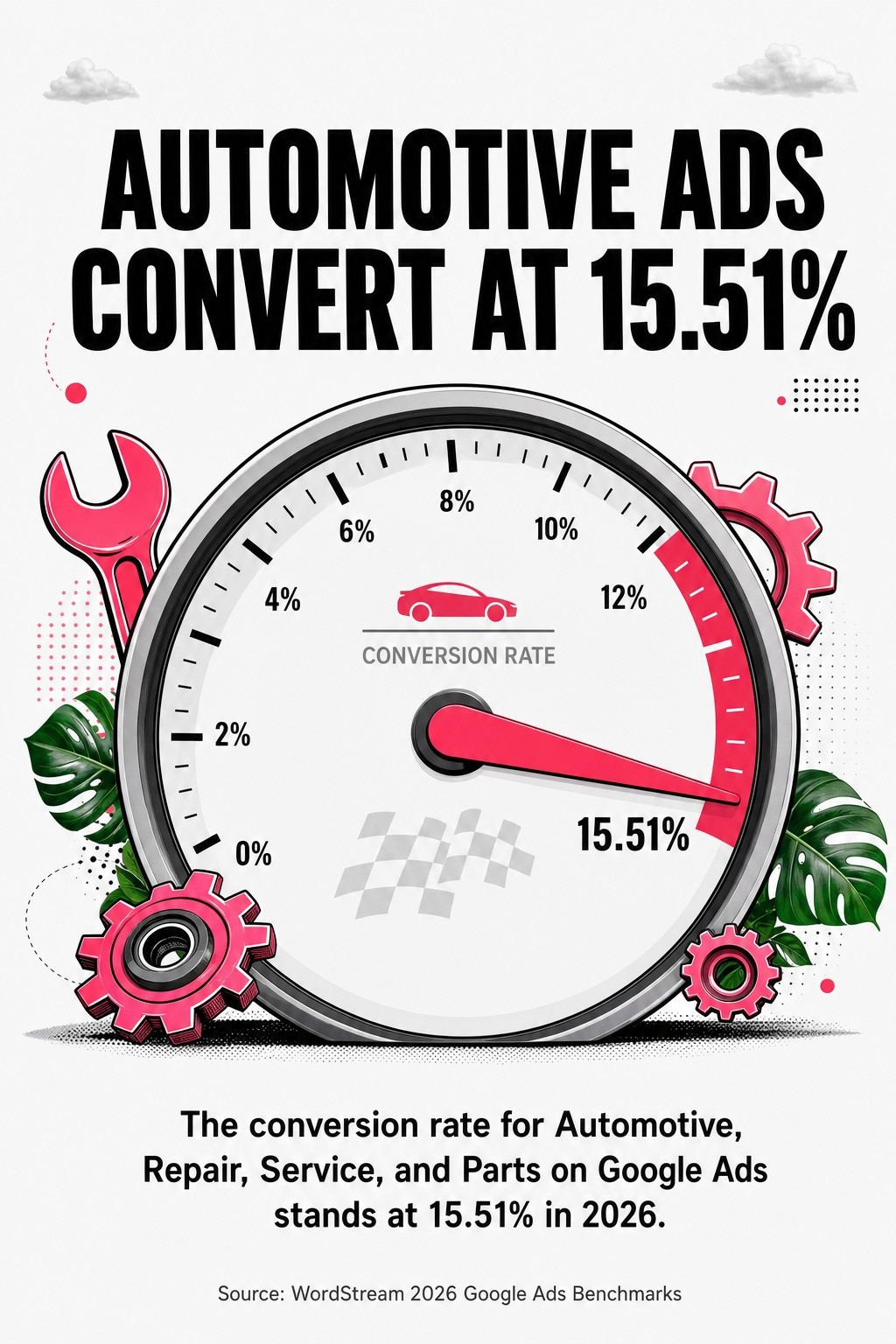
The conversion rate for Automotive, Repair, Service, and Parts on Google Ads stands at 15.51% in 2026, according to WordStream's 2026 Google Ads benchmarks report. That number is high. Encouragingly high, actually. It reflects the intent-heavy nature of aftermarket parts searches. When someone searches for a specific part for a specific vehicle, they're not browsing. They need the part.
The cost per lead for this same category is $29.96, per LocaliQ's search advertising benchmark data. Compared to other ecommerce verticals, that's competitive. But "lead" here means a conversion action, which for aftermarket ecommerce usually means a purchase or an add-to-cart with high downstream close rates.
Google Shopping ads averaged a 0.86% click-through rate across all industries in 2025, according to DesignRush's Google Ads statistics report. For aftermarket accessories, strong product titles with year/make/model data and high-quality images can push CTR above that average. Feed quality is what separates the brands hitting 1.5% CTR from the ones stuck below 0.5%.
What the benchmarks don't tell you is how much your ROAS varies by product category within an aftermarket catalog. Performance accessories often carry higher margins than replacement parts. Accessories for pickup trucks outperform accessories for sedans in most U.S. markets. Your bidding strategy has to reflect those differences, not treat every SKU identically.
A well-built Google Ads account for aftermarket accessories uses three campaign tiers that work together: Performance Max for catalog-wide reach, Google Shopping for high-intent product discovery, and Search for part-number and brand-plus-fitment queries.
For a deeper walkthrough of how this architecture comes together in practice, the Google Ads setup guide for the auto parts industry breaks down account configuration in detail.
Performance Max campaigns handle the bulk of catalog-wide exposure. P-Max uses your product feed, creative assets, and audience signals to find buyers across Search, Shopping, Display, YouTube, and Gmail. For aftermarket sellers with large catalogs, Performance Max is the engine that keeps your products visible without requiring you to manually manage bids on 10,000 SKUs.
The critical setup decision for P-Max in aftermarket advertising is asset group segmentation. Don't throw your entire catalog into one asset group. Segment by product category: lift kits in one asset group, exhaust systems in another, lighting in a third. This gives Performance Max clear signals and lets you apply different ROAS targets by category margin.
Audience signals matter more than most aftermarket sellers realize. Feed in your customer lists, site visitor audiences, and vehicle-enthusiast in-market segments. P-Max uses these as starting points. The better your signals, the faster the campaign learns. For more on structuring P-Max specifically for auto parts, the Performance Max campaign structure guide for auto parts covers asset group segmentation and budget allocation in depth.
Standard Google Shopping campaigns give you bidding control that Performance Max doesn't. Use them for your highest-margin product categories and your best-converting part families. Structure Shopping campaigns by vehicle type or accessory category, then use custom labels in your product feed to flag margin tier, vehicle platform (truck, SUV, Jeep), and whether a product is a top-seller.
Product group segmentation inside Shopping campaigns should mirror your feed segmentation. If you're selling running boards, segment by brand, then by vehicle compatibility. This lets you see exactly which product groups are spending and converting, and adjust bids accordingly.
Search campaigns in aftermarket advertising serve two specific jobs: capturing part-number searches and capturing high-intent brand-plus-fitment queries. These aren't broad awareness plays. Keep them tight, with phrase and exact match keywords, and set your bids based on the margin of the part categories those keywords represent.
Keyword targeting for Search campaigns should be organized by vehicle platform. A campaign for Ford F-150 accessories runs separately from a campaign for Jeep Wrangler accessories. This gives you budget control and makes it easier to identify which vehicle platforms are profitable on paid search.
For aftermarket accessories, no single campaign type wins alone. The answer is always a coordinated structure, but the budget allocation should reflect what each campaign type does best.
Performance Max earns the largest budget share for most aftermarket sellers with catalogs over 1,000 SKUs. P-Max's ability to serve across multiple Google channels and optimize automatically makes it the right tool for catalog-wide coverage. The tradeoff is reduced transparency. You see asset-group performance, not keyword-level data. That's fine for volume, but it's why you need Search campaigns running alongside it.
Standard Shopping campaigns earn their budget when you have high-margin product lines that deserve more manual control. If your roof rack systems convert at 8x ROAS and your replacement wiper blades convert at 2x, you don't want P-Max blending those together. Separate Shopping campaigns let you set targets by margin tier.
Search campaigns earn their budget specifically on part-number traffic and branded queries. These are your most intent-rich searches. Don't let P-Max absorb them at a blended ROAS target. For a full comparison of how these campaign types interact in a real aftermarket account, the PPC campaign guide for aftermarket auto parts covers budget split logic and campaign interaction in detail.
The campaign structure for most aftermarket sellers I'd recommend as a starting split: roughly 50-60% of budget in Performance Max, 25-35% in standard Shopping, and 10-20% in Search for part-number and high-intent brand queries. Adjust from there based on ROAS data by campaign.
Your Google Merchant Center product feed is the foundation of every Shopping and Performance Max campaign you run for aftermarket accessories, and it's where most catalog complexity either gets solved or ignored.
Vehicle fitment data is the element that separates a functional aftermarket feed from a great one. Google Merchant Center supports vehicle-specific product data through feed attributes, but the most reliable way to carry year/make/model fitment is through structured product titles and the vehicle_compatibility attribute where supported. The industry standards that govern this data are ACES (Automotive Catalog Exchange Standard) for fitment and PIES (Product Information Exchange Standard) for product specifications. If your catalog management system exports ACES-compliant data, use it to populate your feed's vehicle compatibility fields. If it doesn't, that's the single most impactful feed fix you can make.
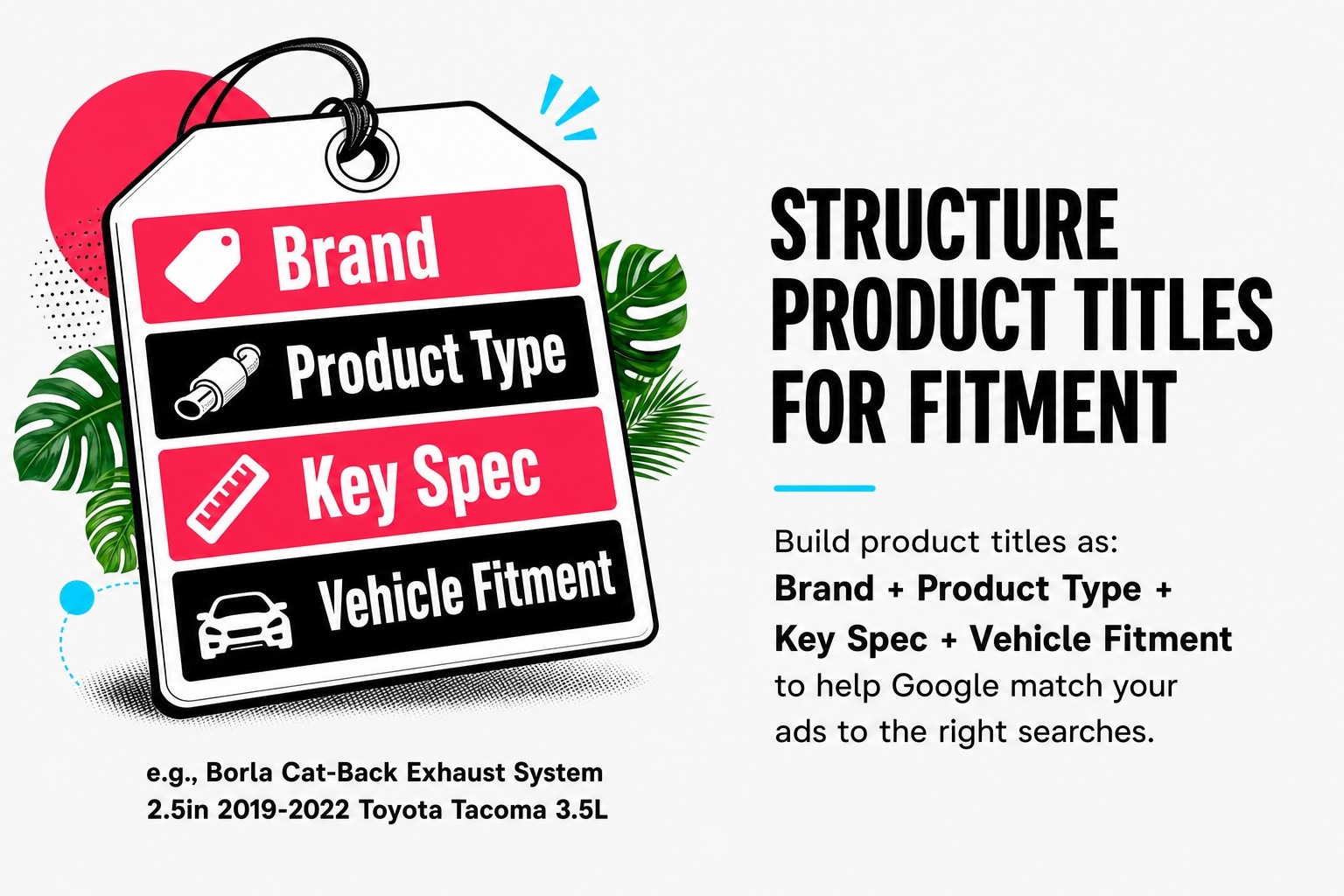
Product titles in an aftermarket accessories feed should follow a specific structure: Brand + Product Type + Key Spec + Vehicle Fitment. "Borla Cat-Back Exhaust System 2.5in 2019-2022 Toyota Tacoma 3.5L" tells Google everything it needs to match that product to the right search. A title like "Borla Exhaust" tells Google almost nothing.
Custom labels in your product feed let you segment campaigns by margin tier, vehicle platform, seasonal relevance, and inventory status. Set up at least four custom label tiers:
Google Merchant Center diagnostics will flag disapproved products, but it won't tell you which approved products have weak titles or missing attributes. Audit your feed with a third-party tool like DataFeedWatch or Feedonomics on a monthly basis. A disapproved SKU costs you zero wasted ad spend. A live SKU with a bad title costs you clicks that never convert. For a detailed breakdown of feed optimization specifically for automotive catalogs, the Google Shopping feed optimization guide for automotive catalogs covers attribute-level fixes and title structure in depth.
Value-based bidding for aftermarket accessories means telling Google Ads the actual revenue value of each conversion, not just counting clicks or form fills equally.
The mechanics work like this: pass transaction-specific revenue values through your conversion tracking, not a static conversion value. Google's Smart Bidding algorithm uses these values to optimize toward higher-value orders. For aftermarket accessories, where a $12 cabin air filter and a $1,200 lift kit both count as purchases, flat conversion counting destroys your ROAS targeting. The algorithm needs to know the difference.
Target ROAS settings should be segmented by product margin tier, not applied uniformly across the account. A rough framework that works for most aftermarket sellers:
These aren't universal numbers. They're starting points. Set your tROAS targets 20-30% below your actual account-wide ROAS to give Smart Bidding room to operate without throttling spend.
Seasonal bid adjustments matter significantly in the aftermarket accessories space. Truck bed liner searches spike in spring. Snow chains and winter wiper searches spike in October and November. Jeep accessory searches peak around Jeep Safari season in April. Build a seasonal budget calendar and pre-plan bid increases for your key categories two to three weeks before the seasonal peak, not after it starts.
One specific mistake I see constantly: sellers set a tROAS target and leave it untouched for months. Google's algorithm needs roughly two to four weeks to gather enough conversion data to optimize reliably after any bid strategy change. Change targets too often, and you're restarting the learning period constantly. Change them too infrequently, and you miss seasonal windows. Check tROAS performance monthly, adjust quarterly unless there's a clear seasonal driver.
Dynamic remarketing for aftermarket accessories is one of the highest-ROAS tactics available, and most sellers underinvest in it relative to prospecting campaigns.
Dynamic remarketing works by pulling products from your Google Merchant Center feed and showing previous visitors the specific parts they viewed or added to cart. For aftermarket accessories, this is especially powerful because buyers often research for days before purchasing. They compare fitment data across multiple sites. A remarketing ad showing the exact exhaust system they viewed on day one, with your price visible, converts those comparison shoppers.
Segment your remarketing audiences by behavior depth. Three tiers that consistently outperform a single "all visitors" remarketing pool:
Customer match lists from your email database let you target existing buyers with upsell campaigns. A buyer who purchased running boards six months ago is a warm audience for a tonneau cover or bedliner spray campaign. First-party data is the most underused asset in most aftermarket Google Ads accounts.
Negative keywords deserve the same strategic attention as your positive keyword list. For aftermarket accessories, the negative keyword categories that save the most wasted ad spend are: installation and repair queries ("how to install," "install guide," "DIY"), vehicle model years outside your fitment range, OEM and dealer-specific terms ("dealer," "OEM," "factory"), and research queries ("review," "forum," "vs," "comparison"). Build a shared negative keyword list in Google Ads and apply it across all campaigns. Add to it weekly in the first 90 days.
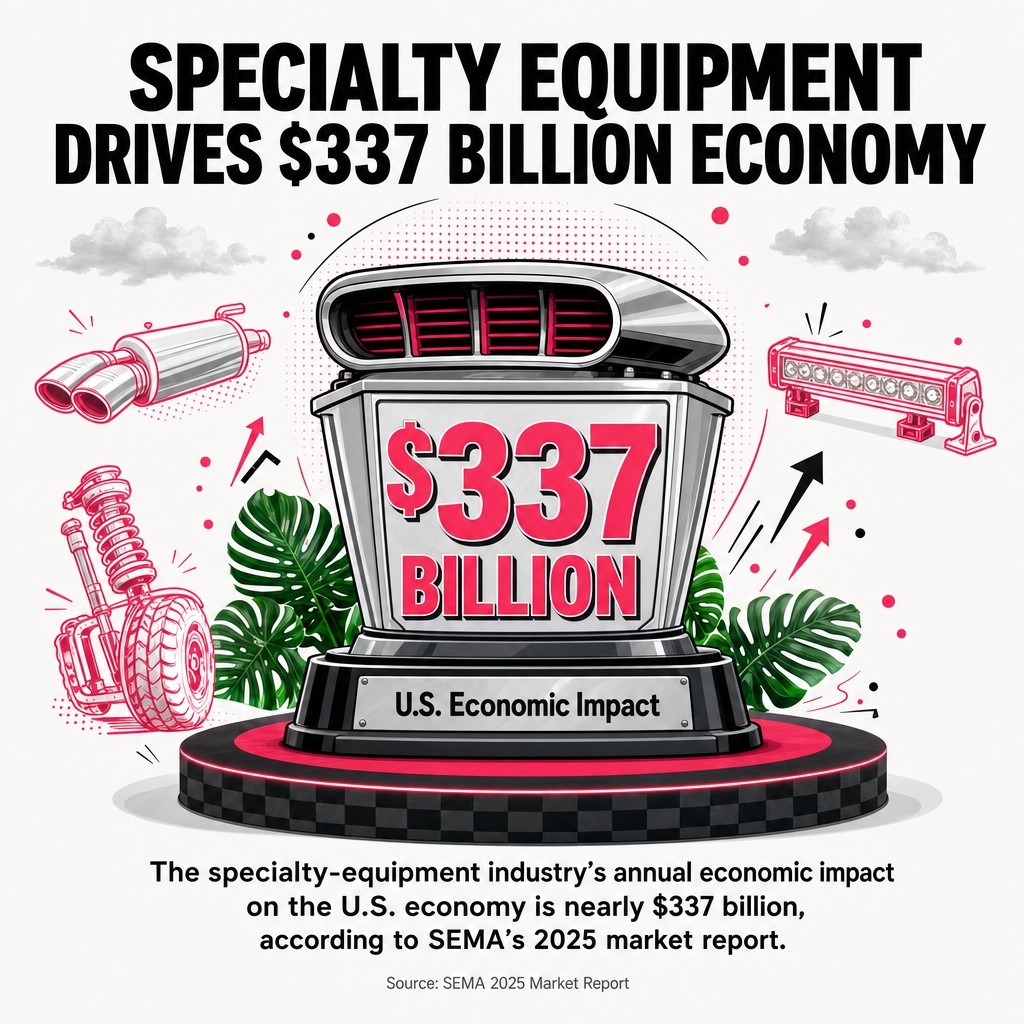
The specialty-equipment industry's annual economic impact on the U.S. economy is nearly $337 billion, according to SEMA's 2025 market report. That scale means the category has the budget to support aggressive Google Ads investment. But budget without structure is just a faster way to spend money you didn't need to. The sellers pulling strong ROAS from this category aren't the ones spending the most. They're the ones with the tightest feed data, the cleanest campaign structure, and the most disciplined negative keyword management.
Aftermarket advertising on Google rewards precision. The broader your targeting, the more you pay for buyers who land on your site and immediately realize the part doesn't fit their vehicle. Every element of your campaign architecture, from vehicle fitment in your product feed to tROAS segmentation by margin tier, exists to narrow that gap between click and conversion.
If you want to see how this architecture applies to a real catalog at scale, the case study on rebuilding Google Ads for a specialty auto parts retailer with 100K SKUs walks through exactly how these principles apply when the catalog gets genuinely complex. Start there, then build your account structure from the ground up with fitment data as the spine. Everything else follows.