

An outdoor cooking brand specializing in authentic European-style pizza ovens, Chicago Brick Oven, partnered with SCUBE to improve an existing Google Ads program and grow direct-to-consumer sales through a Shopify Plus site. The products carried a high price point and long consideration cycle, requiring paid media to do more than drive clicks.
The objective was to scale revenue while maintaining efficiency, improve visibility into performance, and align paid media with both online and phone-based sales activity.
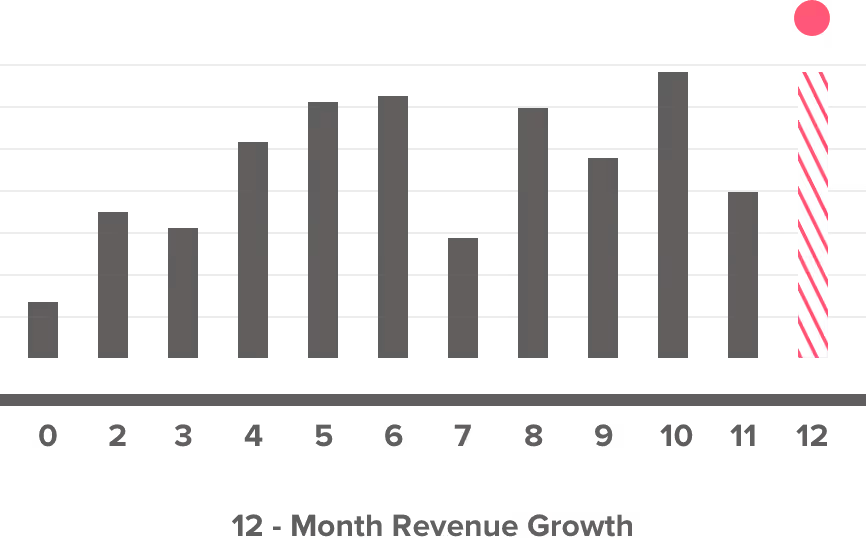
SCUBE restructured the Google Ads program across Search, Google Shopping, and remarketing, while coordinating with the internal sales team to better track phone conversions. Within 12 months, the program added $280,000 in sales, acquired over 130 new customers, and maintained an 893% ROAS. These improvements contributed to the company achieving a record year in total sales.
Selling a high-price, niche product introduces friction that standard ecommerce setups often miss.
The consideration cycle was longer than average, with customers frequently engaging across multiple touchpoints before purchasing. Some conversions happened online, others over the phone, making attribution and performance evaluation more complex.
Paid media needed to support this reality without over-optimizing for short-term signals or undercounting true contribution.
SCUBE approached the engagement as a system refinement rather than a campaign overhaul. The focus was on improving signal quality, aligning channels to buyer behavior, and supporting scale without distorting performance measurement.
Clear KPIs were established based on business objectives, with additional effort placed on aligning online advertising with phone-based sales tracking. This allowed paid media performance to be evaluated against actual buying behavior rather than surface metrics alone.
Campaigns were segmented by buyer journey stage to separate early-stage research from high-intent demand. Search and Shopping programs were rebuilt to prioritize relevance and product fit, while remarketing supported longer consideration cycles without absorbing disproportionate spend.
Product feed management ensured visibility reflected merchandising priorities rather than catalog coverage.
Across the system, ROAS served as a control mechanism, ensuring scale followed efficiency rather than preceding it.
Offers, value propositions, and ad angles were shaped to match a niche audience with a high-price product. Seasonal promotion planning aligned paid activity with demand patterns rather than platform defaults. Keyword and query management reduced waste as efficiency improved, while testing was used to reinforce structure rather than chase short-term lifts.
Within 12 months:
Efficiency over time:
Performance was evaluated over time rather than through isolated peaks. As structure improved, paid media supported both ecommerce revenue and assisted sales activity.
“SCUBE has helped us achieve record sales growth year after year. They are extremely knowledgeable in Google Advertising and have been a phenomenal partner to work with.
With their help, we were able to formulate a comprehensive strategy targeting a niche customer base with a high price point product.
SCUBE helped tackle the unique challenges associated with tracking sales given a long conversion cycle. Once the foundation was set, SCUBE also helped us drive down CPC and drive more traffic.
We continue to grow and look forward to another year of historic growth.”
Kevin Hong
VP of Marketing, Chicago Brick Oven
The outcome was not a single record period. It was a paid media system capable of supporting sustained growth for a high-price, niche product category.
The SCUBE Game Plan is a focused review of how complex, spec-driven catalogs behave inside paid channels. It’s designed to surface what’s contributing to performance, what’s masking underlying issues, and where structure is quietly working against you. If there’s a fit, we walk through the findings in a ~60 minute conversation, looking at:
The goal is a clearer picture of how the system is behaving, so decisions stop relying on averages or assumptions.

.avif)