.avif)
Workwear brands can actually beat Amazon at its own game by mastering structured data and Amazon's ranking algorithm simultaneously. While Amazon dominates through volume and reviews, smaller brands win by optimizing product pages with detailed sizing charts, material specifications, and fit guides that AI-driven search engines now prioritize heavily.
You're not just fighting Amazon's marketplace power. You're competing against their listing optimization, their advertising budget, and their customer review velocity.
But here's what most workwear brands miss: Amazon's dominance creates specific weaknesses you can exploit. Their generic product titles and minimal technical specifications leave gaps for brands that truly understand their customers' needs.
I've worked with ecommerce brands at SCUBE Marketing (an ecommerce SEO and PPC agency) long enough to know that winning against Amazon requires a dual strategy. You need to optimize for both traditional search engines and Amazon's internal algorithm.
This guide shows you exactly how to build that strategy. You'll discover seven proven tactics for Amazon SEO, learn how to structure product listings that convert, and understand which advertising types actually move the needle for workwear brands.
By the end, you'll have a complete framework for competing with Amazon on search rankings, product visibility, and brand differentiation.
Amazon controls the workwear marketplace through three unfair advantages:
Your brand launched last year. Amazon has been collecting customer data since 1994.
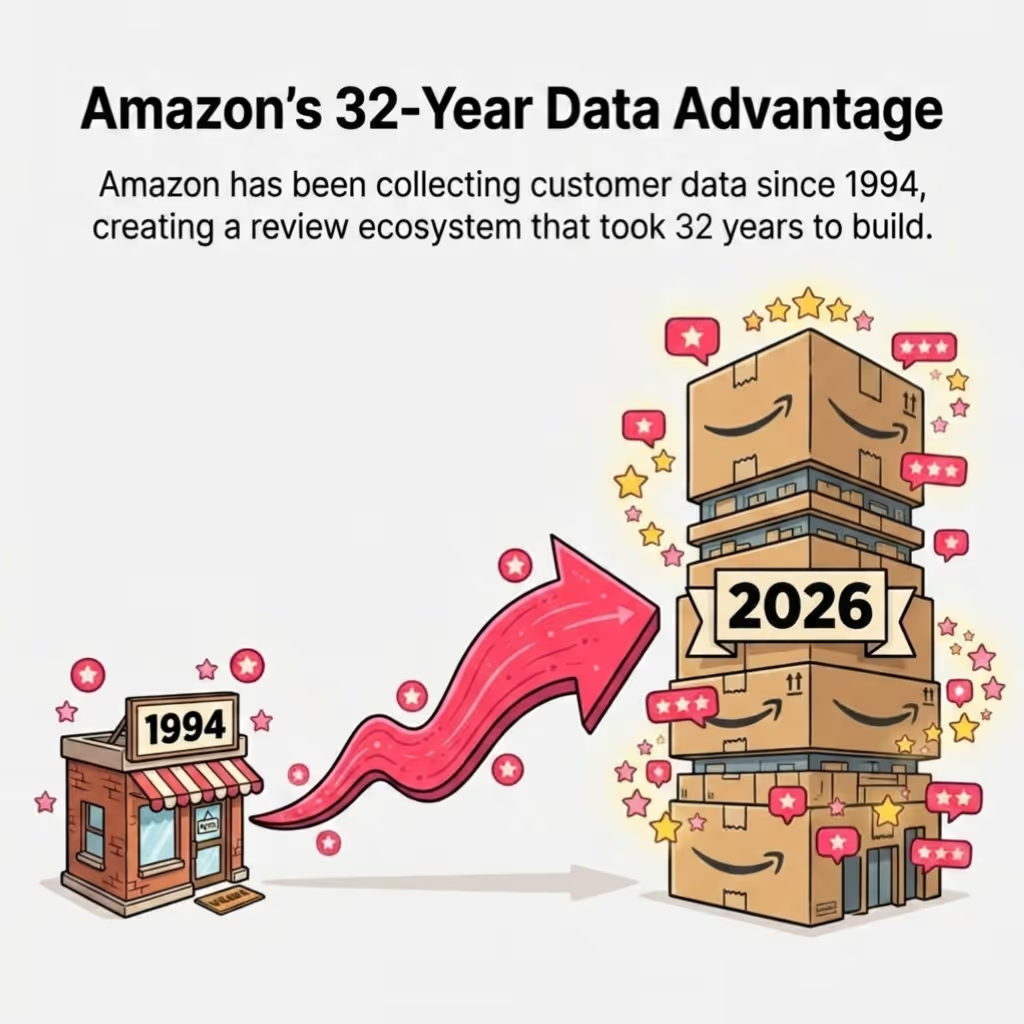
Amazon has built a 32-year head start on reviews and customer trust—fueling its marketplace dominance.
The platform prioritizes listings with high sales velocity and review counts. When someone searches "steel toe work boots," Amazon's algorithm doesn't care about your superior leather quality or your family-owned manufacturing process.
It cares about conversion rate, customer reviews, and whether you're selling through Fulfilled by Amazon.
Most workwear brands make the same mistake: they list products on Amazon using the same descriptions from their website. This fails because Amazon SEO operates completely differently from Google SEO.
Amazon search focuses on product attributes, not brand storytelling. The algorithm ranks listings based on relevance to search terms, sales history, and customer satisfaction metrics.
Your product title needs to include size information, material type, and specific workwear categories. Your brand story belongs in A+ Content sections, not in the first line of your product description.
There's another challenge: Amazon's own private label brands appear first in sponsored placements. They use your sales data to identify winning products, then launch competing versions at lower prices.
But Amazon's dominance creates specific opportunities for brands willing to optimize strategically.
Amazon SEO measures one thing above all others: purchase likelihood. Google ranks pages based on content quality and backlinks. Amazon ranks products based on whether customers buy them after searching.
This changes everything about keyword research.
On Google, you might target "best work pants for construction workers" as an informational keyword. On Amazon, you target "men's work pants ripstop cargo" because that's what people search when they're ready to buy.
Amazon's A9 algorithm evaluates product listings using three primary factors: text match optimization, sales velocity, and customer satisfaction signals.
Text match means your product title, bullet points, and backend search terms must include the exact phrases customers search. If someone searches "flame resistant work shirt," your listing needs those exact words in that specific order.
Sales velocity tracks how many units you sell relative to your category. New listings start with low visibility because they have no sales history. This creates a chicken-and-egg problem: you need sales to rank, but you need ranking to get sales.
Customer satisfaction combines review ratings, review quantity, and return rates. A product with 500 reviews averaging 4.7 stars will outrank a product with 50 reviews averaging 4.9 stars.
The algorithm also weighs these factors differently across categories. In workwear, durability claims and sizing accuracy matter more than in fashion apparel.
Amazon uses retailer corroboration to validate product quality. This means high ratings, customer reviews with images, and consistent product naming all signal search algorithm alignment.
Your listing needs social proof at scale. One five-star review doesn't move the needle. Fifty reviews showing your work pants survived six months on construction sites tells the algorithm your product converts.
Amazon also tracks click-through rate from search results. If 100 people see your listing and only two click, the algorithm interprets this as poor relevance.
Your main product image determines CTR more than any other factor. It needs to show the product clearly against a white background, with any safety certifications visible.
Backend search terms give you 250 bytes to include synonyms and alternative search phrases. Most workwear brands waste this space on repeated keywords already in their title.
Use backend terms for industry-specific variations. If you sell safety vests, include "hi vis vest," "reflective vest," "ANSI vest," and "construction visibility vest."
Product images beyond the main photo impact conversion rate, which feeds back into rankings. Amazon allows up to nine images plus videos. Use all of them to show your workwear in actual work environments.
Pricing relative to category average affects conversion probability. If competitors sell work gloves at $18-25 and you price at $45, you need exceptional reviews and imagery to overcome the price resistance.
Now you understand how Amazon evaluates listings. The next section shows you exactly which tactics improve these ranking factors.
These seven strategies form a complete optimization system. Each tactic addresses specific ranking factors while building toward a single goal: making your listing the obvious choice when customers search.
Amazon keyword research starts with Amazon's own search bar. Type "work boots" and watch the autocomplete suggestions. These represent real customer searches with buying intent.
Write down every variation: "work boots men," "work boots steel toe," "work boots waterproof," "work boots composite toe."
Then use Amazon's Product Opportunity Explorer inside Seller Central. This tool shows search volume and competition level for keywords in your category.
Focus on long-tail search terms with moderate competition. "Work pants" has massive search volume but impossible competition. "Men's ripstop cargo work pants with tool pockets" has less volume but higher conversion potential.
Workwear keywords often include technical specifications that fashion apparel ignores. Customers search for "ANSI Class 3 safety vest" or "cut resistant work gloves level A4."
Your keyword research should identify: primary keywords for product titles, secondary keywords for bullet points, and tertiary keywords for backend search terms.
Amazon processes most searches on mobile devices. Your product title displays only the first 80-100 characters on mobile screens.
This means your most important keywords must appear within the first 80 characters. Put brand name first only if you have strong brand recognition. Otherwise, lead with product category and primary attributes.
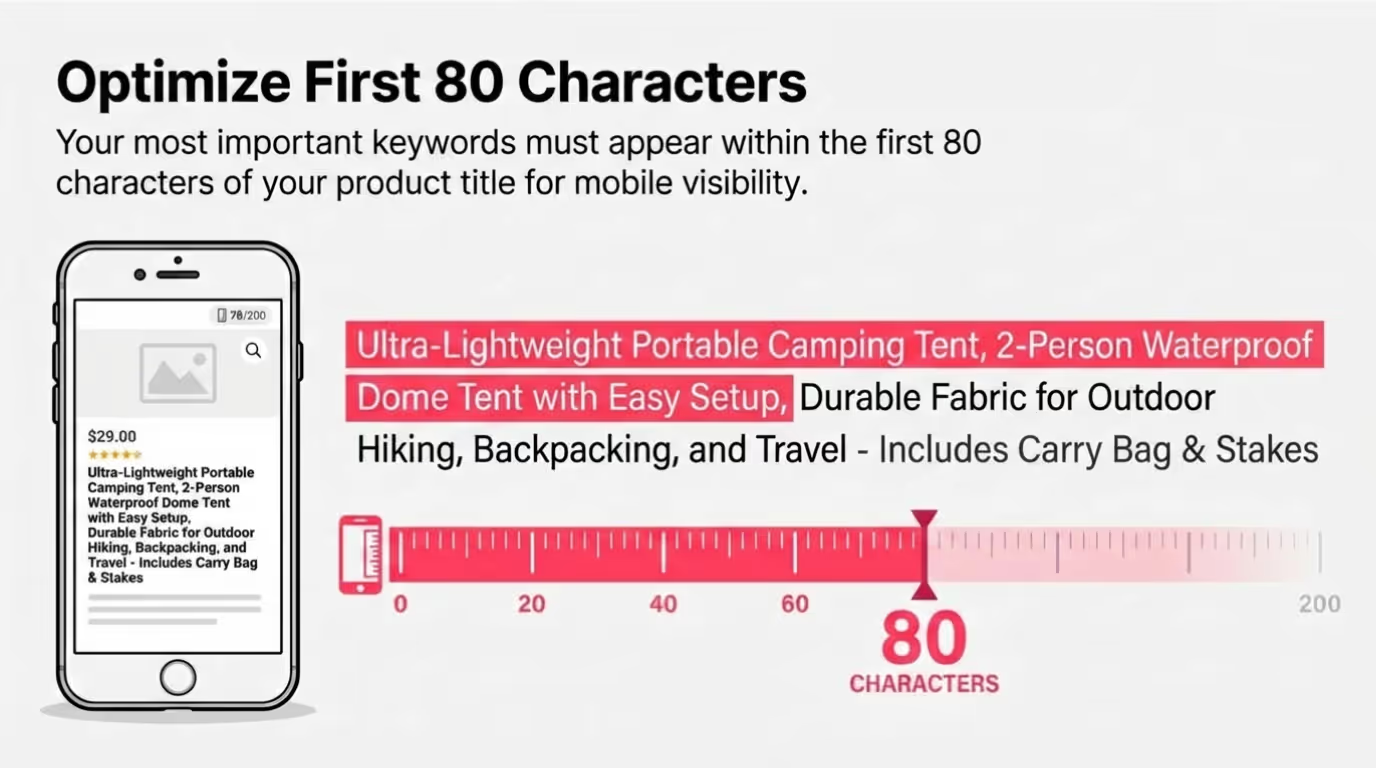
Prioritize essential keywords in the first 80 characters to maximize mobile visibility and CTR.
Mobile shoppers scroll through images before reading descriptions. Your image sequence should tell a complete story: main product shot, close-up of key features, size comparison, in-use photo, certification badges.
Test your listing on a mobile device before publishing. If customers can't read your images or understand your value proposition within three seconds, they'll scroll past.
New listings need 15-25 reviews within the first 30 days to gain algorithmic traction. Without reviews, your listing stays invisible regardless of keyword optimization.
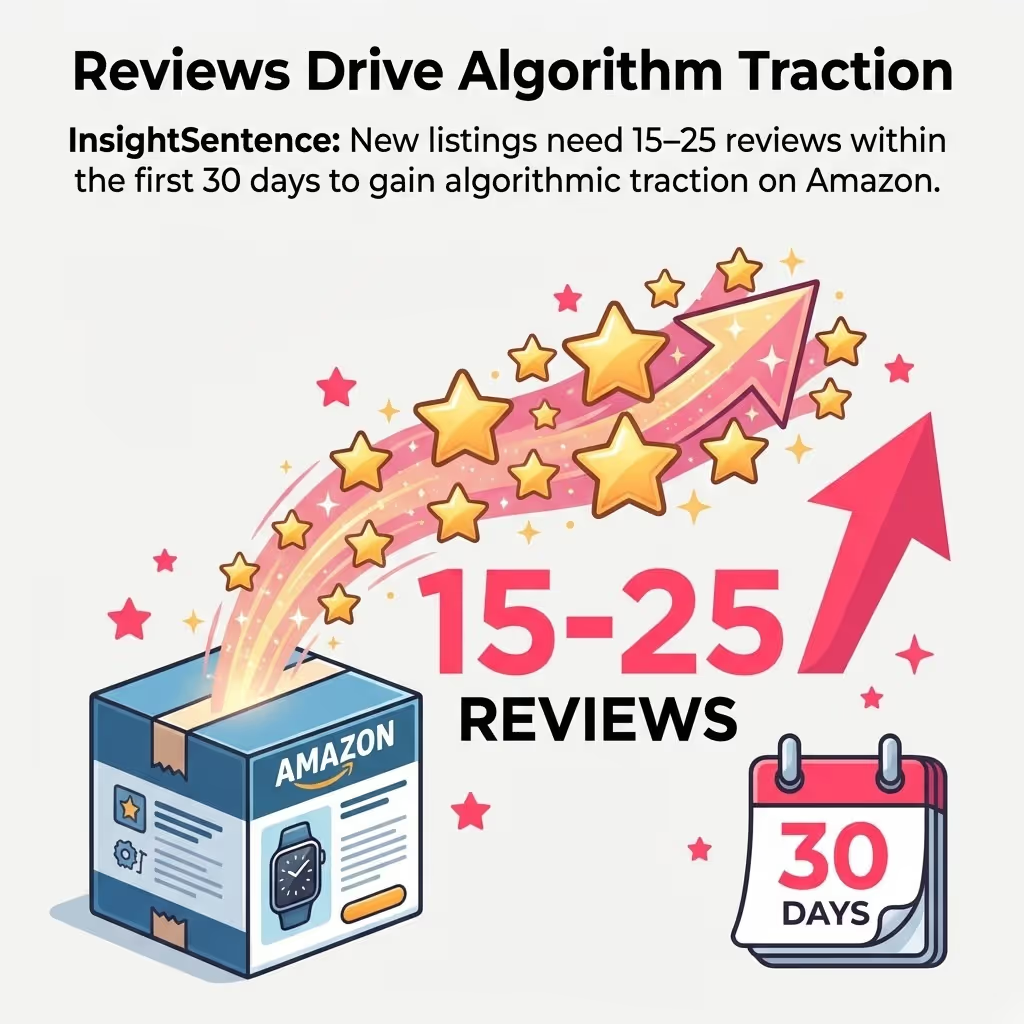
Target 15–25 reviews in the first 30 days to jumpstart Amazon’s ranking signals.
Use Amazon's Request a Review button inside Seller Central for every order. This automates review requests within Amazon's terms of service.
Consider Amazon Vine for new product launches. This program sends free samples to verified reviewers in exchange for honest reviews. It costs money but generates review velocity faster than organic methods.
Focus on getting reviews with images. Customer photos showing your work gear in actual job sites provide social proof that product photos can't match.
Amazon advertising directly improves organic search rankings through increased sales velocity. When you run Sponsored Product ads and generate sales, the A9 algorithm interprets those sales as relevance signals.
Start with automatic campaigns targeting broad match keywords. Let Amazon's algorithm identify which search terms convert for your products.
After two weeks, review the search term report inside your campaign manager. Identify high-converting keywords and move them to manual campaigns with higher bids.
Sponsored Products work best for listings with at least 10 reviews. Sponsored Brands work better once you have multiple products and want to drive brand awareness.
Don't limit your SEO strategy to Amazon alone. Most customers research products on Google before buying on Amazon or your own site.
Google Shopping ads require product feed optimization with detailed attributes like size, color, material, and safety certifications. These attributes help Google match your products to relevant searches.
Your product feed should include custom labels identifying your best sellers, high-margin items, and seasonal products. This allows you to bid more aggressively on products with better economics.
Use high-quality product images that match across Google Shopping and Amazon. Consistency builds brand recognition when customers see your products across multiple platforms.
Social platforms like TikTok and Instagram now drive significant product discovery for workwear brands. Short-form videos showing your products in actual work environments generate engagement that translates to search traffic.
According to research on niche apparel marketing, hashtags and short-form videos showcasing product use cases can support visibility in competitive categories.
Film 15-second videos of your work pants surviving tough conditions. Show close-ups of reinforced knees holding up after months of use. Demonstrate water resistance by pouring liquid on your fabric.
These videos work as both social content and supplementary images in your Amazon listings. Amazon allows video uploads for brand-registered sellers.
Competing with Amazon requires a strong presence on your own website. Many customers research on Google, compare prices across sites, then make purchase decisions based on brand trust.
Optimize your ecommerce site with mobile-first design, fast load times, and automatic image optimization. According to ecommerce SEO best practices, mobile-first designs with built-in SEO tools and image optimization reduce load times and improve search visibility.
Use structured data markup to help Google display rich product results with ratings, prices, and availability. This makes your organic listings more clickable compared to generic text results.
Build dedicated landing pages for specific workwear categories. A page targeting "flame resistant work shirts" will rank better than a generic products page listing all your inventory.
Product listing optimization determines whether customers click your listing and whether they buy after clicking. Every element serves a specific purpose in the conversion funnel.
Amazon product titles follow a strict formula: Brand + Product Type + Key Attribute + Size + Color + Quantity.
For workwear, add material type and safety certifications when relevant.
Good example: "Carhartt Men's Flame-Resistant Duck Work Jacket, Quilt-Lined, Brown, Large"
This title includes brand recognition, product category, safety feature, insulation type, color, and size. Customers searching any of these terms will see this listing.
Bad example: "Professional Quality Construction Jacket for Demanding Job Sites"
This title wastes characters on marketing language instead of searchable attributes. No one searches "professional quality" or "demanding job sites."
Your product title should answer the question: "What exactly am I getting?" before customers even click.
Bullet points need to address practical concerns that matter during 10-hour shifts. Workwear customers care about durability, comfort, and whether sizing runs large or small.
Each bullet point should start with a capitalized feature, followed by a specific benefit.
Strong bullet point: "REINFORCED KNEES: Double-layer 1000D Cordura fabric prevents wear-through on concrete and rough surfaces, extending pants lifespan beyond 12 months of daily use"
Weak bullet point: "Durable construction ensures long-lasting performance"
Include sizing guidance in your bullet points. "ATHLETIC FIT: Cut closer to body than traditional work pants, order one size up if you prefer loose fit or wear knee pads"
Address industry-specific requirements when relevant. "NFPA 2112 CERTIFIED: Meets flame resistance standards for oil and gas industry workers"
Your main image needs to show the complete product clearly against a white background. This is non-negotiable for Amazon's requirements.
Use your additional images to demonstrate performance characteristics. Image 2 should show a close-up of your most important feature: reinforced stitching, water-resistant coating, or reflective strips.
Image 3 should show the product in use. A construction worker wearing your work pants on an actual job site provides context that studio photos can't match.
Image 4 compares sizing or shows multiple color options. Include a measuring tape or size chart overlay to reduce sizing-related returns.
Image 5 displays certifications and technical specifications. If your product meets ANSI standards or has specific safety ratings, show these badges clearly.
Product videos should run 30-60 seconds maximum. Show someone putting on the gear, moving naturally, and demonstrating key features. No music, no fancy editing, just clear documentation of how the product performs.
Backend search terms give you 250 bytes for keywords that don't fit naturally in your title or bullets. Amazon measures in bytes, not words, so avoid spaces when possible.
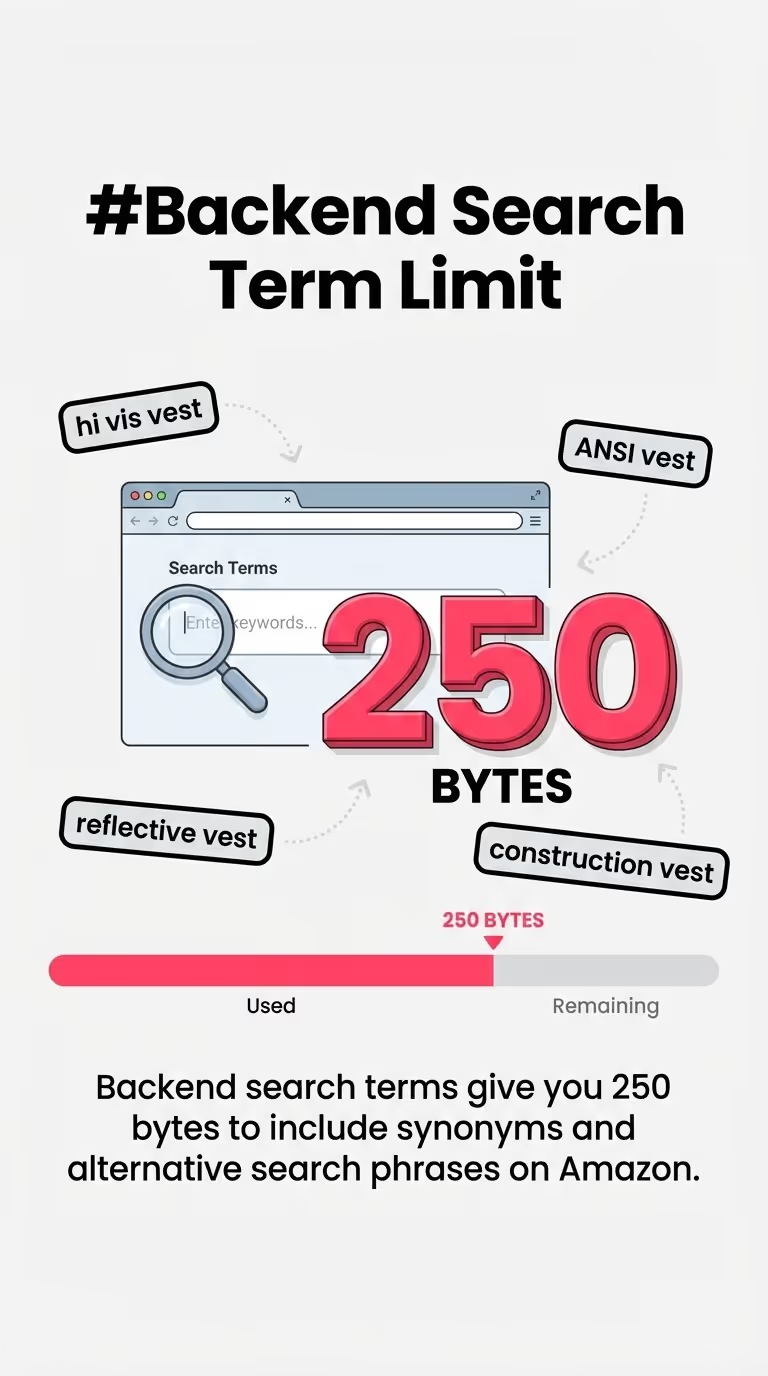
Use the full 250-byte backend search term limit for synonyms, misspellings, and industry abbreviations.
Don't repeat keywords already in your visible listing. If "steel toe boots" appears in your title, don't waste backend space repeating it.
Use backend terms for synonyms and alternate spellings: "steeltoe" (one word), "composite toe," "safety toe," "metatarsal guard."
Include common misspellings that customers actually search. If people search "carheart" instead of "Carhartt," add the misspelling to backend terms.
Add industry abbreviations that professionals use: "FR" for flame resistant, "HiVis" for high visibility, "PPE" for personal protective equipment.
Amazon advertising creates the sales velocity that organic rankings require. You can't wait for organic growth when competing against established brands with thousands of reviews.
Sponsored Products appear directly in search results and on product detail pages. They look identical to organic listings except for a small "Sponsored" label.
Start with automatic targeting campaigns. Amazon's algorithm tests your products across hundreds of keywords, identifying which searches convert best.
Set your initial bid at the suggested amount, then monitor performance daily for the first week. If your ACoS (Advertising Cost of Sales) exceeds 30%, lower bids by 15%.
After 7-10 days, download your search term report. This shows every keyword that triggered your ad and generated clicks or sales.
Identify search terms with multiple sales and conversion rates above 10%. Move these to manual targeting campaigns where you control bids precisely.
Add negative keywords for searches that generate clicks but no sales. If "work boots women" triggers your men's work boots ad, add it as a negative to stop wasting budget.
Sponsored Brands appear at the top of search results with your logo, custom headline, and three products. These ads work best for brands with multiple related products.
Use Sponsored Brands to own high-volume category keywords. Bid aggressively on searches like "work pants" or "safety boots" where you want brand visibility even if immediate ROI is lower.
Your headline should match search intent directly. For "flame resistant work shirts," use "Shop FR Work Shirts - NFPA Certified" not "Premium Workwear Brand."
Select your three products strategically: your best seller, your newest product, and your highest-margin item. This balances conversion rate with business objectives.
Sponsored Display ads appear on and off Amazon, targeting customers based on shopping behavior. Use these for two specific tactics.
First, retarget customers who viewed your products but didn't buy. These shoppers already showed interest, they just need another touchpoint.
Second, target customers viewing competitor products. When someone looks at a competing work boot listing, your Sponsored Display ad can appear suggesting they consider your alternative.
This works particularly well for brands competing against Amazon Basics workwear. Target their product detail pages with ads highlighting your superior durability or specialized features.
Organize campaigns by product category, not by ad type. Create separate campaign groups for work pants, work boots, safety vests, and gloves.
Within each category, run parallel automatic and manual campaigns. Let automatic campaigns discover new keywords while manual campaigns optimize your proven winners.
Set daily budgets high enough to collect meaningful data. A $10 daily budget might generate only 5-10 clicks, which isn't enough to determine keyword performance.
Start with $50-100 daily budgets per campaign group, then adjust based on ACoS and total sales volume.
Brand differentiation determines whether customers remember your workwear or treat it as another commodity option. Amazon pushes toward commoditization through price comparison and feature lists.
Your job is to create differentiation strong enough to overcome Amazon's structural advantages.
Most workwear brands use the same visual language: neutral colors, industrial backgrounds, and generic product shots. This makes every brand look interchangeable.
Choose a distinctive color palette that carries across all your products and marketing. If every competitor uses navy and gray, consider rust orange or forest green as your signature color.
Your product photography should use consistent lighting and angles. When customers see your images in search results, they should recognize your brand before reading the title.
Create a brand style guide documenting your color codes, typography, and image composition rules. Consistency across all touchpoints builds recognition faster than any single marketing campaign.
Workwear customers buy based on trust and proven performance. Your brand story should emphasize your understanding of their daily challenges.
If you're a family-owned business with manufacturing experience, that matters. Customers trust brands with genuine expertise over corporate entities that treat workwear as just another category.
Document your product development process. Show prototypes, field testing, and iterations based on customer feedback. This transparency builds credibility that Amazon's private labels can't match.
Share customer stories showing your workwear performing in extreme conditions. A roofer wearing your pants through a Texas summer carries more weight than any marketing claim about breathability.
You can't win on price against Amazon's buying power and logistics network. Don't try to compete there.
Instead, position your products at 20-30% premium pricing justified by superior materials, construction, or specialized features.
Make your value proposition crystal clear. If you charge $89 for work pants when Amazon sells similar pants at $49, explain exactly why yours last twice as long.
Use customer reviews to validate your pricing. When reviews consistently mention "worth the extra cost" or "best work pants I've owned," new customers feel confident paying premium prices.
Amazon controls the customer relationship on their marketplace. They own the email addresses, the purchase data, and the reorder reminders.
You need to convert Amazon customers into direct customers over time. Include branded product inserts with every order directing customers to your website for future purchases.
Offer exclusive products or colors only available on your site. This gives customers a reason to visit your store directly instead of defaulting to Amazon.
Build an email list through warranty registrations or care instructions. "Register your product for extended warranty" gives you permission to communicate directly with customers.
Create a loyalty program that rewards direct purchases. Points earned on your website can't be matched by Amazon, creating preference for buying direct.
Brand Registry unlocks advanced features that dramatically improve conversion rates and brand control. These tools separate professional brands from basic sellers.
Brand Registry requires a registered trademark, but it provides protections and features worth the investment. Registration prevents unauthorized sellers from hijacking your listings.
It also unlocks A+ Content, Sponsored Brands ads, and enhanced brand analytics. Without Brand Registry, you're competing with one hand tied behind your back.
The application process takes 2-3 weeks once you have your trademark. Apply even if you're not currently selling on Amazon, your trademark gives you priority when you do launch.
A+ Content replaces your basic product description with rich visual layouts, comparison charts, and detailed feature explanations. According to Amazon's own data, A+ Content increases conversion rates by an average of 5-10%.
Use the comparison module to position your product against competitor alternatives. Show side-by-side feature lists highlighting your advantages in material quality, stitching reinforcement, or safety certifications.
Include sizing charts and fit guides directly in your A+ Content. This reduces sizing-related returns and improves customer satisfaction ratings.
Show your products in real work environments through lifestyle imagery. Construction sites, warehouses, and manufacturing floors provide context that studio shots can't deliver.
Keep text minimal and scannable. Customers scroll through A+ Content quickly, looking for specific information. Use bold headers and short paragraphs.
Amazon Storefronts give you a custom URL showcasing your complete product catalog. This functions as your branded destination on Amazon.
Organize your storefront by use case rather than product type. Create sections for "Construction Workers," "Warehouse Staff," "Electricians," and "General Contractors."
This helps customers find relevant products faster than browsing through alphabetical product lists. It also positions you as understanding their specific needs.
Use your storefront hero image to establish brand identity immediately. Show your team, your manufacturing facility, or your products in action.
Add video content to your storefront homepage. A 60-second brand story video builds connection that product listings alone can't achieve.
Drive external traffic to your storefront URL through social media and email marketing. When you control where customers land on Amazon, you control their first impression.
Product Opportunity Explorer inside Brand Registry shows you high-demand, low-competition search terms in your category. This tool reveals gaps in the market that larger brands ignore.
Look for search terms with high volume but low number of competing products. "Women's work pants with tool loops" might show strong demand with only 15 active listings.
These gaps represent product development opportunities. If customers are searching for something that doesn't exist yet, you can be first to market.
Use the customer search behavior data to inform your keyword strategy. The tool shows which attributes customers prioritize: price, brand, color, size, or specific features.
Amazon SEO delivers results slower than paid advertising but builds sustainable traffic over time. Understanding realistic timelines prevents premature strategy changes.
Your first two weeks focus on listing optimization and initial traffic generation. Track these baseline metrics:
Your impressions should increase daily as Amazon's algorithm indexes your optimized listing. If impressions stay flat, your keywords don't match actual customer searches.
Click-through rate for workwear typically ranges from 0.3% to 1.5%. Below 0.3% indicates weak main images or non-competitive pricing.
Sales velocity begins driving organic ranking improvements. Monitor these progression metrics:
Your target keywords should move from page 3-4 up to page 2 during this period. Movement from unranked to page 3 shows the algorithm recognizes your listing relevance.
Organic sales percentage should reach 15-25% of total sales by week 4. If advertising still drives 100% of sales, your listing optimization needs improvement.
Compounding effects from reviews, sales history, and listing optimization create faster ranking improvements:
These targets assume consistent advertising support and active review generation. Results vary significantly based on competition level and product differentiation. (Conversion rate stats: My Amazon Guy)
After 90 days, evaluate strategic performance using these markers:
Strong brands see organic search percentages reach 60-70% by month six. This indicates sustainable visibility less dependent on advertising spend.
Track your Best Seller Rank (BSR) in relevant categories. BSR movement correlates directly with sales velocity and competitive positioning.
Monitor your advertising cost of sale (ACoS) trending downward as organic rankings improve. Target ACoS should drop from 30-35% initially to 20-25% by month six.
Compare your performance against top competitors in your workwear category:
Use tools like Jungle Scout or Helium 10 to track competitor sales estimates and keyword rankings. This data shows whether your optimization efforts are closing competitive gaps.
Set quarterly goals for closing specific gaps: "Achieve 75% of top competitor's review count" or "Rank in top 5 for 15 primary keywords."
You now have the complete framework for competing with Amazon in workwear search rankings. The strategies work, but only if you implement them systematically.
Start with product listing optimization this week. Rewrite your product titles using the formula from section four. Add backend search terms you've been missing. Upload additional product images showing your gear in real work environments.
Next, launch your first Sponsored Products campaign. Start with automatic targeting and a $50 daily budget. Let it run for seven days before making any changes.
Apply for Brand Registry if you haven't already. This unlocks A+ Content and Sponsored Brands capabilities that dramatically improve conversion rates.
Most workwear brands see meaningful ranking improvements within 60-90 days. But you have to start today, not next quarter when you have "more time" or "bigger budget."
Amazon isn't getting any easier to compete against. Their advantages compound daily through additional reviews, sales history, and customer data.
Your competitive advantage comes from understanding your specific customers better than Amazon's algorithm ever will. Use that knowledge to build listings that speak directly to construction workers, electricians, or warehouse staff.
Track your progress using the metrics from section seven. Celebrate small wins: your first page one ranking, your 25th review, your first week with organic sales exceeding ad sales.
These victories build momentum that carries you past competitors who give up after the first month of slow results.
The workwear brands winning on Amazon right now started exactly where you are today. They committed to consistent optimization, strategic advertising, and patience while the algorithm recognized their value.
Your next step is clear: open Seller Central and start implementing these strategies today.