
PPE manufacturers face a unique challenge. Your buyers aren't browsing social media for inspiration. They're deep in procurement mode, searching Google with precise technical queries at 2 AM because a production line needs new gear.
I've worked with industrial clients long enough to know this truth: The moment a safety manager types "ANSI-certified cut-resistant gloves food processing" into Google, they're already 70% through their buying journey. If your site doesn't show up, you've lost them to a competitor who understood industrial SEO.
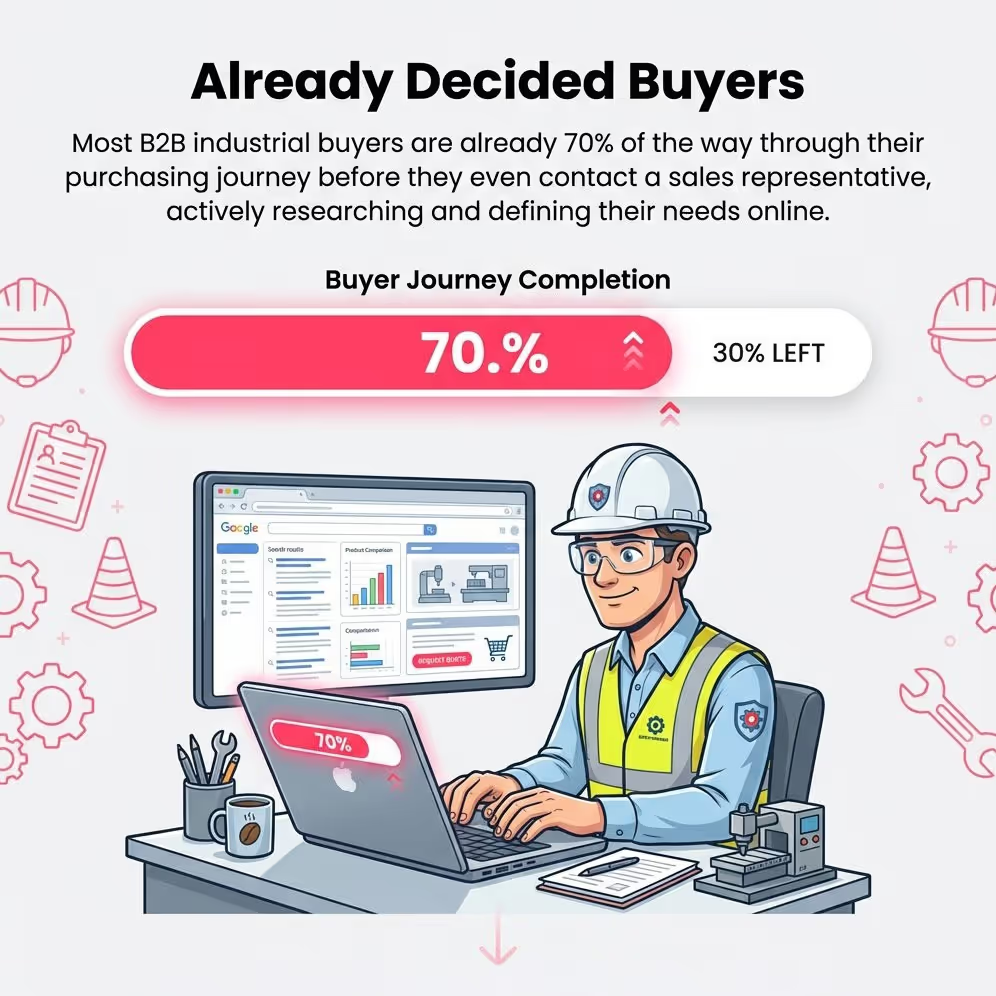
By the time safety managers search with precise specs, they're 70% through the buying journey—be present in those results.
Here's what makes PPE different from consumer products. Your buyers need specifications, certifications, and compliance data before they'll even consider a quote request. Generic SEO tactics designed for B2C brands won't cut it when your audience includes procurement teams managing million-dollar safety budgets.
This guide shows you exactly how to optimize for the way industrial buyers actually search. We'll cover keyword research that targets procurement language, product page optimization that answers technical questions, and content strategies that build authority with safety managers. By the end, you'll have a clear roadmap to capture high-intent industrial traffic.
The payoff? More qualified leads, shorter sales cycles, and a competitive edge in an industry where most manufacturers still treat SEO as an afterthought.
Industrial buyers search nothing like consumers. When someone needs work gloves for their home garage, they might Google "best work gloves." When a procurement manager needs PPE for a 200-person facility, they search "cut-resistant gloves ANSI A4 chemical resistant food grade."
This difference matters more than you think. Industrial searches are longer, more specific, and packed with technical terminology. Your SEO strategy needs to match this precision.
Industrial buyers research online extensively before contacting vendors. They're evaluating multiple suppliers, comparing specifications, and building business cases for their purchasing decisions. This research phase happens almost entirely through search engines.
Safety managers and procurement teams typically search for three things. First, they need products that meet specific regulatory requirements. Second, they want technical specifications to ensure compatibility. Third, they're looking for suppliers who understand their industry's unique challenges.
Your job is to be visible at every stage of this research process. That means ranking for broad category terms, specific product searches, and long-tail technical queries.
Different industrial buyers use different search language. A safety manager might search "OSHA-compliant fall protection harness construction." A procurement specialist might use "bulk industrial safety harness vendor pricing." An operations manager might look for "fall protection equipment manufacturing facility."
Create buyer personas for each decision-maker in your target accounts. Document their responsibilities, pain points, and the technical language they use daily. This persona research becomes your keyword foundation.
Map keywords to buyer journey stages too. Early-stage searches focus on compliance requirements and safety standards. Mid-stage searches compare specific product features. Late-stage searches include vendor qualifications and procurement terms.
Standard keyword tools miss the nuances of industrial search. You need a research process built specifically for B2B technical products.
Start with your existing customer conversations. What exact phrases do safety managers use when they call? What questions appear repeatedly in RFQs? This real-world language beats any keyword tool for accuracy.
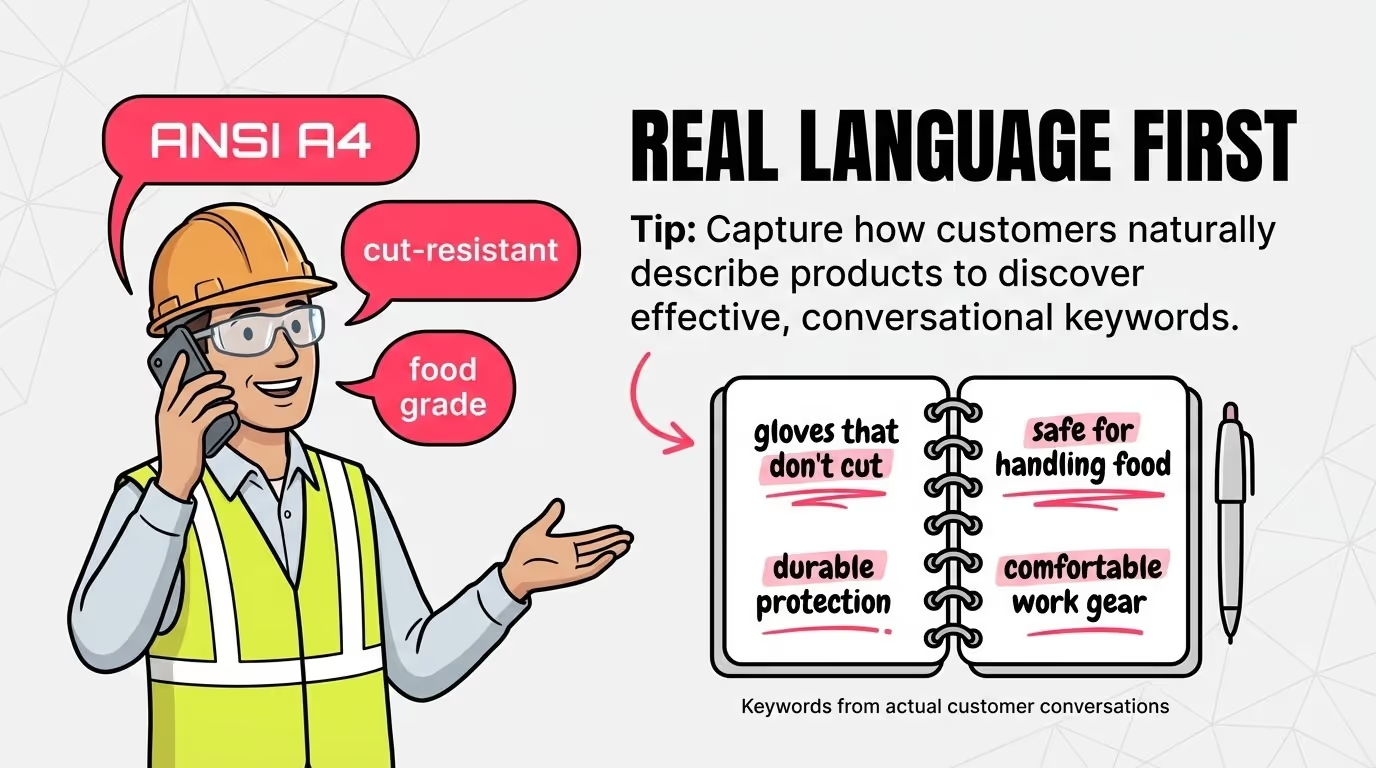
Mine verbatim phrases from customer calls and RFQs to seed high-intent industrial keywords.
Long-tail keywords are gold for PPE manufacturers. While "work gloves" gets massive search volume, it's too broad and competitive. "Chemical-resistant nitrile gloves pharmaceutical cleanroom" has lower volume but drastically higher purchase intent.
Build long-tail keyword lists around these frameworks. Combine product categories with industry applications, like "hearing protection construction sites" or "safety glasses machine shop." Layer in compliance requirements like "ANSI Z87.1 safety eyewear" or "NFPA-rated protective clothing."
Include equipment compatibility terms. Industrial buyers often search for PPE that works with existing systems. Think "respirator cartridges compatible with 3M 6000 series" or "replacement lenses Uvex safety glasses."
Use Google's autocomplete and "People Also Ask" features to uncover real industrial search patterns. Type your core products into Google and note every suggested completion. These suggestions reflect actual search queries from your target audience.
Identify which keywords your competitors rank for that you don't. Use tools like Ahrefs or SEMrush to analyze their top-performing pages. Look specifically for product categories or technical terms where they dominate.
But don't just copy competitor keywords. Find gaps where industrial buyers have questions that nobody's answering well. These untapped opportunities often convert better than crowded terms.
Document your keyword research in a spreadsheet with columns for search intent, buyer persona, journey stage, and estimated value. This organization helps prioritize which keywords to target first for maximum lead generation impact.
Your product pages are the workhorses of PPE SEO. They need to rank for specific product searches while providing all the technical data industrial buyers demand.
Most PPE manufacturer websites fail here. They treat product pages like simple catalogs instead of conversion engines. Industrial buyers need specifications, certifications, application guidance, and procurement information, all on the same page.
Start each product page with a clear H1 that includes your target keyword. "ANSI Cut-Resistant Gloves for Food Processing Facilities" works better than just "Cut-Resistant Gloves."
Write a 150-200 word opening paragraph that immediately addresses buyer needs. Include your primary keyword naturally, but focus on answering the core question: Why does this product solve their specific industrial safety challenge?
Break specifications into scannable sections with clear H2 and H3 headings. Industrial buyers skim quickly, looking for specific data points. Make those data points easy to find.
Create a detailed specifications table for every product. Include all technical details industrial buyers search for: materials, sizes, certifications, compliance standards, temperature ratings, chemical resistance, and more.
Format specifications as structured HTML tables, not images. Search engines can't read text in images, which means you miss out on ranking opportunities for specification-based searches.

Use structured HTML tables for specs so search engines can parse and rank for specification-driven queries.
Include certification details prominently. Industrial buyers in Europe specifically look for CE marking, which indicates conformity with EU safety, health, and environmental protection standards. While CE certification isn't a Google ranking factor, it's a trust signal that improves conversion rates.
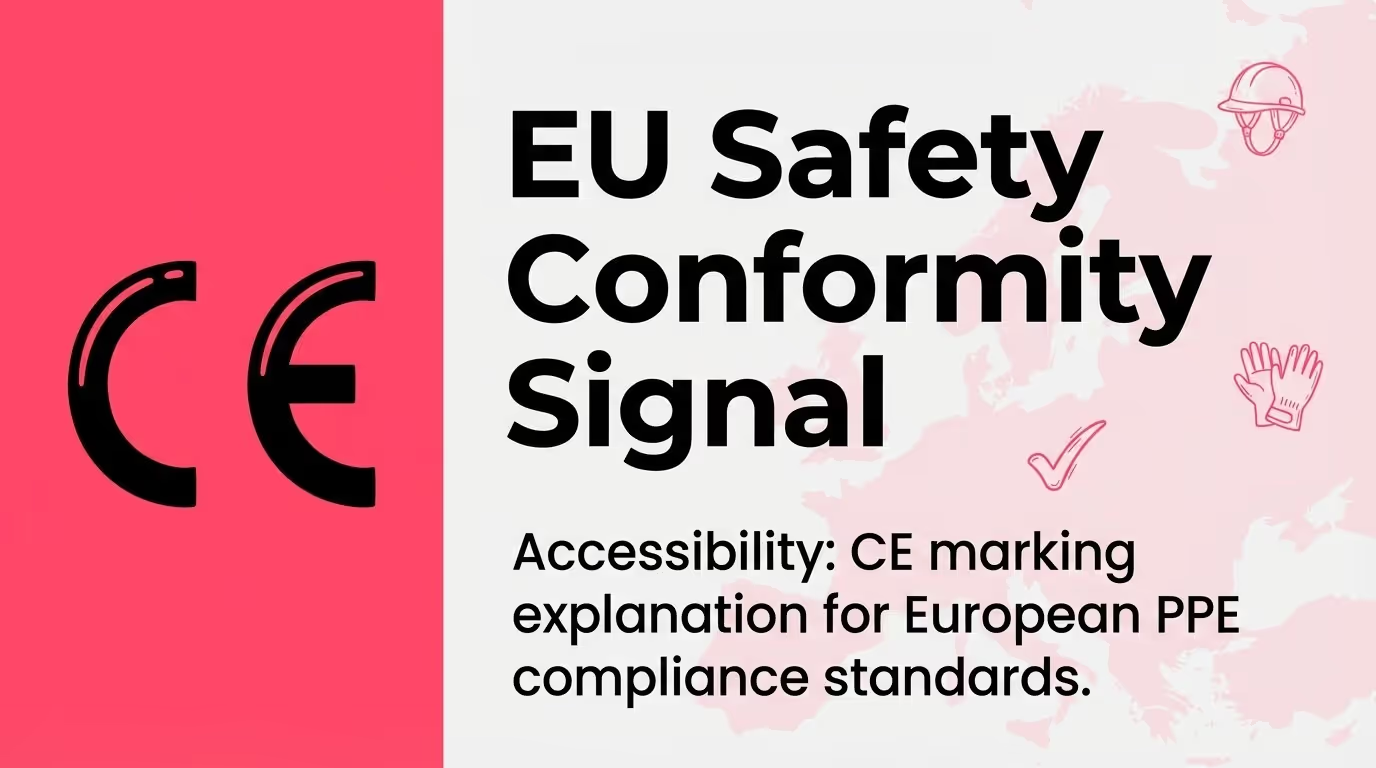
CE marking is a strong trust signal for EU buyers—feature it clearly on product pages and spec sheets.
Add an "Applications" section to every product page describing specific industrial scenarios where this PPE works best. Use real industry language that matches how buyers think about their challenges.
For example, don't just say "suitable for industrial use." Instead, write "Ideal for automotive assembly lines where workers handle sharp metal components and require dexterity for precision tasks."
This application-focused content captures long-tail searches and helps industrial buyers self-identify whether your product matches their needs. It also provides natural opportunities to include industry-specific keywords.
Product pages alone won't capture industrial buyers early in their research. You need educational content that establishes your authority on safety standards, regulations, and best practices.
Think about the questions safety managers ask before they even know which specific products they need. They're researching compliance requirements, evaluating hazard assessments, and trying to understand which PPE categories apply to their situations.
Write detailed guides on safety regulations relevant to your target industries. "Complete Guide to OSHA Fall Protection Requirements for Construction Sites" or "Understanding ANSI Z87.1 Eye Protection Standards for Manufacturing Facilities."
These guides should be genuinely useful, not thinly veiled product pitches. Explain the regulations clearly, break down compliance requirements, and help readers understand how to evaluate their needs. Only then should you mention how your products help meet those requirements.
Target these guides at specific buyer personas. A guide for safety managers should focus on compliance and liability reduction. A guide for operations managers should emphasize productivity and worker acceptance. A procurement-focused guide should cover vendor evaluation criteria.
Create content tailored to the industries you serve. If you target food processing facilities, write about chemical hazards specific to food production. If you serve construction, address jobsite-specific safety challenges.
This industry specialization helps you rank for more targeted searches and builds credibility with buyers who need suppliers that understand their specific environment. Generic safety content gets ignored; industry-specific insights get shared and linked.
Consider creating content around emerging industry trends. The PPE market shows growing interest in sustainable and eco-friendly materials, with increasing demand for chemical-free products and sustainable fabrics. Writing about sustainable PPE options positions you for future-focused buyers.
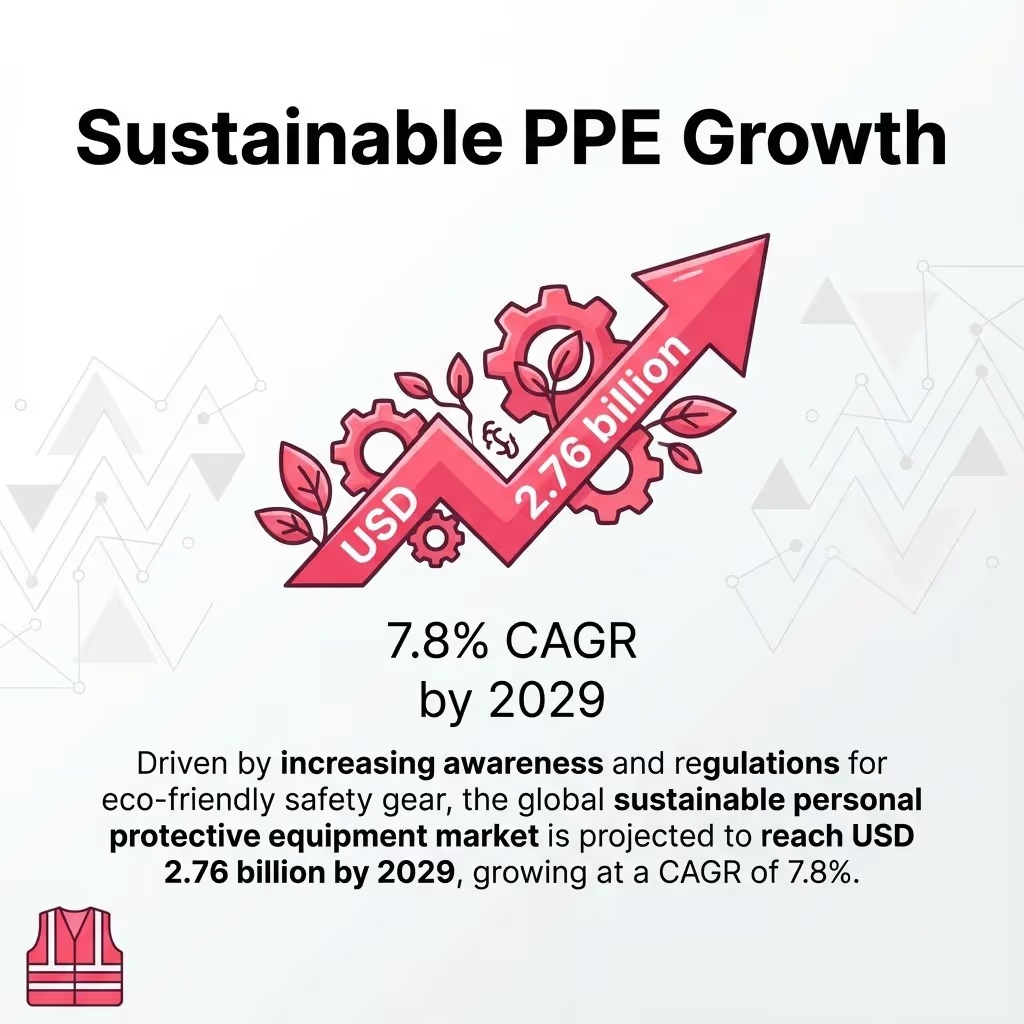
Sustainable PPE demand is rising—high-visibility clothing projected to reach $2.76B by 2029 (7.8% CAGR).
Industrial buyers love comparison content that helps them evaluate options. Create guides like "Cut-Resistant Glove Materials Compared: HPPE vs. Kevlar vs. Dyneema" or "Respirator Types Explained: When to Use N95 vs. P100 vs. Powered Air-Purifying."
These comparisons capture commercial-intent searches from buyers actively evaluating which product type to purchase. They also provide opportunities for internal linking to relevant product pages.
Format comparisons as detailed tables that search engines can parse. Include objective data about performance characteristics, not just marketing claims about why your products are best.
Content and keywords matter, but technical SEO issues can kill your rankings before you start. Industrial B2B sites often have unique technical challenges that need addressing.
Run a complete technical SEO audit before investing heavily in content. Use tools like Screaming Frog or SEMrush to identify crawl errors, broken links, duplicate content, and indexing issues.
PPE manufacturers often have hundreds or thousands of product SKUs. Poor site structure makes it hard for both users and search engines to navigate this complexity.
Organize products hierarchically with clear category and subcategory pages. Start with broad categories like "Hand Protection" or "Respiratory Protection," then create subcategories like "Cut-Resistant Gloves" or "Disposable Respirators," and finally individual product pages.
Each category page should target broader keywords and provide overview content. Individual product pages target specific long-tail queries. This structure allows you to rank for both broad category searches and ultra-specific product searches.
Implement breadcrumb navigation on every page. Breadcrumbs help users understand where they are in your catalog and provide internal linking benefits. They also appear in search results, improving click-through rates.
Industrial buyers increasingly research on mobile devices, even for B2B purchases. Safety managers checking specifications from a jobsite or warehouse need your site to load fast on mobile networks.
Test your site speed using Google PageSpeed Insights. Focus on improving Core Web Vitals, especially Largest Contentful Paint and Cumulative Layout Shift.
Optimize product images aggressively. High-resolution PPE product photos are important, but they don't need to be 5MB files. Use modern formats like WebP and implement lazy loading so images only load as users scroll.
Ensure your site is fully responsive on mobile devices. Test key user journeys like finding a product, viewing specifications, and submitting an RFQ form on various mobile screen sizes.
Write unique title tags and meta descriptions for every page. Your title tag should include your primary keyword and stay under 60 characters. Meta descriptions should be compelling, include keywords naturally, and stay under 155 characters.
For product pages, follow this title tag formula: "[Product Name] | [Key Feature/Certification] | [Your Brand]." For example: "Cut-Resistant Gloves | ANSI A4 Certified | SafetyPro Industries."
Use header tags (H1, H2, H3) strategically to organize content. Include keywords in headers naturally, but prioritize clarity and user experience over keyword stuffing.
Add descriptive alt text to all product images. Alt text helps visually impaired users and provides another opportunity to include relevant keywords. Describe what's actually in the image: "Worker wearing ANSI-certified cut-resistant gloves handling metal components."
Long-tail keywords deserve their own strategy because they're disproportionately valuable for PPE manufacturers. While they have lower search volume individually, they convert at much higher rates.
Industrial buyers using long-tail searches know exactly what they need. They've already done preliminary research and are now looking for specific solutions. Capturing these searches means attracting buyers ready to request quotes.
Group related long-tail keywords into topic clusters. Create a pillar page targeting the broad topic, then build supporting pages for specific long-tail variations.
For example, a pillar page on "Chemical-Resistant Gloves" might link to supporting pages like "Chemical-Resistant Gloves for Pharmaceutical Cleanrooms," "Chemical-Resistant Gloves for Automotive Paint Shops," and "Chemical-Resistant Gloves for Agricultural Chemical Handling."
Each supporting page targets a specific long-tail keyword and addresses that particular use case in detail. This structure helps you rank for numerous related searches while building topical authority.
Internal link between cluster pages strategically. Link from specific pages up to the pillar page and from the pillar page down to specific pages. This linking structure helps search engines understand content relationships.
Industrial buyers increasingly use voice search, especially when researching on mobile devices. Voice queries tend to be longer and more conversational than typed searches.
Optimize for voice by targeting question-based keywords. Instead of just "fall protection harness specifications," also target "what specifications should I look for in a fall protection harness."
Create FAQ sections on category and product pages that directly answer common questions. Format these as actual questions followed by clear, concise answers. Search engines often pull these for featured snippets.
Write in natural language that matches how people actually speak. While "ANSI-certified gloves" works for typed searches, voice searchers might ask "what safety gloves are ANSI certified for cut protection."
Link building for B2B industrial companies requires different tactics than consumer brands. You're not going to get featured in lifestyle blogs or viral social media posts.
Instead, focus on earning links from industry publications, safety organizations, trade associations, and complementary B2B companies. These links carry more weight with search engines for industrial queries.
Identify industry publications that your target buyers read. These might include safety trade magazines, industry-specific journals, or professional association newsletters.
Pitch article ideas that provide genuine value to their readers. Don't pitch thinly disguised product promotions. Instead, offer data-driven insights, safety trend analysis, or technical guides that happen to mention your expertise.
Share original research or survey data when possible. Publications love citing original statistics. If you survey safety managers about their biggest PPE challenges, you'll earn links when other sites reference your data.
Build relationships with industry journalists who cover workplace safety, manufacturing, or your target verticals. Become a go-to expert source they can quote in articles.
Join relevant trade associations in your target industries. Many association websites include member directories with links to member companies. These industry-relevant links boost your topical authority.
Participate actively in industry organizations beyond just paying dues. Speak at conferences, contribute to working groups, or write articles for association publications. This engagement often results in natural backlinks.
If your products meet specific safety standards, reach out to the organizations that manage those standards. Sometimes you can get listed as a certified provider or approved supplier on their websites.
Leverage your existing business relationships for links. Distributors who carry your products might link from their supplier pages. Complementary product manufacturers might link when discussing complete safety solutions.
Create partner resources that provide value worth linking to. This might include co-branded safety guides, integration documentation, or technical compatibility information.
Don't overlook links from your own supply chain. Material suppliers, certification bodies, and manufacturing partners may have legitimate reasons to link to your site.
Schema markup is structured data that helps search engines understand your content better. For PPE manufacturers, proper schema can make your products stand out in search results.
Implement Product schema on every product page. This markup tells search engines about your product name, description, image, brand, SKU, and other key details.
Add Product schema that includes all relevant product properties. At minimum, include name, description, image, brand, manufacturer, and model number. Also add product identifiers like GTIN, MPN, or SKU when available.
Include aggregate rating and review schema if you have customer reviews. Star ratings displayed in search results significantly improve click-through rates, even for B2B products.
Add price schema carefully. If you display prices publicly, include them in schema markup. If you require quote requests, you can omit price or use "Price on Request" with appropriate schema formatting.
Use the offers property to indicate product availability, shipping details, and where buyers can purchase. For B2B products, you might link to an RFQ form rather than a direct purchase button.
Implement Article schema on blog posts and educational content. This helps search engines understand your content type and can enable enhanced search features like article carousels.
Add FAQ schema to pages with question-answer content. This markup makes your answers eligible for featured snippets and Google's "People Also Ask" boxes.
Use HowTo schema for step-by-step guides or implementation instructions. This structured format can trigger special search result displays that improve visibility.
Test your schema implementation using Google's Rich Results Test. This tool identifies schema errors and shows how your markup appears to search engines.
Content marketing for PPE manufacturers differs dramatically from consumer content strategies. Your audience doesn't want entertainment; they want practical information that helps them do their jobs better.
Create content that demonstrates deep industry knowledge and practical application experience. Industrial buyers can spot generic safety content from a mile away. They respect suppliers who understand their specific operational challenges.
Document how your PPE solved specific safety challenges for industrial customers. Strong case studies include the customer's initial problem, the solution you provided, and quantifiable results.
Get specific about industries, applications, and outcomes. "Reduced hand injuries by 40% in automotive stamping facility" carries more weight than "improved worker safety."
Include technical details about product selection criteria and implementation challenges. Industrial buyers want to understand your problem-solving process, not just the happy ending.
Optimize case studies for search by including industry-specific keywords and application terms. Someone searching "PPE solutions chemical processing facility" should find relevant case studies.
Create detailed guides for selecting and using PPE in specific applications. "Complete Guide to Hand Protection for Metalworking Operations" or "Respiratory Protection Selection for Pharmaceutical Manufacturing."
Make these guides genuinely comprehensive. Industrial buyers bookmark and share truly useful technical resources. Shallow content gets ignored.
Include selection flowcharts, compatibility charts, and decision matrices that help buyers evaluate options. Visual decision aids get referenced repeatedly.
Offer these resources as gated downloadable PDFs to capture leads. Industrial buyers will exchange contact information for genuinely valuable technical content.
Create video content showing your PPE in actual use. Industrial buyers want to see how products perform in real working conditions, not studio demonstrations.
Film proper wearing procedures, fit adjustments, and maintenance requirements. These practical videos answer common buyer questions and reduce implementation concerns.
Optimize video titles, descriptions, and tags for search. Upload to YouTube and embed on relevant website pages. Video content often ranks in search results and provides another way to capture industrial buyers.
For more strategies on industrial lead generation through content, check out our guide on using product data for industrial SEO lead generation.
You can't optimize what you don't measure. Set up proper analytics tracking to understand which SEO efforts drive qualified industrial leads.
Industrial SEO success isn't measured by total traffic volume. It's measured by qualified inquiries from real potential buyers. Track metrics that matter for B2B lead generation.
Track organic search traffic to product pages, category pages, and educational content separately. Understanding which content types attract visitors helps you prioritize creation efforts.
Monitor specific keyword rankings for your target terms. Focus on tracking long-tail industrial keywords that indicate buyer intent, not vanity metrics like ranking for single-word terms.
Measure conversion rates from organic traffic to key actions: RFQ form submissions, quote requests, technical document downloads, and contact inquiries. These conversions matter more than traffic volume.
Track time on site and pages per session for organic visitors. Industrial buyers who spend significant time reviewing specifications and technical content are more qualified leads.
For detailed guidance on measuring industrial lead generation performance, see our complete analytics guide for B2B lead generation.
Configure Google Analytics goals for every conversion action on your site. Track RFQ submissions, quote requests, brochure downloads, and contact form completions as separate goals.
Set up event tracking for key user interactions like viewing technical specifications, downloading spec sheets, or watching product videos. These micro-conversions indicate buyer interest even before formal inquiries.
Create custom segments to isolate organic search traffic from industrial buyers. Filter by company size, industry verticals, or geographic regions if that data is available.
Connect your CRM to analytics data to track which organic search visits eventually convert to customers. This closed-loop tracking shows true SEO ROI for PPE manufacturers.
Use Google Search Console to identify which queries drive impressions and clicks to your site. Sort by impression volume to find keywords where you rank but aren't getting clicks.
Look for queries where you rank on page two. These represent quick-win optimization opportunities. Small improvements can push these pages to page one where they'll drive significantly more traffic.
Monitor click-through rates for your key product pages. Low CTR despite good rankings indicates your title tags and meta descriptions need improvement.
Track which pages earn featured snippets or "People Also Ask" placements. Analyze what content format earned these enhanced results, then replicate that format for other target keywords.
The ultimate goal of PPE manufacturer SEO isn't rankings or traffic. It's generating qualified leads from industrial buyers ready to make procurement decisions.
Optimize your entire site experience to convert organic traffic into sales conversations. Every element should guide visitors toward contacting your sales team.
Include multiple clear calls-to-action on every product page. Offer various engagement options: request a quote, download technical specifications, speak with a product specialist, or request samples.
Make RFQ forms simple and intuitive. Industrial buyers will provide detailed information, but they won't struggle with confusing forms. Ask for essential information only: company, application, quantity needs, and contact details.
Show trust signals prominently on product pages. Display certifications, safety compliance badges, industry memberships, and customer logos to build credibility with first-time visitors.
Include direct contact options for buyers who prefer speaking with sales. Display phone numbers and offer live chat during business hours. Some industrial buyers want immediate answers before submitting formal inquiries.
Learn more about optimizing RFQ conversion rates in our CRO tactics guide for industrial equipment dealers.
Create valuable downloadable resources that capture contact information. Technical guides, selection tools, compliance checklists, and specification comparison charts work well for industrial audiences.
Gate your best content behind simple forms. Ask for name, email, company, and role. Don't request unnecessary information that creates friction.
Deliver immediate value after form submission. Don't make buyers wait for sales follow-up to access promised resources. Automated email delivery builds trust and starts the relationship positively.
Use marketing automation to nurture leads who download resources. Send relevant follow-up content based on which resources they accessed. This nurture process keeps you top-of-mind during their research phase.
Ensure your sales team can access detailed information about leads from organic search. What pages did they visit? What specifications did they review? What content did they download? This intelligence helps sales reps tailor their outreach.
Create lead scoring models that prioritize inquiries based on buyer signals. Someone who viewed multiple product pages, downloaded spec sheets, and submitted an RFQ deserves faster sales response than someone who only visited once.
Track lead source attribution carefully. Knowing which keywords, pages, and content types generate the highest-quality leads helps you refine your SEO strategy toward maximum ROI.
Industrial PPE purchases typically involve multiple decision-makers and extended evaluation periods. Your SEO strategy needs to support buyers through this complex journey.
Map content to each stage of the industrial buying process. Early-stage buyers need educational content about safety requirements and compliance. Mid-stage buyers compare specific products and suppliers. Late-stage buyers evaluate procurement terms and implementation support.
Safety managers focus on regulatory compliance and liability reduction. Create content that demonstrates how your products meet or exceed safety standards and reduce workplace injury risk.
Procurement specialists care about supplier reliability, pricing structures, and order flexibility. Develop content addressing vendor qualifications, quality assurance processes, and customer service capabilities.
Operations managers prioritize worker acceptance, productivity impact, and ease of implementation. Produce content showing how your PPE performs in real working conditions without hindering job performance.
Each buyer persona needs targeted content that addresses their specific concerns and speaks their professional language. Generic content that tries to appeal to everyone ends up resonating with no one.
Industrial buyers rarely convert on their first visit. They research extensively across multiple sessions before contacting suppliers. Your analytics should reflect this reality.
Use multi-touch attribution models instead of last-click attribution. Understanding the full sequence of touchpoints that lead to conversions helps you value each content piece appropriately.
Track assisted conversions to see which pages play supporting roles in the buyer journey. A technical guide might not directly generate leads, but it might be viewed by 80% of buyers who eventually submit RFQs.
For deeper analysis of buyer behavior patterns, explore our 3x3x3 analytical framework for improving lead generation.
Once you've mastered foundational SEO, these advanced tactics can help you dominate competitive industrial safety markets.
These strategies require more resources and technical expertise, but they deliver significant competitive advantages in crowded PPE categories.
If you manufacture hundreds or thousands of PPE SKUs, manually optimizing individual product pages becomes impractical. Programmatic SEO uses templates and automation to create optimized pages at scale.
Develop template structures that pull product specifications from your database and automatically generate optimized content. Each page should still be unique and valuable, not thin duplicates.
Create faceted navigation that generates unique category pages for different filter combinations. "Cut-resistant gloves for food processing" and "chemical-resistant gloves for food processing" become separate landing pages targeting different searches.
Implement canonical tags carefully to avoid duplicate content penalties. When similar products or filter combinations create near-identical pages, canonical tags tell search engines which version to prioritize.
Many PPE manufacturers sell internationally, requiring optimization for multiple countries and languages. International SEO introduces complexity around language, currency, regulations, and cultural differences.
Implement hreflang tags to tell search engines which language versions to show users in different countries. This prevents showing English content to Spanish searchers or vice versa.
Create truly localized content, not just translations. Safety regulations vary by country. A guide to fall protection requirements needs different content for US (OSHA), European (EN standards), and Australian (AS/NZS) audiences.
Build country-specific backlinks from local industry publications, safety organizations, and business directories. These regional signals help you rank in local search results.
Identify competitor pages ranking well for your target keywords. Analyze why they rank and create superior content that deserves to replace them in search results.
Make your content more detailed, better organized, and more visually engaging. Add elements competitors lack: comparison tables, video demonstrations, downloadable resources, or interactive selection tools.
Earn better backlinks than competitors by creating genuinely linkable assets. Original research, industry surveys, or free tools naturally attract links that boost your rankings.
Target featured snippets occupied by competitors. Format your content specifically to answer questions directly and concisely. Structured content in paragraph, list, or table format often wins snippet placement.
SEO for PPE manufacturers isn't a one-time project. Markets evolve, regulations change, competitors adapt, and search algorithms update. Sustained success requires ongoing attention.
Build SEO maintenance into your regular marketing operations. Set aside resources for content updates, technical maintenance, and strategy refinement.
Audit your existing content quarterly. Identify pages that have dropped in rankings or show declining traffic. These pages need updates to remain competitive.
Update technical content when safety standards or regulations change. Outdated compliance information damages your credibility and rankings. Stay current with industry developments.
Expand top-performing content to maintain its competitive advantage. If a guide ranks well, make it even more detailed. Add new sections, updated statistics, or additional examples.
Prune or consolidate underperforming content. Pages that don't rank well or attract traffic may be diluting your site's overall authority. Consider merging thin content into stronger pages.
Monitor Google algorithm updates and their impact on your rankings. Major updates can shift industrial search results significantly. Understanding these changes helps you adapt quickly.
Focus on fundamental quality signals rather than chasing algorithm-specific tactics. Sites with genuinely useful content, strong technical foundations, and authoritative backlinks weather algorithm changes better than sites relying on tricks.
Diversify your traffic sources beyond organic search alone. Combine SEO with targeted PPE PPC campaigns, email marketing, and industry partnerships. This diversification protects against temporary ranking fluctuations.
Industrial SEO best practices evolve constantly. Invest in ongoing education through industry publications, SEO conferences, and professional development.
Test new tactics on a small scale before full implementation. Try different content formats, page structures, or optimization approaches on a few pages. Scale successful experiments across your site.
Learn from both successes and failures. When pages rank well, document what worked. When optimization efforts fail, analyze why and adjust your approach.
For additional perspectives on industrial SEO challenges, see our guide on content marketing for technical industries.
You now have a complete roadmap for capturing industrial buyers through search. The strategies in this guide work specifically because they align with how safety managers and procurement teams actually research PPE.
Start with keyword research focused on technical terms and long-tail industrial queries. Build that foundation before creating content. Understanding search intent drives every other decision.
Optimize your product pages next. These pages carry the most immediate business value. Add specifications, certifications, and application details that industrial buyers demand.
Then expand into educational content that builds authority. Create compliance guides, technical resources, and industry-specific materials that demonstrate your expertise.
Don't neglect technical SEO fundamentals. Site speed, mobile optimization, and proper schema markup determine whether your great content actually ranks.
Measure everything. Track keyword rankings, organic traffic, and most importantly, qualified lead generation. Let data guide your optimization priorities.
SEO for PPE manufacturers is a long game. You won't see results overnight. But industrial buyers are searching right now for the products you manufacture. Every day you're not visible in those searches, you're losing leads to competitors who invested in their organic presence.
The manufacturers winning industrial search didn't get there by accident. They built systematic SEO programs focused on how their buyers actually search. You can do the same.