
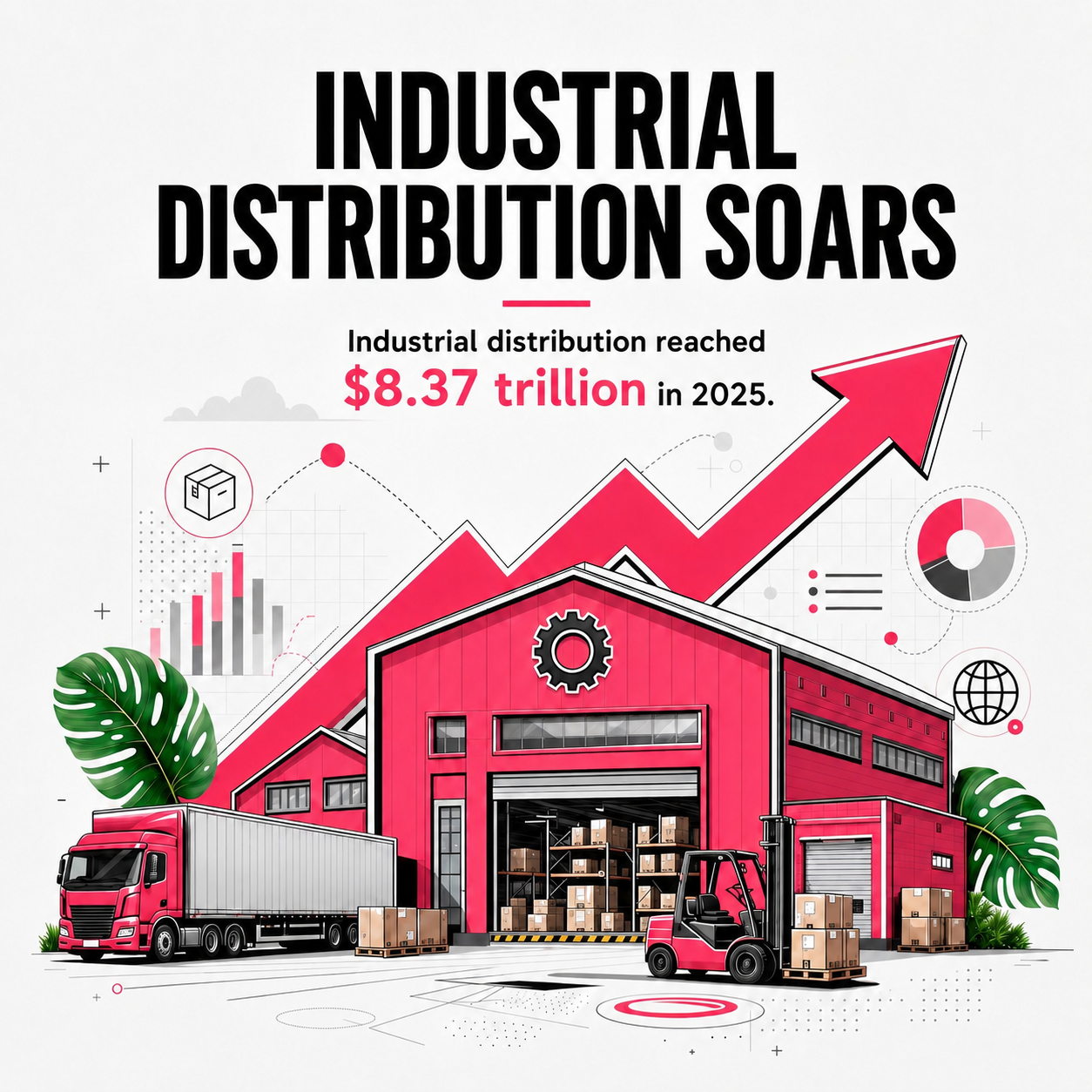
OEM parts suppliers operate in a market where industrial distribution reached $8.37 trillion in 2025, with buyers demanding exact-match components under severe time pressure. PPC campaigns for OEM parts require product feeds built around manufacturer part numbers, compatibility data, and technical specifications rather than broad consumer terms.
High-intent industrial buyers search differently than retail customers. They use precise alphanumeric codes, OEM brand names, and equipment model numbers rather than descriptive phrases. Search campaigns structured around part-number match types, Shopping feeds with complete ACES/PIES data, and display remarketing to procurement professionals deliver measurably better results than generic automotive advertising approaches. The maintenance, repair, and operations sector alone will exceed $500 billion by 2031, creating substantial opportunity for suppliers who understand industrial buyer intent.

I've watched OEM parts suppliers burn through ad budgets targeting "auto parts" and "car accessories" when their actual buyers are maintenance engineers searching "ACDelco 12345678" at 2 AM because a conveyor system just died. The disconnect is painful.
Industrial buyers don't browse. They hunt.
When a fleet manager needs a specific OEM component, they're not comparing features or reading reviews. They're verifying compatibility, checking availability, and comparing lead times. Your PPC campaigns need to intercept these high-intent searches with surgical precision, not broadcast generic automotive messaging to casual DIY enthusiasts.
This guide walks through exactly how to structure Google Ads campaigns that speak the language industrial buyers actually use, part numbers, OEM specifications, and equipment compatibility, while avoiding the common mistakes that make OEM suppliers invisible to their most valuable customers.
Industrial procurement happens under conditions retail marketing never encounters. A maintenance supervisor searching for an OEM bearing at midnight isn't comparison shopping, they're solving a crisis that's costing their company thousands of dollars per hour.
Retail customers search "best brake pads for Honda Civic." Industrial buyers search "ACDelco 18FR2098 OEM rotor" or "Motorcraft BRF-100 specification sheet." The specificity tells you everything about intent.
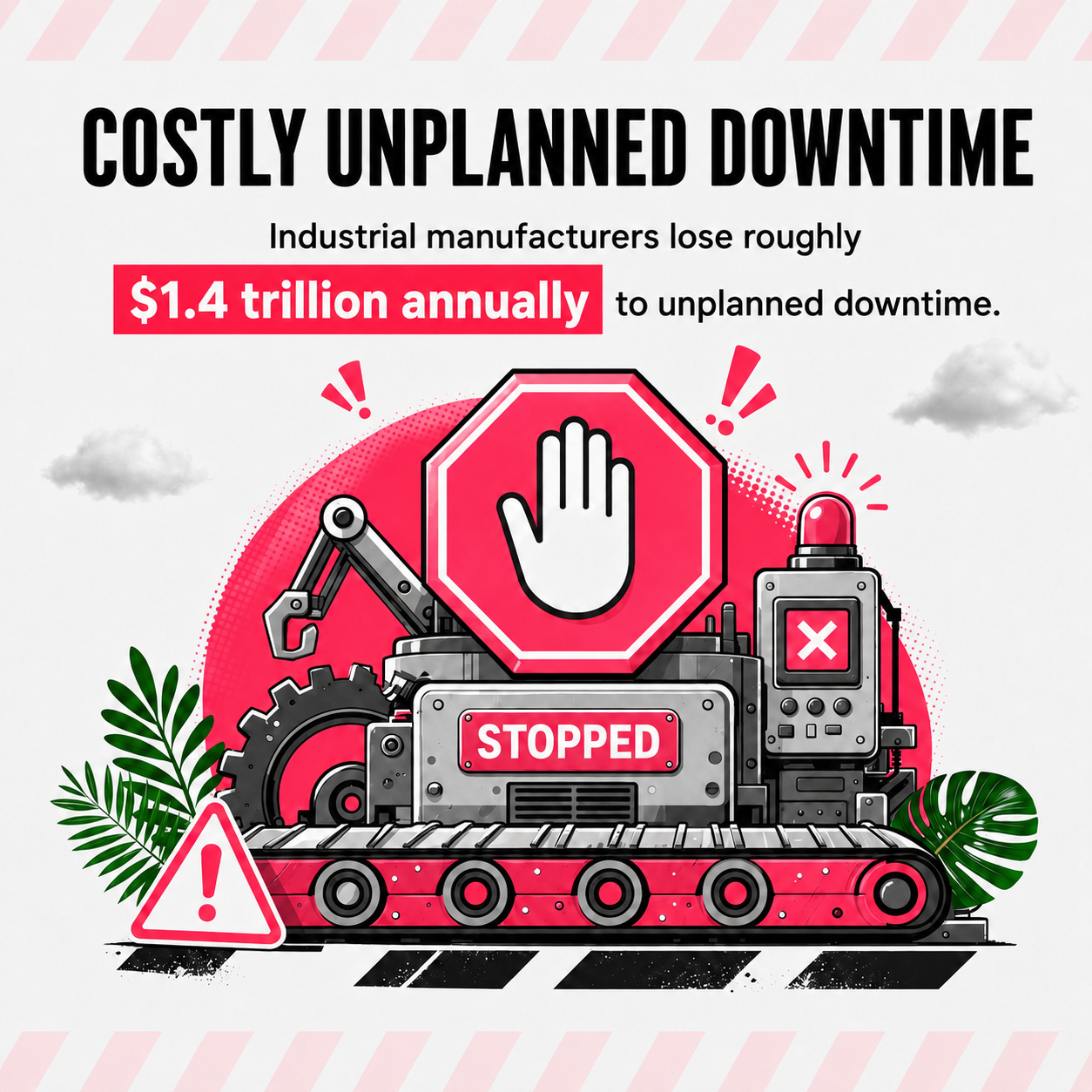
Industrial manufacturers lose roughly $1.4 trillion annually to unplanned downtime, which explains why procurement professionals value speed and certainty over price. They need the exact part, verified compatible, available immediately.
This creates a completely different PPC landscape. Your campaigns must prioritize part-number accuracy, technical specification matching, and availability messaging over lifestyle imagery and emotional appeals.
When someone types a full manufacturer part number into Google, they've already completed 90% of their buying journey. They know exactly what they need.
These searches represent the highest commercial intent in the entire OEM parts market. No research phase, no consideration stage, just immediate purchase intent waiting for the right supplier to appear.
Your PPC campaigns must capture these searches with exact-match keywords, ad copy that mirrors the part number verbatim, and landing pages that confirm compatibility within three seconds of arrival.
Industrial buyers scan for three data points: part number match, compatibility confirmation, and availability status. Everything else is friction.
Ad copy that reads "Quality OEM Parts at Great Prices!" loses to "ACDelco 12345678 - In Stock - Ships Today - Fits 2018-2023 Models." Specificity wins every time.
This principle extends to your entire campaign structure. Generic ad groups targeting "automotive OEM parts" get crushed by tightly organized campaigns where every ad group contains 5-10 related part numbers with matching ad copy and dedicated landing pages.
Google Shopping campaigns for OEM parts require fundamentally different product feed architecture than retail automotive accessories. The product feed is where industrial buyer targeting actually succeeds or fails.
Most OEM suppliers upload feeds designed for consumer browsing, product titles like "Premium Brake Rotor" or "Heavy-Duty Filter Assembly." Industrial buyers never search those terms.
Your product title format should follow this structure: [OEM Brand] [Part Number] [Component Type] [Key Compatibility]. Example: "Motorcraft BRF-100 Brake Rotor - Ford F-150 2015-2020."
The part number must appear in the first 30 characters. Google truncates titles in mobile results, and industrial buyers scan for that alphanumeric string before anything else.
Include both the OEM part number and any superseded or cross-reference numbers in your product description. A buyer searching the old part number should still find your listing.
The Automotive Catalog Exchange Standard (ACES) and Product Information Exchange Standard (PIES) provide the structured data Google needs to match your parts with specific year-make-model searches.
When your feed includes complete ACES fitment data, Google can show your parts to someone searching "2019 Silverado OEM brake pads" even if your product title doesn't explicitly mention 2019 Silverado, because the compatibility database makes the connection.
Upload ACES data through custom labels in your Shopping feed. Map vehicle applications to individual product IDs, then use campaign segmentation to bid differently on high-value vehicle fitments versus lower-margin applications.
Industrial buyers expect technical details that retail listings never include: material specifications, torque ratings, dimensional measurements, operating temperature ranges, and certification standards.
Add these specifications to your product description field. Google's algorithm recognizes technical terminology and matches it to sophisticated search queries, improving your ad relevance for high-intent professional searches.
Create a custom label in your feed called "buyer_type" with values like "industrial," "fleet," or "professional." Use this segmentation to adjust bids and ad copy based on buyer category.
Search campaigns for OEM parts require aggressive segmentation around search intent signals. Generic automotive campaign structures fail completely for industrial buyers.
Start with three campaign types: exact part number campaigns, OEM brand + component campaigns, and compatibility + OEM campaigns. Each serves a different stage of buyer specificity.
Create dedicated campaigns containing only exact-match keywords of your most valuable part numbers. One ad group per part number, with 3-5 keyword variations including spaces, hyphens, and concatenated formats.
Buyers type part numbers inconsistently: "ACDelco 12345678," "AC Delco 12345678," "ACDelco12345678," and "AC-Delco-12345678" all represent the same search intent but require separate keyword entries.
Bid aggressively on these campaigns. Someone searching an exact part number converts at 10-20x the rate of generic component searches. Set ROAS targets 3-5x higher than your account average.
Your ad copy should be brutally simple: "[Part Number] - In Stock - [Price] - Ships [Timeframe]." No clever wordplay, no brand storytelling, just the facts industrial buyers need to click.
The next intent tier captures searches like "Motorcraft brake rotors" or "ACDelco alternators", buyers who know the OEM brand and component type but haven't narrowed to a specific part number yet.
Structure these campaigns with one ad group per brand-component combination. Keep ad groups small (15-20 keywords maximum) to maintain tight message matching between keywords and ads.
Ad copy for these campaigns should emphasize your inventory depth: "200+ Motorcraft Brake Rotors - All Models - OEM Certified - Same-Day Shipping." You're competing on selection and availability since the buyer hasn't committed to a specific part yet.
Use ad extensions aggressively here. Sitelink extensions to category pages, callout extensions highlighting "OEM Certified" and "Complete Fitment Data," and structured snippets listing vehicle makes you serve.
Industrial buyers sometimes search by equipment model rather than part number: "2018 F-150 OEM brake pads" or "Caterpillar 320 hydraulic filter OEM." These searches combine vehicle/equipment compatibility with OEM intent.
Build campaigns around high-value vehicle platforms or equipment models. One campaign for Ford F-Series OEM parts, another for Silverado/Sierra, another for Caterpillar equipment, etc.
Dynamic keyword insertion works well here. Your ad headline template: "OEM {KeyWord:Parts} for [Vehicle Model]" displays as "OEM Brake Pads for 2018 F-150" when someone searches that exact phrase.
The landing page strategy differs from part-number campaigns. Instead of going directly to a product page, send compatibility searches to filtered category pages showing all relevant OEM options for that vehicle or equipment model.
OEM parts suppliers serve two completely different audiences with incompatible search behaviors and value profiles. Your PPC campaigns must separate these audiences and bid accordingly.
Industrial buyers, fleet managers, maintenance supervisors, procurement professionals, search during business hours using technical terminology and convert at high average order values. Retail DIY customers search evenings and weekends using generic terms and buy single units.
Industrial procurement happens Monday through Friday, 7 AM to 6 PM. Consumer DIY searches spike evenings and weekends when people work on personal vehicles.
Set bid adjustments in your exact part-number campaigns: +40% during business hours (7 AM - 6 PM weekdays), -30% evenings and weekends. Flip the schedule for retail-focused campaigns targeting generic component searches.
Geographic bid adjustments matter more than most suppliers realize. Industrial buyers concentrate in manufacturing regions, logistics hubs, and commercial corridors. Analyze your conversion data by ZIP code and adjust bids accordingly.
Build custom intent audiences in Google Ads using URLs from industry publications, equipment manufacturer sites, and professional associations that maintenance engineers and fleet managers visit.
Include domains like: trade magazines (FleetOwner.com, MaintenanceTechnology.com), OEM manufacturer sites (Ford.com/commercial, Caterpillar.com), and B2B marketplaces (Grainger.com, McMaster.com).
Layer these audiences onto your search campaigns with 20-30% bid increases. When someone who recently visited FleetOwner.com searches for an OEM part number, they're exponentially more likely to be a high-value industrial buyer than the average searcher.
Industrial buyers represent recurring revenue streams that retail customers don't. A fleet with 200 vehicles needs the same OEM parts on predictable maintenance cycles.
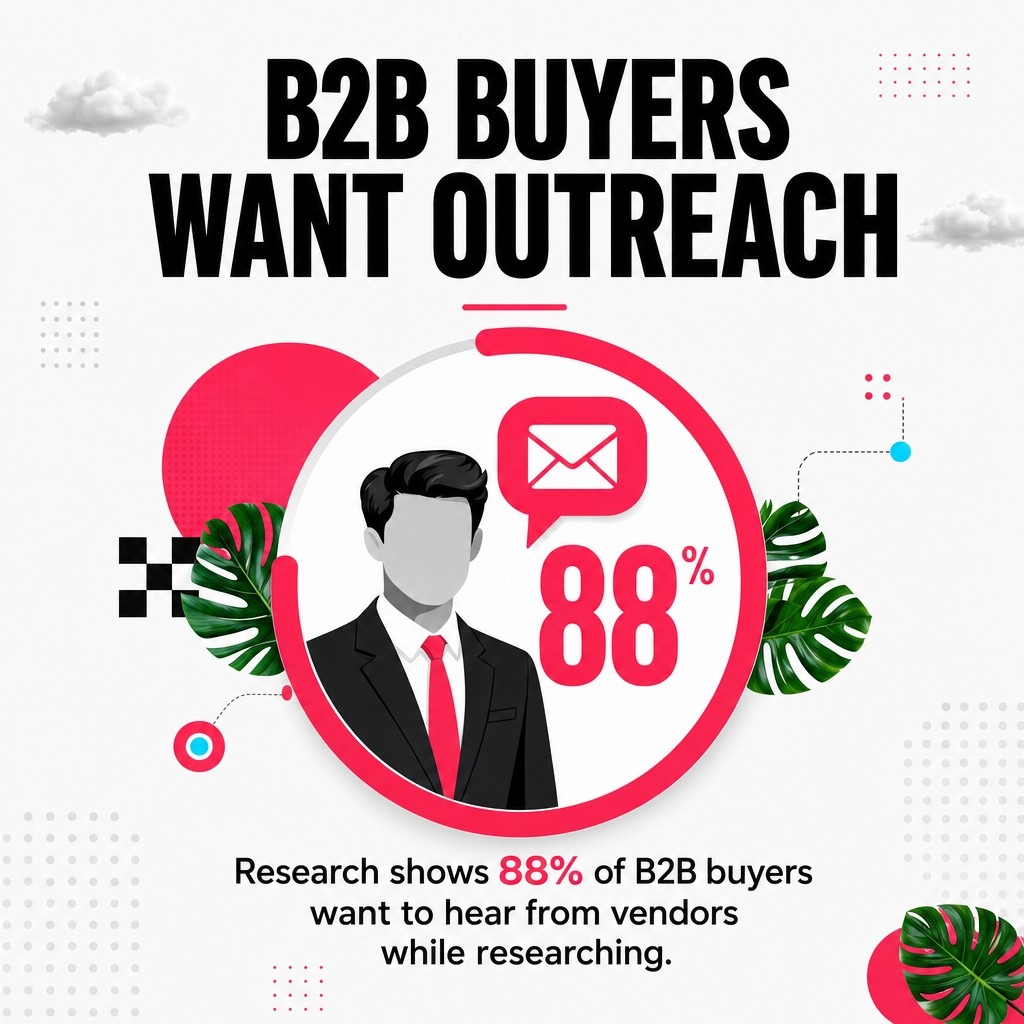
Upload your customer email list to Google Ads as a Customer Match audience. Research shows 88% of B2B buyers want to hear from vendors while researching, meaning remarketing to existing industrial customers actually improves their purchasing experience rather than annoying them.
Create dedicated search campaigns targeting Customer Match audiences with significantly higher bids and expanded keyword coverage. These buyers already trust you, so you can profitably bid on broader terms that would lose money with cold traffic.
Industrial procurement rarely converts on first visit. Buyers need to verify specifications, check with supervisors, and process purchase orders through formal approval systems.
Display remarketing keeps your brand visible during the 3-7 day purchasing cycle typical for industrial OEM parts orders. This isn't retail-style "abandoned cart" recovery, it's professional buyer support.
Your display ads should function as specification reminders rather than promotional messages. Show the part number, key compatibility details, and availability status.
Create different remarketing lists based on which product categories buyers viewed. Someone who looked at transmission components sees ads featuring transmission parts, not generic "OEM Parts Available" messaging.
Set frequency caps aggressively. Industrial buyers don't need to see your ad 50 times, they need 2-3 reminders during their purchasing window. Cap impressions at 4 per week to avoid ad fatigue.
Maintenance professionals watch installation tutorials, troubleshooting guides, and equipment operation videos on YouTube. Remarketing here positions your brand as a technical resource, not just a parts vendor.
Target your remarketing audiences on YouTube channels related to equipment maintenance, vehicle repair, and industrial operations. Use TrueView in-stream ads (the skippable format) to avoid annoying professional viewers.
Ad creative should be straightforward: "Looking for [Part Number]? In Stock at [Your Company] - Ships Same Day - OEM Certified." Skip the production value and focus on clear information delivery.
Industrial buyers abandon landing pages that force them to navigate like retail shoppers. Your pages need to deliver technical confirmation immediately, not marketing storytelling.
The optimal OEM parts landing page answers three questions in the first screen: "Is this the exact part I need?", "Will it fit my equipment?", and "When can I get it?"
Place part number, compatibility data, availability status, and "Add to Cart" button in the top 400 pixels of your page. Everything else is secondary for high-intent industrial buyers.
Use large, scannable typography for the part number, 48pt minimum. Industrial buyers often reference physical catalogs or work orders and need to visually confirm the alphanumeric sequence quickly.
Display real-time inventory status. "In Stock - Ships Today" converts dramatically better than "Available" or "Usually Ships in 1-2 Days." Industrial buyers deal with enough supply chain uncertainty, don't add more ambiguity.
Add a year-make-model dropdown selector to every product page. Even if the buyer arrived via part-number search, they want visual confirmation that the part fits their specific equipment.
Show compatible applications as a filterable table, not a text list. Display year ranges, model variants, and any exceptions (e.g., "Fits 2015-2020 F-150 except Raptor models") in structured format.
Include a "Not sure if this fits?" contact option with phone number and live chat. Industrial buyers will call to verify compatibility on expensive or critical components, make that friction-free.
Industrial buyers expect engineering specifications that retail sites never provide. Include dimensional drawings, material certifications, torque specifications, and installation instructions.
Offer PDF downloads for specification sheets, installation guides, and warranty documentation. Fleet managers and maintenance supervisors save these files for internal records and future reference.
Display any relevant certifications: ISO ratings, OEM certification, quality standards compliance. These trust signals matter more to professional buyers than customer reviews.
Standard ecommerce KPIs mislead OEM parts suppliers because industrial buyers behave completely differently than retail customers. Your measurement framework needs to reflect B2B buying cycles and professional procurement patterns.
Track average order value and customer lifetime value instead of obsessing over cost per acquisition. A $200 CPA looks expensive until you realize the customer places $5,000 orders quarterly for two years.
Industrial purchasing cycles run 5-10 days from initial research to approved purchase order. Your Google Ads conversion window should extend to at least 30 days to capture this delay.
Use data-driven attribution instead of last-click. Industrial buyers interact with multiple touchpoints: initial part-number search, specification verification searches, brand searches after talking to supervisors, and finally direct navigation when ready to order.
Create separate conversion actions for quote requests, phone calls, and completed purchases. Many industrial sales happen offline after digital research, tracking only ecommerce transactions understates your PPC performance significantly.
Exact part-number campaigns should hit 8-15x ROAS because you're capturing buyers at the absolute bottom of the funnel. If these campaigns underperform, your feed data or landing pages need work, not your keywords.
Brand + component campaigns typically deliver 4-7x ROAS. Compatibility-focused campaigns run 3-5x ROAS because you're catching buyers earlier in their research process.
Display remarketing generates 2-3x ROAS but provides attribution support across all other channels. Don't evaluate display in isolation, measure how it lifts conversion rates on search campaigns.
Track impression share for your highest-value part numbers obsessively. Losing top position on a critical SKU can cost thousands in revenue to competitors.
Set up automated alerts when impression share drops below 85% for exact-match part-number campaigns. Bid more aggressively or improve Quality Score before competitors capture your most valuable traffic.
Use auction insights reports to identify which competitors appear most frequently for your target keywords. Industrial OEM parts suppliers often compete with the same 3-5 adversaries across most valuable terms, knowing who they are shapes your bidding strategy.
Industrial buyers don't limit their searches to Google. Bing captures 15-20% of desktop search traffic, and Amazon Business has become a primary sourcing channel for procurement professionals.
Microsoft Advertising (Bing) often delivers 20-30% lower CPCs than Google for identical keywords while maintaining comparable conversion rates. Industrial searches skew slightly more toward Bing than consumer queries.
Import your Google Ads campaigns directly into Microsoft Advertising to start. The interface allows one-click imports that maintain your campaign structure, keywords, and ad copy.
Adjust bids down 30% initially, then optimize based on performance. Bing traffic volume is lower but often converts at similar rates to Google for part-number searches because buyer intent is identical.
Bing's audience reaches older procurement professionals and users in corporate environments where Microsoft products dominate. This demographic aligns perfectly with industrial OEM parts buyers.
Amazon Business accounts represent a distinct buyer segment, procurement professionals who prefer marketplace purchasing over direct vendor relationships. The B2B ecommerce market exceeded $27 trillion in 2025, with Amazon capturing growing share.

List OEM parts on Amazon Business with complete part numbers, compatibility data, and business-specific features like quantity discounts and NET payment terms. Optimize product titles exactly like Google Shopping feeds: part number first, then component type and key compatibility.
Amazon Sponsored Products campaigns for OEM parts should target exact-match ASINs of competitor listings and part-number keyword searches. Avoid broad match entirely, it wastes budget on irrelevant retail searches.
Most OEM parts suppliers approach PPC like consumer retail advertisers and wonder why campaigns underperform. These specific mistakes destroy profitability for industrial parts campaigns.
Running one campaign targeting both "ACDelco parts" (professional search) and "best alternator for my car" (consumer search) guarantees poor performance on both audiences.
Separate campaigns completely. Different keywords, different ad copy, different landing pages, different bid strategies. The audiences have nothing in common except searching for automotive parts.
Budget allocation should favor industrial campaigns 70-80% for OEM suppliers whose core business serves professional buyers. Retail campaigns work as supplementary revenue, not primary strategy.
Uploading a Shopping feed where product titles read "High-Quality Brake Rotor" or "Premium Oil Filter" makes you invisible to industrial buyers who search exclusively by part number.
Restructure your entire feed around part numbers as the primary product identifier. Every other attribute (brand, component type, compatibility) supports the part number, not replaces it.
This requires actual work, mapping manufacturer part numbers to your internal SKUs, standardizing nomenclature, and maintaining accurate cross-reference data. But without it, your Shopping campaigns capture only retail traffic at retail margins.
Industrial buyers search on desktop during work hours, which leads suppliers to neglect mobile optimization. But maintenance technicians search from shop floors on phones when they need parts immediately.
Mobile searches from industrial buyers represent emergency purchasing situations, highest urgency, highest margins, most valuable conversions. Optimize landing pages for mobile load speed and one-thumb purchasing.
Set mobile bid adjustments based on time-of-day analysis. Mobile traffic during work hours (9 AM - 5 PM) likely represents shop floor technicians and deserves bid increases. Evening mobile traffic skews retail and warrants decreases.
Once you've built profitable campaigns around your core part numbers, scaling becomes a product catalog expansion challenge rather than a traffic generation problem.
Identify which part-number campaigns deliver the highest ROAS, then expand horizontally to related components within the same product category. If ACDelco brake rotors perform well, add ACDelco brake pads, calipers, and master cylinders using identical campaign structure.
Create a spreadsheet listing every part number in your inventory. Add keyword variations for each: exact part number, part number with spaces, part number with brand, and common misspellings.
Build new campaigns in batches of 50-100 part numbers monthly. This controlled expansion lets you test performance, optimize landing pages, and scale budgets without overwhelming your operations team with sudden order volume.
Prioritize high-margin, high-velocity parts for initial expansion. A $15 oil filter selling 500 units monthly generates better PPC economics than a $500 specialty component selling twice yearly.
Industrial buyers purchasing brake rotors also need brake pads, often simultaneously. Use Customer Match audiences to run search campaigns promoting complementary components to recent buyers.
Create dynamic remarketing campaigns showing related parts based on previous purchases. Someone who bought transmission components sees ads for transmission filters, fluids, and gaskets.
Add "Frequently Bought Together" modules to landing pages showing complementary OEM components. Industrial buyers appreciate these suggestions because they reduce the risk of forgetting critical related parts.
Analyze your conversion data by metropolitan area. Industrial OEM parts sales concentrate in manufacturing regions, ports, logistics hubs, and areas with heavy commercial vehicle fleets.
Increase bids 20-40% in high-performing industrial regions. Same-day delivery markets in North America will reach $15.47 billion by 2031, creating competitive advantage for suppliers who can fulfill quickly in industrial zones.
Consider location-specific ad copy highlighting your proximity to industrial buyers: "Same-Day Delivery to Chicago Industrial Corridor" or "Next-Day Shipping to Detroit Metro Manufacturing." Geographic proximity matters significantly for time-sensitive industrial purchases.
A common example of a PPC campaign is a Google Ads search campaign for an online store bidding on keywords like "buy running shoes." The advertiser's text ad appears above organic search results, and they pay Google only when a user clicks the ad to visit their website or landing page.
Target industrial buyers by structuring campaigns around exact part numbers, technical specifications, and OEM brand names rather than generic component descriptions. Use dayparting to bid higher during business hours, create custom intent audiences based on industry publications, and write ad copy emphasizing availability and technical accuracy instead of promotional messaging.
Never use broad match for OEM parts campaigns. Industrial buyers search with precise part numbers and technical terminology, broad match dilutes your budget on irrelevant consumer searches. Stick with exact match for part numbers and phrase match for brand + component combinations to maintain search intent quality.