

Most lighting companies burn ad budget because they treat Google Ads like a light switch. Turn it on, hope for sales, wonder why the cost per acquisition keeps climbing. The fix isn't more spend or broader keywords. It's campaign structure that mirrors how commercial buyers actually search.
I've managed PPC for ecommerce brands long enough to spot the pattern. Lighting companies face unique challenges that generic Google Ads strategies ignore completely.
B2B facility managers search differently than residential DIYers. A contractor buying 200 LED panels needs different messaging than a homeowner replacing one fixture. Your campaigns should reflect that reality.
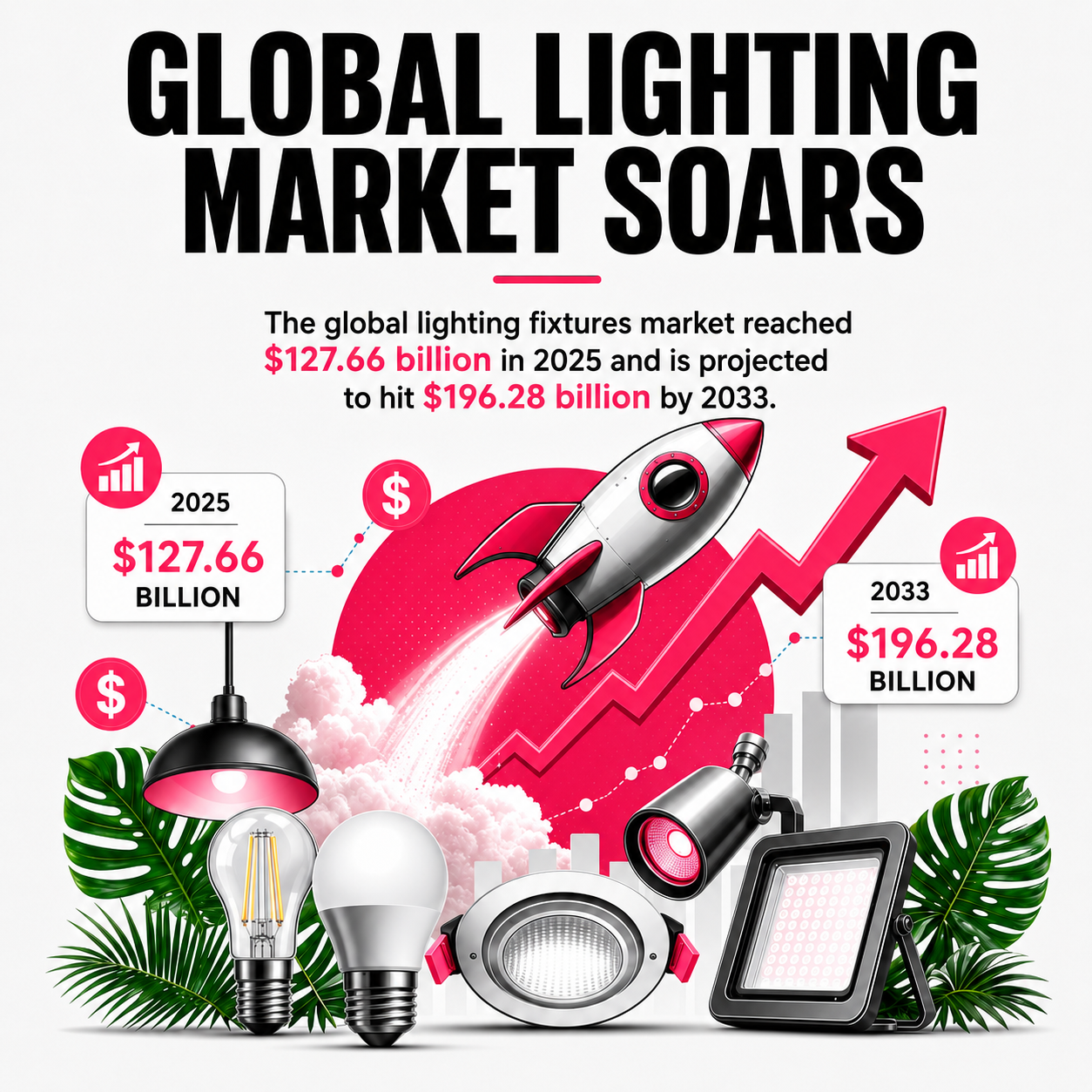
The global lighting fixtures market reached $127.66 billion in 2025 and is projected to hit $196.28 billion by 2033, growing at 4.5% annually. That growth means competition for ad placement intensifies every quarter.
This guide shows you how to structure PPC campaigns that separate commercial intent from browsing traffic. You'll learn Performance Max optimization specific to lighting products, feed management that highlights technical specs buyers need, and ROAS targets that account for different customer segments.
No fluffy best practices. Just the campaign architecture, keyword strategies, and budget allocation frameworks that translate clicks into qualified lighting sales.
Generic Google Ads templates fail lighting brands because they ignore product complexity. A "pendant light" search could mean a $50 residential fixture or a $2,000 architectural specification.
The ad copy, landing page, and bid strategy need to change completely based on that intent. Most lighting companies dump everything into one campaign and wonder why their cost of sale climbs past 40%.
Commercial lighting buyers use different search terms than homeowners. They search "warehouse high bay LED specifications" or "office lighting energy efficiency calculations." Residential searchers type "kitchen pendant lights modern" or "bathroom vanity light ideas."
When you lump both audiences into the same campaign, Google's algorithm optimizes for whoever clicks more. That's usually residential browsers, not commercial buyers with actual budgets.
Your PPC account structure should separate these segments from day one. Different campaigns, different ad groups, different keyword strategies entirely.
Lighting products need technical attributes in the feed that standard ecommerce products don't. Wattage, lumens, color temperature, beam angle, dimming compatibility, energy certifications.
A poorly optimized product feed treats a commercial LED retrofit kit like any other SKU. It misses the chance to show up for specification-based searches that commercial buyers actually use.
Online lighting channels are growing at 6.7% annually through 2033. That shift online means your product data needs to work harder in search results.
Residential lighting purchases happen in days. Commercial projects take months. A facility manager researches in March, gets budget approval in May, and places the order in July.
Standard 30-day attribution windows miss those conversions entirely. Your PPC reporting shows low ROAS when the campaign actually drove the eventual sale.
You need conversion tracking that accounts for multi-touch journeys and remarketing strategies that stay visible through those extended decision cycles.
Build your Google Ads account around customer segments, not product categories. The structure determines whether you waste budget on browsers or capture buyers.
I organize lighting company accounts into three core campaign types. Each serves a different intent level with appropriate bidding and targeting.
These campaigns target bottom-funnel keywords with clear commercial intent. Terms like "buy LED warehouse lighting," "commercial retrofit kits pricing," or "office lighting systems quote."
Bid aggressively here. The average conversion rate for Google Search campaigns hit 4.4% in 2025, but commercial lighting queries convert higher when you match the search intent precisely.
Use exact match and phrase match keywords. Exclude terms like "ideas," "inspiration," or "DIY" that signal residential browsers.
Landing pages should go straight to product specs, bulk pricing, and commercial contact forms. No design galleries or home decor content.
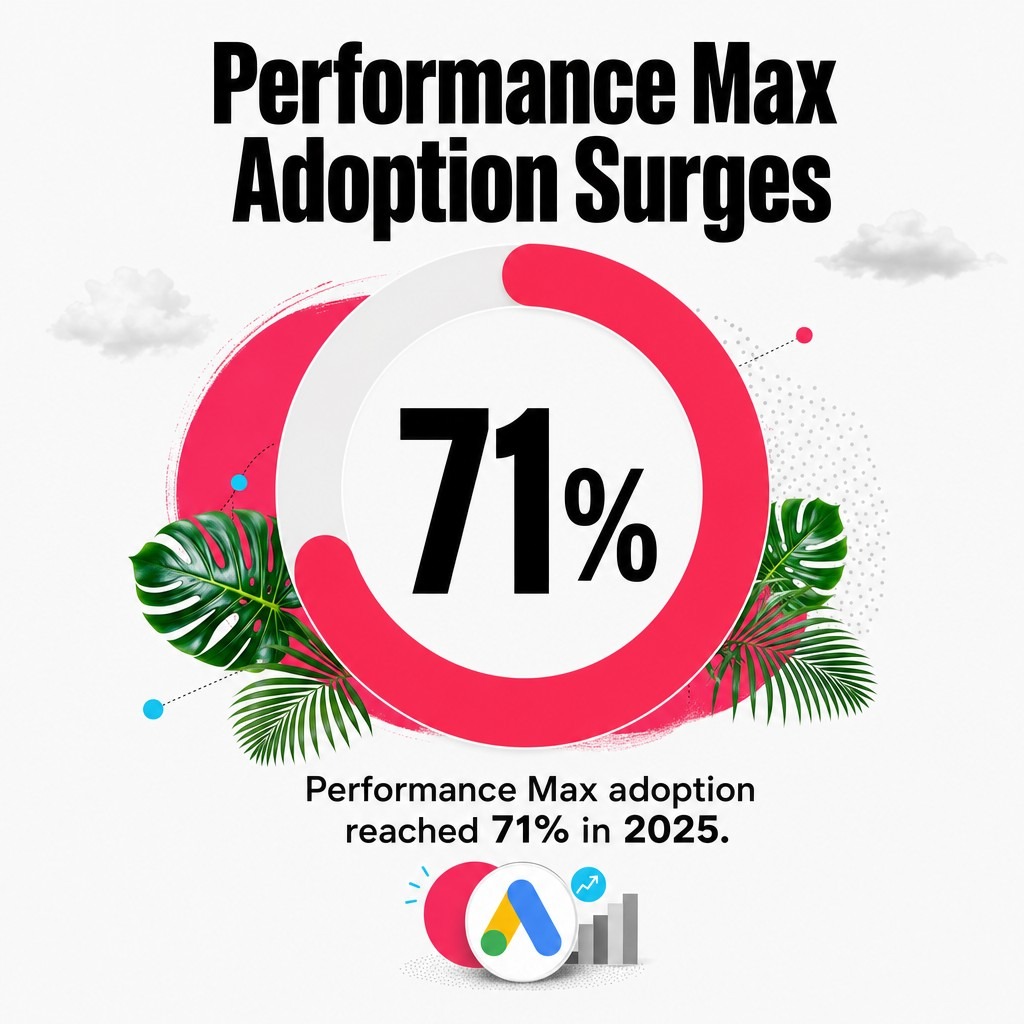
Performance Max adoption reached 71% in 2025. It works for lighting products when you feed it the right signals.
Your product feed becomes the campaign foundation. Google's algorithm matches your inventory to search queries, display placements, and YouTube viewers automatically.
Set up separate Performance Max campaigns for commercial and residential product lines. The algorithm learns different audience patterns for each segment.
Feed in customer lists from your CRM. Commercial buyers have different browsing behaviors than residential shoppers, and Performance Max optimizes better with that first-party data.
Commercial lighting buyers need multiple touchpoints before converting. Remarketing campaigns keep you visible during the specification and approval phases.
Create audience segments based on site behavior. Someone who viewed your technical spec sheets gets different remarketing ads than someone who browsed residential fixtures.
Use a 90-day remarketing window for commercial segments. The standard 30 days misses most B2B purchase cycles completely.
Show ads that address common sticking points. Energy savings calculations, case studies, ROI projections. Content that helps buyers build internal business cases.
Your Google Merchant Center feed determines whether you show up for specification-based searches. Generic product titles and descriptions kill commercial visibility.
Lighting products need technical attributes that most ecommerce feeds omit. The optimization work happens before you even launch campaigns.
Don't use your website's product names in the feed. Use the terms facility managers and contractors actually search.
Bad title: "Eclipse Series Pendant Light - Brushed Nickel"
Better title: "4ft LED Linear High Bay Shop Light 20000 Lumens 5000K Commercial Warehouse Lighting"
Front-load technical specs. Wattage, lumens, color temperature, fixture type. Those attributes match how commercial buyers search and filter.
Use Merchant Center's custom label fields to segment inventory for different campaign types. Create labels for commercial vs. residential, price tiers, and product applications.
Example custom label structure:
These labels let you create Performance Max asset groups or Shopping campaign ad groups that target specific product segments with appropriate bids and messaging.
The product description field should read like a spec sheet for commercial products. Include data points that buyers need to evaluate compatibility and performance.
Essential attributes for commercial lighting feeds:
Residential products can use more lifestyle-focused descriptions. But commercial lighting feeds need to prioritize technical data over aesthetic descriptions.
The keyword research process for lighting differs from typical ecommerce. You're targeting two completely different buyer psychologies in the same vertical.
Commercial buyers search with specification intent. Residential buyers search with style intent. Your keyword lists should reflect that split.
Build keyword lists around technical specifications and quantity indicators. These signals separate commercial buyers from browsers.
High-value commercial keyword patterns:
These keywords have lower search volume than residential terms. But the conversion value justifies higher CPCs and more aggressive bidding.
Your commercial campaigns should aggressively exclude residential intent signals. Every click from a homeowner looking for decor ideas wastes budget.
Critical negative keywords for commercial campaigns:
Review search term reports weekly. Add negative keywords based on actual search queries that triggered your ads but didn't convert.
Residential lighting keywords should focus on room applications, styles, and aesthetic attributes. The search volume is higher but average order value is lower.
Target these keyword themes for residential campaigns:
Set lower CPCs for residential campaigns. The conversion rates are typically lower and order values smaller than commercial segments.
A single product page can't serve both commercial and residential buyers effectively. The information hierarchy and conversion goals differ completely.
Commercial buyers need specs, bulk pricing, and project consultation. Residential buyers want inspiration, easy checkout, and quick shipping.
Commercial lighting landing pages should feel like technical documentation, not ecommerce galleries. Lead with the data buyers need to specify products.
Essential commercial page elements:
Don't bury the quote request form. Commercial buyers often need custom pricing for large quantities. Make that path obvious.
Residential pages should emphasize visual appeal and simple purchase paths. These buyers make faster decisions with less technical evaluation.
Focus on these elements:
Technical specs still matter, but they can live further down the page or in an expandable section. Lead with the aesthetic impact.
Mobile traffic converts differently than desktop for lighting products. Residential buyers browse on mobile but often convert on desktop. Commercial buyers research on mobile during site visits.
Optimize mobile layouts for quick information gathering, not immediate purchase. Make it easy to email product details, save favorites, or request quotes without forcing checkout.
Click-to-call buttons matter more for commercial pages. A facility manager on-site wants to talk to someone about compatibility, not fill out forms.
Not all lighting campaigns should have the same efficiency targets. Commercial campaigns justify higher acquisition costs because customer lifetime value is substantially larger.
Your budget allocation should reflect margin reality and segment potential. I structure lighting company budgets around profitability per segment, not equal distribution.
Allocate 60-70% of total PPC budget to commercial-focused campaigns if B2B represents your primary revenue source. These campaigns have higher CPCs but significantly better unit economics.
Acceptable ROAS targets for commercial lighting:
These targets assume healthy product margins on commercial sales. Adjust based on your actual margin structure and customer acquisition value.
Don't judge commercial campaigns on first-purchase ROAS alone. Track repeat purchase rates and project-based reorders. A facility manager who buys once often returns for additional locations.
Residential campaigns need tighter efficiency because average order values are lower and repeat purchase rates drop. Set more aggressive ROAS targets for these segments.
Target ROAS of 500-700% for residential search campaigns. Lower-margin decorative products can't support the same acquisition costs as commercial specification-grade fixtures.
Allocate 30-40% of budget to residential campaigns unless that segment drives majority revenue. Monitor contribution margin, not just revenue, to evaluate performance.
Reserve 10-15% of monthly budget for testing new campaign structures, audience segments, or bidding strategies. Lighting market dynamics shift as industry consolidation continues with over twenty acquisitions reported in 2025.
Test new approaches in isolated campaigns with defined success metrics. Give tests at least 30 days and 100 conversions before evaluating. Lighting purchase cycles require patience.
Performance Max works differently for lighting companies than generic ecommerce. The product complexity and dual audience segments require specific optimization approaches.
Generic Performance Max setup dumps your entire catalog into one campaign and hopes Google figures it out. That approach wastes budget on mismatched intent.
Create distinct Performance Max campaigns for commercial and residential product lines. Don't let Google's algorithm mix the signals.
Campaign 1: Commercial lighting (specification-grade, project quantities)
Campaign 2: Residential decorative (style-focused, single units)
Campaign 3: LED retrofit and replacement (broad appeal, energy savings focus)
Each campaign gets its own product feed subset, asset groups, and audience signals. The algorithmic learning stays focused on one buyer psychology per campaign.
Within each Performance Max campaign, organize asset groups around specific applications or room types. This helps Google match products to relevant search contexts.
Example asset group structure for commercial PMax:
Each asset group needs custom headlines, descriptions, and images that speak to that specific application. Generic "quality lighting solutions" messaging underperforms application-specific copy.
Feed Performance Max campaigns with first-party audience data. Upload customer lists from your CRM segmented by customer type.
High-value audience signals for lighting PMax:
These signals help Google identify similar users. The algorithm finds patterns in browsing behavior, search history, and purchase signals that indicate commercial intent versus residential browsing.
Standard ecommerce conversion tracking misses the reality of lighting company sales cycles. You need tracking that captures both quick residential purchases and extended commercial projects.
The tracking strategy should measure micro-conversions that lead to eventual sales, not just immediate transactions.
Set up multiple conversion actions with different values in Google Ads. This gives the algorithm optimization signals beyond final purchase.
Primary conversions (highest value):
Secondary conversions (lower value, still tracked):
Assign estimated values to secondary conversions based on historical close rates. If 20% of spec sheet downloads eventually convert at $2,000 average order value, assign $400 value to the download event.
Increase conversion windows to 90 days for commercial-focused campaigns. The default 30-day window misses most B2B lighting projects.
Use data-driven attribution instead of last-click. Commercial buyers interact with multiple touchpoints before purchasing. Last-click attribution under-credits awareness and consideration campaigns.
Track view-through conversions, especially for remarketing campaigns. A facility manager might see your ad multiple times before directly searching your brand and converting.
Many commercial lighting sales happen over phone or email after initial PPC contact. Track these offline conversions back to the original ad click.
Use Google's offline conversion import feature. When a phone quote converts to a sale, import that revenue back to the ad click that started the conversation.
This requires CRM integration or manual tracking, but it's essential for accurate commercial campaign ROAS measurement. Without offline conversion tracking, you'll undervalue top-of-funnel campaigns.
I've audited enough lighting company Google Ads accounts to spot the recurring problems. These mistakes drain budget without obvious red flags in standard reporting.
The biggest mistake is running one campaign with mixed intent. Commercial and residential buyers need completely separate strategies.
When you combine them, Google optimizes for the segment with more volume and faster conversions. That's usually residential browsers, not commercial buyers with actual project budgets.
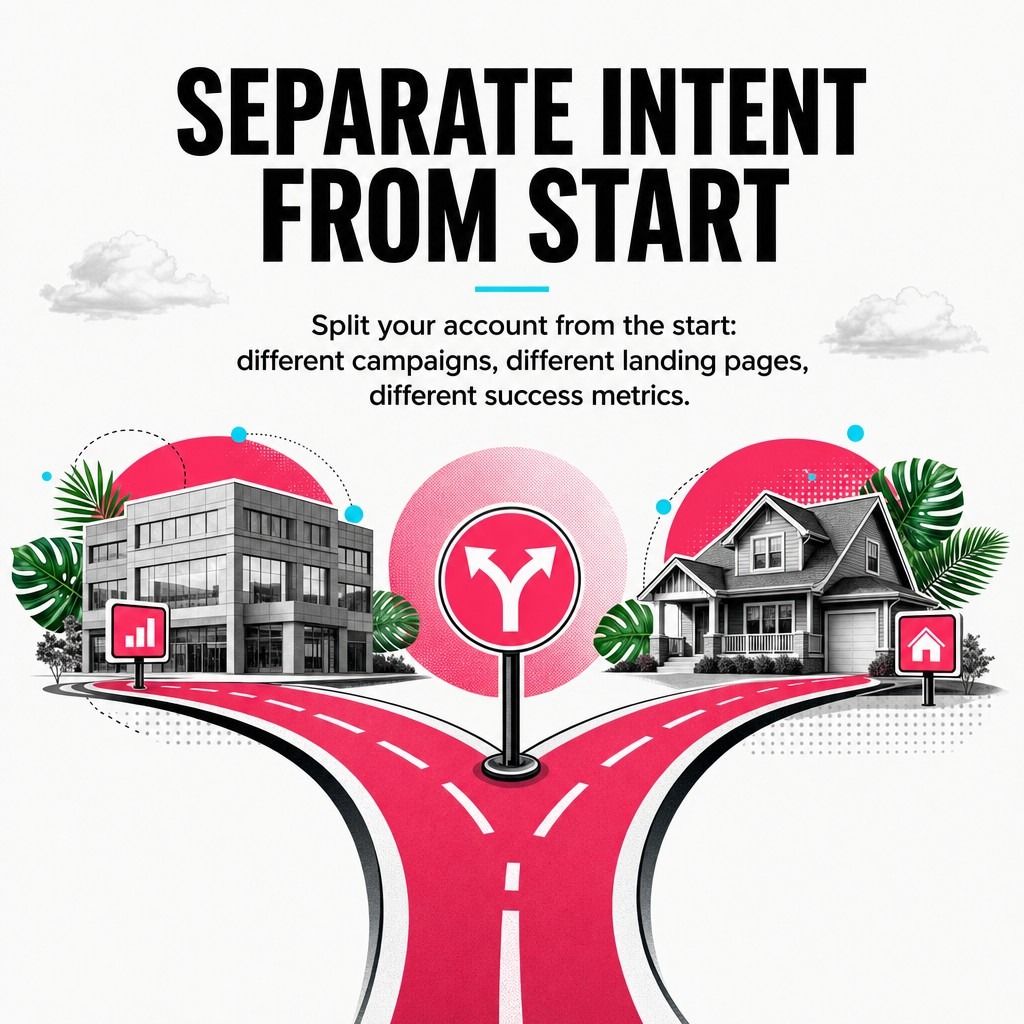
Split your account from the start. Different campaigns, different landing pages, different success metrics.
Many lighting companies upload their website's product catalog to Merchant Center without optimization. Product titles use internal SKU naming. Descriptions copy marketing fluff instead of specifications.
The feed determines your Shopping and Performance Max visibility. Feed optimization deserves as much attention as keyword research.
Technical specs, proper categorization, and custom labels make the difference between showing up for qualified searches or getting buried in irrelevant results.
Commercial lighting campaigns look unprofitable on 30-day attribution. The sales cycle extends far beyond that window for most projects.
Extend conversion windows to 90 days minimum. Import offline conversions from phone and email sales. Use data-driven attribution to credit the full customer journey.
Without proper attribution, you'll pause campaigns that actually drive revenue. You just can't see it in standard reporting.
Lighting companies often underspend on negative keyword management. Your commercial campaigns should aggressively block residential intent terms.
Review search term reports weekly. Add negatives based on actual wasted clicks, not just initial keyword research.
A robust negative keyword list typically contains 500+ terms for commercial campaigns. That's not excessive. It's necessary to prevent budget waste on mismatched intent.
Lighting products carry a level of spec complexity that most feed optimization guides ignore. Lumens, color temperature, CRI, beam angle, wattage equivalency, fixture type, IP rating, dimmability, and base type all function as buying signals — not metadata. When those attributes are missing or inconsistently formatted, the feed can't match the intent behind how buyers actually search.
For PPC for lighting companies specifically, titles are where most feed problems start. "LED Bulb 60W" competes on everything and wins on nothing. "60W Equivalent A19 LED Bulb 2700K Dimmable E26" narrows to buyers who know what they need — and those buyers convert. The spec isn't decoration. It's the filter that keeps your ad from attracting unqualified clicks.
Beyond titles: product type taxonomy in Google Shopping needs to reflect how the category actually works. Luminary categories, sub-fixture types, and application-specific segments (hospitality, retail, industrial) all behave differently in auctions. Treating them as one "Lighting" product type leaves structural bid efficiency on the table.
Run suppression logic on low-margin, low-converting SKUs before scaling spend. A large catalog that feeds everything to Shopping equally creates noise. Performance Max especially amplifies that noise before you can see it in the data.
This is one of the most common patterns in lighting ecommerce PPC. ROAS holds because a handful of SKUs — usually fast-moving residential items with decent search volume — carry the account's performance numbers. Everything else gets a free pass on spend.
The metric isn't lying. It's just not telling you where profit actually comes from. A $150 pendant fixture converting at 3× ROAS contributes differently to gross profit than a $15 bulb converting at 8× ROAS — but both look fine in aggregate reporting.
Lighting companies operating across both residential and commercial channels face this more acutely. Commercial lighting PPC tends to have lower conversion volume but higher order values and margins. If those campaigns are held to the same ROAS targets as residential, they get starved. Profit concentrates in a shrinking slice of the catalog while spend continues to spread across all of it.
The answer isn't a better ROAS target. It's connecting campaign-level reporting to margin, not revenue, and setting thresholds that reflect actual product economics.
Structure determines where spend flows. Without segmentation, your campaigns treat a $12 bulb and a $4,000 commercial fixture as identical entries competing for the same budget. That looks efficient until you examine margin behavior by SKU — and usually it isn't.
For lighting companies running PPC with large catalogs, the breakdown that matters most is: commercial versus residential intent, fixture type versus replacement part, and branded versus non-branded demand. Each carries different ROAS expectations, different conversion rates, and different margin profiles. Collapsing them into one campaign structure hides which segments are carrying the account and which ones are quietly absorbing spend.
The fix isn't more campaigns — it's performance-tiered segmentation. Isolate your high-margin, high-converting SKUs first. Structure campaigns around demand type, not product category. Then let spend follow contribution rather than volume.
The core problem with default Performance Max for lighting companies is that it collapses commercial and residential demand, branded and non-branded traffic, and high-margin and low-margin SKUs into a single optimization target. What surfaces looks like efficiency. What's often happening is that branded search is carrying non-brand performance and margin is concentrating in a small SKU tier.
The structural fix starts before campaign setup: separate asset groups by product tier and buyer type. Commercial fixtures and residential fixtures do not belong in the same asset group — the creative signals, audience behaviors, and expected conversion paths are different. Mixing them means the machine optimizes toward the path of least resistance, which is usually the higher-volume, lower-margin segment.
Run a brand-exclusion campaign in parallel. This forces branded traffic through a controlled search campaign where you can measure its contribution cleanly, rather than letting it inflate PMax ROAS and mask what non-branded demand is actually doing.
On reporting: PMax's attribution will always look stronger than its actual contribution when brand demand is present. Hold its performance against incrementality and cross-channel impact, not just its own conversion data. The channel should be measured against what it adds to the system, not what it claims.
Commercial lighting campaigns should target 300-600% ROAS depending on margins. Residential campaigns need 500-700% ROAS due to lower average order values. Adjust targets based on your actual product margins and customer lifetime value.
Use both. Performance Max works well for product discovery across multiple Google properties. Traditional Shopping campaigns give you more control over bids and product segmentation. Split your budget between both campaign types for comprehensive coverage.