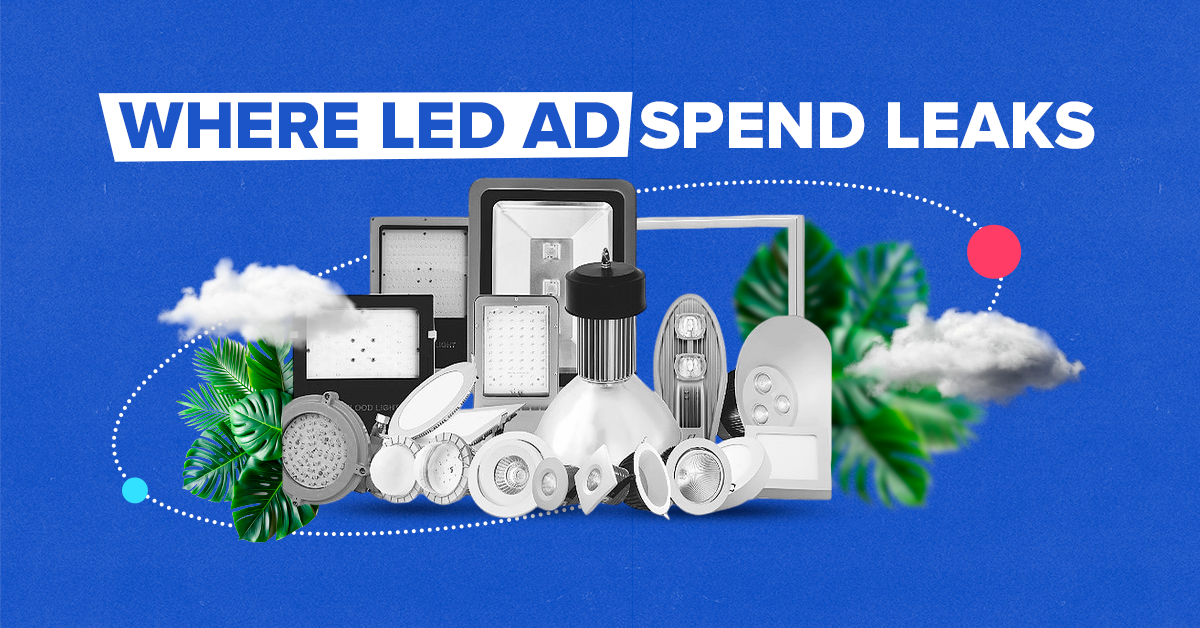
PPC advertising for LED companies isn't just about clicks. It's about connecting commercial contractors searching for retrofit solutions with manufacturers who can deliver measurable energy savings. The difference between burning budget and generating qualified leads comes down to targeting the right buyer at the right stage.
LED lighting companies face a unique challenge. Your buyers aren't impulse shoppers browsing Amazon.
They're facility managers calculating payback periods. They're commercial electricians comparing lumen outputs. They're procurement teams evaluating lifecycle costs against capital budgets.
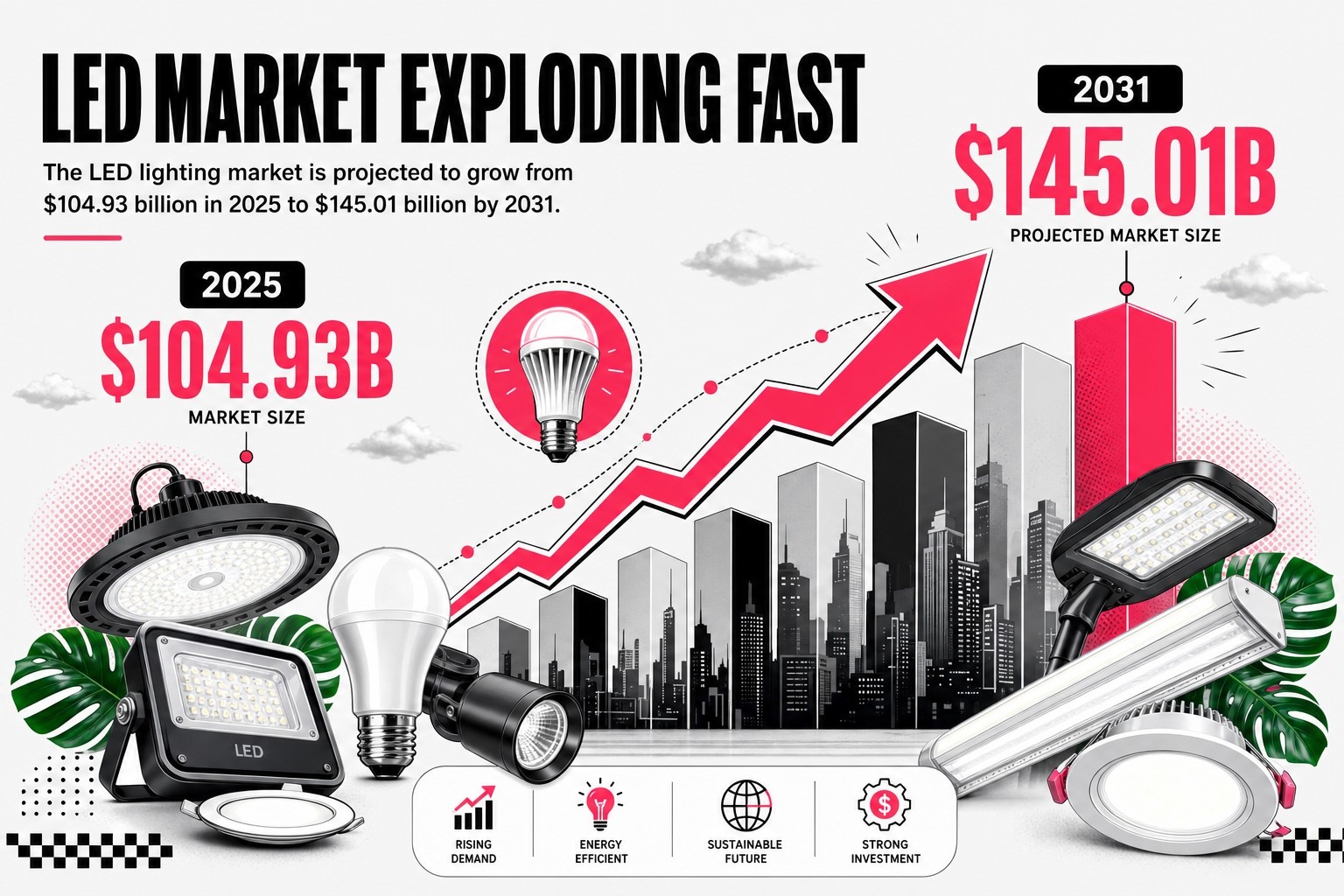
The LED lighting market is projected to grow from $104.93 billion in 2025 to $145.01 billion by 2031. That growth creates opportunity, but it also means your competitors are flooding Google Ads with generic product campaigns.
I've spent years managing PPC campaigns for ecommerce brands, and lighting companies make three consistent mistakes. They target broad keywords that attract DIY homeowners when they need B2B buyers. They send traffic to product catalogs instead of ROI calculators. And they measure success by click volume instead of qualified pipeline.
Here's what actually works: campaign structures that separate commercial intent from informational searches, landing pages that speak to facility manager pain points, and bid strategies that prioritize conversion value over traffic volume. When you nail these fundamentals, PPC stops feeling like an expense and starts generating predictable revenue.
You'll learn how to structure campaigns that target the keywords buyers actually use when they're ready to purchase. How to write ad copy that addresses technical specifications without sounding like a spec sheet. And how to optimize landing pages that convert engineers and procurement teams, not just consumers shopping for bulbs.
LED manufacturers face longer sales cycles than most ecommerce businesses. A residential customer might buy light bulbs on impulse, but a commercial retrofit project takes months of evaluation.
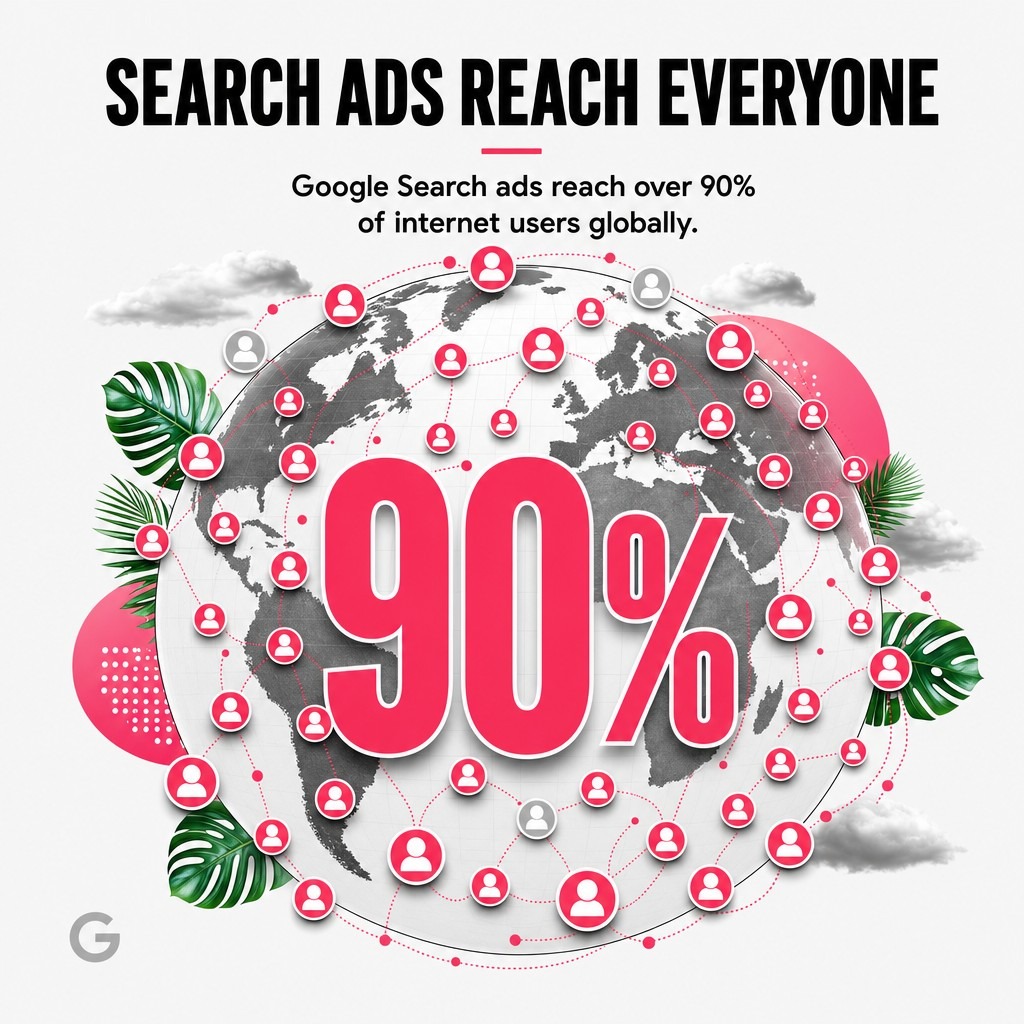
That's exactly why PPC matters. Google Search ads reach over 90% of internet users globally, and your buyers are searching right now. They're comparing wattage equivalents, researching utility rebate programs, and evaluating contractors who can install your products.
Organic SEO takes six to twelve months to generate meaningful traffic. PPC puts you in front of qualified buyers today.
The challenge isn't getting clicks. It's getting the right clicks from buyers who have budget authority and project timelines. When facility managers search "LED warehouse lighting 400W replacement," they're not browsing. They're evaluating solutions for an active project.
PPC lets you show up for these high-intent searches with messaging that speaks directly to their requirements. You can target by geography to align with regional utility incentive programs. You can adjust bids based on device, because engineers research specs on desktop but procurement teams often review quotes on mobile.
And unlike display advertising or social media, search ads capture demand that already exists. You're not interrupting someone's day hoping they might need LED lighting. You're answering a question they're actively asking.
Lighting companies deal with search intent problems that don't affect most ecommerce businesses. When someone searches "LED shop lights," are they a homeowner looking for garage fixtures or a facilities director researching industrial high-bay solutions?
That ambiguity kills campaign performance. You pay $4.50 per click, send traffic to a commercial product page, and watch a DIY shopper bounce because they just wanted $30 fixtures from Home Depot.
Most LED companies serve both markets, but the buying process couldn't be more different. Residential customers respond to aesthetic benefits and energy bill savings. Commercial buyers need lumen maintenance curves, photometric data, and payback calculations.
Your ad copy can't speak to both audiences effectively. When you try, you end up with generic messaging that doesn't resonate with either group.
The solution is campaign separation from day one. Create distinct campaigns for B2B and B2C, with different keyword lists, ad copy variations, and landing page experiences tailored to each buyer type.
Commercial LED projects involve multiple stakeholders. The facility manager identifies the need, the engineer specifies the products, the CFO approves the budget, and a contractor handles installation.
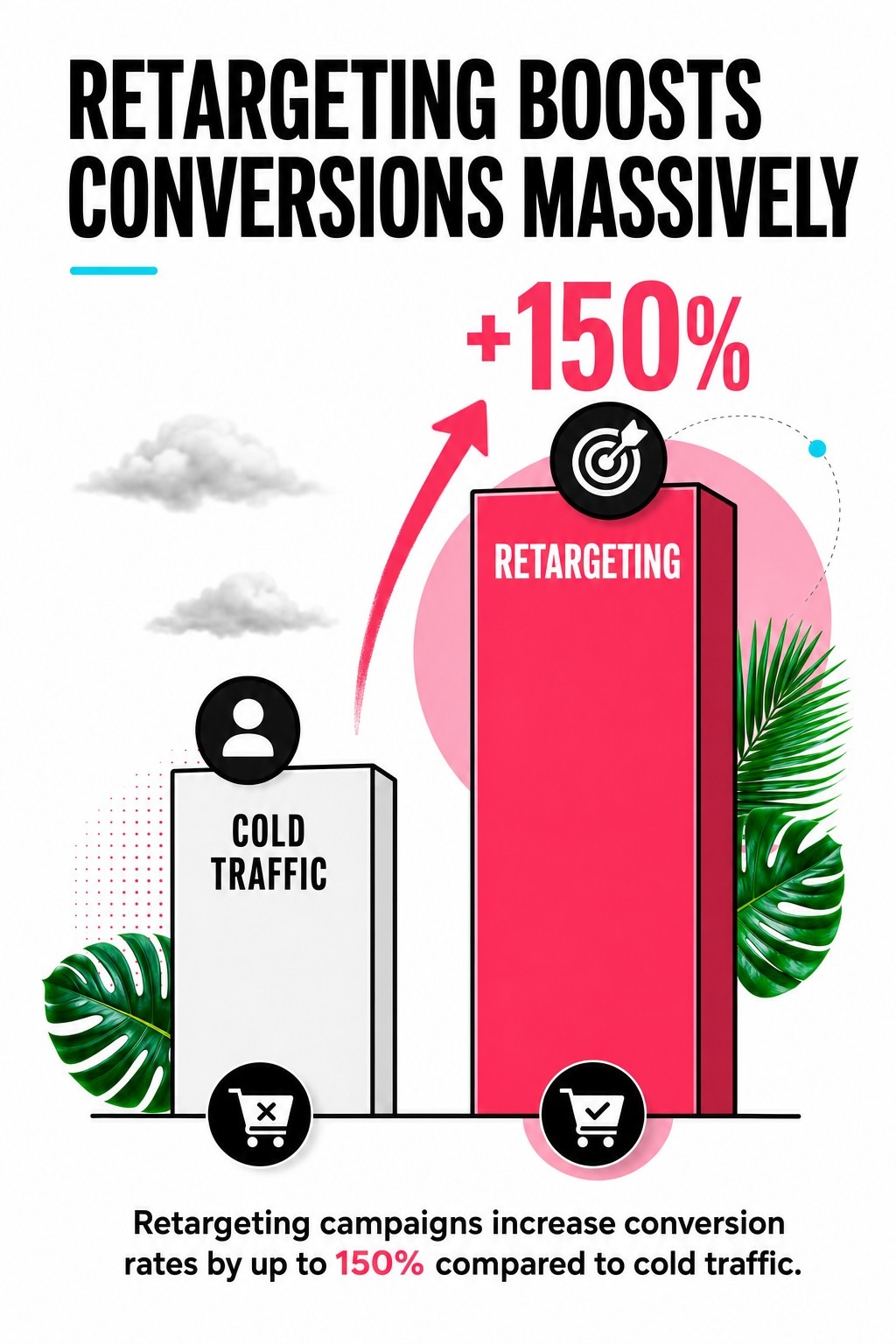
Your PPC strategy needs to account for this. A single click rarely converts to a sale. Retargeting campaigns increase conversion rates by up to 150% compared to cold traffic because they maintain visibility throughout the evaluation process.
First-click attribution makes lighting company PPC look unprofitable. Someone might click your ad, download a spec sheet, then return weeks later through organic search to request a quote. Traditional last-click models would credit SEO for that conversion, even though PPC initiated the relationship.
Your product pages reference color rendering index and luminous efficacy. Your buyers search for "bright warehouse lights" and "energy-efficient parking lot fixtures."
The gap between technical accuracy and search behavior creates keyword strategy headaches. You need campaigns that bridge both worlds, using commercial intent keywords that match how buyers actually search while maintaining technical credibility in your ad copy.
Keyword selection makes or breaks lighting company PPC campaigns. The difference between "LED light bulbs" and "LED retrofit contractor program" represents thousands of dollars in wasted spend.
Informational keywords attract researchers who aren't ready to buy. They're learning about technology, comparing options, or exploring possibilities. These searches include "how do LED lights work" or "LED vs fluorescent comparison."
Commercial intent keywords signal active buying behavior. They include specifications, project types, or business applications that indicate a purchase decision is imminent.
Start with keywords that include:
These keywords cost more per click, but they generate qualified leads. When you're paying $8 per click instead of $2, it feels expensive until you realize the $8 clicks convert at five times the rate.
Create three campaign tiers based on purchase readiness:
Tier 1: Bottom-of-Funnel (High Intent) - Keywords with clear buying signals like "request quote," "buy commercial LED," or specific product model numbers. These get your highest bids and most aggressive targeting.
Tier 2: Mid-Funnel (Consideration) - Comparison keywords and application-specific searches like "best LED for cold storage" or "LED vs HID warehouse." These buyers are evaluating options but haven't selected a vendor.
Tier 3: Top-of-Funnel (Informational) - Educational searches that attract early-stage researchers. Bid conservatively here and focus on building remarketing audiences rather than immediate conversions.
The right bidding strategy for each tier ensures you're not overpaying for clicks that won't convert while capturing maximum share of high-intent searches.
Campaign organization determines how efficiently you can optimize performance. Poor structure makes it impossible to identify what's working and what's burning budget.
Most lighting companies make the mistake of cramming all their products into a single campaign with hundreds of ad groups. This creates three problems: you can't allocate budget strategically, you can't write targeted ad copy, and you can't optimize bids based on performance differences.
Organize campaigns using a two-dimensional structure: product category by audience type. This creates focused campaigns where every element aligns.
For a commercial LED manufacturer, this might look like:
Each campaign gets its own budget allocation, bid strategy, and performance targets. When high-bay fixtures perform well with facility managers, you can scale that campaign without affecting your residential panel light performance.
Within each campaign, separate ad groups by keyword match type. Exact match keywords get different ad copy and landing pages than broad match modified terms.
This structure lets you write hyper-specific ad copy. For [LED warehouse high bay], your ad speaks directly to warehouse applications with relevant specifications. For "commercial LED lighting solutions," your ad takes a broader approach that works for multiple facility types.
The tedious part is building this structure. The payoff is campaign performance that improves month over month because you can optimize at a granular level.
Utility rebate programs create regional variations in buyer behavior. California buyers search differently than Texas buyers because incentive programs shape purchase decisions.
Create separate campaigns for regions with significant incentive programs. This lets you customize ad copy to reference local utility rebates and adjust bids based on regional competition.
A facility manager in the Pacific Northwest researching LED upgrades wants to know about available incentives. Your ad copy should call this out explicitly: "Qualified for [Local Utility] Commercial Rebates." This relevance increases click-through rates and improves quality scores.
You can learn more about advanced geographic targeting strategies that work for location-dependent purchasing decisions.
Ad copy for LED products walks a fine line. Too technical and you sound like a spec sheet. Too simplified and you lose credibility with engineers who need performance data.
The solution is audience-specific messaging that matches where buyers are in their evaluation process. A facility manager researching options needs different information than a procurement agent ready to request quotes.
For facility managers and operations directors, lead with operational benefits:
"Cut maintenance costs 75% with 100,000-hour rated LED high bays. Zero re-lamping for 10+ years."
For CFOs and financial decision-makers, emphasize ROI:
"2.3-year payback on LED warehouse upgrades. Qualify for utility rebates up to 40% of project cost."
For engineers and technical specifiers, include performance data:
"DLC Premium-listed LED fixtures. 150 LPW efficacy with L70 100,000-hour rating."
Your keyword targeting determines which persona sees which ad. Searches for "LED lighting ROI calculator" get the financial messaging. Searches for "DLC premium LED fixtures" get technical specifications.
Generic ad copy gets ignored. "High-quality LED lighting solutions" tells buyers nothing. Everyone claims quality.
Specific differentiators cut through the noise:
These claims require proof. The landing page needs to back them up immediately, or you've wasted the click. But when you can substantiate your differentiators, they become powerful conversion drivers.
Ad extensions turn two-line ads into mini landing pages. For LED companies, these extensions matter:
Callout Extensions: "Free Lighting Audit," "Utility Rebate Assistance," "Project Financing Available," "DLC Premium Listed"
Structured Snippets: Product categories (High Bay, Panel Lights, Wall Packs, Retrofit Kits) or specifications (5-Year Warranty, 0-10V Dimming, Emergency Battery Backup)
Sitelink Extensions: Direct links to ROI Calculator, Product Catalog, Case Studies, Rebate Finder
Extensions increase ad real estate and provide multiple paths to conversion. A buyer not ready for a quote might click the ROI calculator link instead of bouncing.
Your ad promises a solution. Your landing page needs to deliver it immediately, or the visitor leaves.
Most lighting company landing pages fail because they're product pages designed for browsers, not conversion pages designed for buyers with specific intent. When someone clicks an ad for "warehouse LED retrofit solutions," they shouldn't land on a generic product catalog.
Every ad group needs a dedicated landing page that continues the conversation started in the ad. If your ad promises "Commercial LED High Bays - 2 Year ROI Guaranteed," the landing page headline should reinforce that exact promise.
Message match reduces bounce rates and improves conversion rates. When visitors see visual and verbal continuity between the ad and landing page, they trust they've found the right solution.
This doesn't mean building 50 unique pages. It means creating templates with dynamic content that adapts based on the visitor's search query and ad group.
Commercial LED buyers need specific information to move forward. Your landing page should include:
ROI Calculator: Let buyers input their current fixture count, operating hours, and energy rates to see projected savings. Facility managers evaluate LED retrofits primarily on return on investment metrics including simple payback period and lifecycle cost analysis.
Technical Specifications: Downloadable spec sheets, photometric files (IES), and certification documents. Engineers won't recommend products without this data.
Utility Rebate Information: If your campaign targets a specific region, show available incentive programs with qualification requirements and estimated rebate amounts.
Social Proof: Case studies from similar facilities showing actual energy savings, installation details, and ROI achievement. Generic testimonials don't work for commercial buyers.
Clear Next Steps: Multiple conversion options at different commitment levels: Schedule Lighting Audit (low commitment), Download Buyer's Guide (medium), Request Quote (high commitment).
Long forms kill conversion rates. Shortening forms from 11 to 4 fields can lead to a 120% increase in conversions.
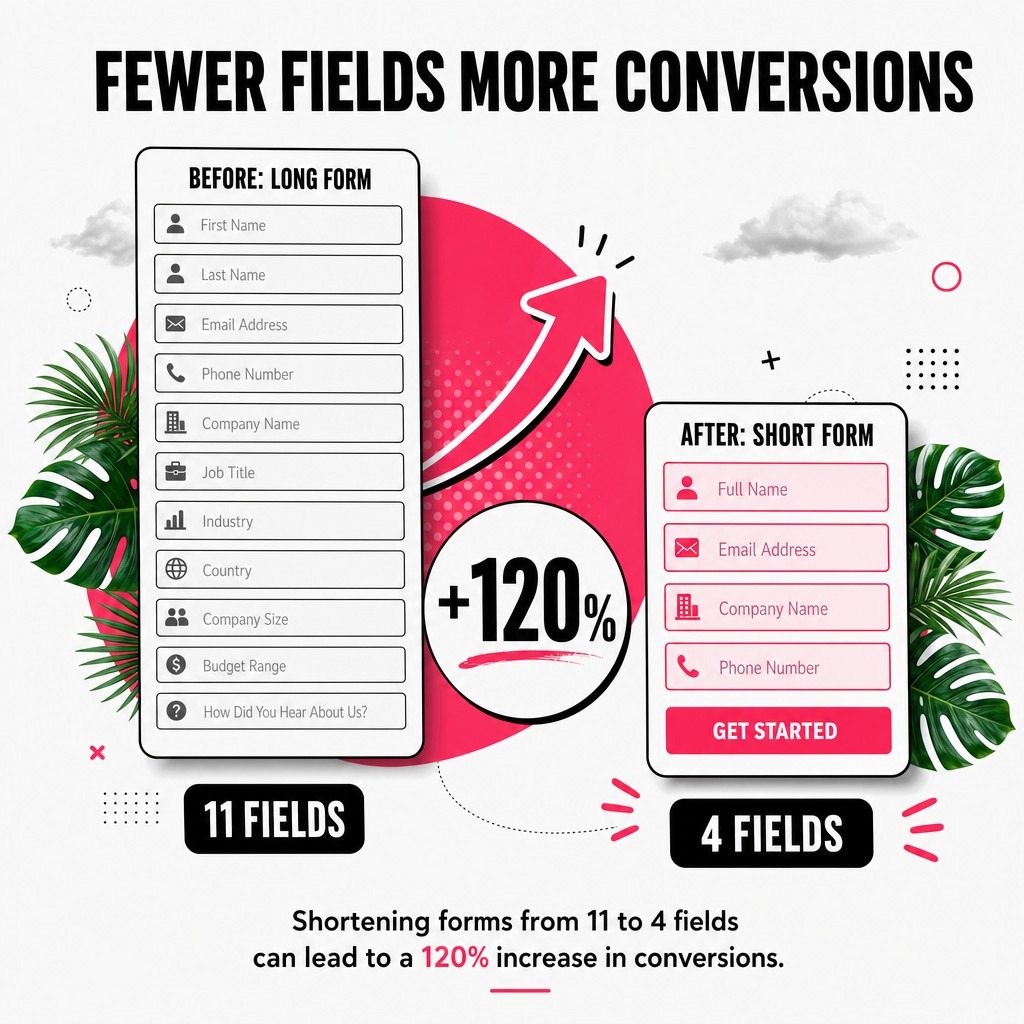
For commercial LED campaigns, you need enough information to qualify leads but not so much that prospects abandon the form. Start with essential fields:
Everything else can be collected during the follow-up conversation. Your goal is starting the relationship, not gathering a complete project brief before first contact.
B2B and B2C LED buyers share nothing except the product category. Their motivations, evaluation criteria, and purchasing processes are completely different.
Treating them the same leads to misallocated budget and poor campaign performance. A campaign optimized for consumer conversions will underperform with commercial buyers, and vice versa.
Commercial lighting buyers make logical, ROI-driven decisions. They need documentation, specifications, and financial justification.
Your B2B campaigns should:
The average cost per lead in Google Ads is $70.11, but commercial lighting leads often cost $150-300. That seems expensive until you realize average project values range from $10,000 to $500,000.
The key is qualifying leads aggressively. Not every form submission deserves sales follow-up. Use form questions to filter out unqualified inquiries, and track which lead sources actually close into revenue.
Residential LED buyers respond to aesthetics, convenience, and immediate energy bill savings. They make faster decisions with less evaluation.
Your B2C campaigns should:
Consumer campaigns generally achieve higher conversion rates but lower average order values. Google Shopping conversion rates average 1.91%, with potential for 3.82% conversion rates when properly optimized.
The challenge is distinguishing between homeowners looking for DIY solutions and residential contractors purchasing for installation projects. Contractors have different volume needs and pricing expectations than homeowners.
Some LED products serve both markets effectively. Recessed downlights work in homes and commercial offices. Outdoor wall packs suit residential garages and small business storefronts.
For these crossover products, test a merged campaign against separate audience campaigns. Monitor performance metrics:
If merged campaigns show conflicting performance patterns, the answer is separation. If results stay consistent across audience types, merged campaigns simplify management without sacrificing performance.
Most LED lighting buyers don't convert on first visit. Commercial projects require multiple stakeholders and approval cycles. Residential customers comparison-shop across vendors.
Remarketing keeps your brand visible during the evaluation period. When that facility manager gets budget approval three months after their initial research, your remarketing ad reminds them where to find you.
Generic remarketing shows the same ad to everyone who visited your site. That's wasteful. Someone who viewed product specifications needs different messaging than someone who abandoned a quote request form.
Create remarketing audiences based on behavior:
Specification Viewers: Visited product pages and downloaded spec sheets but didn't request a quote. These are technical evaluators who need decision-making ammunition. Remarket with case studies and ROI data.
Calculator Users: Interacted with your ROI calculator but didn't submit contact information. They're quantifying the investment. Remarket with financing options and rebate information.
Form Abandoners: Started but didn't complete a contact or quote form. They had high intent but something stopped them. Remarket with simplified form options or phone contact alternatives.
Repeat Visitors: Returned to your site multiple times without converting. They're seriously considering your products. Remarket with urgency-based messaging or limited-time offers.
How long ago someone visited determines the message relevance. Day-one remarketing differs from month-three remarketing.
Days 1-7: Reinforce your core value proposition. They just learned about you, so remind them why your solution fits their needs.
Days 8-30: Address common objections. "See why 500+ facility managers chose [Your Company] for LED retrofits" or "Compare our 5-year warranty against competitors' 3-year coverage."
Days 31-90: Offer new information or incentives. "New case study: Hospital reduced lighting costs 68% with LED upgrade" or "Limited: Free lighting audit with project quotes this month."
Days 91+: Re-engage with fresh campaigns or new product launches. These are cold prospects who need a reason to reconsider.
The average commercial lighting sale involves 6-8 touchpoints. Remarketing provides those touchpoints efficiently, keeping acquisition costs reasonable relative to project values.
Clicks and impressions don't pay the bills. LED companies need PPC metrics that connect to actual revenue and profitability.
The average conversion rate across Google Ads is 7.52%, but that number means nothing without context. A 7.52% conversion rate on $50 consumer orders loses money. A 1% conversion rate on $50,000 commercial projects generates substantial profit.
Different campaigns serve different purposes. Your measurement framework should reflect this.
Direct Response Campaigns (Bottom of Funnel): Measure cost per acquisition and return on ad spend. These campaigns exist to generate immediate sales or qualified leads.
Consideration Campaigns (Mid Funnel): Track assisted conversions and engagement metrics. These campaigns rarely get last-click credit but influence eventual purchases.
Awareness Campaigns (Top of Funnel): Monitor remarketing list growth and brand search lift. Success here means building audiences for remarketing and creating future demand.
The mistake is judging all campaigns by the same conversion metric. Your brand awareness campaign will never match your bottom-funnel conversion rate, and that's fine. It serves a different purpose.
Last-click attribution kills accurate performance analysis for commercial lighting campaigns. When sales cycles span months and involve multiple touchpoints, the final click before conversion gets credit even though earlier interactions initiated the relationship.
Data-driven attribution in Google Analytics 4 has become the default, using machine learning to analyze historical conversion paths. This approach distributes credit across touchpoints based on their actual influence on conversions.
For LED companies with complex B2B sales, position-based attribution often provides better insight than last-click. This model gives significant credit to first and last interactions while acknowledging middle touchpoints.
The practical implementation: compare your campaign performance across multiple attribution models. If a campaign shows terrible ROI under last-click but strong assisted conversions under position-based attribution, you're likely undervaluing that campaign's contribution.
Commercial LED sales often close offline. A facility manager clicks your ad, downloads specifications, then calls your sales team three weeks later to discuss a project.
Without offline conversion tracking, that sale never connects to the PPC campaign that initiated it. Your reporting shows wasted spend when you actually generated revenue.
Implement call tracking with dynamic number insertion on landing pages. When visitors from PPC campaigns call, the system logs which campaign, ad group, and keyword drove that call.
Connect your CRM to Google Ads to import offline conversions. When your sales team marks a lead as "closed-won" in the CRM, that conversion flows back to Google Ads with the original campaign attribution.
This closed-loop tracking transforms campaign optimization. Instead of optimizing for form submissions, you optimize for actual customer acquisition and revenue generation.
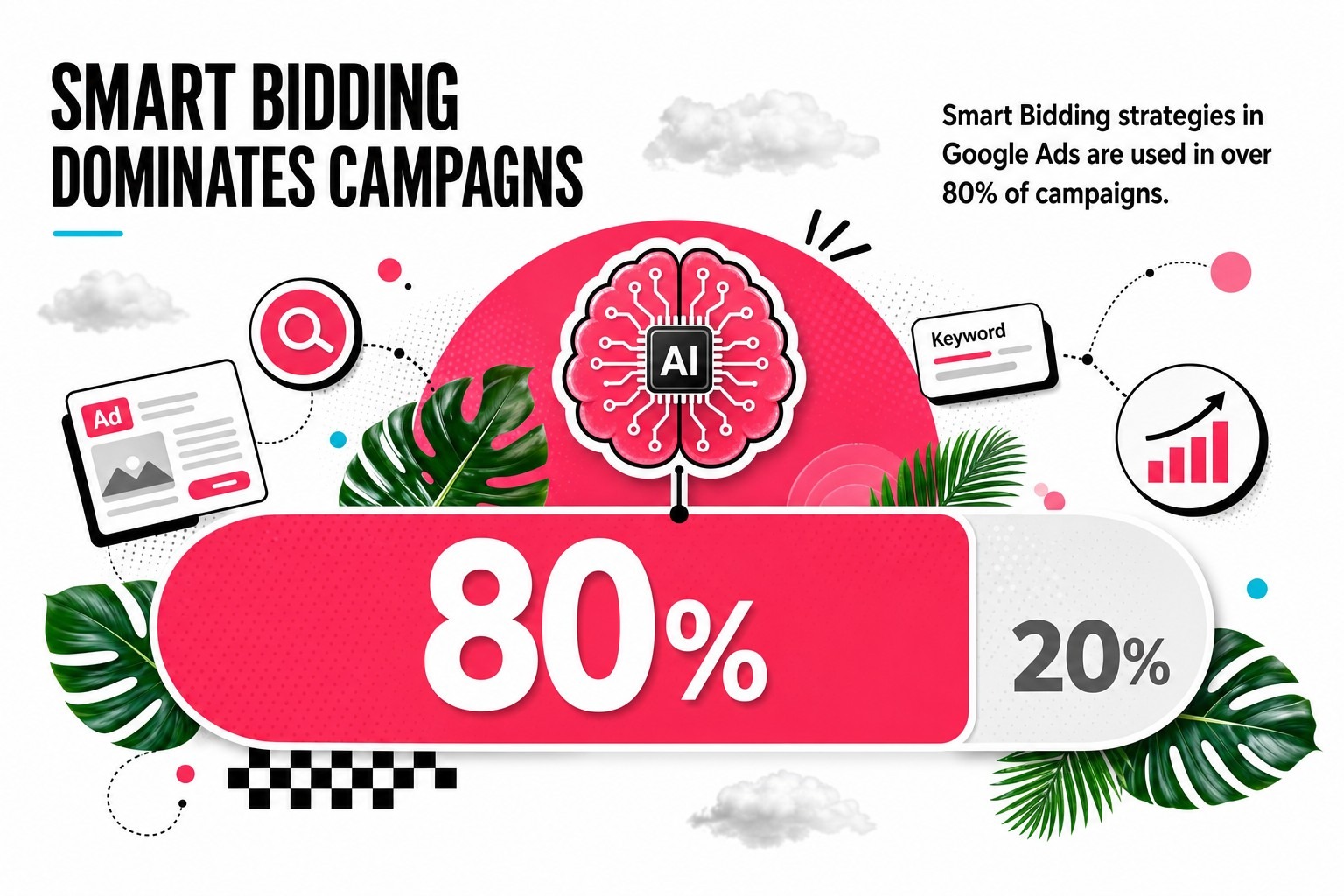
Manual bid management doesn't scale for LED companies managing hundreds of keywords across multiple campaigns. Smart Bidding strategies in Google Ads are used in over 80% of campaigns because automation outperforms human bid adjustments at scale.
The key is feeding the algorithm quality data. Smart Bidding needs conversion tracking, sufficient conversion volume, and clear value signals to optimize effectively.
Google offers multiple Smart Bidding options. The right choice depends on your business model and campaign goals.
Target ROAS: Best for ecommerce-style campaigns where you track actual purchase values. The algorithm adjusts bids to achieve your target return on ad spend. This works for consumer LED products with immediate online purchases.
Target CPA: Optimizes for conversions at your target cost per acquisition. Use this for lead generation campaigns where all qualified leads have similar value. Set your target CPA based on customer lifetime value and acceptable acquisition costs.
Maximize Conversions: Spends your entire budget to generate the maximum number of conversions possible. This works when you have budget constraints but want to maximize lead volume within that budget.
Maximize Conversion Value: Similar to maximize conversions but prioritizes higher-value conversions. Essential for commercial campaigns where project sizes vary significantly. The algorithm learns to bid more aggressively for searches likely to generate large projects.
The strategy I recommend for most LED companies is Maximize Conversion Value with a target ROAS guardrail. This drives high-value conversions while preventing runaway spend on unprofitable clicks.
Performance Max adoption increased from 60% of surveyed advertisers in 2024 to 71% in 2025. These campaigns use Google's automation to serve ads across Search, Display, YouTube, Gmail, and Discover from a single campaign.
For LED companies, Performance Max works well when you have:
The challenge is less control. You can't see exactly which placements drive results or exclude specific keywords. This makes Performance Max risky for LED companies targeting only commercial buyers, since you might waste budget on consumer traffic.
My recommendation: Run Performance Max alongside traditional Search campaigns. Use Search for controlled commercial targeting and Performance Max for discovering new customer segments you hadn't considered.
Automation doesn't fit every situation. Manual bidding maintains relevance for:
New campaigns with limited data: Smart Bidding needs conversion history to optimize. During the learning phase, manual bidding with close monitoring often performs better.
Seasonal campaigns: If you run time-bound promotions or target seasonal buying patterns, manual bid adjustments let you respond faster than algorithm learning cycles.
High-value, low-volume campaigns: When you have only 5-10 conversions per month, the algorithm lacks sufficient data. Manual bidding with portfolio-level insights works better.
Test campaigns: When testing new products, audiences, or messaging, manual bidding provides clearer read on isolated variable changes.
The reality is most LED companies benefit from a hybrid approach. Use Smart Bidding for established campaigns with conversion history, and manual bidding for new initiatives until they generate sufficient data.
Learn more about value-based bidding strategies that maximize campaign ROI through proper conversion value assignment.
PPC doesn't exist in isolation. The most effective campaigns work in concert with SEO, content marketing, and sales processes.
When your PPC campaigns drive traffic to pages that rank organically, you dominate search results. When your content marketing educates prospects who later click your ads, you're building qualified audiences. When your sales team knows which campaigns generated each lead, they adjust their approach accordingly.
PPC provides immediate visibility while you build organic rankings. But the relationship goes deeper than temporary coverage.
Use PPC data to inform your lighting SEO strategy. Keywords that convert well in paid campaigns often indicate valuable organic opportunities. High-converting ad copy reveals messaging that resonates with your audience, which should shape your organic content.
Conversely, pages that rank organically get better Quality Scores when you advertise them. Google recognizes the relevance consistency between your ads and landing pages, leading to lower CPCs and better ad positions.
The coordination extends to content gaps. If you're paying $15 per click for "LED warehouse lighting comparison," that's a signal you need comparison content that can rank organically and reduce paid dependency.
SEO strategies for lighting companies should complement your PPC targeting by capturing the same commercial intent through organic channels.
Your sales team needs context about the leads PPC generates. A prospect who clicked an ad for "emergency LED exit signs" has different needs than one who searched "complete warehouse lighting retrofit."
Pass campaign data to your CRM so sales reps see which ad, keyword, and landing page brought each lead. This context informs the initial conversation.
Even better, create campaign-specific landing pages that pre-qualify leads with targeted questions. Instead of a generic contact form, ask "What type of facility are you looking to upgrade?" and "What's your estimated project timeline?" These answers help sales prioritize follow-up.
The feedback loop matters too. When your sales team identifies patterns in lead quality across campaigns, adjust your targeting. If "LED office lighting" generates unqualified residential leads, add negative keywords or refine ad copy to filter better.
LED companies often ask what percentage of their marketing budget should go to PPC versus other channels. There's no universal answer, but the logic is consistent.
PPC should receive more budget when:
Reduce PPC budget and shift to SEO when:
A mature thought-leadership SEO campaign delivers an average ROI of 748%, but that maturity takes 12-24 months. PPC provides revenue during that SEO investment period.
The most effective approach treats PPC and SEO for lighting companies as complementary. PPC provides immediate results and data insights. SEO builds long-term equity and reduces acquisition costs. Together, they create sustainable growth that doesn't depend entirely on paid traffic.
How long does it take for PPC to produce results for an LED brand?
Thirty days gives you enough data to understand what's breaking. Sixty days tells you whether the structure is right. For commercial and specification-driven LED sales (where a project lead might take three to six months to convert) meaningful ROI measurement requires at least a full quarter of clean data. Teams that judge performance at two weeks are usually reacting to noise, not signal.
Why does our ROAS look healthy but our margins keep thinning?
ROAS measures revenue returned per dollar spent. It doesn't measure which SKUs are generating that revenue or what those sales actually cost to fulfill. In LED catalogs, a handful of high-velocity products often carry account-level ROAS while lower-margin items absorb spend quietly in the background. The metric holds because the top products do the work. The margin problem is invisible until you look SKU by SKU.
How do you separate commercial specification buyers from retail browsers in the same campaign?
They don't search the same way. A facilities manager specifying fixtures for a warehouse retrofit uses different query patterns than a homeowner replacing bulbs — different terminology, different specificity, different intent signals. When both audiences run through the same campaign structure, bids and budgets calibrate toward volume, not value. Separating them requires distinct campaign segmentation, often reinforced by match type discipline and negative keyword layers that most accounts haven't built.
What product data problems most commonly damage LED PPC performance?
Missing or generic product titles are the most common. When titles don't include wattage, color temperature, fixture type, or application — the attributes that determine whether a click is relevant — Shopping ads surface for broad, low-intent queries and convert poorly. The feed looks complete. The performance doesn't reflect it. Feed quality problems rarely announce themselves in platform reporting. They show up as wasted spend and suppressed conversion rates that look like bid problems.
Does SEO or PPC work better for LED brands?
They serve different functions. PPC captures demand that already exists — buyers actively searching for specific products or applications. SEO builds the catalog's ability to be found without paying for every click. For LED brands with large SKU counts, the two compound each other: paid search data reveals which queries convert, and SEO builds durable visibility around those same patterns. Running them independently means leaving signal on the table from both.
PPC advertising for LED companies comes down to targeting precision and patience. You're not selling impulse purchases. You're connecting with facility managers evaluating retrofit projects and procurement teams comparing specifications.
The campaigns that win prioritize lead quality over click volume. They speak to commercial buyers in language that addresses ROI concerns and technical requirements. And they maintain visibility throughout buying cycles that span weeks or months.
Start with campaign structure that separates B2B from B2C traffic. Build landing pages that address the specific concerns of your target buyers. Implement conversion tracking that connects PPC clicks to actual revenue, not just form submissions.
Most importantly, remember that PPC performance improves over time. Your first month establishes baseline data. Your second month begins optimization. By month three, you start seeing which campaign structures and targeting approaches generate qualified pipeline.
The LED companies that succeed with PPC don't expect overnight results. They build systematic campaigns, track meaningful metrics, and optimize based on what actually drives revenue. That approach transforms PPC from an expense into a predictable customer acquisition channel.