

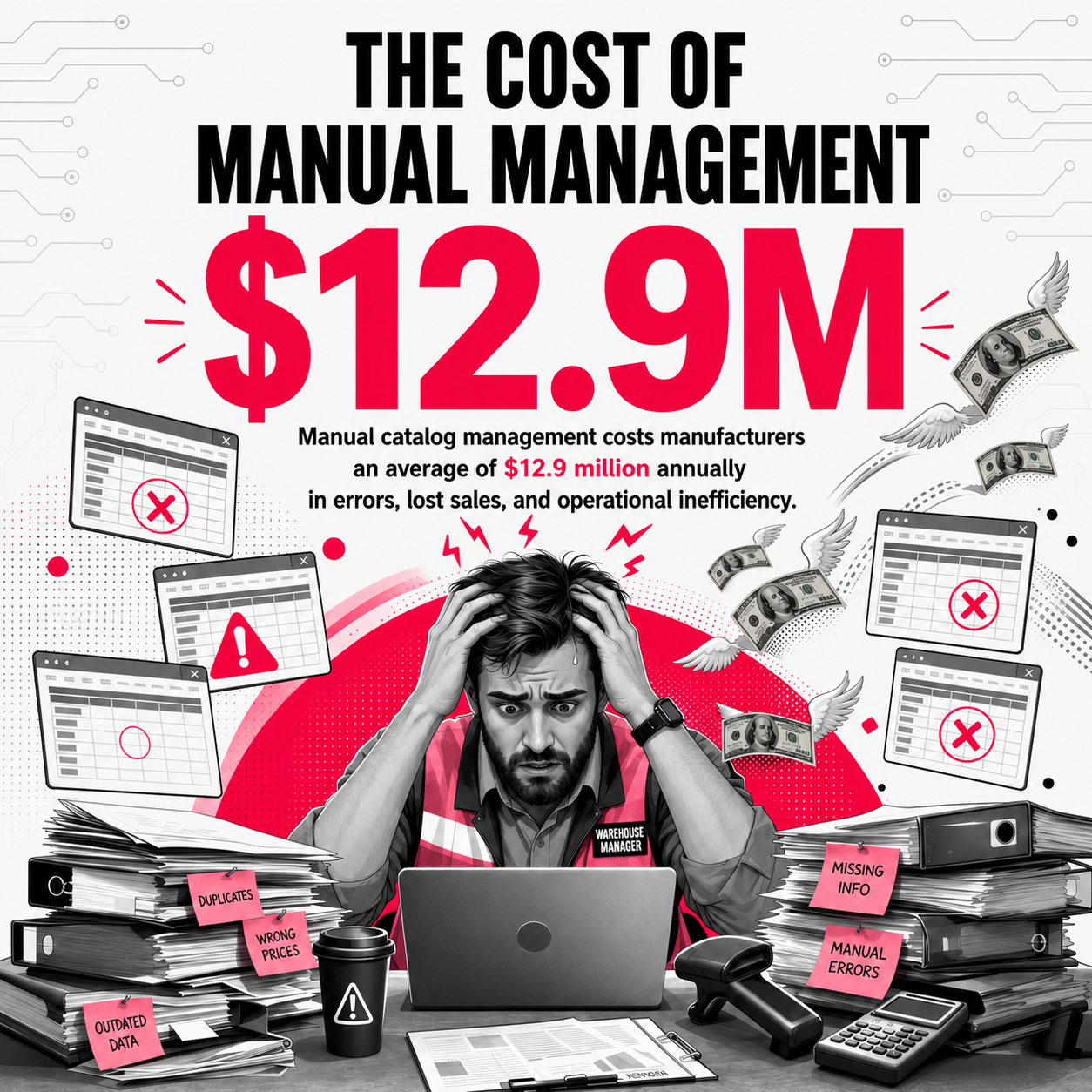
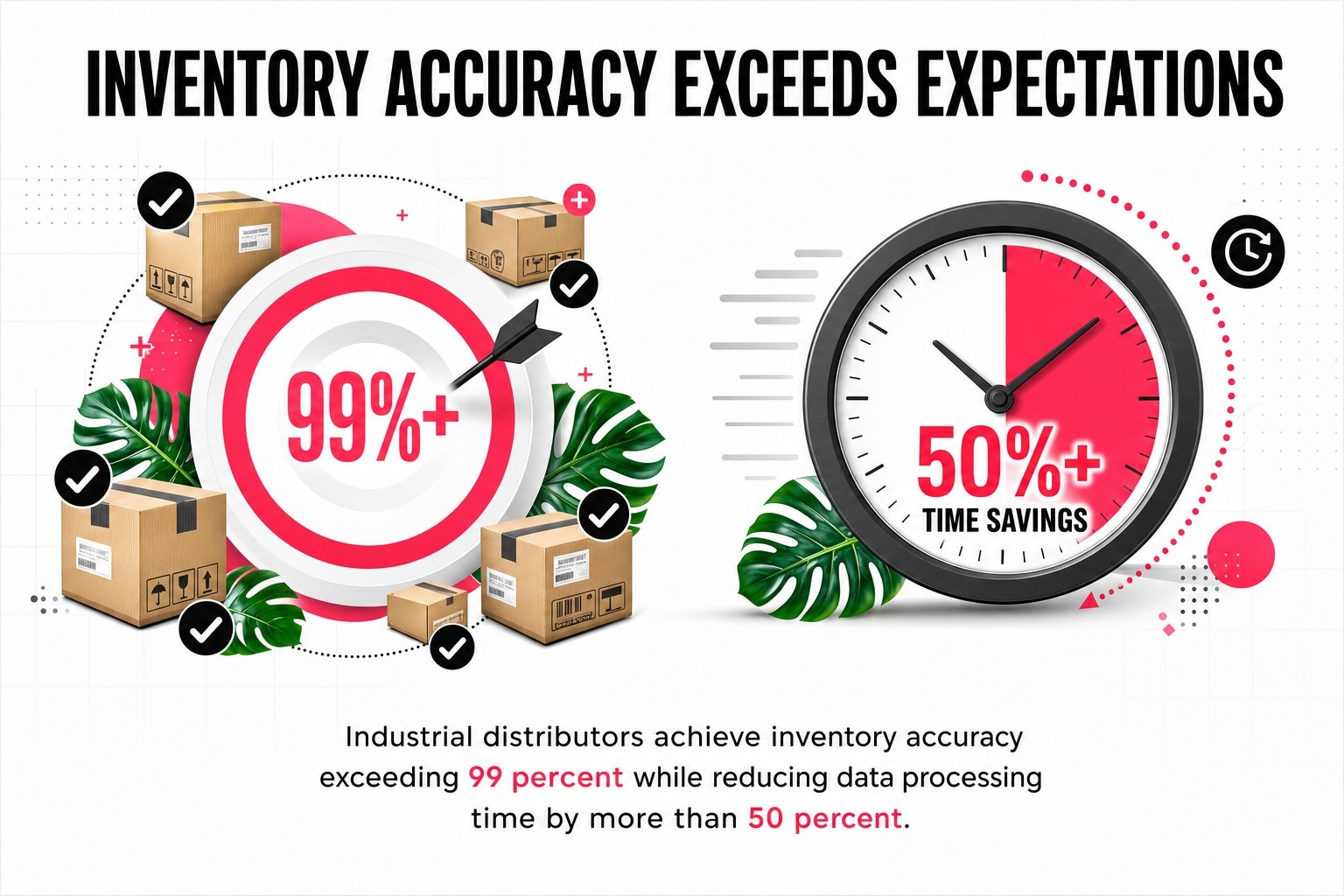
Feed management for industrial catalogs transforms scattered product data into synchronized, accurate information across every sales channel. Manual catalog management costs manufacturers an average of $12.9 million annually in errors, lost sales, and operational inefficiency. Automated feed management systems centralize technical specifications, pricing, and inventory data, then distribute updates in real time to eCommerce platforms, ERP systems, field service apps, and marketplace listings. Product Information Management (PIM) systems serve as the single source of truth for complex industrial catalogs containing HVAC equipment ratings, electrical component specifications, and plumbing supply compatibility matrices. By implementing proper feed management, industrial distributors achieve inventory accuracy exceeding 99% while reducing data processing time by more than 50%.
I've watched industrial distributors struggle with the same painful scenario for years. Your inside sales team quotes one price, your website shows another, and your field technicians are looking at specs that changed three weeks ago. When you're managing 40,000 HVAC components with BTU ratings, voltage requirements, and compatibility matrices, spreadsheets stop working fast. The question isn't whether you need better catalog management. It's how to build a feed management system that actually keeps pace with your operation.
Feed management for industrial catalogs is the systematic process of centralizing, enriching, and distributing product data across multiple channels and systems. A product feed is a structured file or API payload containing titles, descriptions, prices, availability, images, and technical specifications that machines can read and process.
For industrial suppliers, feed management solves a specific problem. You need to maintain technical accuracy for thousands of SKUs while synchronizing data across your ERP, eCommerce platform, field service software, and marketplace listings. Managing hundreds of thousands of SKUs with intricate technical specifications across multi-channel distribution has become a strategic capability rather than back-office work.
The complexity multiplies when you consider what industrial catalogs actually contain. An HVAC compressor listing requires BTU ratings, refrigerant types, electrical specifications, dimensional data, compatibility charts, and installation requirements. An electrical component needs voltage ratings, amperage, phase information, enclosure classifications, and safety certifications. A plumbing valve demands pressure ratings, material specifications, connection types, and flow coefficients.
Feed management systems handle three critical functions. First, they centralize product data into a single repository where your team maintains one authoritative record for each SKU. Second, they enrich that data by validating specifications, standardizing formats, and filling gaps through automated rules or AI-powered attribute generation. Third, they distribute the enriched data to every endpoint that needs it, formatted correctly for each platform's requirements.
The difference between basic catalog management and proper feed management comes down to automation and intelligence. Basic catalog management means maintaining product information somewhere and manually updating each sales channel. Feed management means building a system where one update propagates everywhere, automatically formatted, validated, and optimized for each destination.
This matters because industrial buyers now interact with your catalog data in at least seven different contexts. They search Google Shopping. They browse your website. They check availability through your distributor portal. They order through their procurement system integrated with your ERP. They look up specs in your field service app. They compare options on Amazon Business or Zoro. They ask AI assistants for product recommendations. Each touchpoint needs accurate, current data formatted appropriately for that specific interface.
Industrial distributors face catalog management challenges that make consumer retail look simple. The problems start with volume and complexity, then multiply through technical depth and compliance requirements.
Consider the typical industrial distributor catalog. You're managing 50,000 to 500,000 SKUs across multiple product categories. Each category has different specification requirements. HVAC equipment needs thermal performance data. Electrical components require safety certifications and testing standards. Plumbing supplies demand pressure ratings and material compatibility information. Your team can't treat these products as generic SKU numbers with prices attached.
The cost of getting this wrong shows up immediately in your operation. Poor data quality costs companies an average of $12.9 million per year, and industrial distributors feel this acutely. When a contractor orders the wrong voltage motor because your catalog listed incorrect electrical specifications, you absorb the return shipping, restocking, and expedited replacement. When your field service technician arrives at a job with incompatible parts because your mobile app showed outdated compatibility data, you've lost labor hours and customer trust.
Manual catalog management creates specific failure patterns. Your product team updates specifications in your ERP. Days or weeks later, someone remembers to update the website. Your marketplace listings stay outdated because no one owns that task specifically. Your field service app pulls data from a different database that no one thought to synchronize. Meanwhile, your manufacturer partners send updated spec sheets by email that sit in someone's inbox.
Data quality deteriorates through these disconnected processes. Product titles become inconsistent. One team calls it "1/2 inch copper coupling" while another enters "0.5in Cu Coupling" and a third lists "Copper Pipe Fitting 1/2inch." Search breaks. Reporting becomes impossible. Customers can't find products because your internal terminology doesn't match how they search.
The technical specifications challenge deserves special attention. Industrial products carry data that consumer retail systems weren't designed to handle. Your catalog needs to express complex compatibility relationships. This motor works with these pump housings, but only when paired with this control panel, and the combination requires specific electrical service. Try representing that in a basic eCommerce platform's product attributes.
Compliance adds another layer. Electrical products need UL listings. HVAC equipment requires EPA certifications. Industrial chemicals demand safety data sheets and hazard classifications. This compliance data must flow through your catalog alongside technical specifications, and it needs to update when certifications renew or standards change.
Your catalog data also drives multiple business processes beyond direct sales. Your procurement team needs accurate specifications for vendor negotiations. Your warehouse team needs dimensional data for storage optimization. Your logistics team needs shipping classifications and hazmat flags. Your finance team needs cost data and margin calculations. One catalog record actually serves six different business functions, each with specific data requirements.
Feed management systems for industrial catalogs act as intelligent middleware between your source data and every system that consumes it. The platform centralizes product information, applies business rules and quality checks, then distributes formatted data to each endpoint automatically.
The system starts by ingesting data from multiple sources. Your ERP sends product masters with SKUs, descriptions, and base pricing. Your purchasing team maintains cost data. Your manufacturer partners provide technical specifications through various formats including spreadsheets, PDFs, and structured data feeds. Your marketing team adds optimized titles, rich descriptions, and product images. The feed management platform pulls all these sources into one repository.
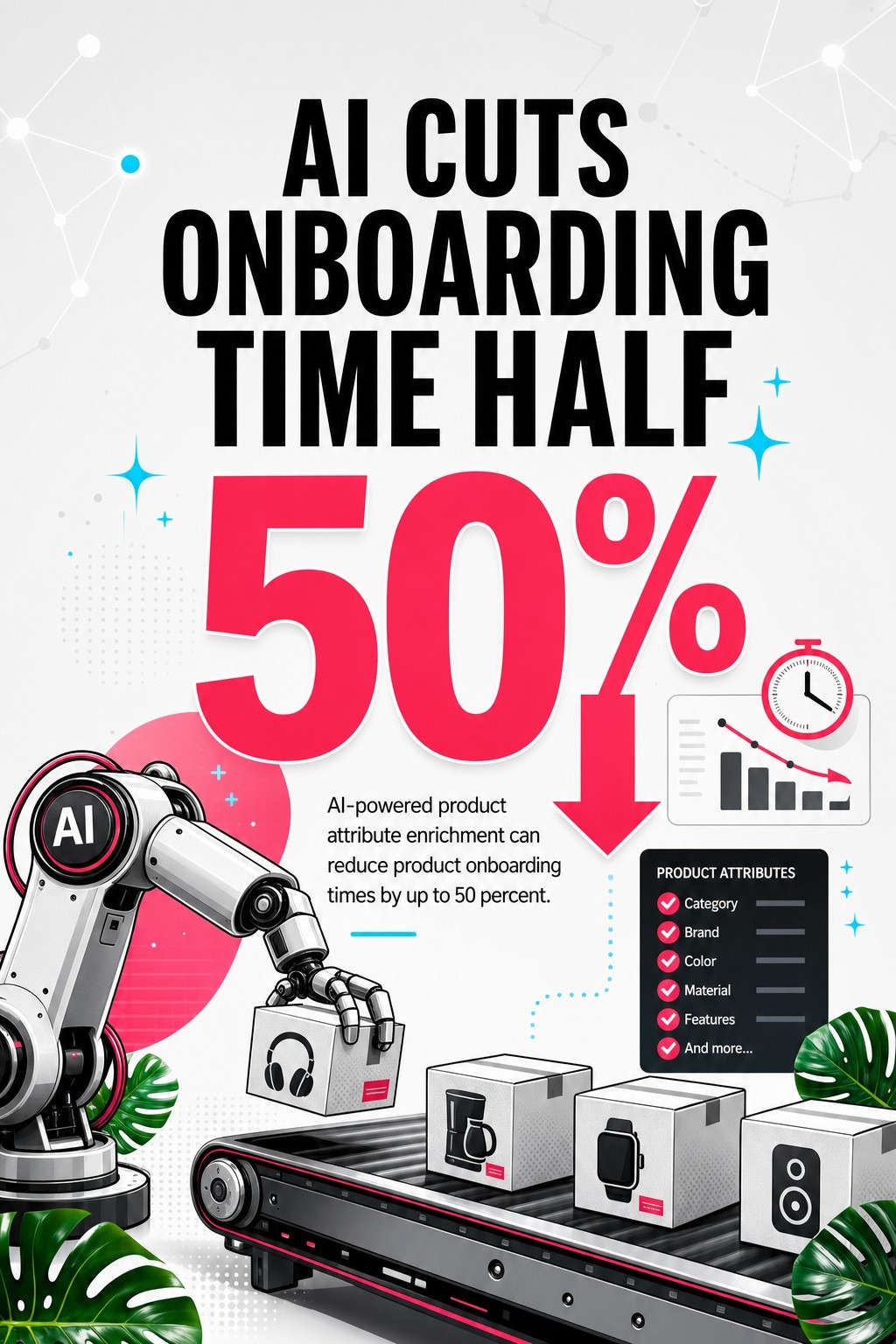
Data enrichment happens next. The platform validates specifications against your business rules. It flags missing required attributes. It standardizes formats so "1/2 inch" and "0.5in" become consistent. It generates additional attributes through logic rules. For example, if you know a product's BTU rating and coverage area, the system can calculate efficiency metrics. AI-powered product attribute enrichment can automatically generate missing attributes and standardize formats, reducing product onboarding times by up to 50%.
The distribution engine then transforms your clean, enriched data into format-specific feeds for each destination. Your eCommerce platform gets products structured for its category system with optimized titles and SEO-friendly descriptions. Google Shopping receives feeds formatted to their specification requirements with proper categorization and GTIN identifiers. Your ERP integration gets structured updates that maintain referential integrity with existing records. Your field service app receives simplified product data optimized for mobile display with essential specifications prioritized.
Modern feed management platforms provide several essential capabilities that directly address industrial catalog challenges.
Multi-source data aggregation pulls product information from disparate systems without requiring manual consolidation. The platform connects to your ERP through APIs, imports manufacturer data files on automated schedules, and allows manual uploads for specialty data. You maintain each data source in its native system, and the feed management platform handles synchronization.
Automated transformation rules standardize data formats and generate derived attributes. You define rules once, then the system applies them consistently across your entire catalog. If your naming convention requires brand names before product types, you write that rule and the system reformats 100,000 titles automatically. If marketplace listings need specific character limits, the system truncates descriptions intelligently while preserving key specifications.
Validation and quality controls prevent bad data from reaching customer-facing channels. The platform checks for required attributes, validates formats, flags pricing anomalies, and identifies specification conflicts. You can set thresholds that block publication when quality scores fall below acceptable levels. Automated tracking systems can reach inventory accuracy exceeding 99%, compared with approximately 63 to 65 percent in manual environments.
Channel-specific optimization adapts your product data for each destination's requirements and best practices. The same source product generates different titles for Google Shopping (keyword-optimized for search) versus your printed catalog (formatted for easy scanning) versus your B2B portal (optimized for part number lookup). The platform manages these variations automatically rather than forcing your team to maintain separate data sets.
Real-time synchronization pushes updates to connected systems immediately or on scheduled intervals. When your purchasing team updates a product cost in your ERP, the feed management system recalculates margin-based pricing and updates your website within minutes. Real-time data allows businesses to keep inventory levels accurate, optimize stock, and automate reordering, improving customer experience and operational efficiency.
For industrial distributors specifically, feed management systems handle technical complexity that consumer-focused platforms miss. The system understands that an electrical component's amperage rating isn't just another attribute to display, it's a critical specification that determines compatibility and safety. The platform can express complex relationships like "this replacement part fits models X, Y, and Z manufactured between 2015 and 2022, but requires adapter kit A for models before 2018."
Product Information Management (PIM) systems provide the foundational layer that industrial feed management requires. A PIM system serves as your single source of truth for all product data, particularly the complex technical specifications that define industrial catalogs.
The distinction between a PIM system and basic feed management matters. Feed management focuses on distributing and formatting product data for different channels. PIM focuses on authoring, enriching, and governing that data at the source. Most mature industrial catalog operations use both, with the PIM system as the master data repository and feed management as the distribution engine.
PIM systems excel at managing the hierarchical complexity of industrial products. A motor product family might have base specifications shared across all models, with variations by horsepower, voltage, and frame size. The PIM system maintains this hierarchy logically, allowing you to update shared attributes once and inherit changes across all variants. When you change the manufacturer part number prefix format, that change propagates through every related SKU automatically.
Technical attribute management in PIM systems goes beyond simple key-value pairs. The system understands data types, units of measurement, and valid ranges. When entering a motor's voltage rating, the PIM enforces that the value must be numeric, must include units (V or VAC), and must fall within realistic ranges (120V, 208V, 230V, 460V for common industrial motors). This structured approach prevents the data quality erosion that happens when teams enter specifications into unstructured fields.
PIM systems handle product relationships that matter for industrial catalogs. Complementary products, replacement parts, required accessories, and compatible components all connect through structured relationships. When a customer views an HVAC condenser unit, your PIM system knows to display compatible air handlers, required installation kits, and recommended maintenance supplies. These relationships maintain themselves as products change or are discontinued.
The workflow capabilities in PIM systems ensure data quality through governed processes. New product data flows through approval stages. Your product team enters initial specifications. Your technical team validates electrical ratings and certifications. Your marketing team adds optimized descriptions. Your pricing team applies margin rules. Only after all approvals does the product data become available for feed management distribution. This workflow prevents incomplete or unvalidated data from reaching your customers.
Choose your PIM system based on how well it handles industrial-specific requirements. Consumer retail PIM platforms often lack the technical depth that industrial catalogs demand.
Evaluate whether the PIM system supports complex attribute types. You need systems that handle numeric ranges ("operating temperature: -40°F to 140°F"), multi-value attributes ("compatible with: model A, model B, model C"), conditional attributes ("if voltage is 460V, then phase must be 3-phase"), and hierarchical specifications. Basic systems that treat every attribute as simple text won't serve your needs.
Check the system's classification and taxonomy capabilities. Industrial catalogs need multiple classification schemes simultaneously. You have your internal category structure, industry-standard classification codes (like UNSPSC), manufacturer categorization, and marketplace-specific taxonomies. Your PIM should maintain all these classification schemes and map between them automatically.
Assess integration capabilities with your existing systems. The PIM needs reliable connectors to your ERP for transactional data, your DAM for product images and documents, your pricing system for current prices, and your inventory system for availability. Poor integration means manual synchronization, which defeats the purpose of centralized master data.
Consider the system's data quality tools. Built-in validation rules, completeness scoring, duplicate detection, and quality dashboards help your team maintain high standards. Companies using master data management see potential operating impacts including 10 to 15% reductions in inventory carrying costs and more than 50% reductions in data processing time for cleansing and enrichment.
Test the user experience for your specific team. Product data management in industrial contexts involves technical staff who may not be database experts. The PIM interface needs to make complex data entry logical and efficient. Bulk editing capabilities, template-based entry forms, and clear validation feedback matter for daily usability.
Industrial catalog feed management requires specific technical capabilities beyond what consumer retail platforms provide. These features directly address the complexity, accuracy requirements, and technical depth that define industrial distribution.
Specification validation and technical attribute management rank first. Your feed management system needs to understand that a voltage rating isn't arbitrary text, it's a critical specification with safety implications. The platform should validate electrical specifications against standards, flag impossible values, and enforce unit consistency. When someone enters "230" without specifying voltage, the system should require clarification rather than assuming units.
Compatibility matrix management becomes essential when products have complex fit requirements. An industrial pump replacement part might fit dozens of original equipment models, but only with specific impeller combinations and motor configurations. Your feed management system needs to express these relationships clearly and maintain them as products evolve. The system should also validate compatibility claims, preventing impossible combinations from appearing in your catalog.
Multi-unit handling addresses the reality that industrial products are measured and sold in various units. The same pipe fitting might be specified in inches for North American markets and millimeters for international distribution. Electrical ratings need both imperial and metric expressions. Your feed management platform should maintain a canonical measurement and generate converted values automatically, ensuring accuracy across all output formats.
Feed management systems for industrial catalogs must handle data complexity that simpler platforms ignore. Understanding these requirements helps you evaluate platforms effectively.
Complex product hierarchies need proper representation. A variable frequency drive family includes base models, voltage variants, horsepower ratings, and optional feature combinations. The hierarchy might go six levels deep with shared and unique attributes at each level. Your system needs to manage inheritance rules so that updating a base specification propagates correctly while preserving variant-specific data.
Certification and compliance data requires special handling. UL listings, CSA certifications, OSHA requirements, EPA ratings, and energy efficiency classifications all need structured storage with renewal tracking. Your feed management system should flag certifications approaching expiration and prevent publishing products with lapsed compliance data. This compliance information often needs to appear in specific formats for different channels, with certification numbers, dates, and proper legal disclaimers.
Technical documentation linking connects products to installation guides, specification sheets, CAD drawings, wiring diagrams, and safety data sheets. The feed management platform should maintain these associations and provide appropriate document links in each output format. Your website might link directly to PDF specification sheets, while your field service app needs offline-available quick reference guides.
Configurability rules let you express products that customers build to order. An HVAC system configured from components needs rules that ensure valid combinations. If a customer selects a 5-ton condenser, your system should only offer compatible evaporator coils and appropriately sized air handlers. The feed management platform expresses these rules and enforces them across channels.
Supersession tracking maintains the product lifecycle relationships that matter in industrial contexts. When manufacturers discontinue a motor and release a replacement, your feed management system needs to track that relationship. Customers searching for the old part number should see the superseding product. Your inventory system should understand that stock of the old part satisfies orders for either number. These relationships prevent confusion when specifications and part numbers change.
Effective feed management requires deep integration with your existing systems. The platform should connect seamlessly to your operational infrastructure.
ERP integration forms the backbone of your feed management system. Bidirectional data flow ensures that your ERP maintains transactional data (orders, inventory, costs) while your feed management system handles customer-facing product content. API-based integration provides real-time synchronization, though batch integration may suffice for less time-sensitive data like specification updates.
Vendor data ingestion automates the process of receiving and incorporating manufacturer product data. Manufacturers send updates through various formats including EDI, XML, spreadsheets, and PDF specification sheets. Your feed management platform should handle multiple input formats, extract relevant data, map to your internal structure, and flag changes for review. This automation eliminates the manual work of processing manufacturer updates.
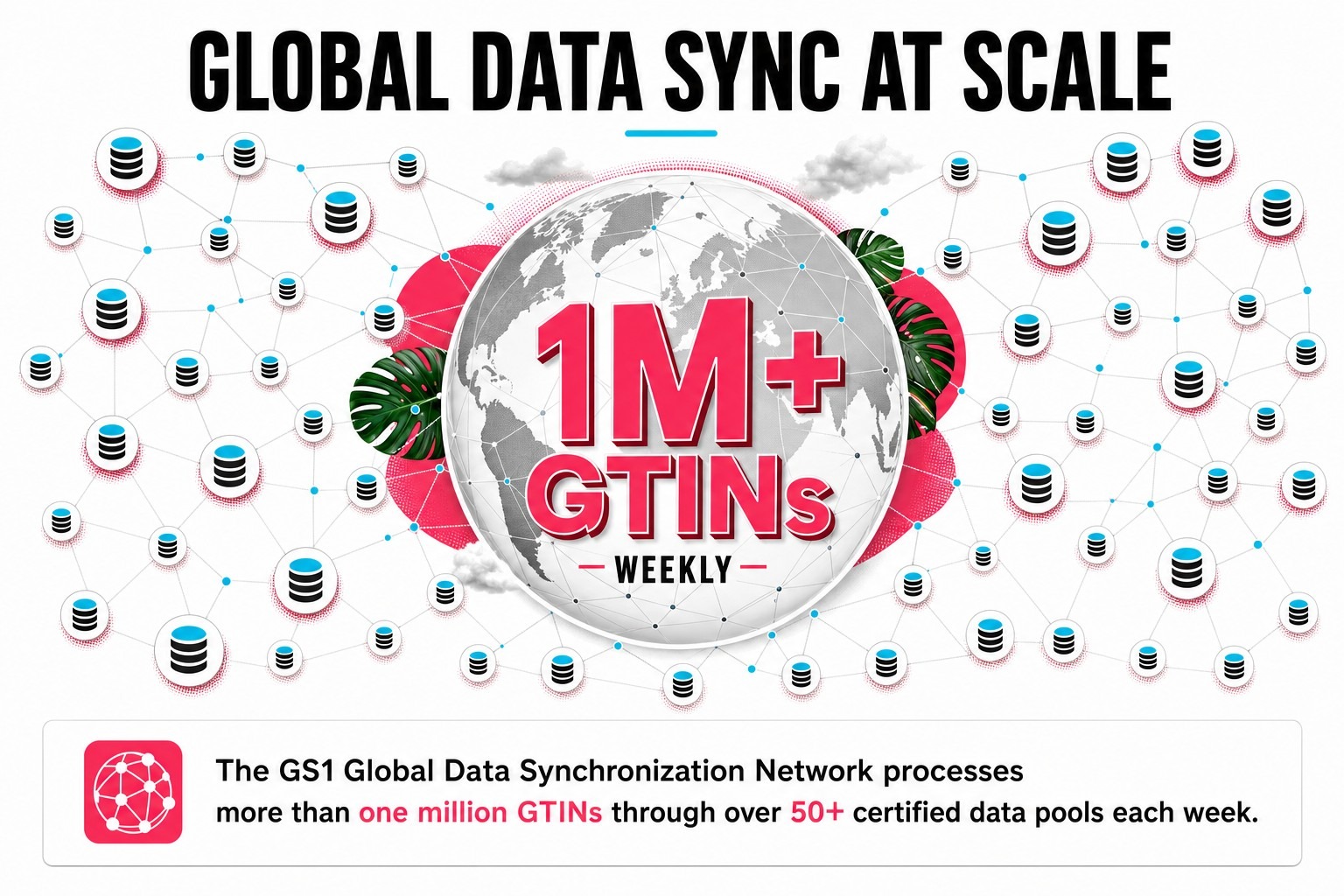
Marketplace and platform connectors push your catalog data to sales channels automatically. Direct integrations with Amazon Business, Zoro, Google Shopping, and industry-specific marketplaces ensure your products appear with correct formatting and complete data. The GS1 Global Data Synchronization Network processes more than one million GTINs through over 50 certified data pools each week, representing a standardized approach to product data distribution.
Workflow automation handles the repetitive tasks that consume your team's time. Automated workflows can route new products through approval stages, trigger price updates when costs change, flag products missing required attributes, and publish updates on defined schedules. You define the business logic once, then the system executes it consistently.
Monitoring and alerting capabilities keep your team informed about catalog health. The system should alert you when feed publications fail, when data quality scores drop, when required certifications approach expiration, or when inventory synchronization delays exceed thresholds. Proactive monitoring prevents customer-facing issues before they occur.
Successful feed management for industrial catalogs requires strategic integration across your entire technology ecosystem. Your ERP, eCommerce platform, and field service systems all consume product data, but each needs that data structured and formatted differently.
ERP integration establishes your operational data foundation. Your ERP system holds the transactional truth, managing purchase orders, inventory positions, actual costs, and order history. The feed management platform pulls this operational data and combines it with enriched product content. The integration needs to handle core product identifiers, base pricing, cost data, inventory availability, and supplier information. Most industrial ERPs provide APIs or database views that feed management platforms can query in real time or near-real time.
The synchronization pattern matters for ERP integration. For product masters and specifications, the feed management system typically acts as the source of truth, pushing data to the ERP. For transactional data like inventory and costs, the ERP serves as the source and the feed management system pulls updates. This bidirectional relationship requires clear data ownership rules to prevent conflicts when both systems allow editing the same attributes.
ECommerce platform integration focuses on creating optimized product presentations for online buyers. The same product data from your ERP transforms significantly for web presentation. Technical specifications become filtered attribute sets for category pages. Part numbers and internal codes translate to customer-friendly titles. Compatibility matrices transform into guided product finders. Your feed management system handles these transformations, sending the eCommerce platform fully optimized product data rather than raw specifications.
Each sales and service channel has specific data requirements that your feed management system needs to satisfy. Understanding these requirements helps you structure integrations effectively.
Your primary eCommerce website needs complete product data optimized for conversion. Product titles include key specifications and search terms (not just manufacturer part numbers). Descriptions balance technical accuracy with customer benefits. Technical specifications appear in structured attribute tables that support filtering and comparison. Images show products from multiple angles with dimensional overlays. Related products connect through merchandising rules. All this comes from your feed management system, formatted specifically for your web platform.
Marketplace feeds require platform-specific formatting and categorization. Google Shopping demands specific attribute names, proper Google product categories, and GTIN identifiers. Amazon Business requires browse node classification, valid values for variant attributes, and specific image requirements. Each marketplace feed needs its own transformation logic, pulling from the same source data but formatting it according to each platform's specifications.
Field service applications need simplified product data optimized for mobile access and technician workflows. Field techs don't need marketing descriptions, they need quick-reference specifications, compatibility information, and current availability. The feed management system provides a streamlined data set showing only essential attributes, formatted for small screens and offline access. Cross-reference information helps techs identify correct replacement parts for equipment they encounter in the field.
Procurement system integration serves B2B customers who order through their own purchasing platforms. These systems often use standardized formats like cXML or EDI, requiring your product data in structured formats with specific field mappings. The feed management platform maintains punch-out catalogs that customers' procurement systems can access, showing your full catalog with customer-specific pricing and contract terms applied.
Distributor portals need product data that supports reseller workflows. Your distribution partners require not just specifications and pricing, but also inventory availability across your warehouse network, shipping lead times, suggested retail prices, and marketing assets they can use. The feed management system provides partner-specific feeds with appropriate data visibility and formatting.
Structure your integrations based on proven architectural patterns that ensure reliability and maintainability.
API-first integration provides real-time data synchronization and reduces latency between systems. Modern feed management platforms expose RESTful APIs that your other systems can consume. This approach works well for inventory updates, where you need near-instant synchronization between your ERP's stock positions and your website's availability display. API integration also enables event-driven architectures where changes in one system immediately trigger updates in connected systems.
Scheduled batch integration handles high-volume data exchanges that don't require real-time synchronization. Nightly feeds might extract your complete product catalog from the feed management system and update your distributor portal. Weekly specification updates from manufacturers can be processed in batch, reviewed for quality, then published to all channels on a scheduled cadence. Batch processing reduces system load and provides natural checkpoints for data validation.
Middleware platforms can orchestrate complex integrations between multiple systems. iPaaS (Integration Platform as a Service) solutions connect your feed management system to dozens of endpoints without requiring custom integration code for each. These platforms provide pre-built connectors, transformation logic, and error handling that accelerate integration projects and improve reliability.
Direct database access works for specific use cases where API integrations aren't available. Some legacy ERP systems may not expose modern APIs, requiring direct database queries to extract product and inventory data. This approach requires careful coordination to avoid performance impacts and maintain data integrity, but it enables integration with systems that otherwise couldn't participate in your feed management architecture.
Real-time data synchronization ensures that customers, field technicians, and internal teams all work from current, accurate product information regardless of which system they're using. For industrial distributors managing rapidly changing inventory and frequent specification updates, synchronization delays create immediate problems.
The synchronization challenge scales with your operation. A small distributor updating 500 products might synchronize data hourly without issue. A large distributor managing 200,000 SKUs with inventory positions across multiple warehouses needs more sophisticated real-time approaches. The synchronization frequency you need depends on how quickly your data changes and how much customer impact delays create.
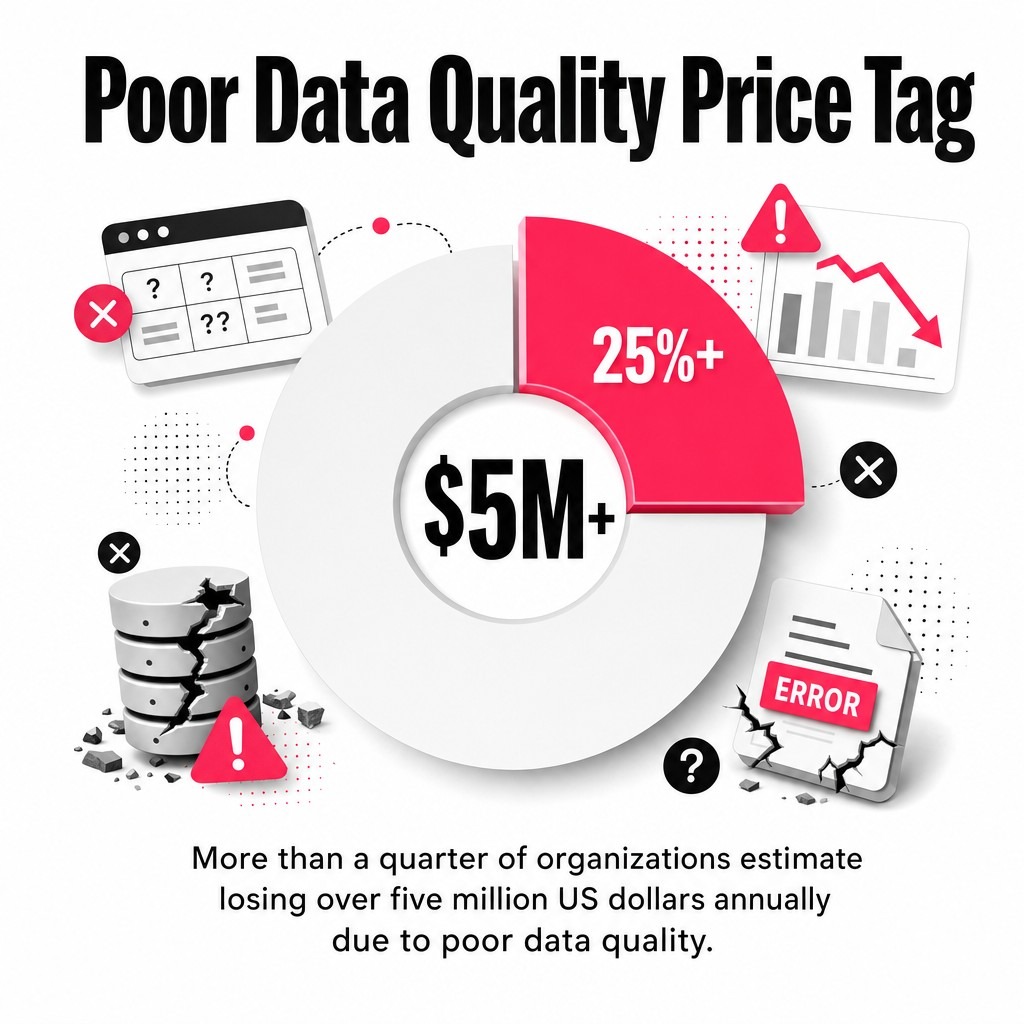
Inventory synchronization demands the tightest latency requirements. When your warehouse ships the last unit of a motor, your website should reflect that unavailability within minutes to prevent orders you can't fulfill. When receiving processes a new shipment, those products should become available for sale immediately. More than a quarter of organizations estimate losing over $5 million annually due to poor data quality, and inventory inaccuracies drive significant portions of that cost through misallocated stock, rush shipping, and lost sales.
Price synchronization prevents customer service nightmares. When your pricing team updates margins or applies promotional pricing, every channel needs to reflect those changes immediately. Price discrepancies between your website and your phone quotes damage credibility and create fulfillment conflicts. Your feed management system should push price changes to all channels within minutes of ERP updates.
Building reliable real-time synchronization requires choosing the right technical approach for your specific requirements and system capabilities.
Event-driven synchronization provides the lowest latency and most efficient resource usage. When inventory decreases in your ERP, the system publishes an event that your feed management platform consumes immediately. The platform updates its internal records and triggers downstream updates to connected channels. This approach requires systems that can publish events and message queues to ensure reliable delivery, but it provides true real-time synchronization with minimal polling overhead.
Polling-based synchronization works when your systems don't support event publishing. Your feed management platform queries the ERP every few minutes, checking for changes to products, inventory, or pricing. Changed records trigger updates to downstream systems. While less efficient than event-driven approaches, polling provides reliable synchronization with systems that only offer database or API access without event capabilities.
Change data capture (CDC) techniques track modifications at the database level, identifying exactly which records changed since the last synchronization. This approach provides reliable change detection without requiring application-level event publishing. Database triggers or transaction log monitoring identify changes, which the feed management platform then processes and distributes. CDC works particularly well with legacy systems that weren't designed for modern integration patterns.
Hybrid synchronization combines approaches based on data type and urgency. Inventory positions might use event-driven synchronization for immediate updates, while specification changes use daily batch processing because technical attributes change infrequently. Pricing could use polling with five-minute intervals, balancing synchronization speed with system load. Matching synchronization strategy to business requirements optimizes both performance and resource usage.
Real-time synchronization inevitably creates conflicts when multiple systems can modify the same data. Your feed management architecture needs clear rules for resolving conflicts.
Data ownership policies define which system serves as the source of truth for each data type. Your ERP owns transactional data like inventory and costs. Your PIM system owns product content and specifications. Your pricing system owns margins and promotional prices. When conflicts arise, the owning system's data always wins. Clear ownership prevents synchronization loops and data corruption.
Timestamp-based resolution handles situations where ownership isn't absolute. If your marketing team updates a product description in the PIM while your product team updates it in the ERP, the most recent change takes precedence. Accurate timestamps and coordinated system clocks become essential for this approach to work reliably.
Manual review queues capture conflicts that automated rules can't resolve safely. If your pricing system and ERP both show different prices for the same product, with timestamps within seconds of each other, the feed management platform can flag this for human review rather than making an arbitrary choice. These review queues ensure significant discrepancies get human attention while allowing routine synchronization to proceed automatically.
Version control and audit trails track all changes to product data, providing the context needed to understand and resolve conflicts. When synchronization issues occur, your team can review the complete change history, identifying which system made specific modifications and when. This audit capability proves essential for both troubleshooting and compliance requirements.
Implementing feed management for industrial catalogs requires a phased approach that balances quick wins with long-term strategic goals. Start with your most impactful data quality problems and most critical sales channels, then expand systematically.
Begin by auditing your current catalog data quality and identifying specific pain points. Where do returns happen because of incorrect specifications? Which product categories have the most incomplete data? What percentage of your catalog lacks required technical attributes? Which sales channels show the highest error rates? This assessment guides your implementation priorities, ensuring you tackle problems with clear business impact first.
Establish your data governance framework before implementing technology. Define which teams own which data types. Create approval workflows for new products and specification changes. Document attribute standards and naming conventions. Set data quality thresholds that products must meet before publication. Technology enables your governance framework, but the framework must exist first or you'll just automate existing chaos.
Select your technology platform based on your specific requirements rather than chasing features you won't use. An industrial distributor with 20,000 SKUs and three sales channels needs different capabilities than a manufacturer with 500,000 SKUs selling through 50 distributors. Match platform complexity to your actual use case. Reliable, standardized master data delivers measurable benefits including reductions in mean time to repair by 15 to 20%, but only when properly implemented.
Roll out feed management in phases that deliver value incrementally while building toward your complete vision.
Phase 1: Centralize and Clean Core Product Data
Start by establishing your single source of truth. Migrate product masters from your ERP into your PIM system. Consolidate manufacturer data scattered across spreadsheets and file shares. Clean up product titles, descriptions, and basic specifications. This phase creates your data foundation without yet tackling complex integrations or multi-channel distribution.
Focus on your highest-volume product categories first. If HVAC equipment represents 40 percent of your revenue, prioritize getting that category's data clean and complete. Achieve success with a manageable subset before expanding to your entire catalog. This approach delivers measurable improvements quickly while proving your processes work.
Phase 2: Integrate Primary Sales Channels
Connect your feed management system to your most critical sales channel, typically your primary eCommerce website. Build the integration, establish synchronization processes, and validate that product data flows correctly with appropriate formatting. This phase proves your feed management system works in production under real customer load.
Measure the impact of clean, synchronized data on your eCommerce metrics. Track changes in search accuracy, conversion rates, return rates, and customer service inquiries related to product information. Document these improvements to build support for expanding the initiative.
Phase 3: Expand to Additional Channels and Systems
Add integrations to marketplaces, distributor portals, field service applications, and other secondary channels. Each integration builds on the foundation established in earlier phases, with less effort required as your team gains experience and your data quality improves.
Automate workflows for routine tasks like manufacturer data ingestion, price updates, and inventory synchronization. Build monitoring and alerting that keeps your team informed about system health and data quality trends.
Phase 4: Optimize and Innovate
With your core feed management infrastructure stable and delivering value, focus on optimization and new capabilities. Implement AI-powered attribute enrichment to accelerate new product onboarding. Build advanced compatibility matrices that improve customer self-service. Create product configurators for complex built-to-order items. Add predictive analytics that forecast which products need specification updates or face obsolescence.
Track specific metrics that demonstrate feed management value and identify areas needing improvement.
Data quality metrics provide baseline health indicators. Measure catalog completeness (percentage of products with all required attributes), specification accuracy (error rates in technical data), consistency scores (how uniform naming and formatting are), and freshness (average age of product data). Set targets for each metric and track progress monthly.
Operational efficiency improvements show feed management impact on your team's productivity. Track time spent on manual catalog updates, frequency of specification corrections, speed of new product onboarding, and resource hours dedicated to data quality firefighting. These metrics should all improve significantly after feed management implementation.
Customer-facing performance indicators reveal how feed management affects your market success. Monitor product findability (search result relevance), conversion rates by product category, return rates due to specification errors, and customer service inquiries about product information. Improved data quality should drive measurable improvements across these metrics.
Channel performance metrics show how well your feed management supports multi-channel distribution. Track data synchronization delays, feed publication success rates, channel-specific conversion performance, and marketplace approval rates for new listings. Consistent, high-quality feeds improve performance across all sales channels.
Financial impact provides the ultimate measure of feed management success. Calculate costs avoided through reduced returns and corrections. Measure incremental revenue from improved product findability and conversion. Quantify inventory carrying cost reductions from better accuracy. Total these benefits against your feed management investment to demonstrate clear ROI.
The industrial catalog landscape continues evolving rapidly. Product feeds now form the foundation determining whether products are discovered, trusted, selected, and recommended across search engines, AI agents, marketplaces, and emerging interfaces. Your feed management infrastructure needs to adapt to these changes while maintaining the accuracy and technical depth that industrial customers demand.
Start with your most critical pain point. Fix the data quality issue costing you the most money or customer trust. Build from there systematically. The goal isn't perfect catalogs overnight, it's reliable processes that continuously improve your product data while supporting your business growth.