
Most SEO agencies run the same playbook regardless of what you sell. For large auto parts catalogs where fitment, compatibility, and spec data drive the sale, that playbook leaves rankings intact while visibility quietly narrows underneath it. SCUBE fixes the catalog structure, fitment data, and technical issues that generic programs miss. Built for high-SKU, spec-driven auto parts catalogs.








When a buyer is searching for a specific part, they’ve got multiple tabs open, comparing across you and your competitors. The first page that makes fitment unambiguous gets the order. The other two lost the sale because they didn't confirm the right thing fast enough.
That's the conversion problem in auto parts SEO. You’re not just trying to show up for the right searches, you also need to make sure the page getting the click answers the buyer’s questions.
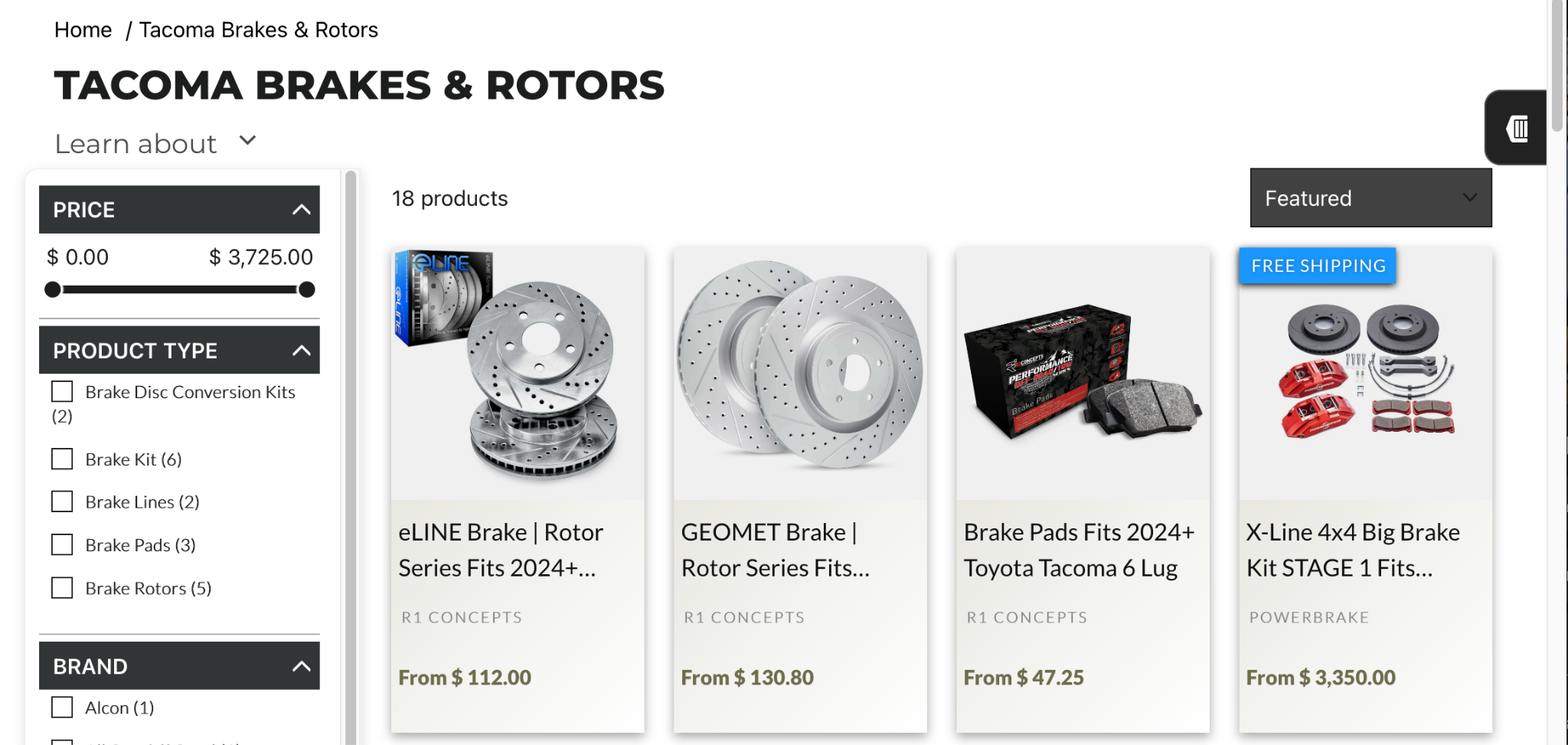
This issue is even great for large catalogs, where broad category pages (/brake-pads) rank. But a fitment-specific product page with more detail and depth (/Tacoma-2019-brake-pads-front) gets buried in the search results. Buyers can’t quickly and clearly confirm YMM, engine, trim, etc. on a category page. They end up wasting time and leave, frustrated.
You could see your rankings improve without a subsequent increase in sales. The only way SEO will produce consistent results is when search visibility and catalog clarity work together.
Auto parts SEO is about cleaner fitment signals, stronger product and category pages, better internal structure, and less crawl waste. When your site checks off all of those, then you’ll start to see results that convert.
The problem for large auto parts catalogs is that the wrong pages are getting traffic and they’re not built for conversion. Broad category and brand pages rank well but they’re not going to help someone searching for a part for a specific vehicle. Whereas the correct fitment-specific product page is buried on page 5 of Google. This comes down to page structure.
In 2026 you’d be amazed at the number of auto parts stores that either don’t provide fitment compatibility or it’s incorrect. Buyers need to confirm that the part is going to fit. If they can’t find that quickly, it breaks trust.
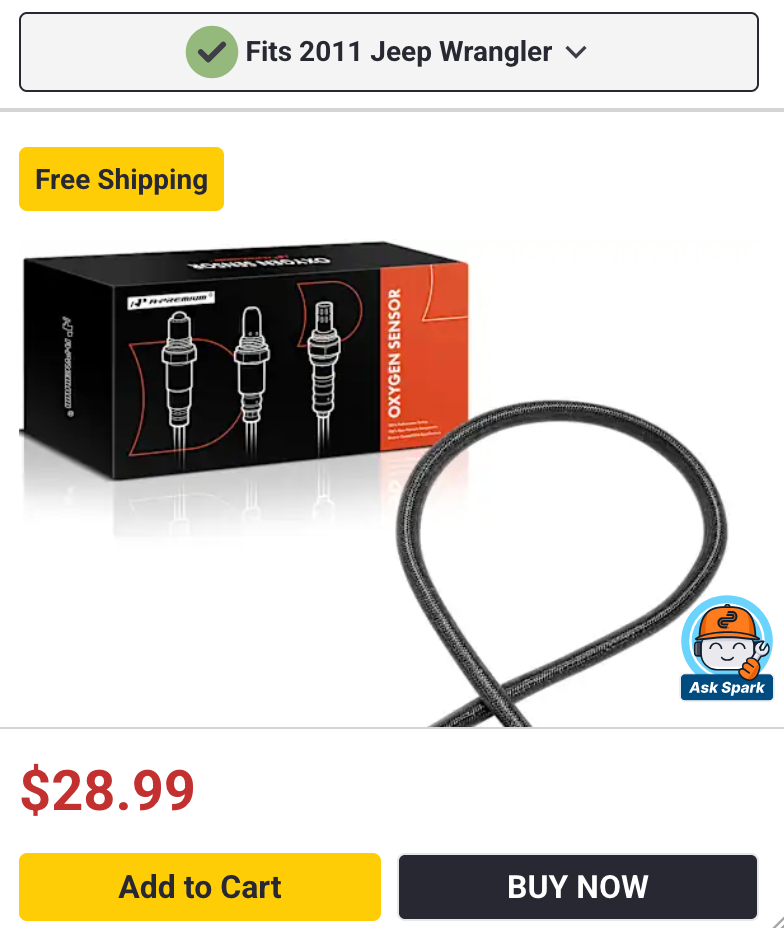
Fitment is crucial for any catalog but problems compound for large catalogs. If you’ve got one incomplete field it can spread to every SKU that shares the same template, feed import, or data source. That gap becomes a conversion problem. And even if people do purchase, they’re going to return because the fitment was incorrect.
And don’t even get us started on fitment for parts like tires, where clearance, offset, and mods like lift kits enter the picture, further complicating things.
Standardized fitment formats are exactly that; they allow you to organize, index, and pair data on an industry-wide basis. If ACES & PIES data is missing, incorrectly entered, or absent in some portion(s) of your catalog, a search engine will not be able to match vehicle specific searches to the correct product pages. A data gap does not simply prevent a page from ranking, but may result in incorrect matches when a page appears for a search query it cannot properly address.
In addition, unevenly populated data affects product feed performance. Product feeds with full fitment data perform differently than those with none. Even within the same category, products with full data (SKUs) and those without (also SKUs), do not operate as one unified catalog. Rather, they begin to function as individual, non-cohesive web pages.
In many cases large aftermarket catalogs list SKUs that are very close if not identical. Similar products from different manufacturers in the same product line or with slightly different applications can be listed on nearly identical pages. Pages like this, often with little or no unique content and similar fitment information, confuse search engines when trying to determine which one of these pages to rank higher. This results in diluted authority among the two pages and neither page will be able to capture the traffic they were originally designed to capture.
There is an architectural issue here rather than an issue of how much content you need to add to your existing pages. While adding more copy to each page may help with content quality and density, it does nothing to address the underlying issue. Your catalog needs to architecturally split and clearly identify what makes each page distinct from all other pages so search engines know which url should rank for what exact query.
Thin pages, duplication of URLs, faceted search navigation producing low-value filtered views, and search result pages that have no business being crawled by SEO robots are drawing crawl budget away from those pages that count. That's a major problem in a large auto parts catalog where this isn't just an inefficiency. The potential exists for google bot to spend its time crawling thousands of urls that don't do anything to improve your ranking, while your product and category pages (the ones that contain real fitment information) will be crawled less often.
The downstream effect is slow indexation of newly added items and pages that have been updated, meaning slower recoveries and weaker authority signals on the pages that need to capture the high-intent demand. The Crawl Waste issue is a cap on the performance for the entire product catalog, which cannot be offset no matter how optimized individual items are.
Catalogs that have been in use for several years typically receive substantial branded traffic. Returning customers recognize the brand, and repeat visits increase the measured volume of organic sessions. Branded demand appears as an increase in overall reporting. However, the true measure of the catalog's effectiveness in capturing non-branded, fitment-specific, part-number level search demand remains obscured.
Interpreting these results as evidence of effective search engine optimization is inaccurate when the business is actually merely recirculating existing customers. Organic-based acquisition of new customers remains at the same low level as before. This is a key distinction to make in SEO.
SEO is built on rankings and clicks. But now AI is upending those metrics. LLMs are now recommending specific parts to buyers, but there’s no click. You lose that data but your awareness grows. Those recommendations are built on the same thing SEO is: clean, structured, fitment-accurate data.
If your catalog is not structured properly, you’ll lose rank on search engines and also not be recommended when your ideal buyer asks Claude or ChatGPT what rotor to buy for their 2019 Tacoma SR5.
Fitment is as important to your product specs as it is to search. If your pages handle fitment the right way, they rank for more specific searches, convert better and lead to fewer returns.
Most of your customers are not searching “brake pads” and spending time browsing broad category pages. Their search is specific, because they already know what they want. That’s why spec-driven products SEO differs from industries like fashion, where there often is no hyper-specific search query.
Search queries that reflect this pattern:
If your pages are built around specs (YMM, engine, trim in page content, titles, structured data), then you’ll capture these searches. If not, buyers will have extra work to do in order to figure out compatibility. That friction and uncertainty means they’ll often just go to one of your competitors’ sites instead.
A significant number of auto parts searches express intent using part numbers, OEM references, aftermarket equivalents and substitutions. Searches based on these terms represent a customer that has identified the part; now they’re seeking sources, pricing, or confirmation that an equivalent substitute will meet needs.

Example patterns:
These are queries with low competition and high purchase intent, compared to a broad category search like “brake pads”. The catalog that surfaces the right part for that search (because of structured data, part numbers and cross-references on the page) is going to capture that buyer.
OEM and aftermarket customers assess parts in different ways, seek parts in different ways, and convert differently. While OEM searching can be characterized as having a relatively high price tolerance and low acceptance of uncertainty regarding fit, aftermarket searches involve making comparisons (equivalent, alternative, replacement) and require the page to have a greater amount of persuasive content before the customer will make a purchase decision.
A page that isn’t clear about whether it’s OEM or aftermarket creates a trust issue. A buyer looking for an OEM-grade replacement who lands on a page that leads with aftermarket options hasn't found confirmation. A buyer comparing aftermarket options who lands on a page built around OEM part numbers hasn't found the comparison they need. Both leave.
Most wheel and tire catalogs use a single look up method to determine compatibility; which generally includes the year, make, and model of a vehicle. However, this does not accurately reflect how most people shop for wheels and tires.
Take wheels, if your site only offers YMM filtering, you’re missing out on buyers who search by bolt patter and vice-versa. For tires, you have OEM-spec replacements, where YMM maps to a tire size. But! That same size (even the same product) can cross-reference to many different vehicles. It’s a many-to-many relationship, rather than a one-to-one. To make it even more complicated, if someone wants to upgrade instead of replace, then you have to take into account clearance, offset, and mods like lift kits.
Wheels and tires aren't edge cases, since they're two of the highest-volume categories in most aftermarket catalogs. Everyone with a car is bound to buy a new set of tires at some point. These purchases end up with a mix of car enthusiasts who likely know their bolt pattern by heart, and the typical car owner who doesn’t know what a bolt pattern is.
There's a second split inside that behavior that matters just as much: replacement buyers versus upgrade buyers. A replacement buyer wants the fastest possible confirmation that a part matches what failed, they just need a fast fix. An upgrade buyer is comparing options and isn't in a hurry. A page written for one reads as either too slow or too thin for the other.
Demand for aftermarket parts is out there. The issue is whether your pages that rank for those parts searches will actually convert.
When an aftermarket buyer is searching for a particular part for their particular vehicle, that’s about the best ready-to-buy signal you’re going to get. There is no reason the page which ranks highest in the search results cannot be an easy conversion from the buyers perspective. If the buyer clicks on the link and views the information available, but chooses to leave without making a purchase, the problem most likely lies with the page content, not the search.
Product pages fail to make sales when there is no vehicle compatibility, specs, or application context in an easy-to-evaluate format. Simply listing the part number isn’t enough. The buyer has already found the part they were searching for, but now needs to have confidence that it fits their particular vehicle, specs and application requirements prior to considering purchasing it.
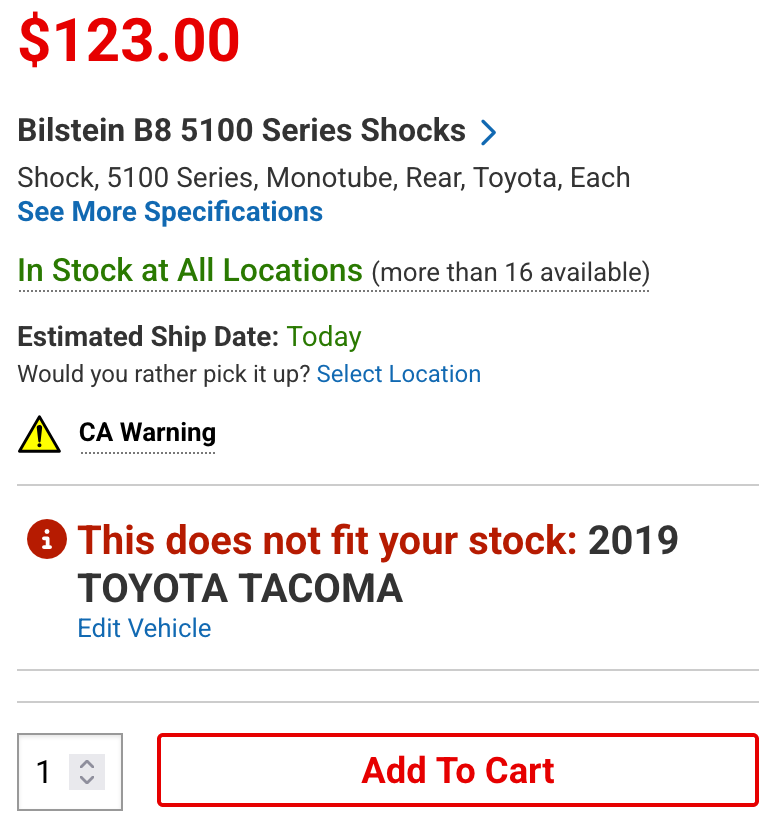
If there’s too much friction in the way (too much scrolling, looking through a PDF of specs, needing additional info that’s not on the page) a buyer will simply bounce. The lack of verification that the product fits their needs means a loss of trust and a lost sale.
Category pages rank well because they provide both inventory depth and accumulated authority. However, a category page will no longer convert once the searcher’s intent becomes too specific relative to what the category page offers. A shopper looking for a very specific part and/or vehicle combination that arrives at a generic category page has had to filter the catalog. For some buyers that’s too much extra effort.
Category pages need to function as real entry points for specific demand, structured around how buyers search, not just how the catalog is organized internally. A category page that narrows to fitment context, surfaces relevant SKUs based on vehicle parameters, and gives buyers enough information to start confirming fit before they click into a product page retains more of the high-intent traffic it ranks for.
Aftermarket parts buyers are not without options. With sites like Amazon, eBay, RockAuto.com and PartsGeek.com just one click away, these sites get the user’s click because they provide buyers with immediate access to information such as specifications, reviews and product options. If you do not enable the buyer to quickly determine if your product fits the vehicle they want to buy, there are many other sources where they can obtain this information.
You’re not going to win by creating more products or pages. The competitive advantage lies in providing easy to use, reliable and quick-to-access data regarding fitment, compatibility and spec data. When that structure is in place, the page competes on something more durable than price: it answers the question that determines whether a buyer commits.
Auto parts SEO underperformance comes from the same structural sources in most large catalogs: too many low-value pages in the index, weak internal paths, fitment signals that don't match how buyers search, and pages that rank for demand they can't convert. The fix sequence follows the same logic; remove what's diluting performance, then strengthen what should be carrying it.
Thin pages, duplicate URLs, and faceted navigation generating low-value filtered views drain crawl budget away from the pages that matter. You need to tell search engines where to spend more crawl time with noindexing, consolidating, or cleaning up those URLs.
This is structural work that may seem boring but can give more important pages the attention they need, rather than wasting that attention on pages that don’t need to rank. Rankings on core product and category pages typically stabilize before they improve, which is itself a meaningful change in catalogs that have been losing ground to index bloat.
Internal linking creates confusion by having multiple versions of the same page with duplicate URLs; causes weaker linkages in the product to category to brand pathways; and ultimately disallows search engines from clearly determining which version of multiple competing pages will rank.
Adding inconsistent application of canonical tags further muddies the water and converts what could have been a single high quality page into many competing lower quality pages.
Making intentional choices about which URL has authority for every content context is the first step in fixing internal linking issues. This requires directing all internal links to the chosen URL and selecting canonical signals that support the chosen URL as opposed to conflicting with them. When you do this, Page authority, which was previously diluted, begins to concentrate. As a result of concentration, the weaker rankings that resulted from diluting page authority begin to become consistent.
How an ecommerce catalog constructs its product and category urls impacts how granular/precise a search result can be. Most ecommerce catalogs never made this decision intentionally. One platform migration after another created the unintended consequence of limiting how precise certain pages may rank.
Product pages need better fitment indicators, clearer specs and more purchase details so the shopper can feel confident in their decision. Category pages need to support specific demand rather than forcing buyers back into filters. Brand pages need to be assessed as to whether they exist just for branded navigation or if they actually carry non-branded fitment demand.
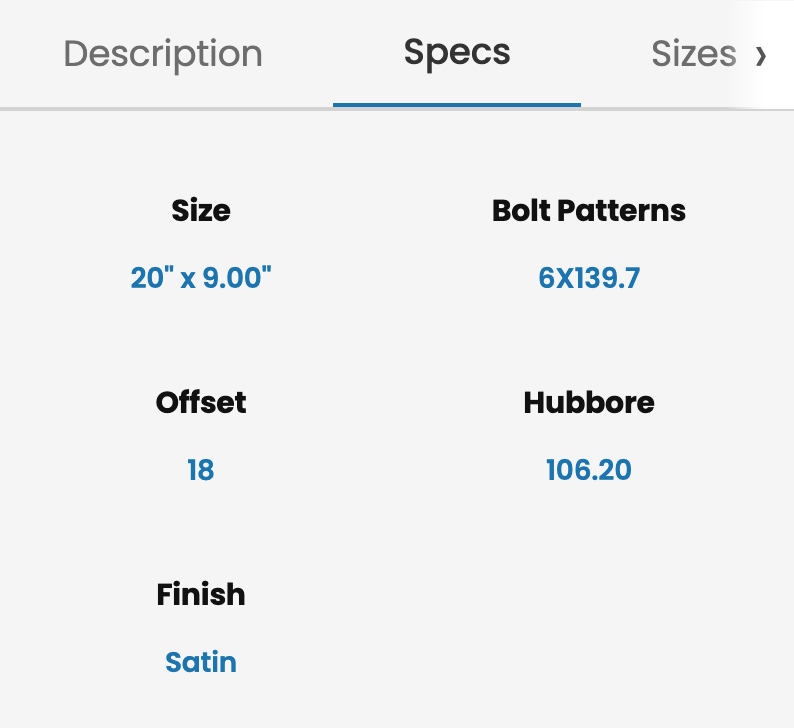
Every single page has the same objective: to provide an answer to what the customer was searching for. Thus, every page needs to have an indicator of how well a part fits, clear specs and sufficient context regarding where/what this part will be applied to.
Exact-fit demand (buyers searching for a specific part for a specific vehicle) should land on pages that can close the sale, not broad placeholders or search-result pages with minimal fitment context. When demand mapping reveals that high-intent queries are currently landing on weak pages, new or restructured pages get built around the vehicle context, compatibility data, and spec detail that demand requires.
Example search patterns that get mapped to real pages:
When that mapping is in place, the catalog stops absorbing demand loosely and starts directing it to pages built to answer it.
The first measurable improvements typically begin once clean-up work is done. When crawl waste declines and as canonical signals are consolidated and fitment data is more reliable then the correct URL gets better ranking signals. Product and category pages will capture more of the demand that they were originally designed to handle. At this point it's about the catalog operating at a level of performance that aligns with its inventory and authority level.
As the site’s architecture improves, fitment-specific searches are landing on pages that are actually relevant. Users who have been searching for a specific combination of parts and vehicles see those same combinations in the results as opposed to seeing “maybe it’s this” or “it could be that”. Before you see an increase in session volume, you’ll notice an improvement in session quality (users converting at a higher rate), which will precede a rise in organic traffic numbers.
Cleaner structure and more complete compatibility data make future growth cheaper to support. New products have a better foundation to index from. New categories can be built on architecture that already works. Demand that enters the catalog through new fitment combinations finds pages that are already set up to handle it, rather than a structure that has to be rebuilt every time the inventory expands.
The compounding is slow to start and durable once it's running. Organic visibility built on fitment accuracy and catalog structure doesn't reset when paid budgets shift or when marketplace algorithms change. It reflects what the catalog actually knows and keeps surfacing that knowledge for as long as the vehicles are on the road.
This service produces results for auto parts catalogs with real depth and real structural problems.
This service is not suited for catalogs that want SEO activity layered on top of weak structure without fixing the structure underneath. Blog-heavy content programs, broad keyword targeting, and surface-level deliverables that avoid catalog problems produce motion in metrics that don't connect to revenue. That's not the work.
It's also not suited for stores at an early stage with thin catalogs, no fitment data infrastructure, and no meaningful existing search demand to build from. The structural SEO work requires something to structure. A catalog that hasn't been built out yet needs catalog development before it needs SEO. Once the product data and fitment infrastructure exist, structural search work is the right next layer.
A diagnostic review of your catalog structure, fitment data, and where non-branded search demand is going uncaptured.
Because traffic lands on the wrong pages. A broad category page may rank for a specific fitment query, but it doesn't confirm the match, so buyers leave. The click happened. The conversion didn't. Revenue requires both the right ranking and the right page waiting for it. When those two things are misaligned, traffic growth and revenue growth separate.
It means fixing the structural issues: crawl waste pulling attention away from the pages that should rank, internal linking that splits authority instead of concentrating it, fitment signals that don't match how buyers search, and high-intent demand landing on pages that aren't built to convert it. Content volume is rarely the issue. Catalog structure almost always is.
Yes and in most catalogs, the first meaningful gains don't come from rewriting product copy at all. They come from fixing what's blocking the pages that already exist: crawl waste, canonical issues, internal link structure, and fitment data gaps in the pages with the most search demand. Prioritization by revenue impact means most of the movement comes from a fraction of the catalog.
Not by trying to out-scale them on inventory or page count. Large marketplaces win on speed of fitment confirmation. Buyers can evaluate compatibility, specs, and options quickly. That gap closes when your pages make the same confirmation fast and unambiguous. Clarity at the page level is a competitive advantage marketplaces don't consistently execute at the SKU level. When your page answers the fitment question faster than a marketplace listing does, it keeps the buyer.
For catalogs with existing domain authority and fitment data in reasonable shape, crawl cleanup and canonical correction show up in search console within four to eight weeks. Rankings on core product and category pages typically stabilize within two to three months of structural fixes going live. Revenue movement follows rankings, usually visible in organic-attributed order data within three to five months in the categories where structural work was most concentrated.
SEO and paid search address the same queries but at different points in the buying relationship. Organic visibility for the same SKUs paid search runs on reinforces the relationship without adding to CPC. More importantly, structural SEO opens demand that paid search can't cost-effectively reach: long-tail fitment queries, cross-reference searches, part number variations with low individual volume but significant combined value. Those aren't competing with paid spend. They're capturing demand paid search leaves behind.
The traits clients value about partnering with SCUBE on their growth projects.


"Thanks to the efforts of the SCUBE Marketing team, the company has hit all of their monthly goals since launching the e-commerce platform in 2019. The ROI in particular exceeded their expectations and credit it to the team's attention to detail and clear communication throughout the partnership."







The SCUBE Game Plan is a focused review of how complex, spec-driven catalogs behave inside paid channels. It’s designed to surface what’s contributing to performance, what’s masking underlying issues, and where structure is quietly working against you. If there’s a fit, we walk through the findings in a ~60 minute conversation, looking at:
The goal is a clearer picture of how the system is behaving, so decisions stop relying on averages or assumptions.
.avif)