
Aerospace buyers do not look for fancy marketing lines. They want clear technical details, like AS9100 certification information, FAA inspection steps, and aircraft platform qualifications that match their needs. If they click a search result and only see vague wording instead of real documentation, they leave quickly, and SEO performance drops.
When they find detailed compliance explanations and real certification case studies, they stay longer, read more, and often come back later when they are ready to reach out. That is how aerospace SEO and aviation SEO work in the real world. Clear compliance content builds trust, improves search visibility, and helps you rank higher in search results.
The pattern is consistent across aerospace and aviation companies. Teams that publish clear public-facing compliance content often outrank competitors with bigger budgets because the content matches user intent. Procurement officers and engineers do not want to be sold to. They want evidence that your processes meet their regulatory requirements.
This section shows how to turn existing compliance work into search engine optimization authority. It explains what buyers search for, how to convert internal documentation into quality content, and why smaller MRO providers can build a stronger digital presence by being more transparent about certifications.
Aerospace search behavior is different from consumer markets. Buyers are not browsing for inspiration. They are validating suppliers inside a highly competitive aerospace industry where risk, traceability, and compliance matter more than brand voice.
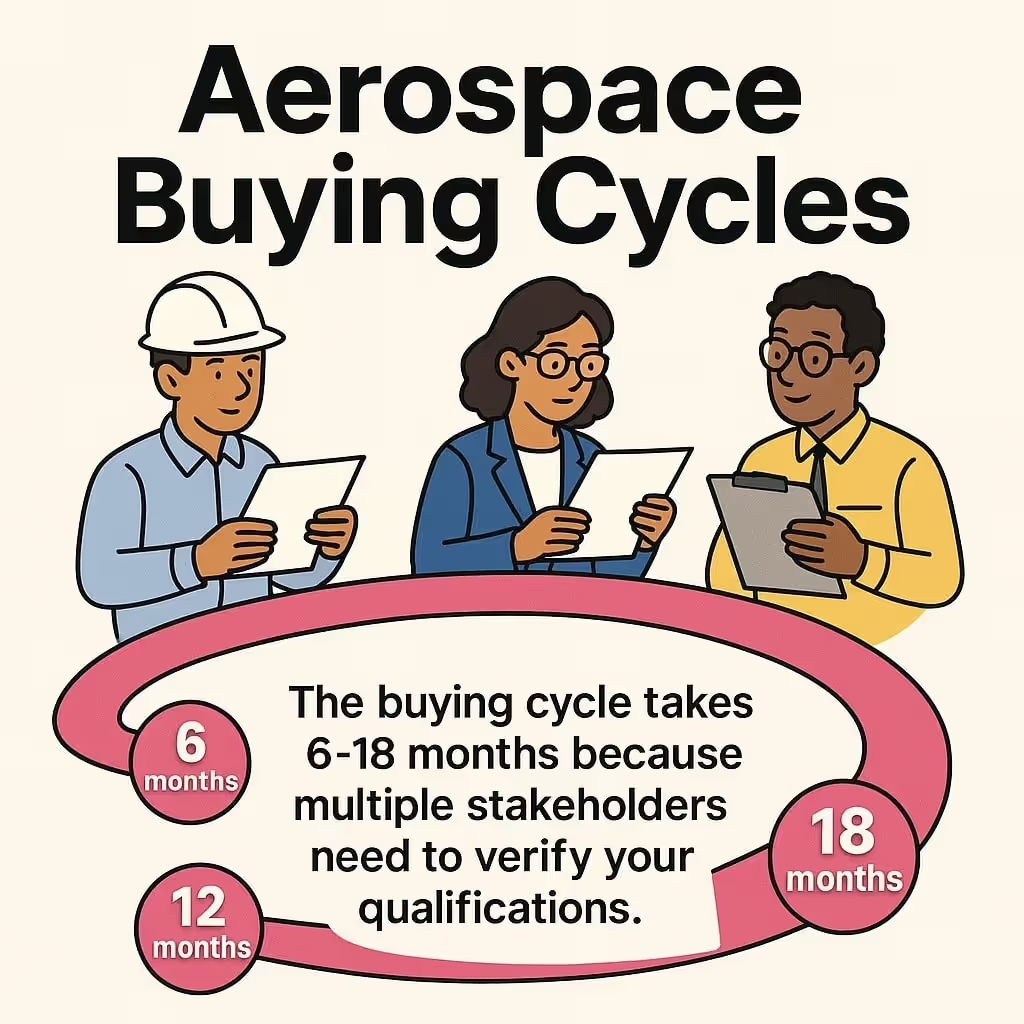
Most partnerships involve long sales cycles because multiple stakeholders must verify qualifications. The buying cycle often lasts 6 to 18 months, and this changes which seo strategies work. The priority becomes clarity, proof, and precision across search engine results, not high-volume topics.
Search terms reflect this reality. Buyers search phrases like AS9100 certified MRO for an Airbus A320 or FAA Part 145 repair station turbine blades. These queries may have low search volume, but they bring targeted traffic with strong commercial intent.
Volume metrics do not matter much in aerospace SEO. Getting 50 qualified visitors from procurement teams at primes or defense contractors is often more valuable than 5,000 random clicks. In this market, one qualified lead can become a multi-year contract.
That is why lead generation in aerospace should be measured differently. Instead of tracking total web traffic, track keyword rankings for certifications, aircraft platforms you support, and compliance terms tied to real buyer requirements. Those searches represent your ideal target audience.
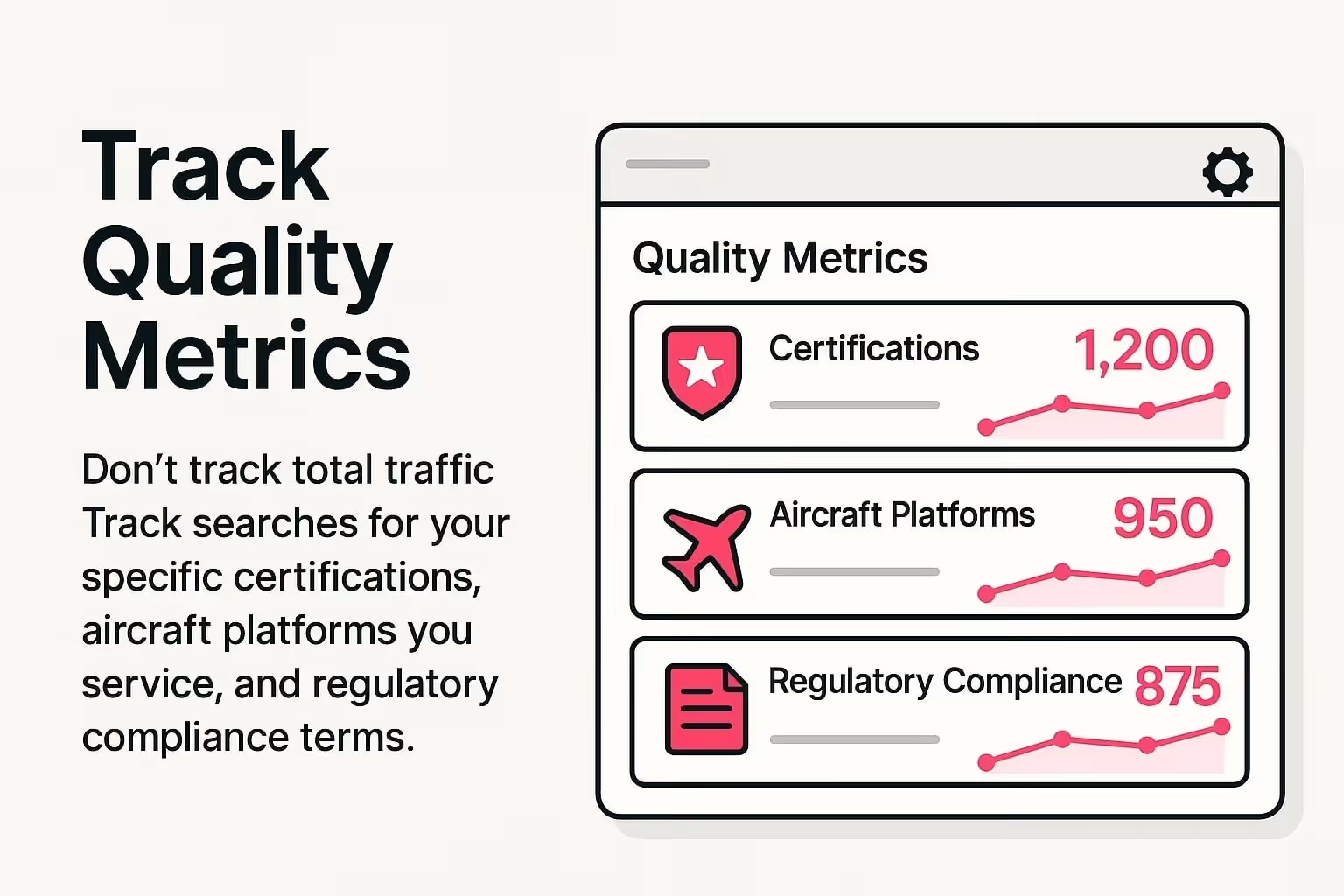
This approach improves seo success because it aligns your content with the buyer journey. It also supports better search engine rankings since engagement and relevance signals tend to improve when content matches intent.
Every certification you hold is a content opportunity. Buyers search for AS9100, FAA Part 145, EASA requirements, Nadcap, and ITAR compliance by name because those terms reduce supplier risk.
Most aerospace companies list certifications as logos on a single page. A stronger approach is creating dedicated pages that explain how you maintain each certification, which inspections occur, and how your quality system supports compliance. This improves online visibility and supports stronger search rankings.
Your quality management documentation already contains most of what you need. The work is not inventing new material. It is adapting internal compliance content into public-facing pages that strengthen online presence.
Compliance content builds authority because it aligns with buyer intent and shows operational depth. It proves you understand the regulatory environment your buyers operate in, which is more persuasive than generic claims.
An MRO provider that publishes a detailed guide explaining AS9100 Rev D audit preparation can outperform a competitor using generic statements. The guide ranks for specific queries, improves seo rankings, and builds credibility with technical readers.
Keep in mind that search rankings also depend on technical seo and site quality signals. A clear site structure, correct indexing, and consistent publishing help search engines understand your expertise.
Quality manuals, audit reports, and certification maintenance procedures contain valuable information. You cannot publish these documents directly, but you can create public versions that protect sensitive data while keeping the process transparent.
Start with your certification process. Explain the gap analysis, corrective actions, internal audits, and external assessment steps used to achieve certification. This type of content supports search engine optimization and attracts potential customers looking for proof.
Then publish compliance challenge stories. If you implemented a new traceability workflow to meet EASA requirements, describe the problem, your approach, and the verification outcomes. This is content marketing built from real operations, not generic storytelling.
Aerospace buyers can spot imprecise language immediately. Instead of saying you are committed to quality, describe your nonconformance reporting process, corrective action procedures, and internal audit schedule. Specific operational details improve credibility and support user satisfaction.
Use accurate terminology and cite relevant standards when appropriate. Mention FAA Advisory Circulars, EASA Part-145 requirements, and industry specifications by number. This precision improves trust with potential clients and strengthens relevance in search engine results pages.
Technical accuracy also supports better SEO outcomes because it naturally includes industry specific terms and signals topical authority within the aviation industry and aerospace sector.
Aerospace keyword research is not driven by volume. A term with 20 monthly searches can be valuable if those searches come from qualified buyers researching certifications you hold.
Start by listing your certifications, aircraft platforms, components, and regulatory standards. Each one can become a targeted page and a set of relevant keywords. When you combine these into long-tail phrases, you capture high-intent queries that support a competitive edge.
Over time, these pages build stronger search visibility and improve keyword rankings, especially when paired with strong seo efforts and consistent updates tied to industry trends.
Your sales team hears buyer language every day. Discovery questions are often the same phrases buyers type into search engines when they research suppliers on online platforms, and even reviews that sell can reveal what matters most to decision-makers.
Review RFP responses and pull the exact wording from the technical requirements sections. That language often becomes the best set of targeted keywords because it reflects how buyers define qualification and what they expect to see.
Customer support questions also highlight content gaps. If customers repeatedly request compliance verification, create a public page that explains what can be shared, how verification works, and where supporting documents can be found.
Aircraft platform pages attract highly qualified traffic because they mirror real procurement filters. If you service a Boeing platform, create content that maps platform to system to certification, then connect it to your capabilities and approvals.
This approach supports stronger search engine rankings because it increases relevance for specific buyer queries. It also improves conversion rates because visitors see matching qualifications quickly.
Platform specificity helps smaller providers compete in a competitive market. It is a practical way to boost visibility without relying on broad keywords.
Aerospace content requires technical language. Terms like non-destructive testing and special process certifications are what buyers search for, so removing them weakens relevance and reduces search visibility.
The goal is to use technical terms precisely while supporting readers with different roles. A procurement lead may understand regulatory requirements but not inspection methods. An engineer may need the technical detail and also want clarity on certification maintenance.
This balance supports a positive user experience and better SEO outcomes, especially for readers on mobile devices who need clear structure and quick comprehension.
Start each page with a clear summary that defines the topic and explains why it matters. Use this opening to establish context and define acronyms you will use in the article.
Move into specific technical detail in the main body. This is where precision matters and where engineers and quality managers evaluate whether your claims match real-world practice.
Include practical examples to make abstract concepts concrete. For material traceability, describe how certificates are tracked, where records are stored, and how compliance is verified during inspections.
Aerospace communication relies on acronyms like AS9100, FAA, EASA, MRO, and NDT. Define acronyms on first use, even if they are common internally, because not every reader shares the same baseline knowledge.
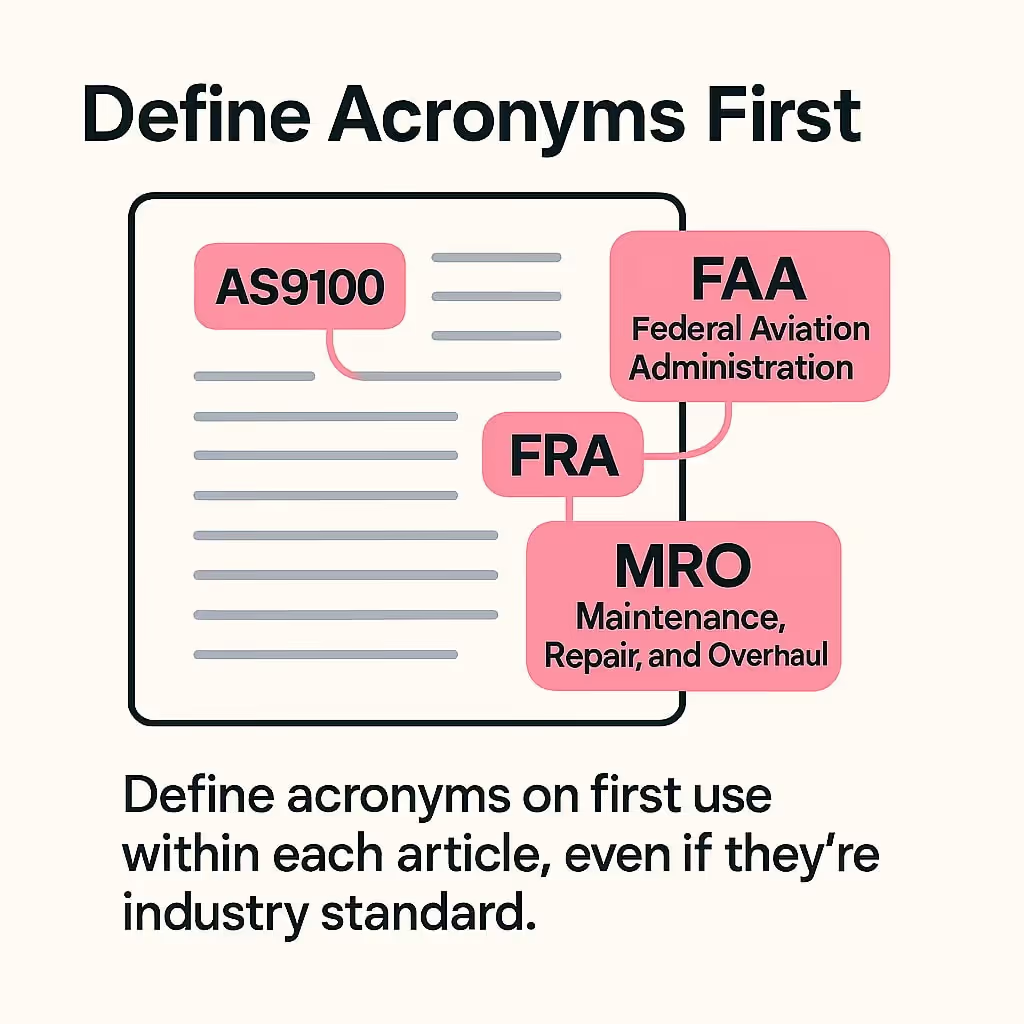
Clear definitions also help search engines interpret the page. This improves clarity and supports better performance in search engine results.
After defining an acronym once, use it consistently to keep the page readable and professional.
Aerospace content marketing is not built for viral results on social media platforms. It is built to support due diligence, demonstrate capability, and reduce buyer risk during long sales cycles.
The most effective formats are compliance case studies, technical process explainers, and certification maintenance guides. These assets align with seo services goals because they attract high-intent visitors and support conversions.
To get full value, pair content with solid technical foundations like good site speed and a fast loading website. Tools like Google PageSpeed Insights help identify issues that can affect user experience and ranking as a ranking factor.
Case studies work best when they are specific and technical. Instead of generic success claims, explain the compliance challenge, the actions taken, and how outcomes were verified.
Focus on compliance outcomes that matter to buyers. Audit performance, traceability improvements, and corrective action closure are more relevant than general business growth metrics.
Well-written case studies attract targeted visitors and improve credibility across the competitive landscape.
Process explainers show how your operation works. Pages covering receiving inspection, calibration controls, internal audits, and corrective action workflows help buyers evaluate risk and competence.
Adding real visuals can improve trust and user engagement, especially when the visuals show actual equipment and documentation workflows. This strengthens online visibility and reduces bounce from search traffic.
When you explain why a process exists, you show you understand the regulatory risks being controlled. That depth supports buyer confidence.
Buyers care about ongoing compliance, not just achievement. Content that explains audit schedules, management review cycles, and continuous improvement shows you can maintain standards across long-term contracts.
This supports stronger supplier confidence and improves conversion outcomes. It also strengthens your digital visibility because these pages align with certification-focused search behavior in the aviation sector.
When compliance becomes your content foundation, your SEO strategy becomes clearer. It is built on proof, precision, and processes that buyers already care about.
Once compliance content is live, the next step is building authority signals outside your website. In aviation SEO and aerospace SEO, backlinks matter because they influence search engine rankings and strengthen trust in search engine results pages. The goal is not volume. The goal is relevance from respected sources in the aviation industry and aerospace industry.
Backlinks in this space work differently than consumer markets. A single link from an industry publication or association can improve search visibility more than dozens of links from generic sites. This is especially important in a highly competitive aerospace industry, where buyers validate suppliers through proof, not hype.
Trade publications and niche outlets often need expert contributors who can explain complex concepts clearly. Publishing educational articles in Aviation Week, AIN, MRO Network, or similar outlets builds credibility and can send highly qualified targeted traffic.
Pitch topics that match buyer questions and industry trends, such as AS9100 audit preparation, quality management systems, or regulatory updates. Avoid promotional angles. Editors want useful content that helps readers make better decisions, and that aligns with what search engines reward as quality content.
When an article includes an author bio and a link to your site, it becomes a strong authority signal. It also helps aerospace and aviation companies demonstrate expertise to potential customers who research suppliers through search.
Industry associations and member directories create powerful, relevant backlinks. Groups like SAE International, AIA, GAMA, and regional aerospace clusters often list members with website links, which supports online presence and improves seo performance over time.
Active participation matters. Contributing to association resources, speaking at events, or sharing technical guidance can lead to natural citations and links. These mentions strengthen your brand’s digital presence and improve visibility for industry specific terms.
Supplier directories also play a role. Listings on platforms like ThomasNet and aerospace supplier databases can rank well on their own, which helps you reach buyers earlier in their research process. A complete profile that includes certifications, industry specific keywords, and clear capability details can drive qualified web traffic before your pages reach top positions.
Even the best content and backlinks struggle if the website is slow or hard to crawl. Technical SEO supports search engine optimization by helping search engines understand pages, index them properly, and rank them consistently across mobile devices and desktops.
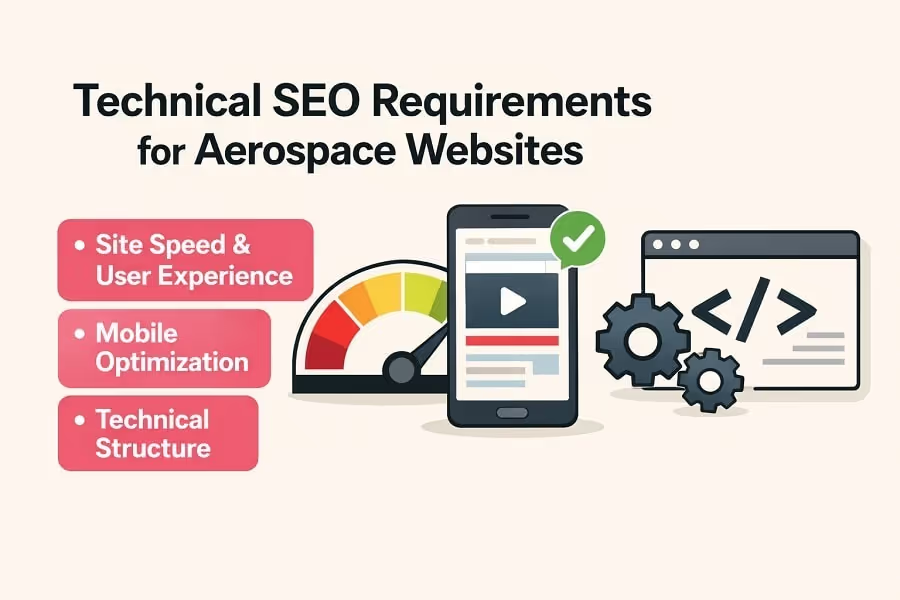
In aerospace, technical reliability matters because buyers are often researching at work on restricted networks. If pages load slowly, confidence drops and user satisfaction falls, which can impact search rankings.
A fast site improves enhancing user experience and supports rankings because speed is a known ranking factor. Use Google PageSpeed Insights to identify slow templates, heavy scripts, and oversized images, then fix issues in a structured way.
Compliance content often includes detailed visuals and documentation screenshots. Compress images, size them correctly, and avoid uploading files that are larger than needed. This supports a fast loading website and a better positive user experience, especially for international visitors.
Site speed improvements also help conversion. If a page loads fast, users engage more, read deeper, and are more likely to become potential clients.
Many technical buyers review content on phones at events or on tablets during meetings. Make sure pages display well on different screen sizes and that forms work smoothly. If navigation feels clunky, user engagement drops and that can hurt performance in search engine results.
Clear structure also supports indexing. Use descriptive headings, logical internal links, and clean URLs so search engines can crawl and understand the site faster. Submit an updated sitemap and monitor coverage in Google Search Console to confirm key pages are being indexed correctly. This foundation supports long-term SEO success and helps you remain competitive.
Aerospace SEO should be measured by lead quality, not vanity metrics. In long sales cycles, a small amount of high-intent organic traffic can drive more revenue than broad awareness campaigns on social media platforms.
Track metrics tied to buyer intent and capability validation. Focus on the searches that match certifications, platforms, and services rather than total sessions. That is how you evaluate improving seo performance in a realistic way.
Monitor keyword rankings for certification-driven terms and capability phrases, such as AS9100 certified MRO plus location, or FAA Part 145 repair station plus component type. These are often low volume, but they bring the right decision-makers.
Track organic visits to compliance pages and watch how those visitors behave. Longer time on page, deeper navigation, and form submissions are signs that the content matches user intent and supports lead generation.
Tie SEO to outcomes by tracking how prospects found you. When prospects mention certification pages or compliance case studies, that is direct proof your strategy is working in real buying journeys.
Authority builds slowly in aerospace, then compounds. Track whether industry publications, associations, and industry influencers reference your content over time. When credible sources cite your work, your backlink profile becomes stronger and rankings become more stable.
Evaluate performance in 6 to 12 month windows, not weekly. Aerospace contracts take time, and seo efforts may show up as a single high-value lead after months of consistent visibility. That is normal in this market.
SEO compliance means aligning your website with search engine guidelines so pages can be crawled, indexed, and ranked without risk. It includes secure site setup, clear structure, and content that supports user satisfaction while avoiding manipulative tactics that can harm seo rankings.
The 3 C’s of SEO are content, code, and credibility. Content is the quality content that matches intent, code includes technical seo elements like site speed and structure, and credibility comes from backlinks and authority signals that improve search engine rankings.
The four major SEO factor groups are technical factors, on-page factors, off-page factors, and content factors. Together, they influence search engine results pages visibility, organic performance, and long-term digital visibility for aerospace companies and aviation companies.
Generic SEO strategies often ignore industry-specific keywords, long sales cycles, and the compliance proof aerospace buyers expect in search results. Aerospace marketing that uses targeted pages, technical SEO, and digital marketing built around certifications can enhance visibility and attract qualified traffic.