
If you're an OEM still manually uploading equipment listings to your dealer portal, you're leaving serious revenue on the table. Here's the truth: your competitors are using automated product feeds to publish inventory across multiple channels in minutes, not days. Product feeds are the foundational technology that lets you centralize equipment data from your PIM and ERP systems, then distribute it instantly to dealer networks, marketplaces, and direct-to-consumer channels without touching a spreadsheet.
I've watched too many equipment manufacturers struggle with the same problem.
They want to grow online sales. They need better dealer alignment. But their product data lives in three different systems, pricing updates take weeks to propagate, and half their SKUs show "out of stock" when inventory actually sits in a warehouse two states away.
This isn't just inefficient. It's costing you customers every single day.
Product feeds solve this. They create what industry experts call a "single source of truth" by aggregating product and fitment data from PIM and ERP systems, improving accuracy and consistency across all sales channels.
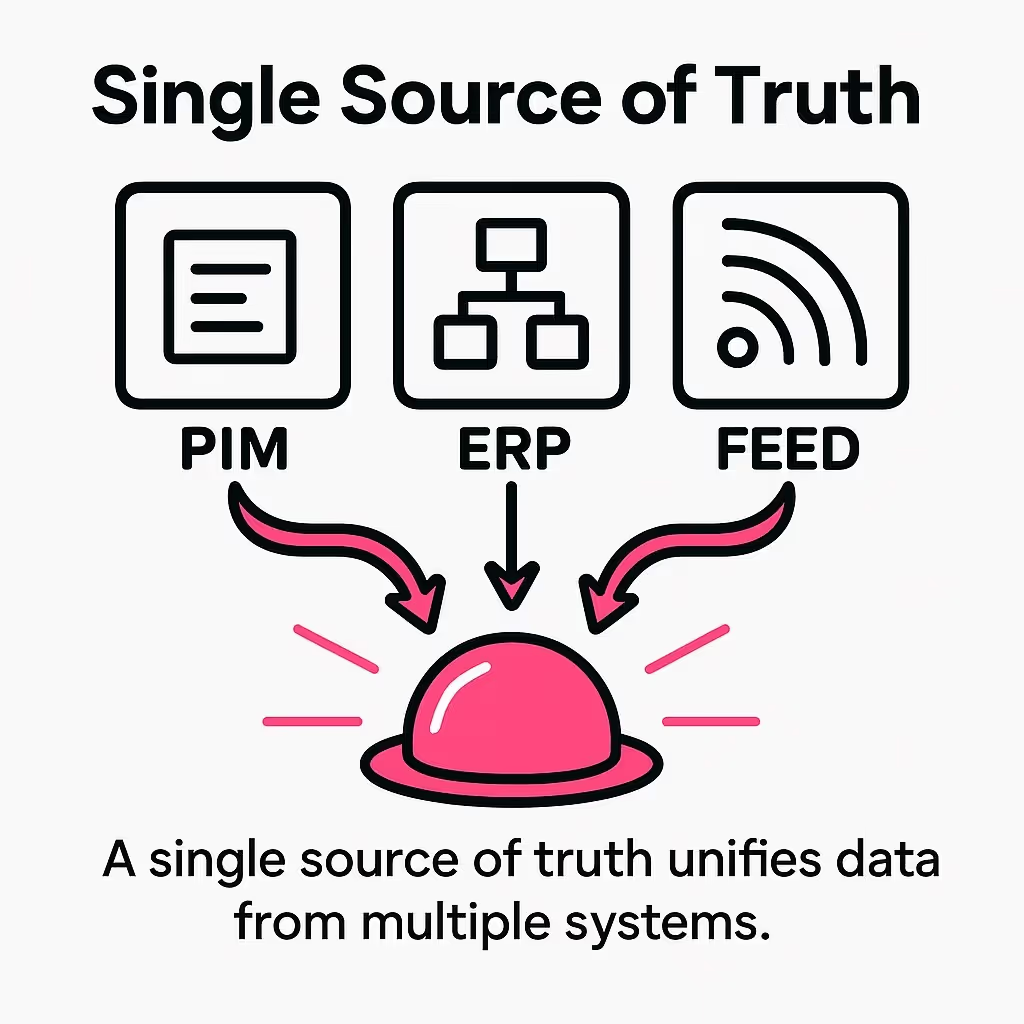
Product feeds centralize PIM and ERP data into a single source of truth, ensuring consistent, accurate listings across every channel.
The agricultural equipment sector has already figured this out. OEMs in that space are rapidly centralizing data flows to maintain control over customer relationships while expanding digital reach.
Here's what we'll cover: why product feeds matter more than your ecommerce platform choice, how to structure feeds that actually convert, the dealer alignment strategy that prevents channel conflict, and the data architecture that scales from 500 SKUs to 50,000 without breaking.
By the end, you'll know exactly how to implement feed-based selling for your equipment line. Whether you manufacture construction equipment, agricultural machinery, or industrial tools, the same principles apply.
Your equipment deserves better than manual data entry. Your dealers deserve real-time inventory. Your customers deserve accurate product information.
Product feeds deliver all three.
The traditional OEM model is under pressure from multiple directions.
Dealers want better digital tools. Customers expect Amazon-like experiences. Aftermarket competitors are eating into parts revenue with aggressive ecommerce strategies. And your sales team is juggling spreadsheets trying to coordinate it all.
The shift to direct equipment sales isn't about cutting out dealers. It's about controlling the customer experience and capturing data you've never had access to before.
When customers buy through dealer websites you don't control, you lose visibility into purchase patterns, service needs, and replacement cycles. You're flying blind on the very customers who keep your business running.
Product feeds change this dynamic completely.
Modern feed management platforms enable OEMs to onboard dealers into unified platforms with streamlined digital workflows, allowing real-time publication of inventory, pricing, and lead times while maintaining control over customer experience and data capture.
This is the B2B2C model in action. You're selling through dealers but owning the digital infrastructure.
Equipment sales are important, but aftermarket parts are where the real margin lives.
Every piece of equipment you sell generates 5-10 years of parts and service revenue. That's the annuity stream every OEM dreams about. But capturing it requires making those parts easy to find, easy to order, and easy to get delivered.
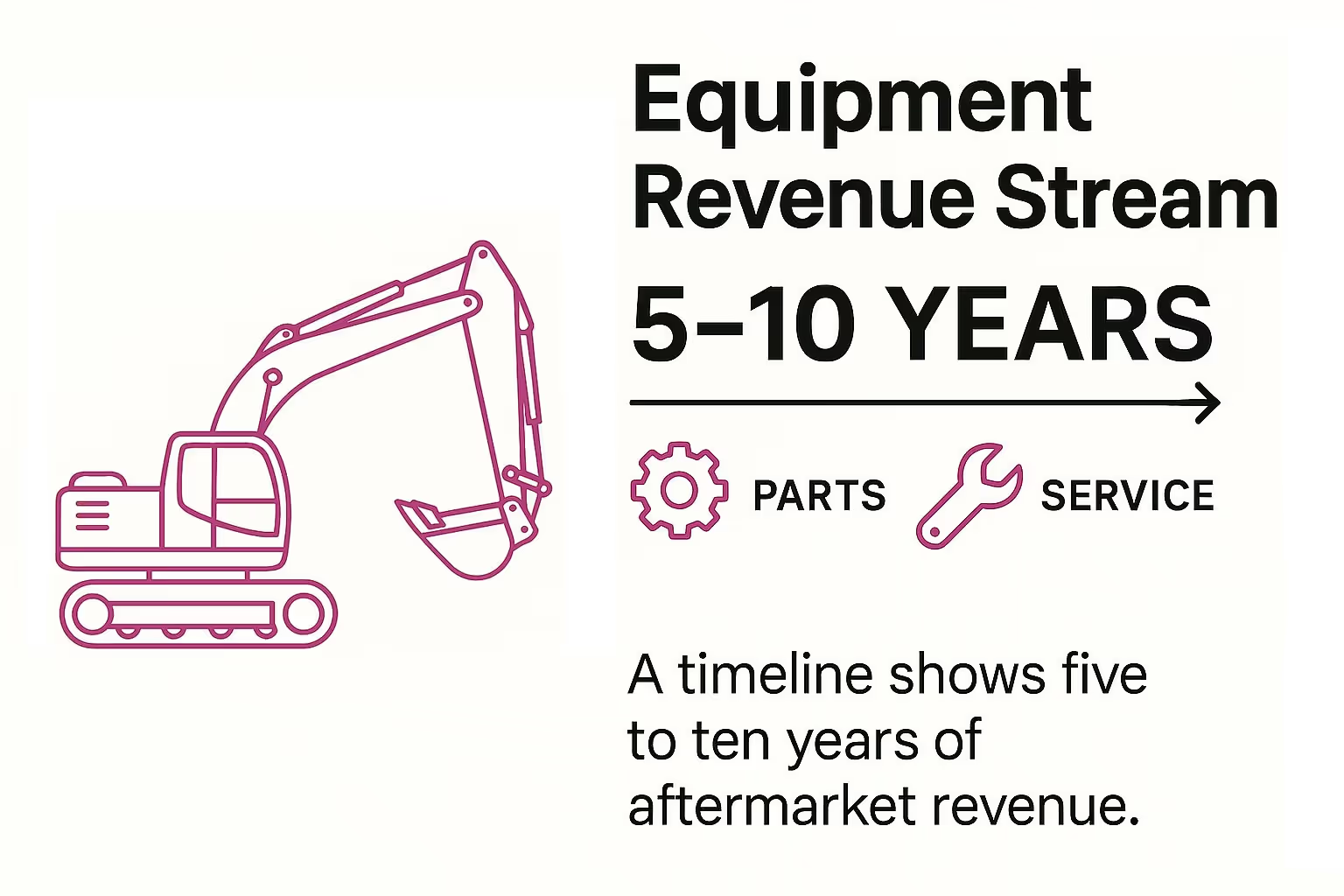
Each equipment sale can drive 5–10 years of parts and service revenue—make it effortless to capture with feed-powered listings.
Product feeds make this possible at scale.
You can publish 10,000 part numbers across dealer portals, Amazon Business, and your own D2C shop using the same data source. Update pricing once, and it propagates everywhere. Add a new SKU, and it appears on all channels within hours.
This is how you compete with aftermarket suppliers who've been selling online for a decade.
Here's the concern I hear constantly: "Won't direct online sales alienate our dealer network?"
Not if you structure it correctly.
The key is positioning dealers as fulfillment partners rather than competitors. Unified digital platforms can position dealers as fulfillment partners, allowing OEMs to capture customer data and control the digital experience while supporting dealer relationships.
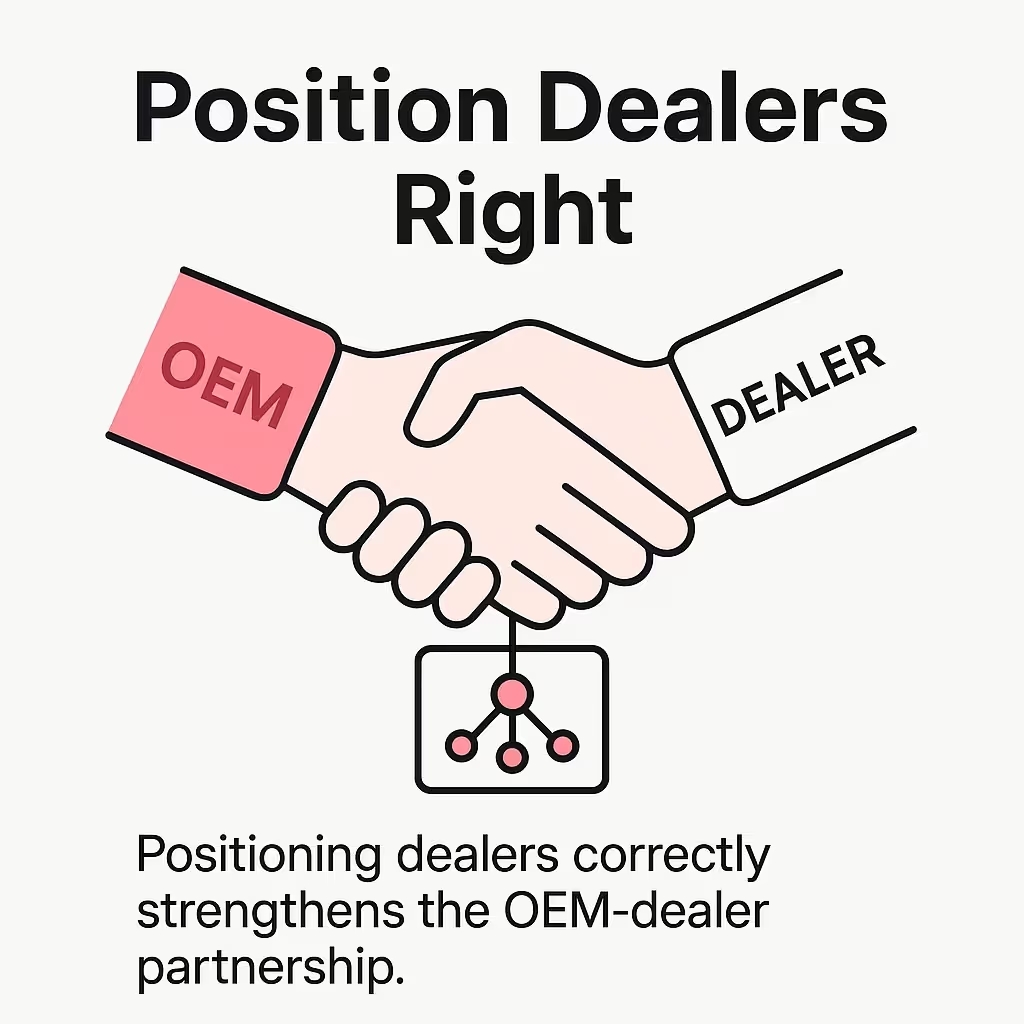
Prevent channel conflict by positioning dealers as fulfillment partners—OEMs own the digital experience, dealers win on service.
The customer places an order through your branded platform. The nearest dealer gets the fulfillment notification and delivery fee. You control the experience and capture the data. The dealer gets the sale without building their own ecommerce infrastructure.
Everyone wins.
This model is already transforming industries beyond agriculture. Automotive OEMs are exploring D2C strategies that maintain dealer partnerships while expanding digital reach.
Product feeds are structured data files that contain everything needed to list and sell your equipment online.
Think of them as the universal translator between your internal systems and every sales channel you want to reach. Your ERP speaks one language. Amazon Business speaks another. Your dealer portal speaks a third.
Product feeds bridge all of them.
A properly structured feed includes SKU numbers, product titles, descriptions, pricing, inventory levels, images, fitment data, specifications, and shipping details. All formatted according to each channel's requirements.
Without feeds, you're manually reformatting this data for every channel. With feeds, you update it once and distribute everywhere.
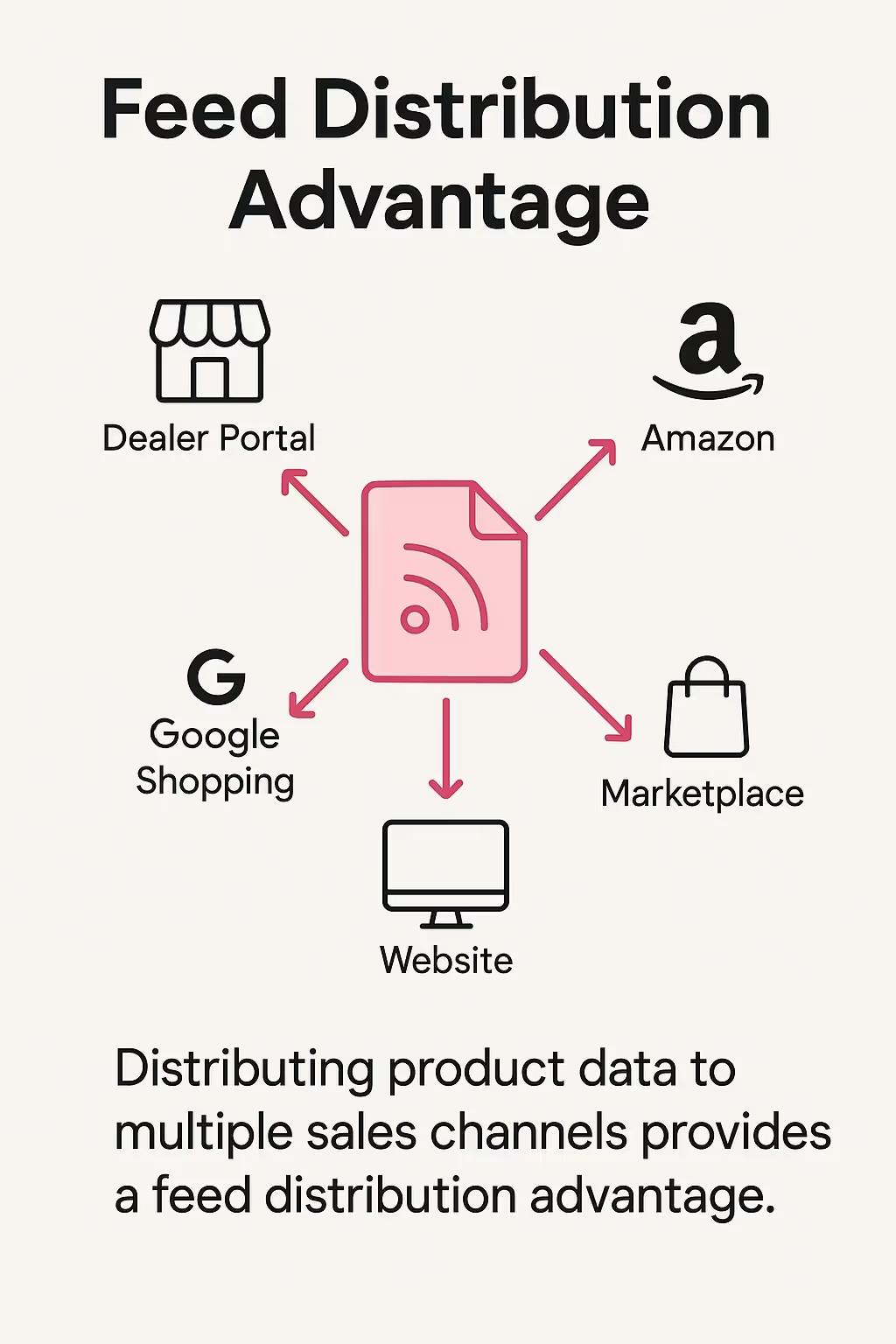
Update once, publish everywhere—feeds synchronize data to dealer portals, marketplaces, and D2C channels automatically.
Equipment feeds are more complex than typical ecommerce feeds.
Consumer products have straightforward attributes: size, color, material. Equipment has horsepower ratings, compatibility requirements, certification standards, operating specifications, and maintenance schedules.
You need fitment data so customers know which parts work with their specific equipment model. You need dimensional data for shipping calculations. You need compliance information for regulatory requirements.
Product feed attributes serve specific purposes in helping customers find and evaluate equipment.
The agricultural equipment market faces particular challenges with supply chain disruptions, changing customer demographics, and evolving regulatory requirements. Product feeds help OEMs adapt quickly to these shifting conditions.
Every equipment feed needs these foundational elements:
The more complete your feed data, the better your conversion rates.
Product feeds don't exist in isolation. They need to pull data from your existing systems.
Your Product Information Management system stores the marketing content, images, and specifications. Your ERP system tracks inventory, pricing, and order status. Your product feed platform sits in the middle, pulling data from both sources and formatting it for each sales channel.
This is where API integration becomes crucial for automating product listings.
The technical implementation matters less than the business outcome: you update product information in one place, and it flows automatically to every channel where you sell.
| Data Source |
Information Provided
|
Update Frequency
|
|---|---|---|
|
PIM System
|
Product titles, descriptions, images, specifications |
Weekly or as needed
|
|
ERP System
|
Pricing, inventory levels, lead times, SKU status
|
Hourly or real-time
|
|
Fitment Database
|
Compatibility data, application guides, cross-references
|
Monthly or as models update
|
|
Compliance System
|
Certifications, regulatory data, safety information |
As regulations change
|
This integration creates what industry analysts describe as a "digital ecosystem" where data flows seamlessly between systems.
You can't run effective product feeds without a solid ecommerce foundation.
That foundation starts with choosing the right platform architecture. You need systems that can handle complex B2B requirements like customer-specific pricing, bulk ordering, quote requests, and dealer assignment logic.
Consumer ecommerce platforms weren't built for this. You need B2B-capable infrastructure.
The best ecommerce platform for equipment OEMs balances flexibility with integration capabilities.
You need native support for product feeds. Built-in connection to your ERP system. Customer-specific pricing based on dealer agreements. Support for complex product catalogs with thousands of SKUs.
Platforms like BigCommerce, commercetools, and Salesforce Commerce Cloud offer B2B features equipment manufacturers need.
But platform selection is just the first step.
Your ecommerce platform handles the storefront. Feed management tools handle distribution to other channels.
Tools like ChannelAdvisor, Feedonomics, and Productsup specialize in taking your product data and formatting it for dozens of channels simultaneously.
These platforms handle the technical complexity of different feed formats, validation rules, and submission protocols. You focus on your product data, and they handle the distribution mechanics.
Feed distribution is worthless if your data quality is poor.
Missing product images tank conversion rates. Inaccurate inventory levels frustrate customers. Outdated pricing confuses dealers. Incomplete specifications prevent customers from confirming compatibility.
Data quality isn't a one-time fix. It's an ongoing discipline.
You need governance processes that ensure product information is complete before SKUs go live. Validation rules that catch errors before they reach customers. Regular audits that identify incomplete or outdated listings.
Structured data standards matter for maintaining quality at scale.
Start with a data audit. Identify which products have complete information and which have gaps. Build a roadmap to fill those gaps systematically.
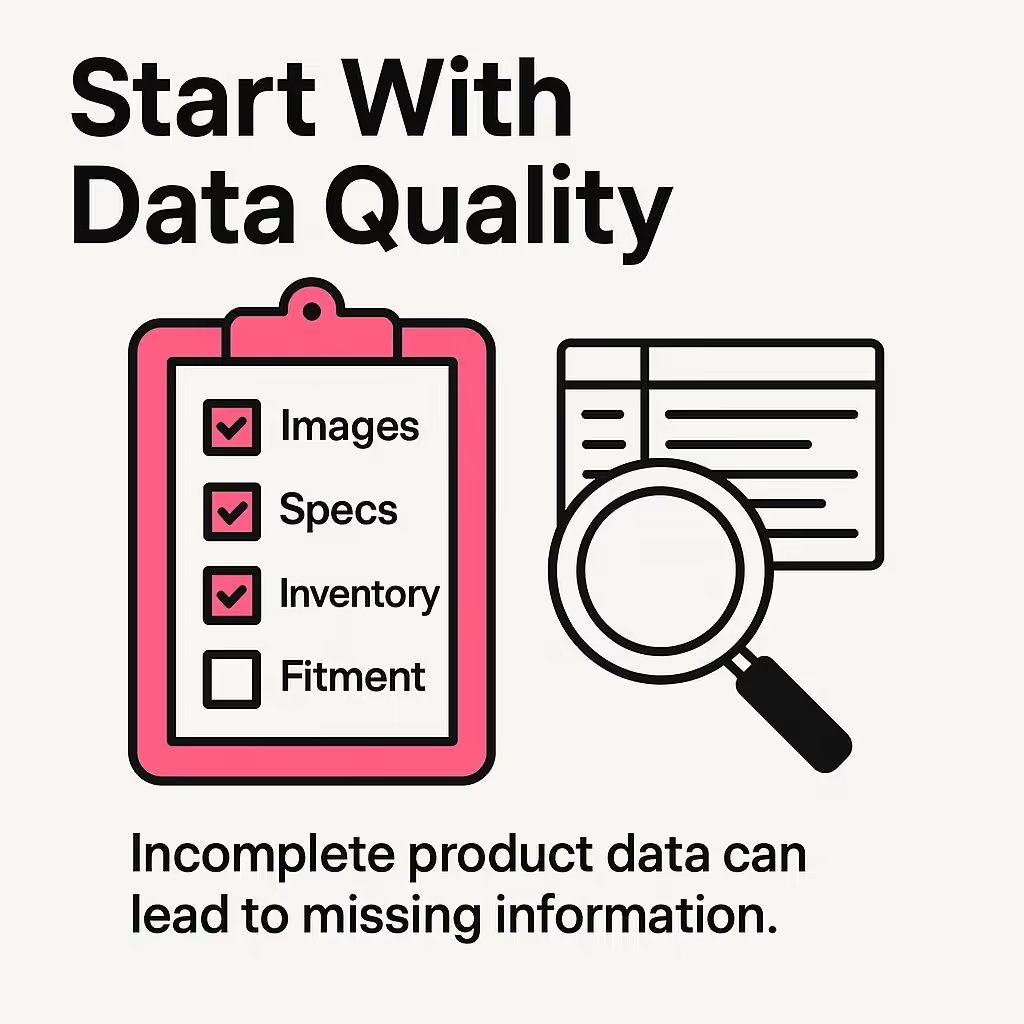
Begin with a data audit: prioritize completeness, then scale feeds confidently with validation and governance.
Your dealer network is your biggest asset and your biggest challenge.
Dealers want autonomy. They've invested in local relationships and service capabilities. They're nervous about OEM-controlled digital platforms that might route customers away from their businesses.
This is where thoughtful strategy makes the difference between channel conflict and channel harmony.
The smartest OEMs are redesigning their digital infrastructure around dealer participation, not dealer replacement.
Here's how it works in practice.
Customers browse equipment and parts on your branded platform. The platform shows real-time inventory from all dealers in their region. The customer places an order. The system routes it to the nearest dealer with inventory.
The dealer fulfills the order and collects a fulfillment fee. You capture the customer data and control the experience. The customer gets fast delivery and local service support.
The key is making dealers see the platform as an advantage, not a threat. They get orders without marketing spend. They get customer traffic without building expensive ecommerce sites. They focus on what they do best: service and support.
Dealers won't participate just because you built a platform. You need incentives that make participation more profitable than going it alone.
Consider these approaches:
Make the economic case obvious. Dealers who participate should make more money with less effort than dealers who don't.
Technology doesn't fail. Change management fails.
Your dealers need training on how to update their inventory feeds. They need support when technical issues arise. They need clear documentation on pricing rules, fulfillment expectations, and customer service protocols.
Build a dealer onboarding program that includes system training, business process documentation, and ongoing support. Assign dedicated resources to help dealers through the transition.
The dealers who succeed early become your best advocates. Their success stories convince hesitant dealers to participate.
|
Dealer Concern
|
Platform Solution
|
Business Benefit
|
|---|---|---|
|
Loss of customer relationships
|
Dealer handles fulfillment and service
|
Strengthens local customer connection
|
|
Reduced margins from online competition
|
Wholesale pricing protected, fulfillment fees added |
Better total profitability
|
|
Technical complexity of ecommerce
|
OEM manages platform and feed integration
|
Lower operational overhead
|
|
Inventory risk from online commitments
|
Real-time inventory sync prevents overselling |
Reduced carrying costs and stockouts
|
Address concerns directly. Show dealers the numbers. Prove the model works for everyone.
Connected equipment changes everything about aftermarket sales.
When equipment reports its own operating hours, maintenance needs, and part wear rates, you stop guessing about service timing. You know exactly when customers need parts before they do.
This is predictive commerce, and it's powered by IoT data flowing through your product feeds.
IoT sensors on equipment generate operational data constantly. Hours logged, fuel consumption, error codes, performance metrics. This data isn't just for diagnostics.
It's for sales.
When equipment hits a service interval, your system can automatically recommend the parts needed for that service. When a component shows wear patterns, you can proactively offer replacements before failure occurs.
Product feeds provide detailed data on SKU-level performance, channel ROI, and competitive pricing that helps optimize both product offerings and aftermarket strategies.
The agricultural equipment sector has been at the forefront of this trend, with OEMs increasingly focusing on controlling data flows to maintain competitive advantages.
The next evolution is automatic part ordering based on equipment telemetry.
Imagine this scenario: A customer's excavator reaches 2,500 operating hours. Your system knows this triggers an oil and filter change. It checks their service history and sees the last service was 6 months ago.
The system automatically sends a service reminder with a one-click parts ordering option. The parts arrive before the machine needs downtime.
This requires integrating equipment telemetry data with your product feed system. The equipment reports its status. Your system matches that status to maintenance requirements. Your product feed delivers the right parts recommendation.
Customers get better uptime. You get recurring aftermarket revenue without manual intervention.
Product feeds generate massive amounts of performance data.
Which SKUs convert best on which channels? What price points drive the most volume? Which product descriptions generate the highest engagement? How do conversion rates vary by region?
This data informs product development decisions.
If certain parts consistently show high search volume but low inventory availability, you know to increase production. If specific equipment models generate disproportionate parts revenue, you know where to focus R&D investment.
The feedback loop between operational data, sales data, and product strategy accelerates your ability to serve customer needs profitably.
You can build the perfect product feed infrastructure, but it's worthless if customers don't use it.
Adoption requires solving real customer problems better than current alternatives.
Equipment buyers want to research on their own timeline, not during dealer business hours.
Your ecommerce platform needs robust self-service features. Product comparison tools. Fitment verification. Specification downloads. Installation guides. Video demonstrations.
The more information you provide online, the more confident customers feel making purchases without calling a dealer.
This is especially critical for aftermarket parts where customers know what they need and just want fast ordering.
B2B buyers expect B2C experiences. Amazon has trained everyone to expect fast search, clear product information, and easy checkout.
Your equipment platform needs to deliver the same seamless experience.
Invest in search functionality that understands equipment terminology. Build product pages that answer common questions. Simplify checkout to minimize abandoned carts.
Ecommerce strategies that work in adjacent industries often translate well to equipment sales.
Test your platform with real customers. Watch where they struggle. Fix the friction points systematically.
Product feeds enable sophisticated marketing that drives adoption.
Your equipment catalog can power Google Shopping campaigns that put products in front of customers searching for specific models or parts. Dynamic retargeting can remind customers about products they viewed but didn't purchase.
Performance Max campaigns can automatically promote your entire product catalog across Google's network.
The key is connecting your product feed to your advertising platforms so campaigns stay synchronized with inventory and pricing.
Optimizing product data feeds directly impacts advertising performance across all channels.
|
Marketing Channel
|
Feed Requirement
|
Primary Use Case
|
|---|---|---|
|
Google Shopping
|
Google Merchant Center feed
|
Parts and equipment discovery
|
|
Amazon Business
|
Amazon product feed
|
Procurement and bulk ordering |
|
Facebook/Instagram
|
Meta catalog feed
|
Visual product discovery
|
|
Dealer Locators
|
Inventory availability feed
|
Drive local dealer traffic
|
Every channel you activate increases customer touchpoints and drives adoption.
Equipment sales are one-time transactions. Service contracts and subscription models create predictable recurring revenue.
Product feeds can power both.
Consider offering subscription programs for routine maintenance parts.
A customer buys a piece of equipment. You offer a maintenance subscription that automatically delivers filters, fluids, and wear items on a schedule based on typical usage patterns or IoT data.
The customer never runs out of parts. You generate recurring revenue. The dealer handles fulfillment and service.
Your product feed system manages the subscription inventory, pricing, and delivery scheduling across all participating dealers.
Service contracts are another recurring revenue stream enabled by centralized product data.
When customers purchase equipment through your platform, offer service contracts that bundle routine maintenance, priority support, and parts discounts. Price these contracts based on equipment type, usage patterns, and customer location.
Your product feed system can include service contract offerings alongside equipment listings, making it easy for customers to add coverage at purchase time.
The most sophisticated OEMs are exploring equipment-as-a-service models where customers pay based on operating hours or output rather than ownership.
This requires real-time usage tracking through IoT sensors, integrated billing based on that usage data, and automated parts delivery to support continuous operation.
Product feeds connect all these pieces. Usage data triggers parts recommendations. Billing systems reference feed pricing. Inventory systems coordinate delivery through dealer networks.
This is the future of equipment sales: customers buying outcomes, not assets.
An OEM produces equipment to specific engineering standards and maintains control over design, quality, and often distribution. In B2B marketing, OEMs handle manufacturing while focusing on brand positioning, dealer relationships, and increasingly, direct digital sales channels that maintain those dealer partnerships.
Equipment manufacturers primarily use B2B ecommerce models that support bulk ordering, customer-specific pricing, and dealer network integration. These platforms handle complex requirements like fitment verification, quote requests, and regional inventory visibility that consumer platforms can't support.
Product feeds are structured data files that automatically sync product information across multiple channels. Unlike manual listings, feeds update in real time, enforce data consistency, and allow you to manage thousands of SKUs from a single source while distributing to dealers, marketplaces, and direct channels simultaneously.
Product feeds aren't just another technology project.
They're the infrastructure that lets you compete in digital markets while preserving dealer relationships. They're how you turn aftermarket potential into recurring revenue. They're what connects IoT data to customer purchases.
Start with your data foundation. Clean up your PIM and ERP systems. Document your SKU attributes completely. Then choose a feed management platform that integrates with your existing systems.
Get your first channel live. Maybe that's your own dealer portal or Amazon Business. Prove the model works before expanding.
Bring your dealers along. Show them the economics. Train them on the platform. Make participation more profitable than resistance.
The equipment manufacturers who master product feed infrastructure now will dominate online sales for the next decade.
Your competitors are already building this capability. The only question is whether you'll lead or follow.