

PPE spec sheets fail when they're written for search engines or safety managers, not both. You need product details that satisfy compliance teams while conversion language speaks to procurement decision-makers. Spec sheets for PPE should clearly outline product type, intended use, materials, compliance standards, sizing, certifications, and maintenance instructions to ensure clarity. Miss one element, lose the sale or the ranking.
I've seen ecommerce teams treat spec sheets like afterthoughts. They dump technical data into a PDF and wonder why it doesn't show up in search results.
The truth? A well-crafted specification sheet is your silent sales rep. It ranks in Google when buyers search for "ANSI Z87.1 safety glasses specifications." It converts when that same buyer sees compliance proof, clear dimensions, and downloadable formats.
This guide shows you how to build PPE spec sheets that satisfy both algorithms and human buyers. We'll cover essential components, SEO tactics that actually work, and conversion strategies rooted in real product data. You'll learn how to structure technical specifications for search visibility while maintaining the clarity safety managers demand.
By the end, you'll have a repeatable process for creating spec sheets that appear in search results and turn browsers into buyers.
Personal protective equipment carries liability most products don't. Your spec sheet isn't just describing features. It's documenting safety claims that could end up in a legal review.
Standard product specifications list dimensions and materials. PPE specification sheets must prove compliance with regulatory standards. Including a PPE checklist with product claims, relevant standards like ANSI or ASTM, and evaluation criteria ensures the spec sheet is actionable for safety managers and procurement teams.
That's the first divergence. Your spec sheet needs to speak two languages simultaneously.
Safety managers need proof of OSHA compliance and testing certifications. They're scanning for ANSI codes, material resistance ratings, and inspection protocols.
Purchasing agents need SKU numbers, bulk pricing indicators, and lead times. They want to know if your hard hats fit existing inventory systems.
Search engines need structured data, keyword-rich headings, and scannable formatting. They're looking for semantic relationships between "fall protection harness" and "ANSI Z359 compliance."
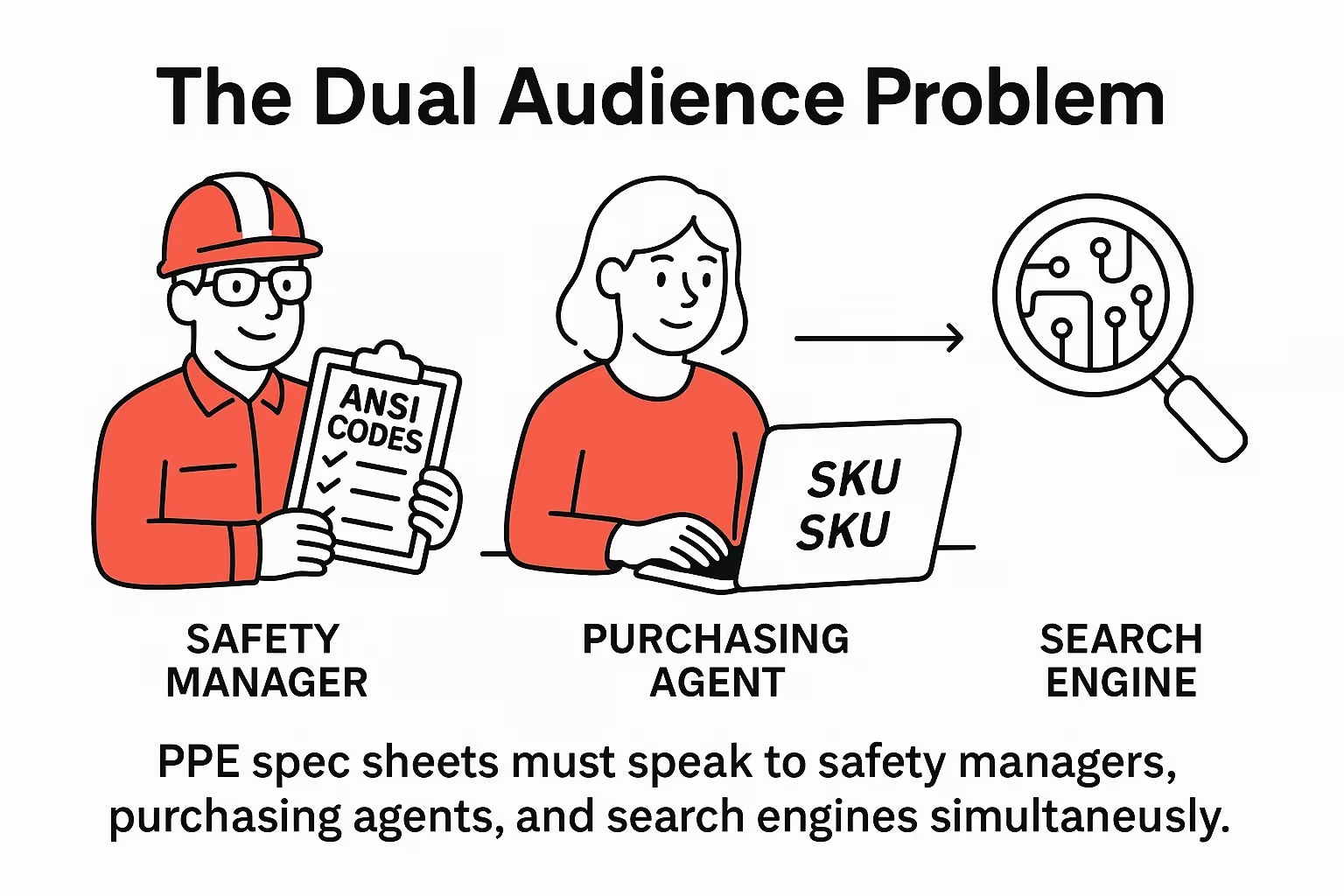
PPE spec sheets must address safety managers, purchasing agents, and search engines at the same time.
Most spec sheets optimize for one audience and alienate the other two. That's why your safety glove specifications sit on page seven of Google while your conversion rate stays below 2%.
Every regulatory standard you reference is a ranking opportunity. When you mention "ASTM F2413 steel toe boots," you're targeting long-tail searches with commercial intent.
Spec sheets should reference relevant consensus standards like ANSI Z89.1 for head protection to demonstrate compliance and build trust with buyers. Those standard codes aren't just compliance checkboxes. They're your differentiation in search results.
Generic competitors write "meets safety standards." You'll write "Certified to ANSI/ISEA 105 Level A4 cut resistance with EN 388 4X42C rating."
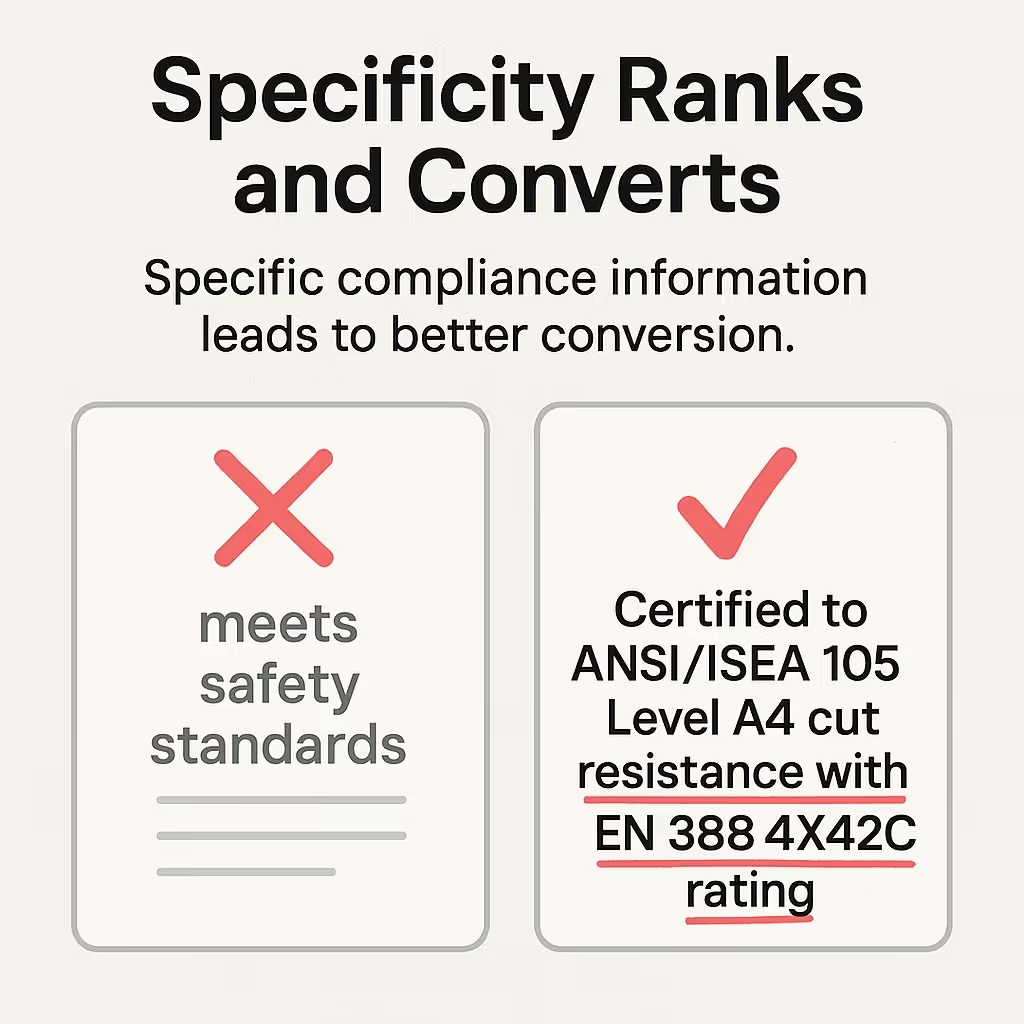
Specific, verifiable standards language outranks and out-converts vague claims.
That specificity ranks. It also converts because it answers the exact question your buyer typed into Google.
Start with product identification. Model number, SKU, and manufacturer part number go at the top. These aren't optional metadata, they're how buyers search and how purchasing systems filter results.
Next comes the product description. Not marketing fluff, a technical summary. "Hi-vis Type R Class 3 safety vest with 2-inch reflective striping and breakaway closure" tells search engines and humans exactly what this is.
Dimensions matter more than you think. Length, width, height, weight. List them in both metric and imperial units because international buyers search in centimeters while US teams use inches.
Materials composition comes next. "100% Kevlar shell with nitrile palm coating" beats "durable material." Specificity ranks and converts.
Effective PPE spec sheets use clear, concise language and visual elements like tables or matrices to communicate product features, safety standards, and compliance information. Tables make technical data scannable.
This section separates amateur spec sheets from professional documentation. List every applicable standard with the full designation.
Don't write "OSHA approved." Write "Complies with OSHA 29 CFR 1910.132 PPE general requirements." The regulation number is searchable and legally precise.
Include certification dates when available. "ANSI Z87.1-2020 certified" is better than just "ANSI certified" because it shows current compliance.
Spec sheets must address industry-specific hazards and regulatory requirements such as OSHA and ANSI standards depending on the region and sector. Your electrical hazard gloves need different certifications than your cut-resistant gloves.
Every spec sheet needs at least three image types. Product photos from multiple angles show what buyers are getting.
Dimension diagrams with measurement callouts help purchasing agents verify fit. A line drawing showing strap adjustment points or ventilation hole placement answers questions before they're asked.
Compliance certification logos matter. When buyers see the ANSI logo or CE mark, trust increases. Link those logos to PDF copies of actual certificates when possible.
Intended use cases prevent misapplication liability. "Designed for impact protection in construction environments, not suitable for electrical work" sets clear boundaries.
Care instructions affect product lifespan and repeat purchases. "Machine wash cold, tumble dry low, inspect for damage after each wash" is specific enough to be useful.
Inspection protocols belong here too. Templates for PPE spec sheets often include fields for hazard identification, PPE requirements, inspection protocols, and emergency procedures. Tell users what to check before each use.
Search engines can't rank what they can't read. PDFs are terrible for SEO unless you also create an HTML version of the same content.
Your spec sheet should exist in three formats. An HTML page on your product detail page for crawlability. A downloadable PDF for offline reference. A structured data schema for rich results.
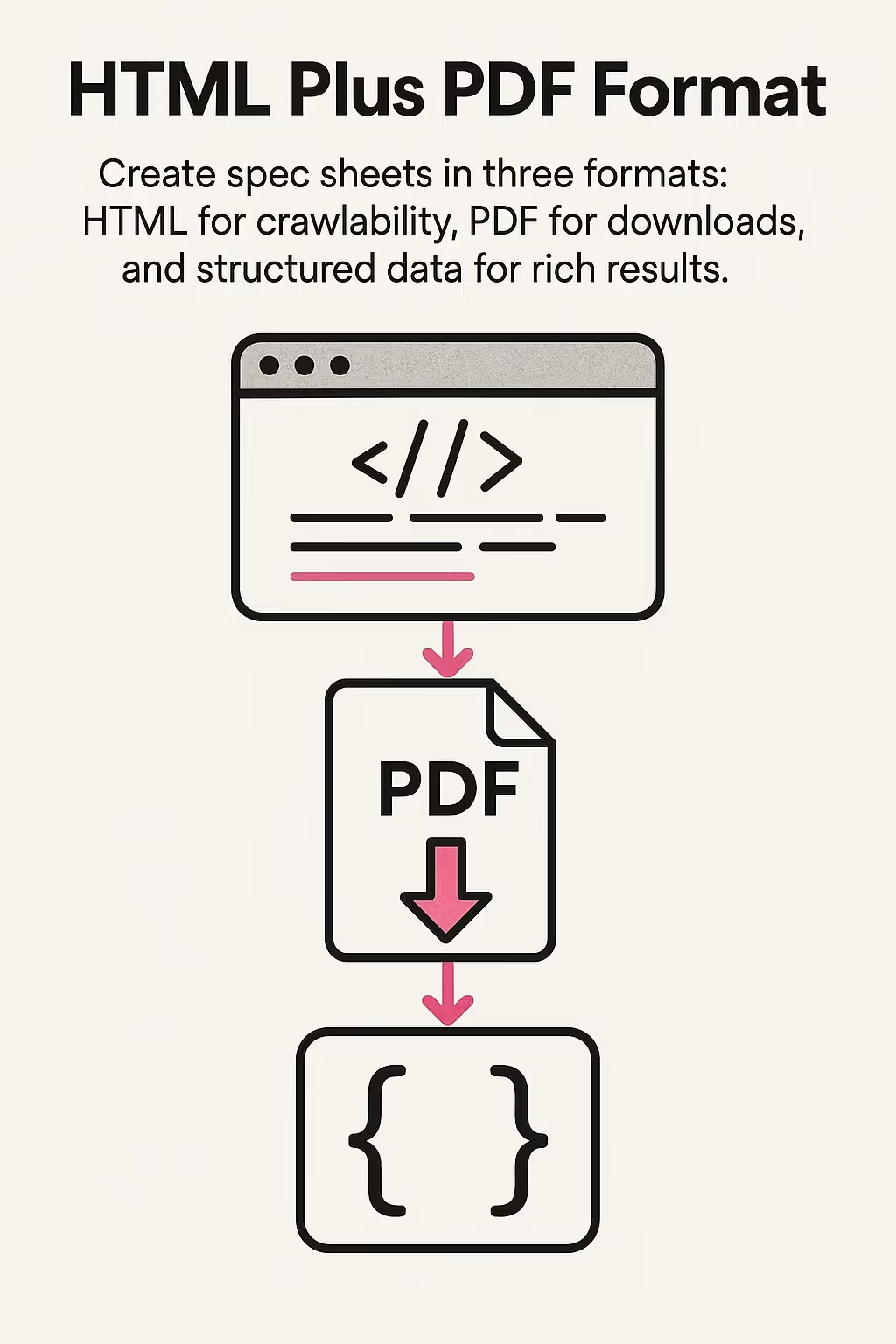
Ship spec sheets in HTML for SEO, PDF for buyers, and structured data for rich results.
Use proper heading hierarchy. The product name goes in an H1 tag. Specification categories like "Technical Specifications" and "Compliance Standards" become H2 headings.
Each spec detail gets its own paragraph or list item. Don't bury "impact resistance rating" in a wall of text. Give it a line: "Impact Resistance: Meets ASTM F2413-18 I/75 C/75."
This structure helps Google extract specific facts for featured snippets. When someone searches "ASTM F2413 boot rating explained," your structured content can appear in position zero.
Your primary keyword is usually the product type plus the main specification. "Cut resistant gloves ANSI A4" or "safety glasses ANSI Z87.1."
Use that exact phrase in your H1, first paragraph, and at least one H2 heading. Don't force it 15 times. Three to five natural mentions work better.
Secondary keywords are related searches. If you're writing about respirators, related terms include "N95 mask specifications," "particulate filtration efficiency," and "NIOSH certification."
Incorporate those naturally in subheadings and specification descriptions. Keyword research strategies help identify which technical terms buyers actually search.
Product schema tells search engines exactly what your spec sheet describes. Include fields for name, description, SKU, brand, material, and safety features.
Add the "additionalProperty" field for each specification. Impact rating, temperature range, and compliance standards all go here.
This structured data feeds Google Shopping results, knowledge panels, and AI overviews. It's the difference between a blue link and a rich product card with ratings and availability.
Every spec sheet should link to related products. If you're documenting safety glasses, link to face shields and hearing protection.
Link to category pages. Your "Eye Protection" category should link to all individual safety glasses spec sheets. This distributes page authority and helps Google understand your product relationships.
Create a "PPE Compliance Guide" hub page that links to every spec sheet. This central resource ranks for broad terms like "PPE compliance requirements" while funneling authority to individual product pages.
Technical accuracy builds trust. Conversion triggers get the sale. Your spec sheet needs both.
The first conversion element is availability messaging. "In Stock, Ships Same Day" removes purchase friction. "Low Stock, 14 Units Available" creates urgency.
B2B buyers hate "contact for pricing." When possible, show bulk pricing tiers directly on the spec sheet. "1-9 units: $24.50 ea, 10-49 units: $22.05 ea, 50+ units: $19.60 ea."
If you can't show exact prices, show price ranges. "Typically $18-$26 per unit depending on quantity" beats hiding pricing completely.
Volume discount calculators work well. Let buyers input their quantity and see their per-unit price update in real-time.
Compliance documentation is logical proof. Reviews and testimonials are emotional proof. You need both.
Add a review summary widget to your spec sheet. "4.7 stars from 124 verified purchasers" with recent review excerpts.
Industry-specific testimonials convert better than generic praise. "Switched our entire warehouse team to these gloves, zero hand injuries in 8 months" from a named safety manager at a recognized company.
Case studies linked from the spec sheet work too. "See how Acme Manufacturing reduced PPE costs by 23% with our compliance program."
Make your PDF downloadable with one click. No form fills, no email gates. Buyers researching multiple suppliers will bounce if you make it hard.
Add a "Send to Colleague" button that emails the spec sheet. Purchasing decisions involve multiple stakeholders. Make it easy for your advocate to share internally.
Include a "Print-Optimized Version" option. Safety managers still print specs for job sites. A print-friendly layout without navigation elements improves usability.
Every spec sheet needs an obvious call to action. "Request a Quote," "Add to Cart," or "Download Full Catalog" depending on your sales model.
For complex purchases, offer a "Schedule Compliance Consultation" option. Some buyers need expert guidance on which PPE meets their specific hazards.
Sample request options convert well for first-time buyers. "Order a Test Kit with 5 Sizes to Find Perfect Fit" reduces risk and increases trial.
You don't want to build each spec sheet from scratch. Template systems maintain consistency while speeding production.
Free, customizable templates for PPE issue records, hazard assessments, and PPE registers help standardize documentation across organizations. Start with a master template that includes every possible field.
Create sections for every spec type you might need. Not every product uses every section, but having them ready saves time.
Standard sections include product identification, technical specifications, compliance standards, materials, sizing, care instructions, warranty information, and ordering details.
Use conditional logic if your content management system supports it. If product type equals "respiratory protection," show NIOSH certification fields. If not, hide them.
Different PPE categories need different emphasis. Safety glasses specs focus on lens specifications and optical class. Fall protection specs focus on load ratings and anchorage strength.
Create category-specific template variations. Your "Hand Protection Template" includes cut resistance levels and dexterity ratings. Your "Hearing Protection Template" includes noise reduction ratings and frequency attenuation tables.
This approach balances consistency with relevance. Core elements stay the same while category-specific details change.
Regulatory standards change. Your spec sheets must keep up. PPE spec sheets should be reviewed and updated regularly to reflect changes in workplace hazards or safety standards.
Set annual review dates for each spec sheet. Flag products affected when a new ANSI revision publishes. Update certification references, test all links, verify pricing accuracy.
Version numbering prevents confusion. "Version 2.3, Updated 10/15/2025" in the footer shows buyers they have current information.
Maintain a change log. "v2.3: Updated ANSI Z87.1 reference from 2015 to 2020 standard, added new sizing chart, revised impact test results."
Construction PPE specs need OSHA 1926 subpart E references. Healthcare PPE specs need FDA clearance and NIOSH approval numbers. Manufacturing specs need ANSI standards and NFPA ratings.
Your spec sheet format should adapt to your primary industry while remaining useful for crossover buyers.
OSHA regulations dominate this sector. Reference specific CFR sections for each product type.
Hard hats need 1926.100 references. Fall protection needs 1926.502 compliance. Eye protection cites 1926.102 standards.
Include job site condition ratings. "Suitable for outdoor use in temperatures from -20°F to +120°F" matters for construction applications.
Weather resistance specs appear here more than other industries. UV resistance, water resistance, and temperature performance affect usability.
Fluid resistance ratings become critical. ASTM F1862 for face masks and surgical gowns. ASTM F1671 for bloodborne pathogen protection.
Particulate filtration efficiency needs specific callouts. "99% BFE at 0.1 micron" for surgical masks. N95, N99, or P100 ratings for respirators.
Sterility information appears here. "Gamma sterilized, sterile until package opened" or "Non-sterile, single-use disposable."
Latex-free claims need prominence due to allergy concerns. "100% latex-free nitrile construction" in the first paragraph.
Food contact safety becomes primary. FDA 21 CFR 177 compliance for any PPE that might contact food.
Cut resistance levels matter significantly. ANSI/ISEA 105 Level A4 or higher for meat processing. Level A2 might suffice for produce handling.
Cleanability specifications appear here. "Autoclavable to 250°F" or "NSF certified for commercial dishwasher cleaning."
Metal detectability for food processing environments. "Contains metal-detectable additives, X-ray and metal detector visible" prevents contamination incidents.
Chemical resistance charts become essential. Show breakthrough times for common chemicals your buyers handle.
NFPA ratings for hazmat suits and gloves. Level A, B, C, or D classification affects what emergencies the gear protects against.
Permeation data needs detail. "Acetone breakthrough time: >480 minutes per ASTM F739" gives specific protection duration.
Decontamination protocols belong in these specs. "Compatible with chlorine dioxide and hydrogen peroxide decontamination systems."
Words describe specifications. Images prove them. Your spec sheet needs both.
Product photography from multiple angles shows construction quality. Front view, back view, side profile, and detail shots of key features.
Dimension diagrams with measurement lines and callouts remove ambiguity. A line drawing showing "26-inch chest circumference, adjustable 24-28 inches" clarifies fit.
Exploded view diagrams show component relationships. For a respirator, show how the filter cartridge attaches to the mask body.
Compliance label photos build trust. A clear image of the ANSI Z87.1 marking molded into safety glasses proves certification.
Wear pattern illustrations help with sizing. A diagram showing "measure around largest part of head for proper helmet sizing" reduces returns.
Show your product alongside two competitors. List specifications side-by-side. Your superior cut resistance level or longer breakthrough time stands out visually.
Feature comparison tables work well. Checkmarks for included features, X marks for missing features. Buyers scan these faster than reading paragraphs.
Donning and doffing videos prevent user error. A 60-second video showing proper respirator fit reduces contamination risk and returns.
Feature demonstration videos show capabilities static images can't. Bend a cut-resistant glove around a blade to demonstrate protection level.
Inspection procedure videos help buyers maintain PPE properly. Show what damage looks like and when to replace items.
Host videos on YouTube with keyword-optimized titles. "How to Properly Fit ANSI Z87.1 Safety Glasses" ranks independently and links back to your spec sheet.
Your spec sheet content is solid. Now make sure search engines can actually find and rank it.
URL structure matters. Use descriptive URLs with your main keyword: "/ppe-specifications/cut-resistant-gloves-ansi-a4/" beats "/product-123/".
Title tags should follow this pattern: "[Product Name] Specifications | [Key Compliance Standard] | [Brand]".
Example: "TechFlex A4 Cut Resistant Gloves Specifications | ANSI/ISEA 105 | ProGuard Safety".
Keep titles under 60 characters. Include your primary keyword and one trust signal like the compliance standard.
Meta descriptions should answer the search query. "Complete technical specifications for TechFlex A4 cut resistant gloves including ANSI cut level, materials, sizing, and OSHA compliance details."
Use action words in meta descriptions. "Download PDF spec sheet," "Compare models," or "Request bulk pricing" improve click-through rates.
Large spec sheet PDFs slow page load. Compress images and PDFs before uploading. A 2MB PDF loads faster than a 10MB version with identical content.
Lazy load images below the fold. Your compliance certification logos don't need to load until users scroll to that section.
Use WebP format for product images. It's 25-35% smaller than JPEG with comparable quality. Faster load times improve rankings.
Test with Google PageSpeed Insights. Aim for a score above 80 on mobile. Core Web Vitals affect both rankings and conversion rates.
Over 60% of B2B research happens on mobile devices. Your spec sheet must work perfectly on smartphones (Source: Demand Gen Report).

Mobile dominates B2B research—optimize spec sheets for small screens and fast loads.
Use responsive tables that stack columns on small screens. Horizontal scrolling frustrates mobile users.
Make CTAs thumb-friendly. Buttons should be at least 44x44 pixels with adequate spacing. "Download PDF" buttons need to be tappable without zooming.
Test on actual devices. What looks fine in Chrome DevTools might fail on an iPhone SE with a smaller screen.
Beyond basic Product schema, add Technical Specification schema using the additionalProperty field.
Each specification becomes a name-value pair. "Cut Resistance Level: ANSI A4" or "Temperature Rating: -20°F to 150°F".
Include certificationValue schema for compliance standards. This helps Google understand your product meets specific safety requirements.
Add FAQ schema for common questions. "What does ANSI Z87.1 mean?" answered directly on your spec sheet can trigger featured snippets.
You can't improve what you don't measure. Track specific metrics for each spec sheet.
Search impressions show how often your spec sheet appears in results. Search Console reports this data. Rising impressions mean improving visibility.
Monitor rankings for your target keywords. Track both broad terms like "safety glasses specifications" and specific terms like "ANSI Z87.1 glasses specs."
Set up position tracking for your main product keyword plus five related long-tail terms. Check weekly. Sudden drops signal technical issues or competitor gains.
Compare your position to featured snippet ownership. If you're ranking #3 but a competitor owns the featured snippet, optimize for that.
Time on page reveals if visitors find your spec sheet useful. Under 30 seconds suggests missing information or poor formatting.
Scroll depth tracking shows how far down the page users read. If 80% of visitors never see your compliance section, move it higher.
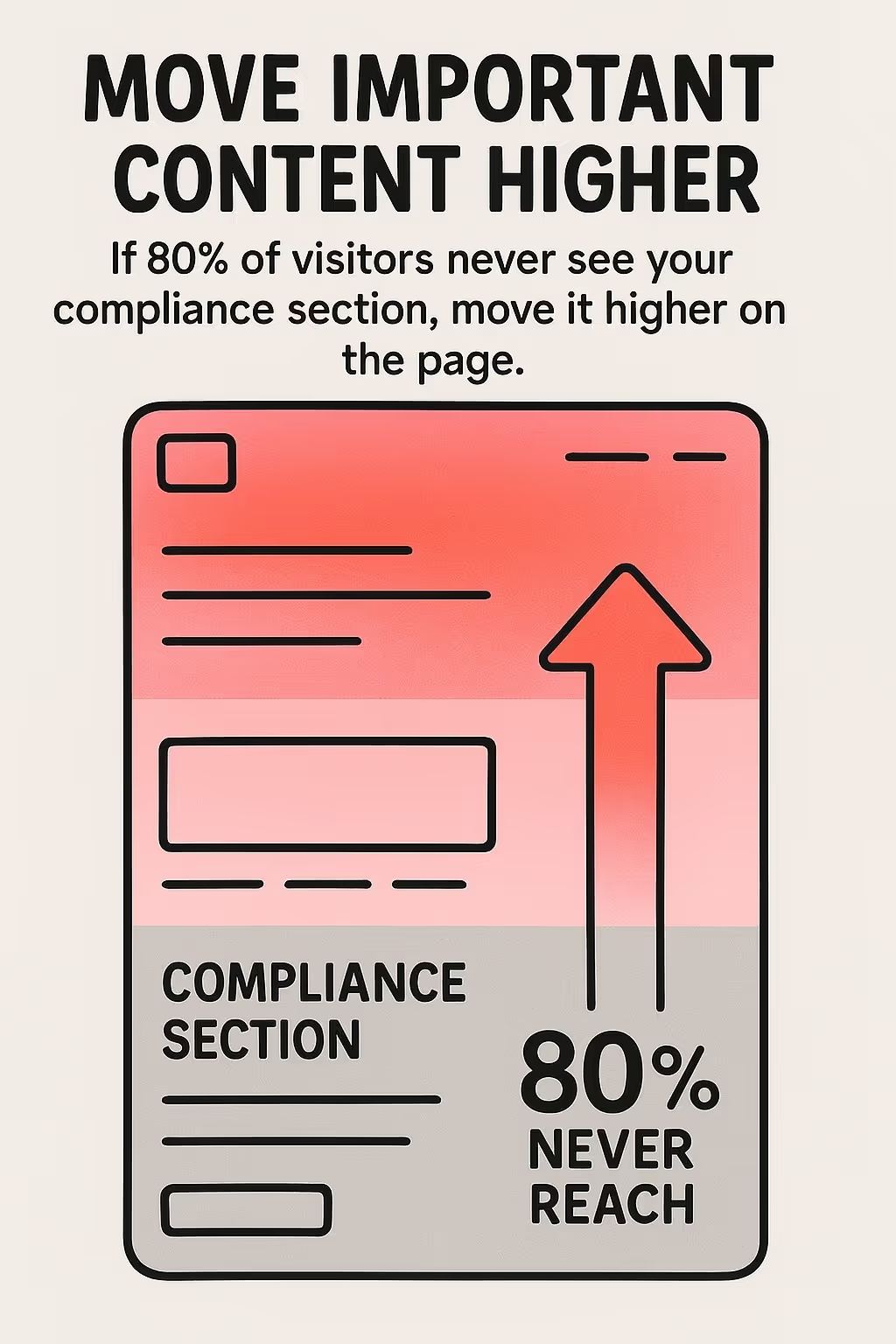
Use scroll-depth data to prioritize content. Move critical compliance info higher if users miss it.
PDF download rate indicates interest level. High page views with low downloads means your HTML content satisfies the need, or your download CTA is buried.
Heat mapping tools like Hotjar show where users click and what they ignore. Unexpected patterns reveal optimization opportunities.
Define what conversion means for your spec sheets. Quote requests, sample orders, PDF downloads, or add-to-cart actions.
Set up goal tracking in Google Analytics for each action. Track conversion rate by traffic source. Organic traffic might convert at 4% while paid search converts at 8%.
Monitor micro-conversions too. Clicking to a related product page or signing up for stock alerts shows buying intent.
Calculate the value of spec sheet traffic. If 2% of spec sheet visitors eventually purchase with an average order value of $850, each visit is worth $17 in expected revenue.
Test different spec sheet layouts. Side-by-side comparison: specifications in a table versus bullet list format. Measure time on page and conversion rate.
Test CTA placement. Download button above the fold versus after the compliance section. Track which position generates more downloads.
Test social proof placement. Reviews at the top versus reviews after specifications. Measure quote request rate for each version.
Test pricing transparency. Show bulk pricing versus "contact for quote." Track which approach generates more qualified inquiries.
Start with a template that includes product identification, technical specifications, compliance standards, materials, and visual elements. Fill in sections for product type, intended use, dimensions, certifications, and maintenance instructions. Save as both HTML for SEO and PDF for downloads.
Standard formats include product summary at the top, technical specifications in a table, materials and dimensions in bulleted lists, compliance standards with certification numbers, and visual aids. Information is organized in scannable sections with tables or bullet points for quick reference.
Gather all product data including physical properties, materials, compliance standards, and intended use. Enter details into a template, review for accuracy and completeness, then save in standardized formats. Include visual elements and make it easily shareable.
You now have the framework for spec sheets that satisfy both search algorithms and human decision-makers.
Start with your top-selling PPE products. Apply the template structure we covered. Add compliance details using the proper standard references. Optimize for your primary keyword plus three related long-tail terms.
Create both HTML and PDF versions. The HTML version ranks in search. The PDF version gets downloaded and shared internally at buyer organizations.
Track performance monthly. Search impressions, rankings, time on page, and conversion rate. Adjust based on data, not assumptions.
The goal isn't perfection on day one. It's continuous improvement. Your first spec sheet might take six hours to build. Your tenth takes 90 minutes because you've refined the process.
PPE spec sheets are technical documents. They're also marketing assets. The best ones serve both purposes without compromise.
Start with one product. Get it right. Then scale the system across your catalog. That's how spec sheets become your highest-converting content.