
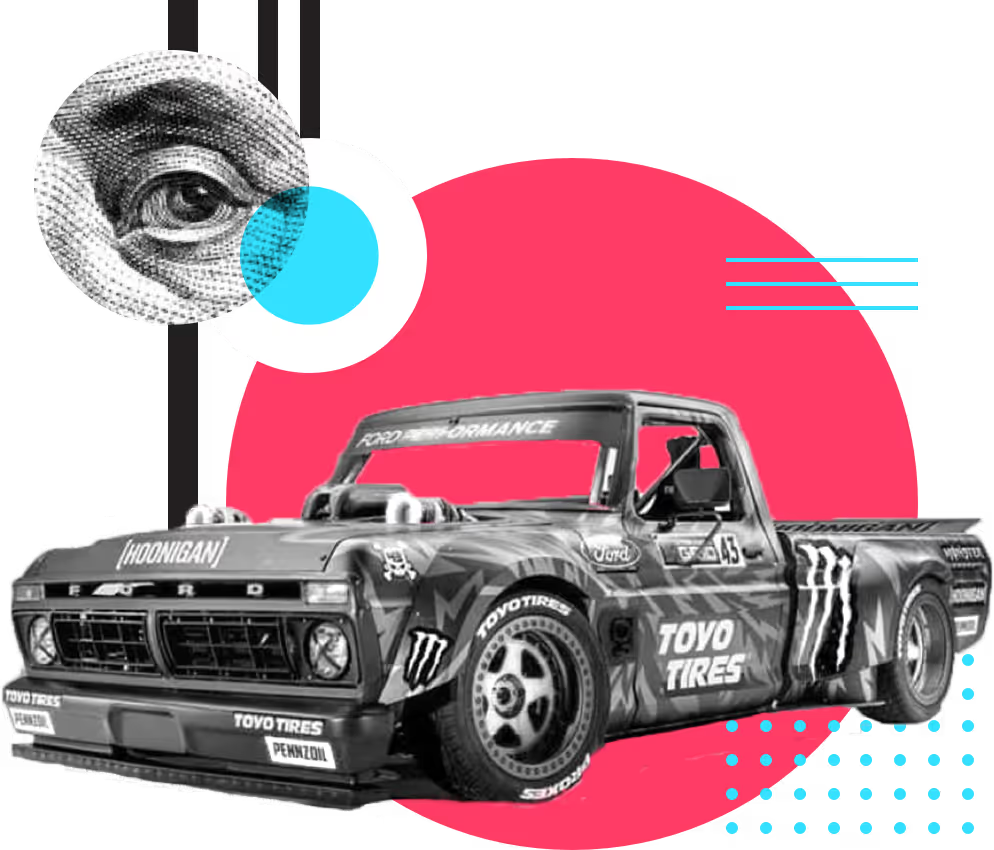

Hoonigan, a well-known motorsport-led consumer brand known for racing culture and media-driven reach partnered with SCUBE to scale branded merchandise sales through paid media. The objective was to extend demand beyond its existing fan base and turn brand attention into a reliable ecommerce revenue stream.
The work focused on building a paid acquisition system that could operate automatically, support branded demand, and scale without sacrificing efficiency as spend increased.
SCUBE designed and launched a multi-channel paid media program across Google properties. Within the first 12 months, the program generated over seven figures in ecommerce revenue. Over the following 12 months, ad spend increased by 79% while revenue grew by 78%, customer acquisition increased by 53%, and return remained stable.
Strong brand awareness does not automatically translate into scalable ecommerce performance.
Demand existed, but it was concentrated within a known audience. Paid media needed to do more than capture existing interest. It needed to extend reach, convert attention into sales, and maintain control as volume increased.
Without structure, scaling spend risked amplifying inefficiencies rather than expanding contribution.
SCUBE approached the engagement as a system build rather than a collection of campaigns. The focus was on establishing clarity early so growth could scale without introducing instability.
Clear KPIs were established based on business objectives, creating a consistent reference point for evaluating performance as spend increased.
Campaigns were segmented by buyer journey stage to separate demand capture from demand development. Search and Shopping supported high-intent demand, while YouTube and Display extended reach beyond the brand’s existing audience.
Product feed management ensured visibility aligned with relevance and merchandising priorities rather than catalog coverage alone.
Offers and messaging were shaped to convert demand without overextending reach or weakening brand signal. Search terms and queries were actively controlled as volume increased, preventing low-intent traffic from absorbing spend. Promotional timing followed commercial realities rather than platform defaults, and testing was used to reinforce structure, not chase incremental lifts.
ROAS was monitored as a safeguard, not a growth objective. Success was measured by sustained revenue behavior, customer growth, and the system’s ability to scale without introducing fragility.
Within the first 12 months:
Over the following 12 months:
Performance was assessed over time rather than through isolated spikes. As structure held, paid media became a reliable driver of merchandise revenue rather than a short-term amplification channel.
“SCUBE gave us the ability to reach new fans beyond our traditional endemic audiences and bolstered the brand’s reach with strong results in a short period of time.”
Steve Demars
Director of Operations, Hoonigan Industries
This was not a temporary growth push. It was a paid media system designed to expand branded merchandise revenue without degrading as spend increased.
The SCUBE Game Plan is a focused review of how complex, spec-driven catalogs behave inside paid channels. It’s designed to surface what’s contributing to performance, what’s masking underlying issues, and where structure is quietly working against you. If there’s a fit, we walk through the findings in a ~60 minute conversation, looking at:
The goal is a clearer picture of how the system is behaving, so decisions stop relying on averages or assumptions.

.avif)